

Original Coverage & Source Attribution: www.cbr.com
The Hunger Games: Sunrise on the Reaping has brought the franchise back in a big way. The prequel movie explores the long road to revolution through fan-favorite character Haymitch Abernathy and his time in the 50th Games. With the series’ continuation currently up in the air, fans might find themselves interested in watching movies with comparable stories.
Aside from rewatching the rest of the Hunger Games movies, viewers have plenty of other death competition and dystopian revolution stories to choose from. Not all of them are as poignant as Suzanne Collins’ take on the subgenre, but many do hold a similar appeal. From The Running Man to The Long Walk, here are six movies for fans of Sunrise on the Reaping to check out.
The Running Man Approaches Propaganda With Satirical Humor
Based on the dystopian novel by Stephen King, The Running Man follows a blue-collar worker named Ben Richards. He enters a deadly game show to help his sick daughter and raise his family out of poverty but struggles to expose the show’s falsehoods to the public. It might not be director Edgar Wright’s best work, but it might be one of the most entertaining death game movies around today.
Glen Powell delivers a riveting performance as Richards, and his charisma keeps audiences engaged throughout the film’s runtime. While its worldbuilding is rather basic, it sticks to its message and interrogates similar themes to Sunrise on the Reaping, including propaganda as entertainment and the importance of controlling the narrative in a dystopian world.
Snowpiercer Is a Creative Rebellion Story
Snowpiercer is adapted from Jacques Lob’s graphic novel and is set on a high-speed train containing the last of humanity. With those in the back of the train being oppressed by those in the front cars, Curtis Everett leads a rebellion as he fights his way to the front. The movie garnered acclaim for Bong Joon Ho’s direction and unique vision.
Like Sunrise on the Reaping, Snowpiercer focuses largely on class conflicts, with passengers toward the front of the train living in luxury and leaving those in the back with next to nothing. Chris Evans’ Curtis is easy to root for as he strives to take down this corrupt system. Likewise, Tilda Swinton’s Minister Mason feels like she’d fit right in with the Capitol citizens.
Battle Royale Has an Eerily Similar Premise to The Hunger Games
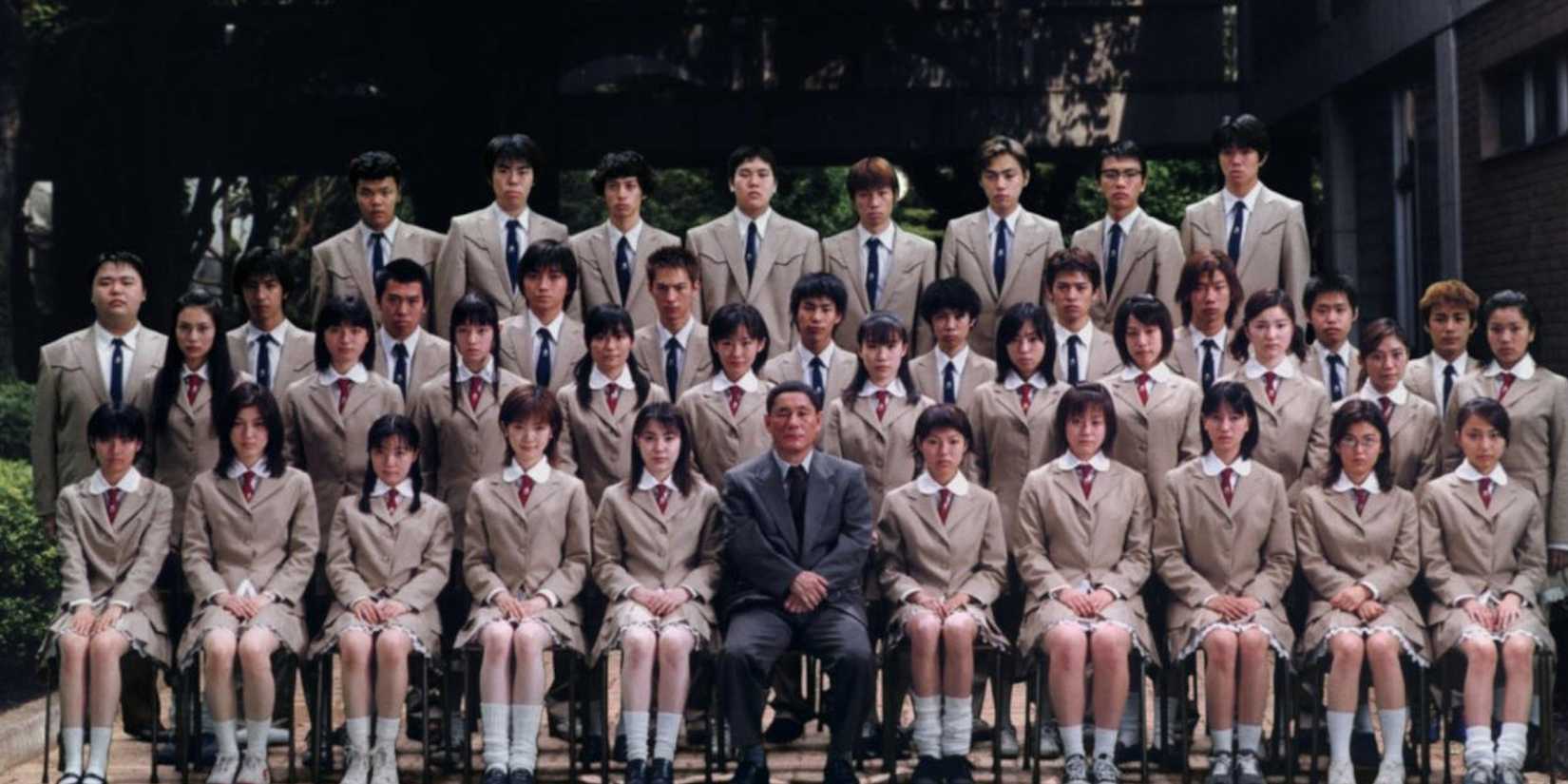

Adapted from the book by Koushun Takami, Battle Royale is set in a totalitarian Japan that holds an annual fight to the death for one class of school children to curb juvenile delinquency. The film largely follows Shuya Nanahara as he tries to protect his fallen friend’s crush, Noriko Nakagawa. Some have accused Collins of copying this premise when writing The Hunger Games, but the two stories are actually quite different.
Battle Royale is a great choice for Hunger Games fans interested in seeing a different take on a similar idea. Unlike other entries on this list, the Japanese film specifically pits kids against adults while also asking what happens when young people are left to their own devices. The result is a bloody dark comedy that has been endlessly influential in the death game subgenre.
Hadestown Explores the Intersection of Art and Politics
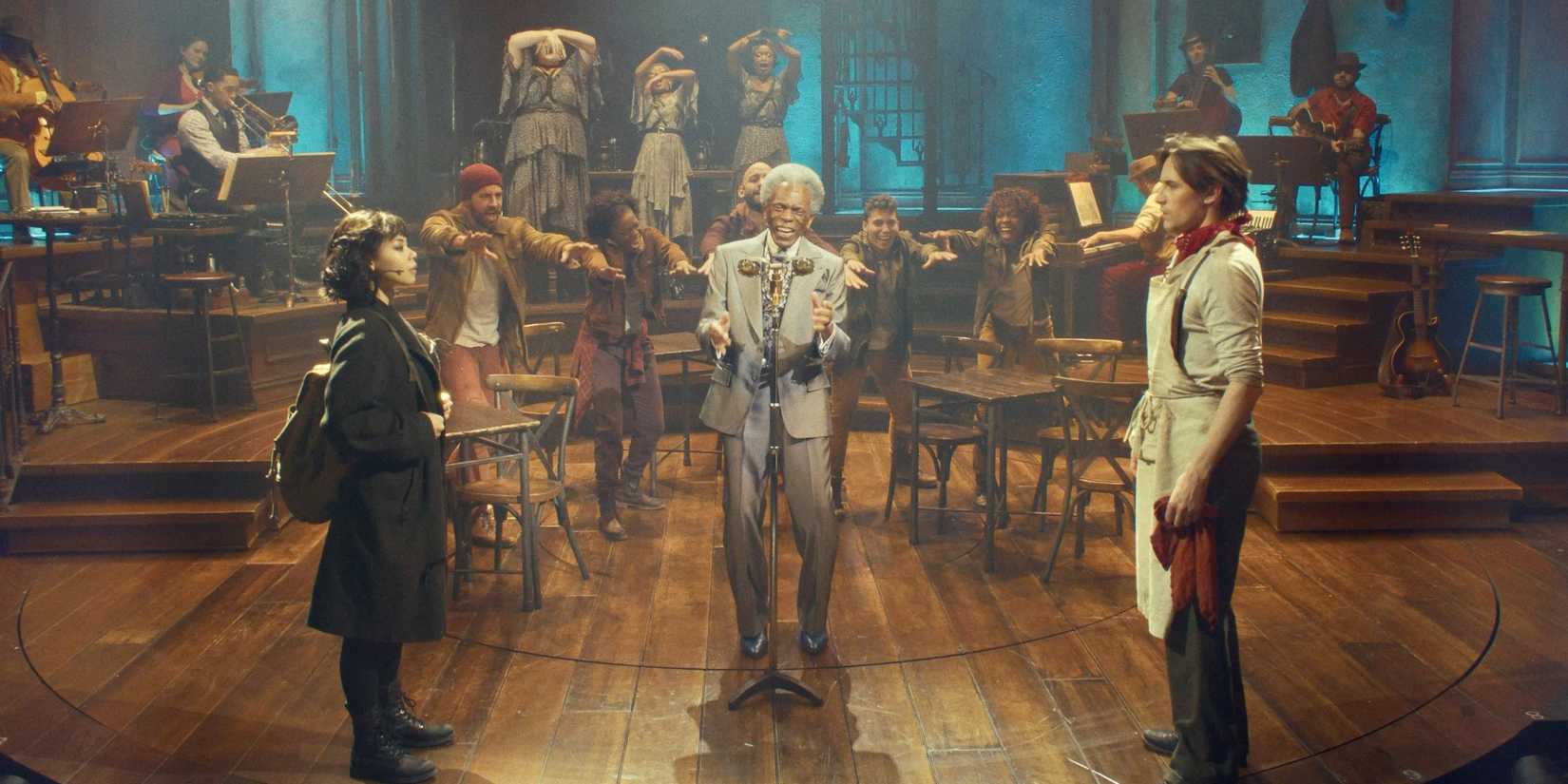
Hadestown: The Musical is a reimagining of the Greek myth of Orpheus and Eurydice. Set in a post-apocalyptic dystopia with Great Depression era flair, Orpheus is determined to fix the world with the perfect song and save his love from the underworld. The Tony Award-winning musical was filmed and released in movie theaters earlier this year, gaining near-universal acclaim both on stage and on screen.
For Hunger Games fans who love the Covey and wished Sunrise on the Reaping featured more of Lenore Dove’s rebellious folk songs, Hadestown is a must-watch movie. Not only does it examine the role of artists — specifically musicians — in revolutions and the importance of resilience, but it also features an emotional love story that’s rather reminiscent of the romance between Haymitch and Lenore Dove.
Rogue One Examines the Sacrifice of Revolution
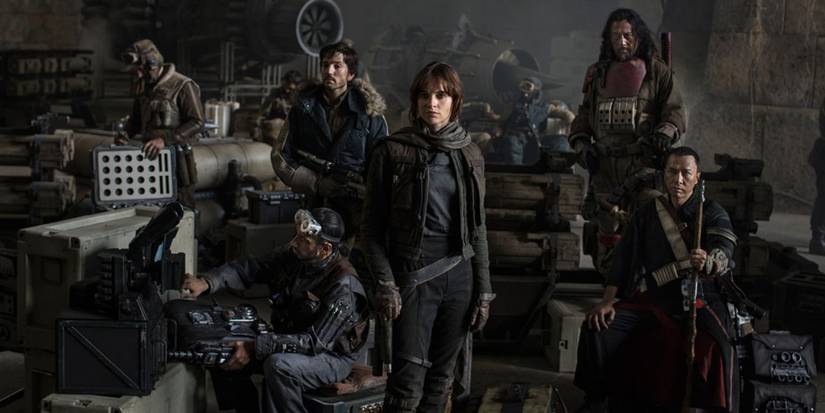

Set just before the events of A New Hope, Rogue One: A Star Wars Story follows a ragtag group of rebels who steal the plans for the Death Star from the evil Empire. The prequel captured audiences’ attention with its decision to focus on everyday people in the Star Wars universe rather than the Force-wielding Jedi. It also got its own highly-praised prequel series, Andor.
Early reactions to Sunrise on the Reaping drew parallels between it and Rogue One for their similar themes and stories. Although there’s no elaborate death game in the Star Wars movie, its narrative is all about the sacrifices that countless rebels have to make to overthrow their oppressors. Both films highlight the contributions made by underappreciated or even unknown figures in a revolution.
The Long Walk Is a Harrowing But Moving Journey
The Long Walk is another film based on a dystopian Stephen King novel centering on a televised death competition. In this one, 50 teenage boys must walk at a minimum pace of three miles per hour until a sole survivor remains, who will be showered with riches and granted one wish. The adaptation shares a director (Francis Lawrence) and a star (Ben Wang) with Sunrise on the Reaping.
While The Long Walk doesn’t focus as much on worldbuilding or propaganda as Sunrise on the Reaping, it has more time to meditate on the ideas that permeate The Hunger Games. The movie also does a great job of making viewers feel for the contestants, much like the tributes in the Games. It might be a harrowing watch, but much like Sunrise on the Reaping, its moving story is worth the pain.



