



Original Coverage & Source Attribution: www.mhlnews.com
Global trade is getting harder to manage, and not because goods are necessarily moving farther, but because the systems, regulations, intermediaries and geopolitical conditions surrounding each shipment are becoming more interconnected.
In 2025, global trade in goods and commercial services reached $34.89 trillion, an 8% increase from the previous year, according to the World Trade Organization.
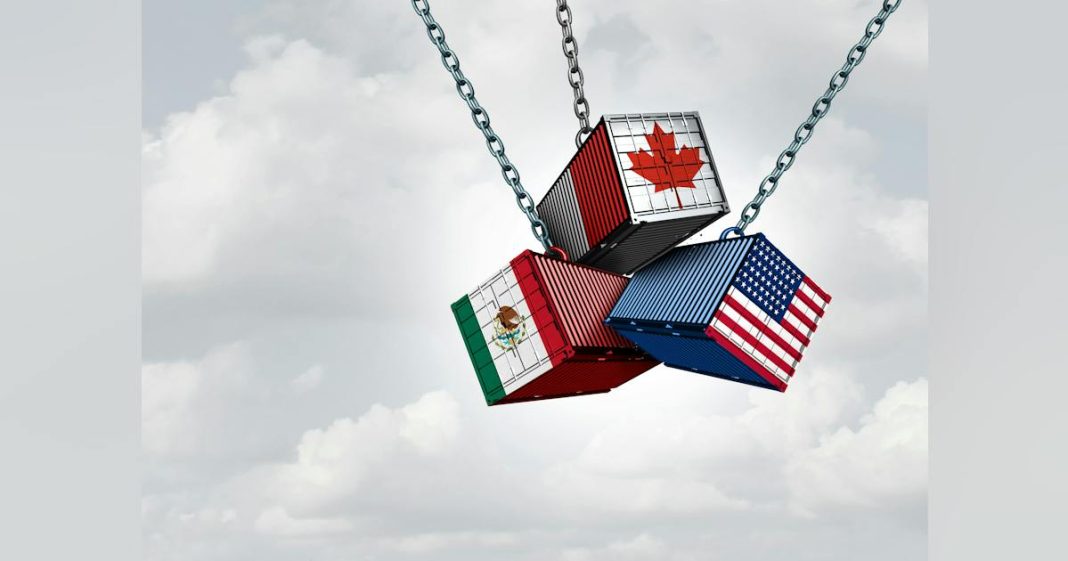
At the same time, trade routes and relationships are shifting for U.S. businesses. U.S. goods imports from Canada fell 7.2% in 2025, while imports from Mexico increased 6.2%, according to the U.S. Census Bureau.
Canada offers another illustration of this broader shift: its merchandise exports to the United States fell 5.8% in 2025, while exports to countries outside the U.S. increased 17.2%, according to Statistics Canada.
For logistics leaders, these changes create an important question: Are we still treating trade fraud as primarily a compliance problem, when it has become an end-to-end supply chain problem?
I believe we need to rethink the answer.
Complexity creates more places for risk to hide
A cross-border shipment rarely follows a simple path from one company in one country to another. A single shipment can involve manufacturers, suppliers, freight forwarders, carriers, customs brokers, warehouses, ports, distributors and multiple regulatory jurisdictions. It can generate commercial invoices, packing lists, waybills, shipping labels, customs declarations, tracking records and digital transactions along the way.
The complexity is visible in the trade data itself. The U.S. trade system itself illustrates why the distinction between a product’s origin and its shipping path matters. The U.S. Census Bureau defines country of origin as the country where merchandise was grown, mined or manufactured, while country of shipment is the country from which the merchandise was shipped. Those are not necessarily the same.
In 2024, U.S. imports from Mexico totaled about $503.1 billion, while imports from China totaled about $440.3 billion, according to the U.S. Census Bureau. Goods can move through multiple countries, ports, carriers and intermediaries before reaching their final destination. Canada provides a concrete example of this complexity: Statistics Canada found that more than 40% of Canadian imports originating in Mexico were shipped to Canada from the United States, while more than 25% of Canadian imports originating in China were first imported into the United States.
In other words, the country where a product originates and the country from which it enters a market are not always the same.
That matters because every additional handoff, jurisdiction and data source creates another opportunity for information to become inconsistent, intentionally or otherwise.
A shipment can have a legitimate-looking invoice, a valid tracking number and apparently correct customs documentation. Yet when those individual pieces are compared with the shipment’s route, history, declared value, product classification, weight or other transactions involving the same parties, a different picture may emerge.
The problem is not necessarily that organizations lack data. It is that the data is often disconnected.
The limits of document-by-document compliance
Most compliance processes have been designed around reviewing specific documents, transactions or rules.
That approach remains necessary. But it becomes less effective when risk is distributed across multiple data points. Consider a shipment where the commercial invoice looks reasonable. The declared value falls within an expected range. The HS code appears valid. The tracking number exists.
None of those facts, considered independently, necessarily raises an alarm. But what happens when the same shipment is compared against historical activity and reveals an unusual routing pattern, a duplicate tracking identifier, an unexpected change in product classification or a discrepancy between declared weight and shipment history?
The individual documents may still look legitimate. The relationship between them may not. This is why trade fraud should increasingly be viewed as a supply chain intelligence problem rather than a collection of isolated compliance checks.
The objective isn’t to inspect everything more aggressively. It is to identify where the relationships between pieces of information create a reason for a closer look.
AI changes the economics of both sides
There is another factor changing the risk equation: artificial intelligence. AI can help organizations process and correlate information at a scale that would be difficult to achieve through manual review. But the same technology can also make it easier for bad actors to manipulate information, generate convincing documentation and scale activity across many transactions. That creates an asymmetry.
A compliance team cannot realistically respond to exponentially increasing volumes of information by adding more people to manually inspect every document. The answer has to involve better prioritization.
Instead of asking, “Can we review every shipment?” the more useful question is: “Can we identify which shipments deserve more scrutiny, and explain why?” That requires connecting information before a shipment becomes an investigation.
Connect the physical and digital shipment
One of the biggest opportunities is to connect what exists physically with what exists digitally.
A shipping label, barcode, package, pallet or document represents a physical event. The ERP record, customs declaration, transaction history, routing information and warehouse record represent digital events. Those two worlds are often managed separately. Bringing them together can create a much richer view of shipment integrity.
For example, a scan can capture information from a shipping label or document. That information can then be compared with identifiers, parties, product information, price, weight, origin, destination and routing contained elsewhere in the organization’s systems. The objective isn’t simply to digitize another document. It is to determine whether the shipment tells a consistent story.
That consistency can be assessed through a relatively simple sequence: identify the signals, connect them across systems, compare them against expected patterns, investigate the exceptions and use what is learned to continuously improve the controls. The value comes not from any one signal, but from understanding how multiple signals relate to one another. The broader lesson, however, extends beyond any individual technology.
Strengthening controls without slowing legitimate trade
There is an understandable concern that adding more controls to cross-border logistics will create more friction. Supply chain leaders are already dealing with tariffs, changing trade policies, capacity constraints, labor pressures, regulatory requirements and customer expectations around speed. The goal cannot be to turn every shipment into a manual investigation.
Effective risk management should do the opposite: reduce unnecessary friction for legitimate shipments while directing attention toward the exceptions that matter. That means moving from blanket controls toward risk-based controls. Low-risk shipments should move efficiently.
Higher-risk shipments should generate more context for investigators. And when a shipment is flagged, the system should provide evidence that explains the reason for the alert rather than simply producing a score that no one can interpret. This distinction matters. A risk score without context can create another operational problem: alert fatigue.
An investigator needs to know what changed, which signals contributed to the risk assessment, what evidence supports the finding and what action should happen next.
Build intelligence across the existing supply chain
Another important consideration is that organizations rarely have the luxury of starting over. A typical logistics environment may already include ERP systems, warehouse management systems, transportation platforms, customs and brokerage systems, fraud tools and other specialized applications. The answer isn’t necessarily another system operating in isolation.
It is an intelligence layer that can connect information across the systems organizations already depend on. That approach also makes it possible to start with a defined use case — such as trade fraud or shipment integrity — and expand over time as organizations identify other operational risks that can benefit from connected data.
The bigger shift: from compliance to supply chain intelligence
Cross-border trade will continue to evolve. Tariffs will change. Trade relationships will shift. New routing patterns will emerge. AI will make both legitimate logistics operations and fraudulent activity more sophisticated. Regulatory requirements will continue to evolve alongside those changes.
Supply chains therefore need to become better at understanding not just what a document says, but whether the entire transaction makes sense. That requires connecting information across the shipment journey, correlating physical and digital signals, and giving people enough context to make faster and better-informed decisions.
Trade compliance remains an essential function. But the risk it manages increasingly extends into transportation, warehousing, procurement, finance, cybersecurity and broader supply chain operations. The organizations that adapt will not necessarily be those that add the most controls.
They will be those that can connect the right information early enough to distinguish normal complexity from meaningful risk, without making legitimate commerce unnecessarily difficult.