



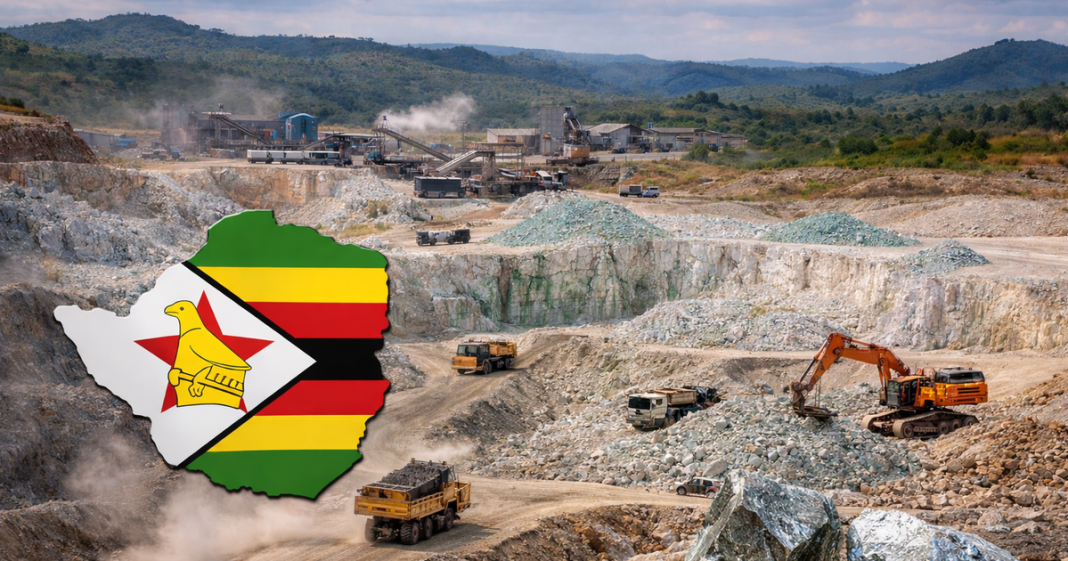
Original Coverage & Source Attribution: africa.businessinsider.com
Per a recent report by the Minerals Marketing Corporation of Zimbabwe, this strategy seems to have worked, as the Southern African country saw its mineral exports in the current fiscal year double to $4.7 billion.
The contents of this report, as seen on Sputnik, show that sales of the battery metal reached $2.16 billion during the first nine months of the year, nearly four times the amount recorded in the same period last year.
The surge in lithium revenue was driven by a sharp increase in spodumene concentrate prices, which climbed 283% during the period under review.
Lithium now accounts for almost half of Zimbabwe’s mineral earnings outside gold, putting it ahead of platinum group metals and making it the country’s largest non-gold mineral export.
Much of the growth has been tied to rising Chinese investment in Zimbabwe’s mining industry.
Chinese companies have poured money into lithium mines and processing plants, helping the country increase its role in the global supply chain for battery materials.
This year, following the ban, Sinomine’s Bikita Minerals committed approximately US$500 million toward the establishment of lithium sulphate processing facilities.
In April, Zimbabwe exported its first shipment of lithium sulphate, a higher-value intermediate of the mineral, from the Arcadia mine near Harare.
Before this milestone, most of the country’s lithium was exported as spodumene concentrate, leaving much of the value-added refining abroad.
In July, the official state-owned lithium mining arm of Zimbabwe, Mutapa Energy Resources, reportedly secured a $300 million investment to accelerate the development of its lithium assets.
While Zimbabwe has not recorded lithium sales of this level, it has for years been considered the largest producer of the product in Africa.
Zimbabwe sold 586,197 metric tonnes of lithium concentrate in the first half of 2025, up 30% from 451,824 metric tonnes shipped the previous year.
In the first quarter of 2026, total mineral sales in Zimbabwe reached 1,288,761 tonnes valued at $983.85 million, representing a 27% increase in volume and a 79% jump in value compared to the same period last year.
This surge in output coincides with rising global demand for lithium, which is being driven by increasing electric car adoption and the expansion of global energy storage capacity.
Zimbabwe’s lithium ban
Zimbabwe, holding Africa’s largest lithium reserves, has recently intensified measures to maximize value from its mineral assets.
To achieve this objective, the nation suspended the export of unprocessed lithium concentrates in February, referencing concerns regarding administrative irregularities and revenue leakages.
Although the immediate suspension was prompt, Zimbabwe had previously outlined policy intentions in 2025 to institute a formal ban on raw lithium concentrate exports effective January 2027.
By April, Zimbabwe’s mines ministry disclosed that lithium concentrate exports will now be subject to mandatory quotas and that companies must commit to establishing domestic processing facilities before shipments can restart.
Per a letter to the Chamber of Mines seen by Reuters at the time, export quotas will be communicated individually to producers, while a 10% export tax will remain until a January 2027 ban on unprocessed concentrate shipments takes effect.

![Anthropic's IPO: 80 of 261 Pages Warn of AI Risk [2026]](https://pune.media/wp-content/uploads/2026/10/1791556227-1068x610.webp "Anthropic’s IPO: 80 of 261 Pages Warn of AI Risk [2026]")