


Original Coverage & Source Attribution: variety.com
When it comes to Russell Hitchcock and Graham Russell — partners behind the 50-year-plus hit machine Air Supply — the only four-letter word in their vocabulary is “soft.”
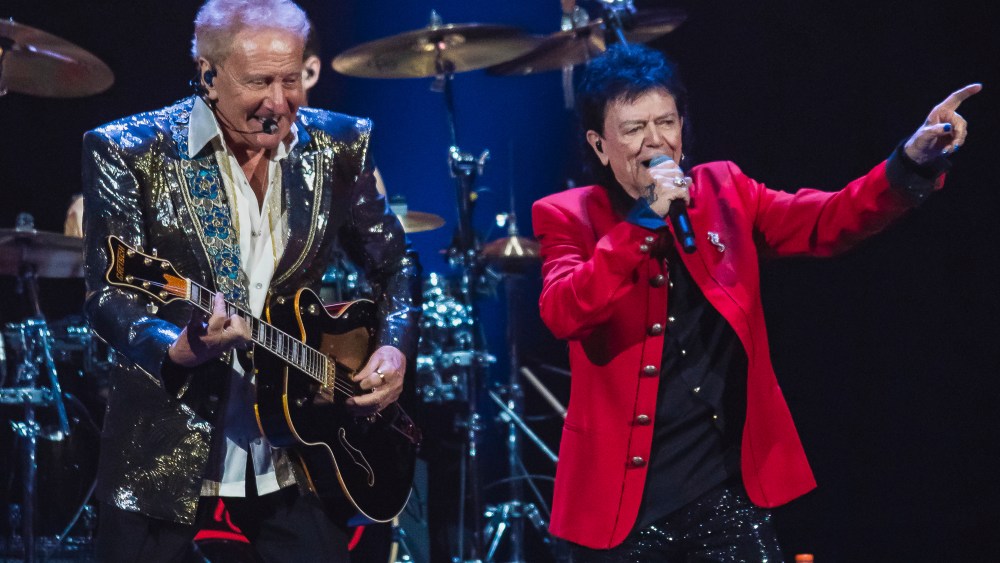
Sure, British-born songwriter-harmonist Russell and Australian vocalist Hitchcock sing luscious love songs like “Every Woman in the World” and “Even the Nights Are Better” and make mellow top 10 albums like “The One That You Love” — to the tune of 100 million records sold worldwide — “but you can’t call it ‘soft,’” says Russell, calling from Los Angeles just hours before another of Air Supply’s concerts (more than 6,000 since the duo launched in 1975). “When we play live, we rock. LOUD.”
Hitchcock chimes in on how energetic Air Supply’s shows have been forever — they played with AC/DC in the 1970s — and of the rough tones of Stones-y new tracks like “I Want Your Love” and “Son of the Father.” The vocalist then makes a proclamation: “I fancy calling what Air Supply does ‘romantic rock and roll.’ The term soft rock makes me sick.”
Done. Air Supply creates romantic rock and roll filled with the passion of their youth, for the love of their devoted fanbase, the Airheads, and to follow the muse they were gifted with since the 1970s.
Media tracking databases WhatSong and Tunefind credit Air Supply with 64-plus serene sync placements since 1979’s smash “Lost in Love.” They have a new album, due out soon, “A Matter of Time,” a biopic in development and received a star on the Hollywood Walk of Fame Oct. 8, which cemented their legacy as hitmakers and an enduring touring band.
“This might sound cliché, but we really do do this for our fans — better shows, better performances,” Russell says adamantly. “That’s our driving force. When we decided to form Air Supply, we really didn’t know what we were doing. I’m not a particularly great musician. But together we created this bond from the start.”
Hitchcock reminds Variety that when it came to building Air Supply, “There were no grand plans or future projections. We just wanted to do it,” before Russell finishes his partner’s sentiment.
“Fifty-one years later, we have the same incentive: we just want to do it. And to continue to do it at such a high level as we do is a gift from somewhere. We love that gift. We’re guided by that.”
That gift started when “the two Russells” met as part of the vocal chorus of 1975’s Australian production of Andrew Lloyd Webber’s “Jesus Christ Superstar.”
“My recollection of Graham during the first rehearsal, learning our choreography — we can’t dance, I can tell you — was that he fell and sprained his ankle,” says Hitchcock, as both men laugh. “THAT made him stand out. Plus, he’s 6’ 4”. Once we started talking, though, we had so much in common. Both saw the Beatles, independently, in London and Australia. We weren’t part of the theater kids who thought they were better than everybody else. Our birthdays are three days apart. We’re both working-class guys who grew up without brothers. We were that production’s black sheep — all of which drew us close to each other. Then I heard him playing guitar off to the side of the stage, one of his own songs. That sealed the deal. I never met anyone who played their own songs. We started singing together that day.”
Russell adds that Hitchcock “was the one who took me to get my ankle taken care of that day.”
Not only did Air Supply start dropping albums (like their self-titled debut in 1976) guitarist Russell states, “Our first single, ‘Love and Other Bruises,’ actually came out while we were still in ‘Jesus Christ Superstar,’ but we couldn’t tell anyone as that was against our contractual obligations. It was a massive hit in Australia, too, but we had to hide that.”
But despite releasing additional albums and winning Aussie gold records, Air Supply struggled. “We got put in front of the lions quickly, and for some time,” says Russell.
Then Rod Stewart asked them to open his 1977 U.S. tour, and “Lost in Love” caught the attention of then-Arista label head Clive Davis.
“I knew the moment I heard ‘Lost in Love,’ it was IT,” stresses Hitchcock.
“But we were still going nowhere when we released it,” says Russell. “It was a hit in Australia, but we still made $200 a night.”
Unbeknownst to the Air pair at the time, however, Arista picked up an option on “Lost in Love,” and pushed the single into the U.S. charts. “I called Arista, charges reversed, and got through to Clive, who told me to start writing more songs as Air Supply was about to have the biggest hit of the year.”
Clive Davis being Clive Davis, he added background singers and edited the run time.
“No songwriter wants that,” says Russell. “[But] once Clive got involved, and we made him part of our circle, we knew it would be OK — that’s how we became us.”
“We didn’t have a choice,” Hitchcock says laughing, about the “Lost in Love” changes, Davis’ lyrical fixes and non-Air Supply-written songs that Davis brought to them from Jim Steinman (“Making Love Out of Nothing at All”) and Ken Bell & Co. (“Even the Nights Are Better”). “Clive was feared and revered at the same time, and deserves nothing but gratitude from us,” he adds.
But calling their own shots brought Air Supply to where they are now — such as last year’s sold-out Carnegie Hall show and a new album with rougher edges, which may be their final recorded effort.
“Thinking this might be our last album gave me license to do what I wanted without having to worry about hit singles,” says Russell. “We wanted to have fun. If we do go out after this one, we’re happy.”
Hitchcock reminds us that, after 51 years, he’s still amazed and inspired by “Russell being a guy who writes every day — always playing guitar, never without something to record what he’s doing.”
Russell admires Hitchcock’s frontman abilities. “He’s the one in the spotlight,” says the songwriter of the singer. “That’s what Russell does best — be that lead person. It takes a lot of balls to do what Russell does. Can you say ‘balls’ in an interview? Anyway, that’s why Air Supply works. We allow ourselves to both do what we love to do. What we’re good at. It’s cool.”
Going back to Russell’s ‘last album’ sentiment, Hitchcock faces facts. “Look, our last album before ‘A Matter of Time’ was 16 years ago (‘Mumbo Jumbo’). If we wait another 15, 16 years, I’ll be 94.”
“Every artist makes a last album,” says Russell, with a hint of black humor. “Maybe we could call the next one ‘One Foot in the Grave.’”
Putting aside the gallows humor, the duo reflect on their Walk of Fame star.
“Along with waiting for a songwriting Grammy for Graham — tragedy if that doesn’t happen before he croaks — getting this Walk of Fame star is great validation,” says Hitchcock. “It’s hard to comprehend being so enshrined. Wait, that sounds as if we’re being embalmed.”
Russell adds, laughing, “There’s that ‘One Foot in the Grave’ thing. All I can say is that when I heard we were getting our star, I burst into tears. It’s just incredible.”