Original Coverage & Source Attribution: bizfayetteville.com
Regional business leaders, industry experts and economic development advocates gathered for an important collaborative conversation about one of the most transformative forces impacting today’s business landscape: Artificial Intelligence (AI).
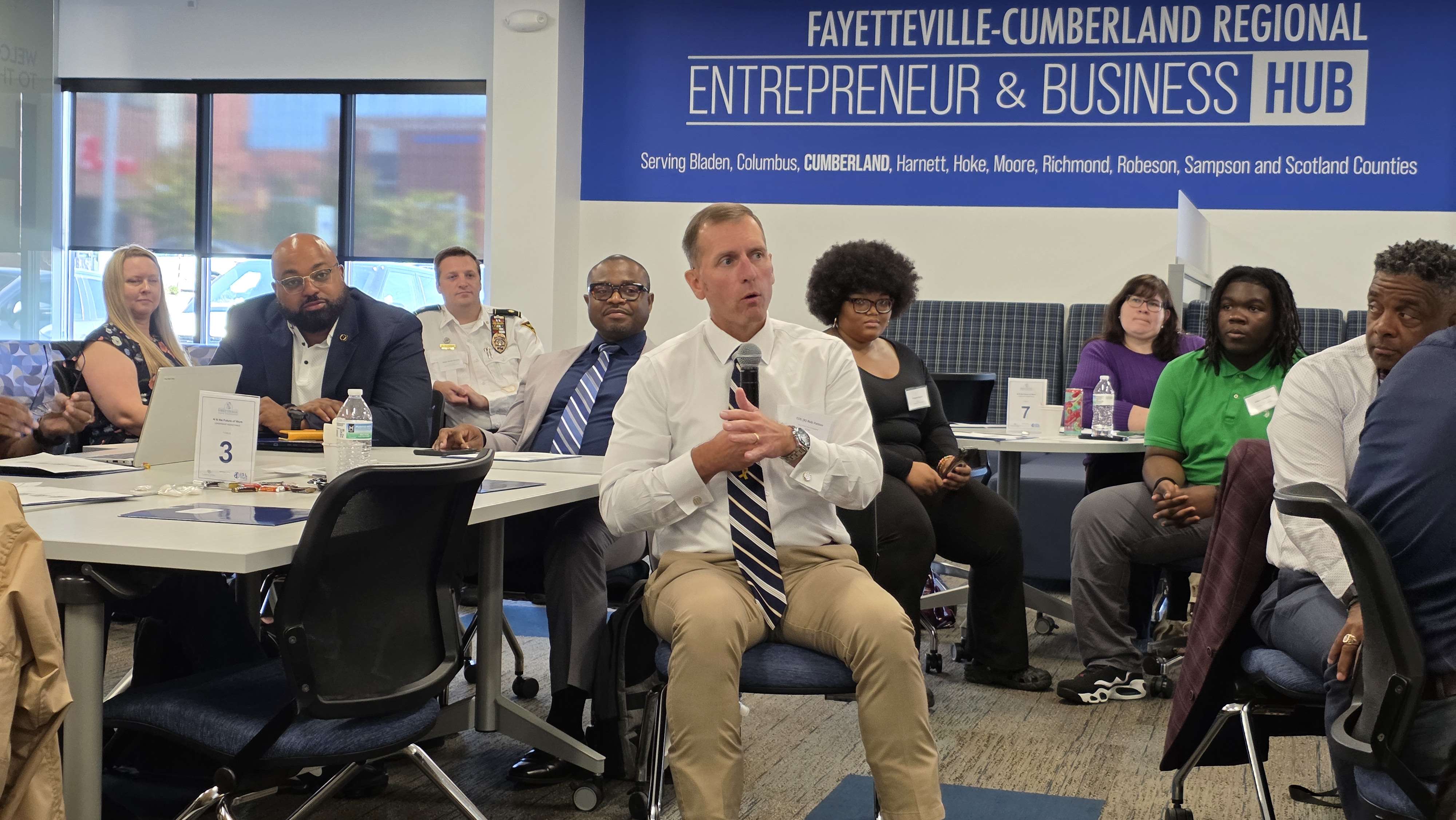
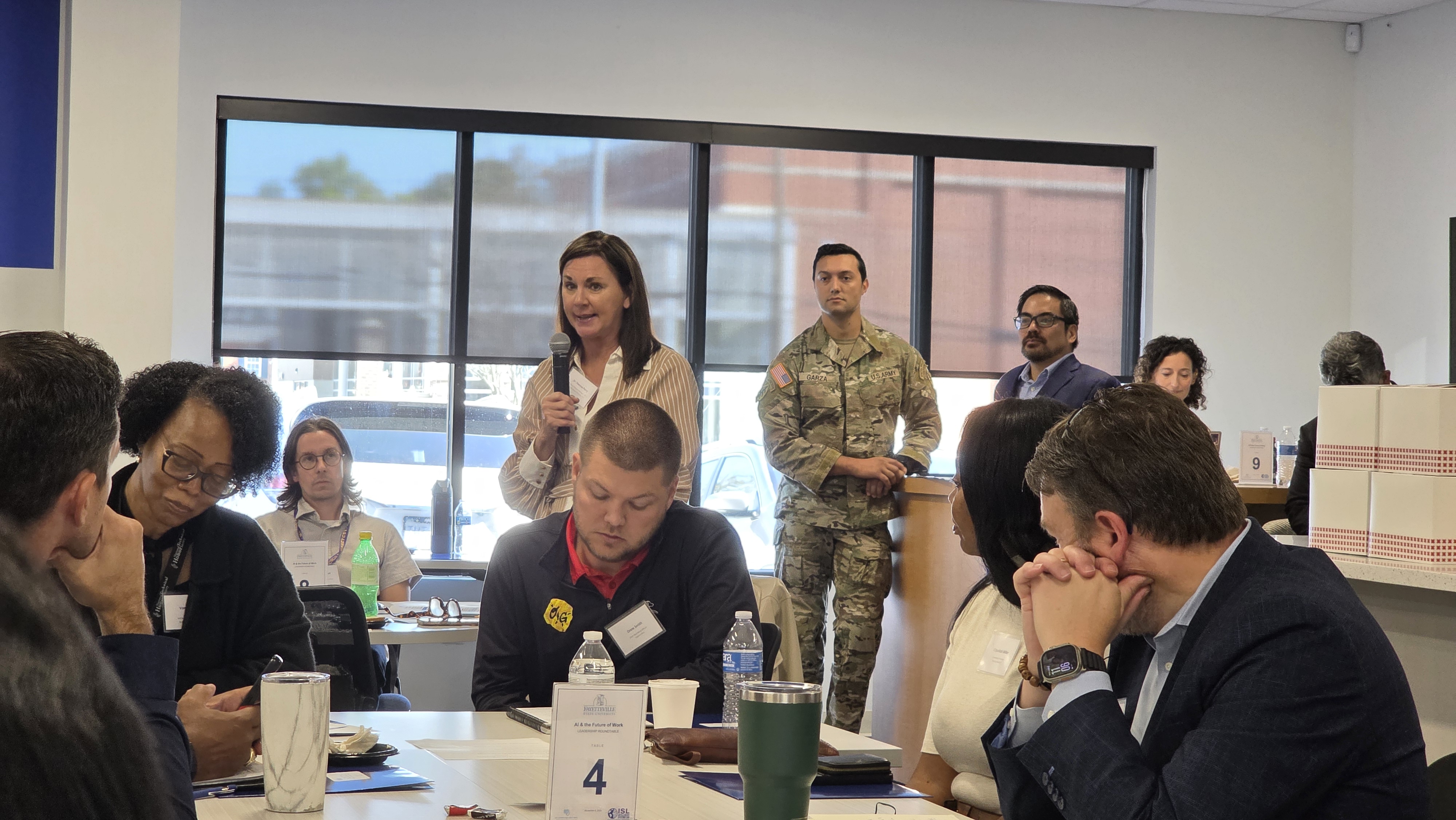
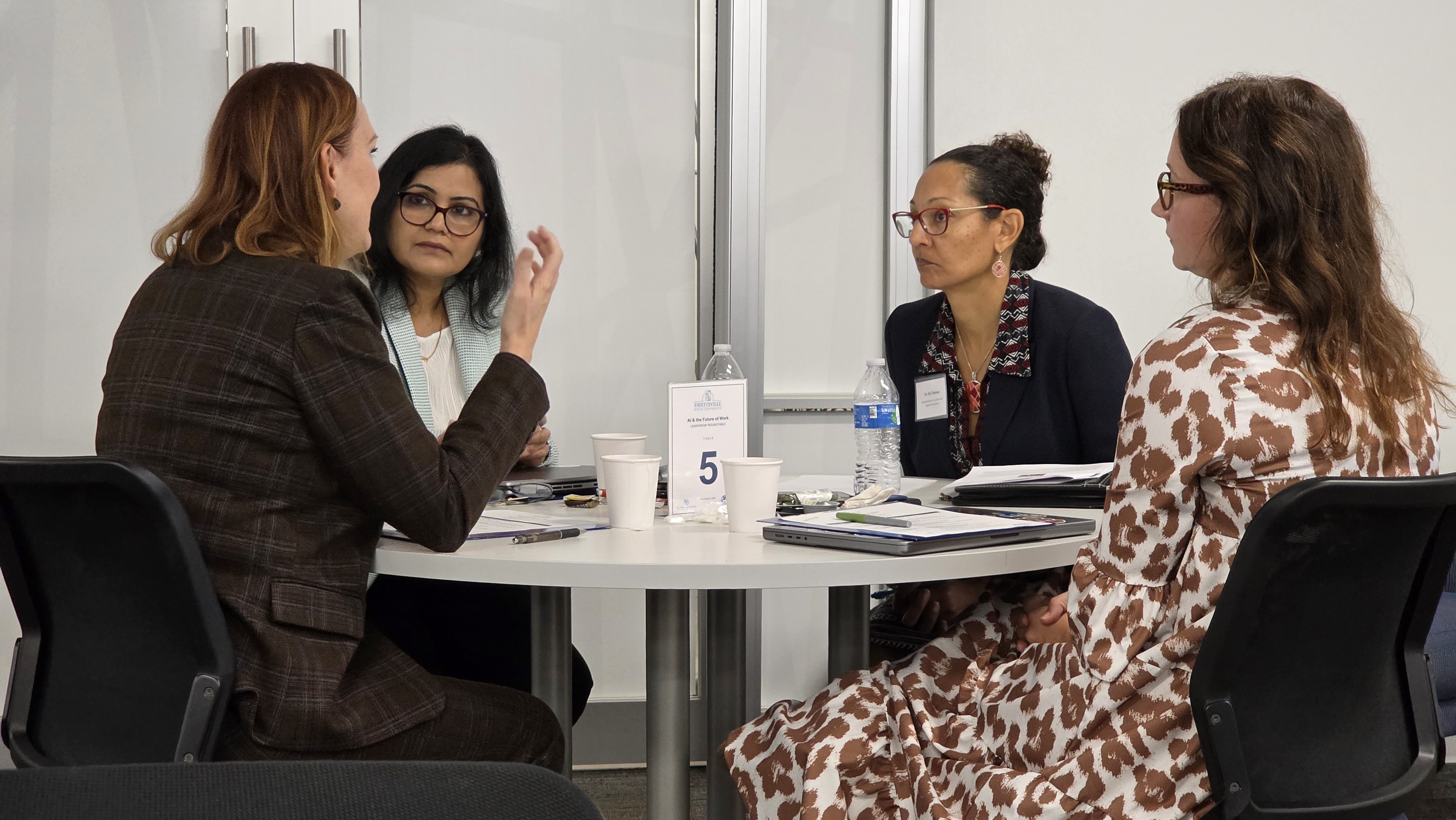
The “AI and the Future of Work Leadership Roundtable” event brought together voices from across industries for a constructive and collaborative conversation exploring how AI is reshaping the workforce, creating new opportunities and challenges and sharing what businesses and communities can do today to prepare for tomorrow.
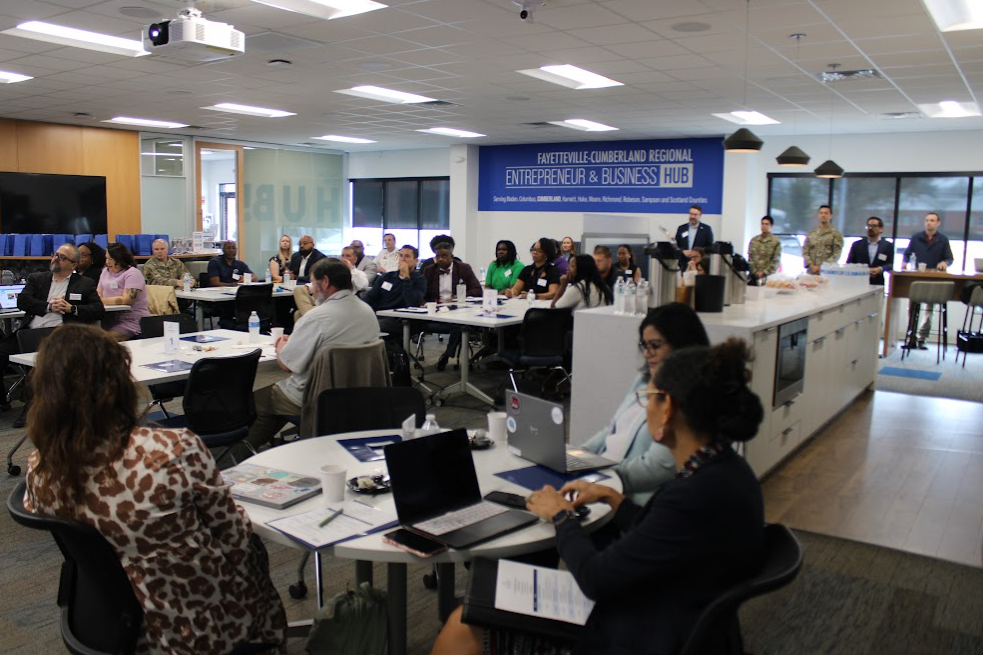
Taking place on Wednesday, Nov. 4,the event was a collaborative effort as it was an initiative of AI Learning Central in collaboration with IBM and hosted by the FSU Intelligent Systems Lab, held at the Fayetteville-Cumberland Regional Entrepreneur & Business HUB.

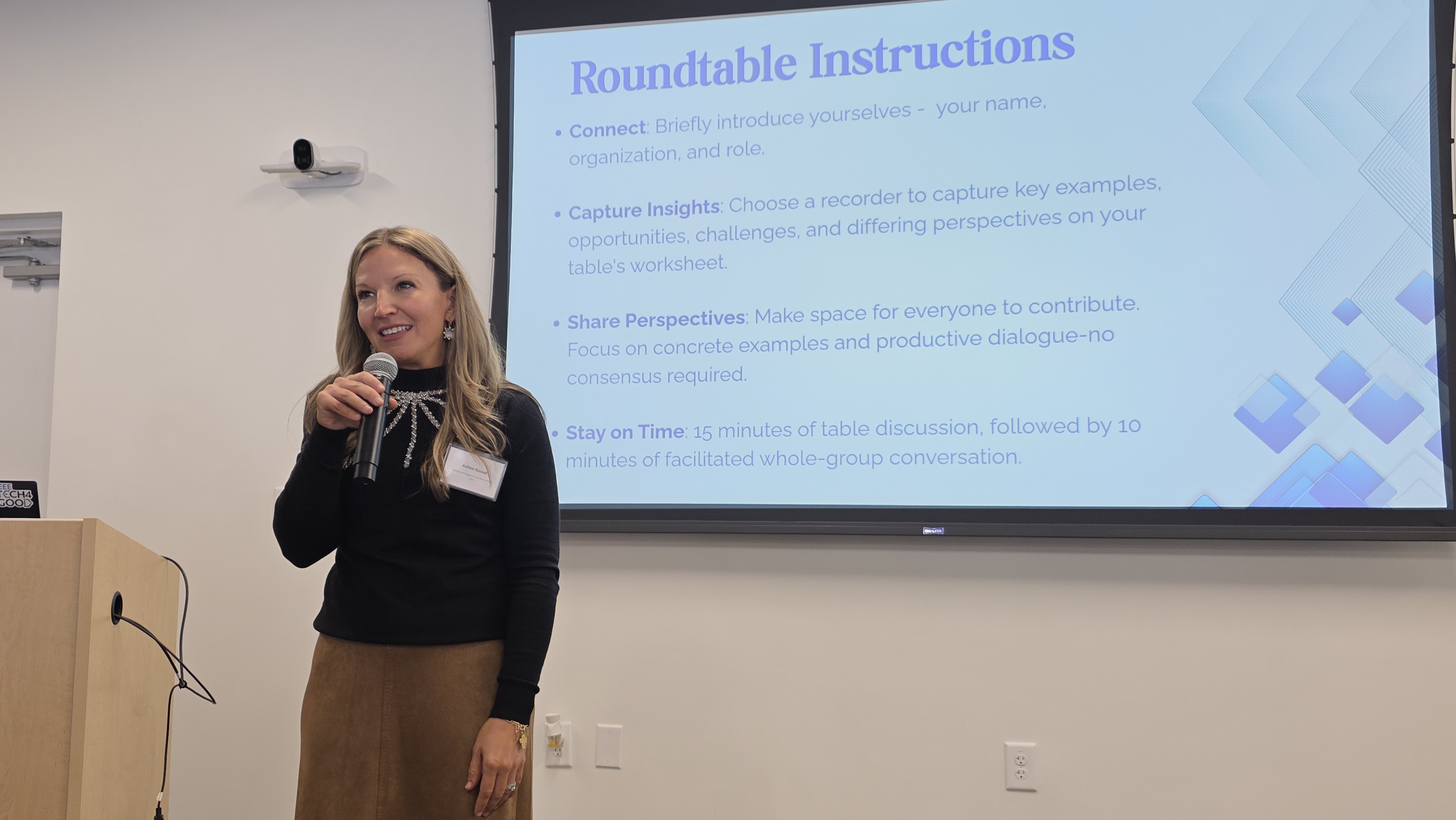
Organizer and Mistress of Ceremonies Ashlee Russell, director of Programs and Partnerships and chief learning consultant of AI Learning Central shared that her main goal was to bring people together to have a productive cross-sector conversation about AI and emerging technologies.
“Today I felt incredibly inspired by the conversations and the willingness of leaders across education, business, public service and the military to learn from one another. It was especially valuable to hear what’s already happening across our region, where AI is creating opportunities, and the challenges different sectors are navigating. As we explored what the future of work may look like, one theme stood out: preparing our current and future workforce for what’s ahead requires more than technical skills,” shared Russell.
Guests were able to hear from FSU ISL Director, Dr. Sambit Bhattacharya who was able to share a bit about how the ISL is helping Artificial Intelligence meet real-world use.
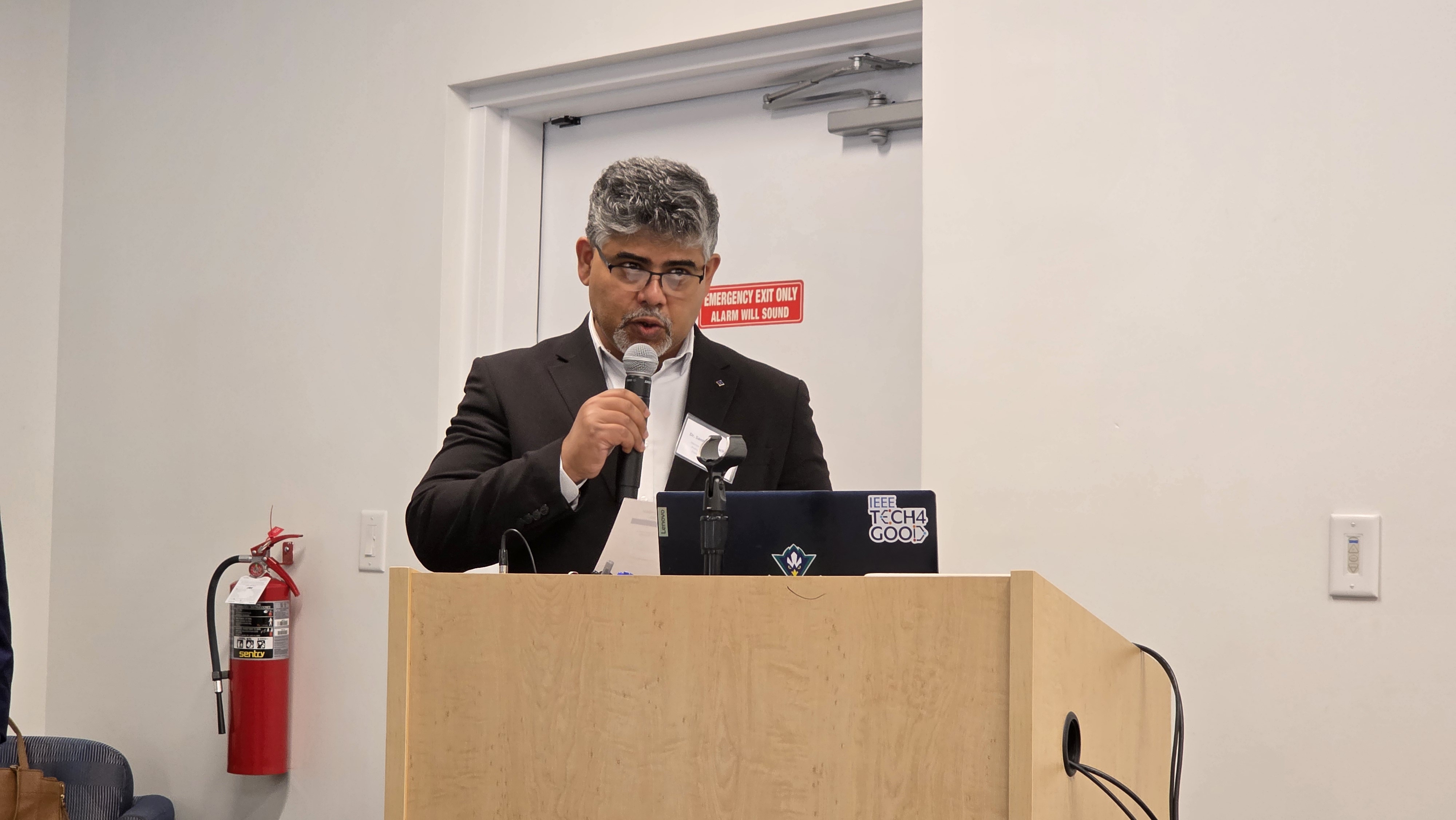
“What takes place in my laboratory is hands-on research in applied AI, and some amount of it also has to do with cybersecurity. In fact, a special form of cybersecurity called industrial control systems. So I invite any conversation you want to have after this meeting, if you want to collaborate or if you want to learn more about the research program,” shared Bhattacharya.
IBM, a company that brings together software, consulting and infrastructure to help clients solve business challenges, also provided subject matter experts in the areas of engineering and future-ready learning.
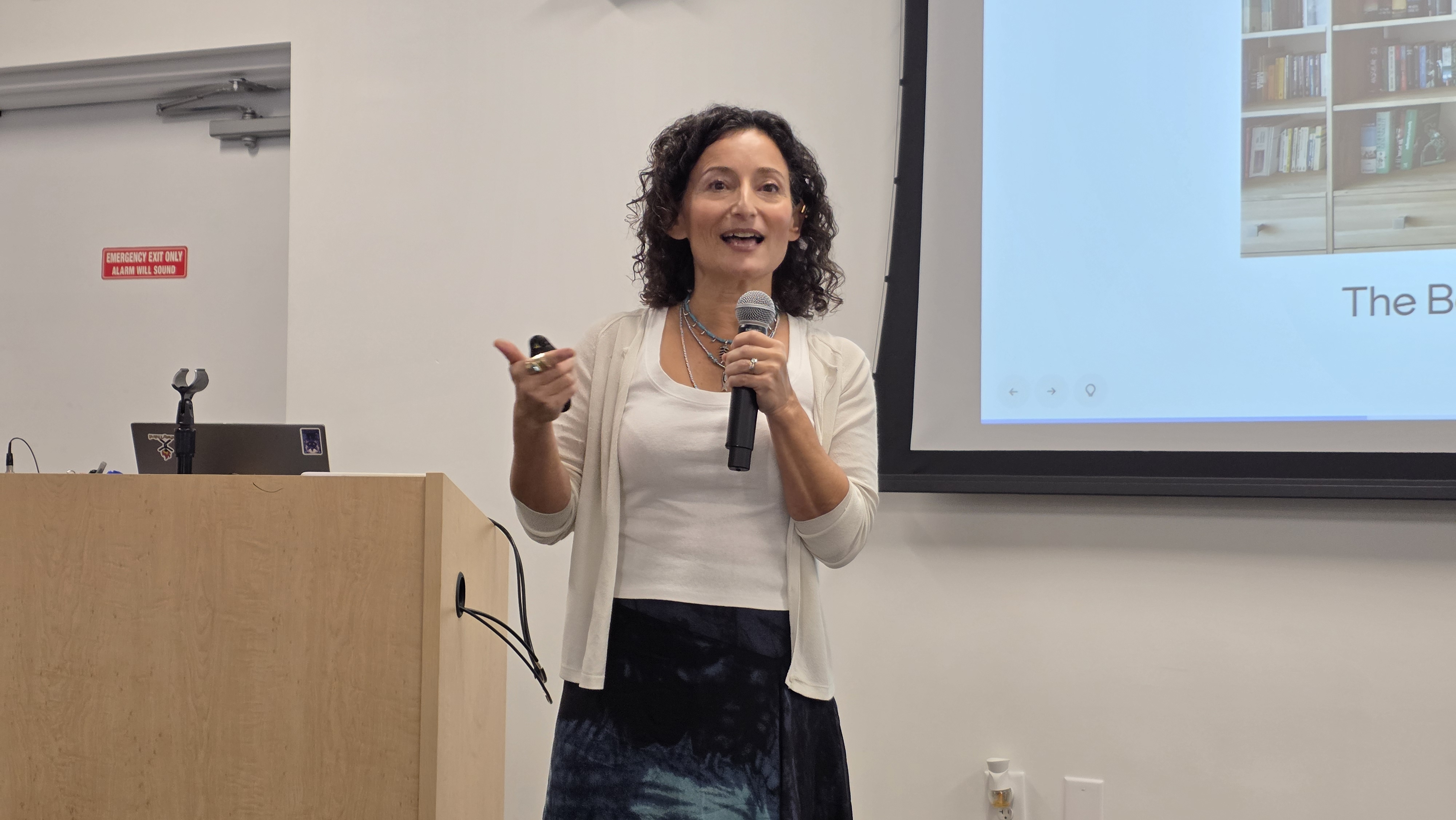
Phaedra Boinodiris, IBM’s Consulting’s Global Leader for Trustworthy AI delivered the keynote perspective. Her interactive presentation “AI for the Rest of Us” touched on the different types of AI, where utilization of it can go wrong, the different types of processing capabilities provided by AI models and more.
“I do believe that our destiny and our fates are not predetermined, and in fact, the more literate we are on this subject, the more understanding we are, the far more agency we will have,” said Boinodiris speaking of AI. “We need to be talking about this way differently than we have been. We need to be teaching this differently. We need to be rethinking where we teach this, when we teach this and how we teach this. I don’t think this should be restricted just in schools of computer science and engineering anymore. I think we need to have this truly be multidisciplinary in higher ed, but also bring this earlier and earlier in people’s academic careers.”
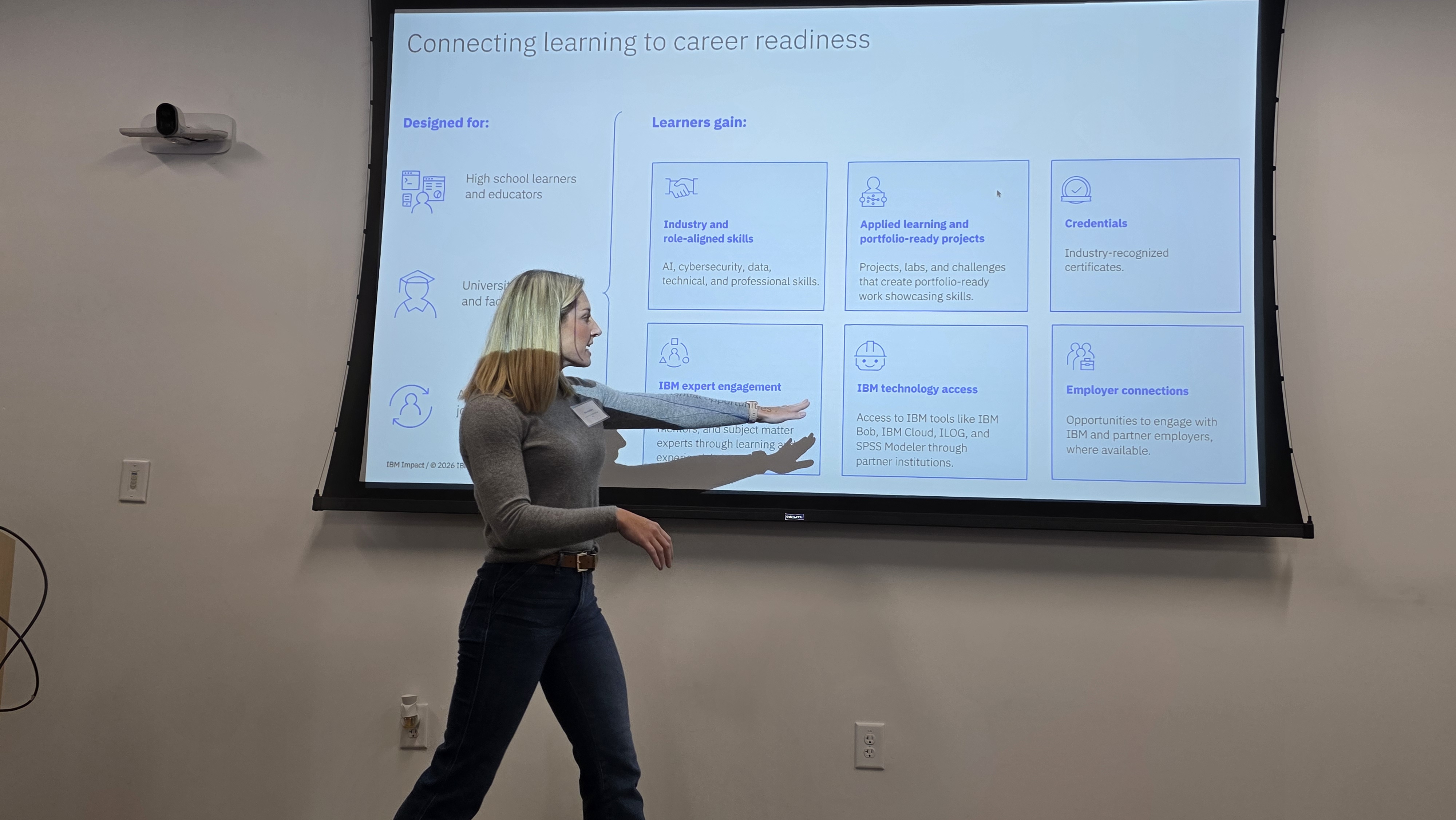
Other speakers included Michael Martine, director of Asset Engineering for IBM Consulting and Kiki Huckaby, corporate responsibility manager for IBM.
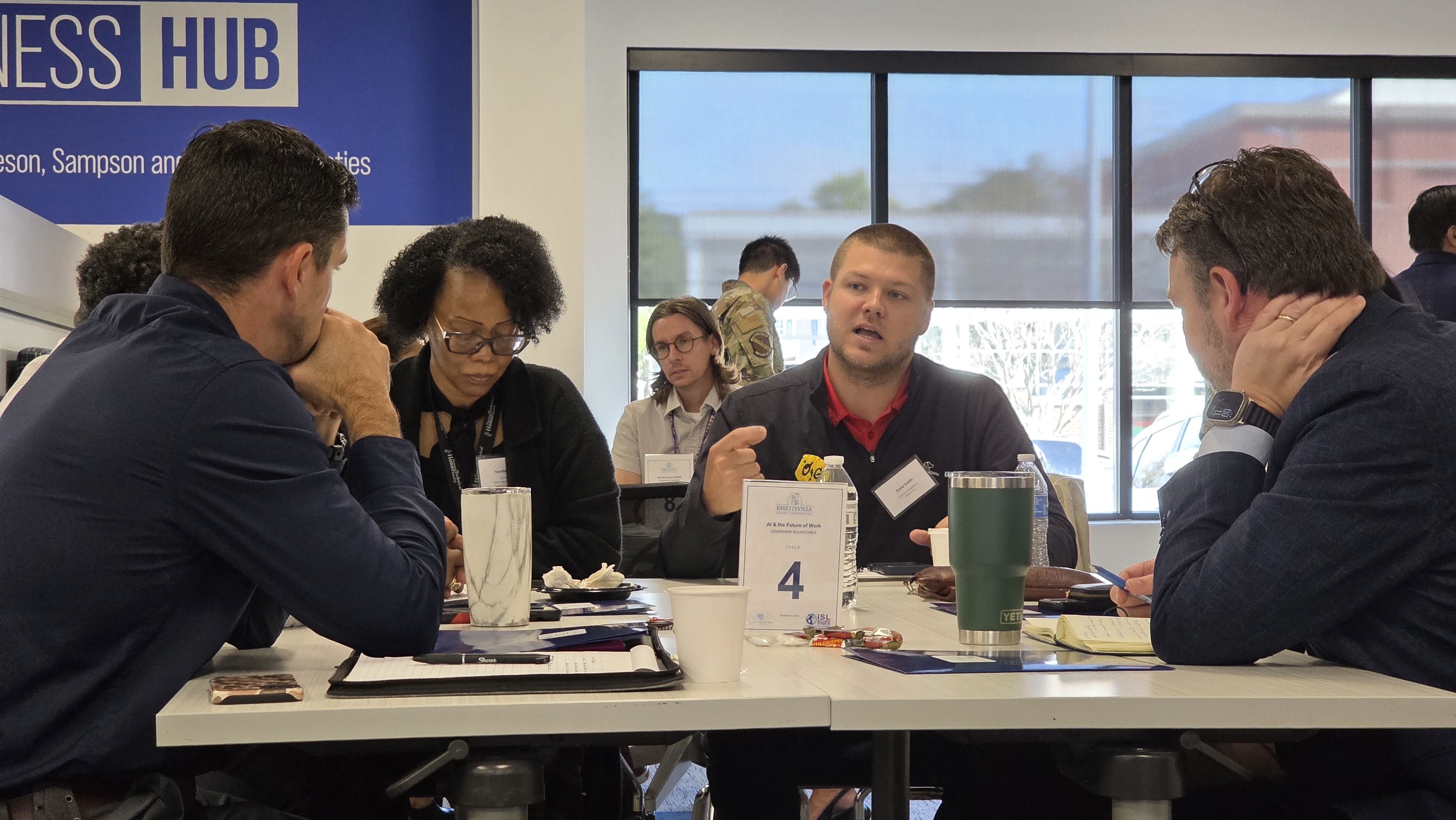
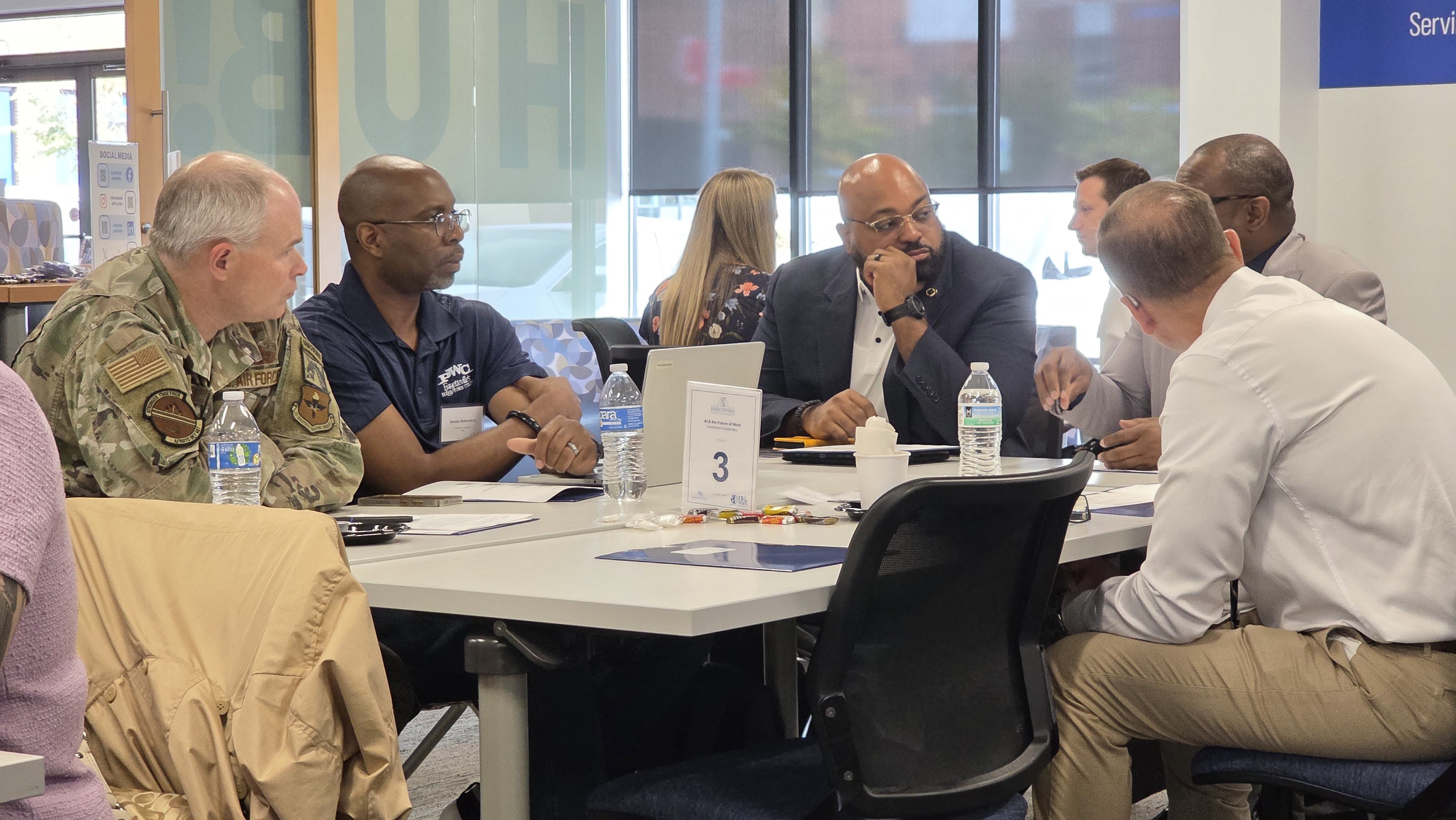
Between speakers, guests were invited to speak with each other and the room about their experiences and challenges with AI in their fields or in their daily life, and what impact it has on them, their communities and society as a whole.
“Creativity, critical thinking, problem-solving, ethical judgment, and responsible decision-making are equally essential. I’m so grateful to everyone who contributed their perspectives, and especially to our colleagues at IBM, Booz Allen Hamilton, and Fayetteville State University’s Intelligent Systems Lab for sharing their expertise. My hope is that these conversations will help us better understand the changes ahead and make more thoughtful, informed decisions for our region,” shared Russell.
Building on the conversations initiated at the roundtable, AI Learning Central will launch a series of AI leadership and professional learning cohorts beginning in January 2027, in collaboration with IBM and Fayetteville State University’s Intelligent Systems Lab. Designed for nontechnical professionals and leaders across education, industry and other sectors, the cohorts will provide opportunities to build AI literacy, explore responsible adoption and better understand how AI is transforming work. Enrollment remains open for interested participants and organizations.