

Original Coverage & Source Attribution: knews.kathimerini.com.cy
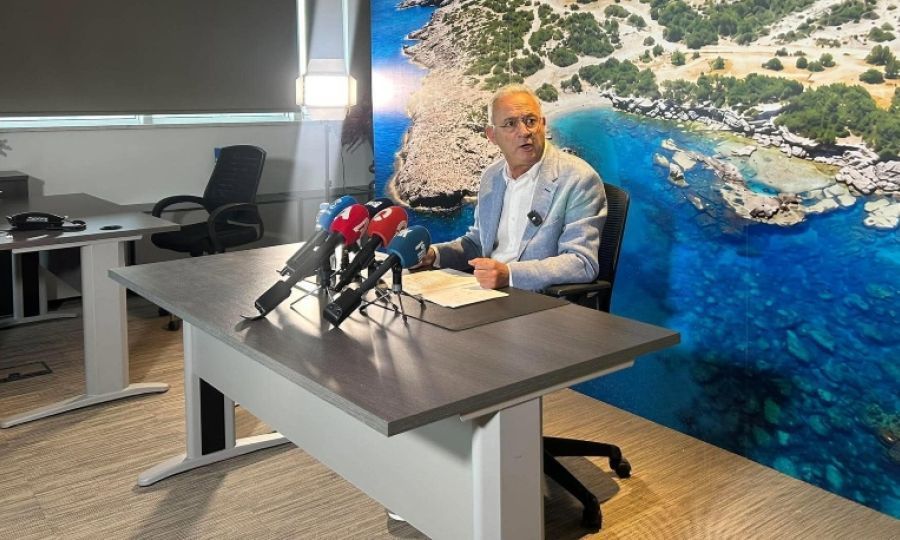
Averof Neofytou’s call to lift energy sanctions against Russia was hardly the bolt from the blue it was made out to be in Cyprus. Similar ideas have repeatedly been hinted at in European circles over the past 12 months. But the positions voiced within the EU have been more guarded and less clumsily expressed than those of the former DISY leader. Crucially, none calls for sanctions to be lifted before talks with Vladimir Putin’s government begin and the Russian leader’s intentions become clearer.
Several leaders, including French President Emmanuel Macron, Italian Prime Minister Giorgia Meloni and Belgian Prime Minister Bart De Wever, have supported opening a channel of communication with Moscow. European Council President António Costa, meanwhile, entered preliminary discussions with Russia through his aides last spring. The European Commission is keeping that possibility alive, while stressing that “we still have some way to go” before talks with the Russian government become possible.
Neofytou’s proposal was, to some extent, a calculated move: Several European leaders had long since raised the prospect of normalizing relations with Russia.
Unlike Neofytou, however, none of those leaders has called for the lifting of energy sanctions against Russia. It is effectively understood that, if the EU regains access to cheap Russian energy, those sanctions would necessarily fall away. Yet no one wants to bear the political cost of committing in advance to lifting them before a dialogue has even begun.
This is particularly true given the fierce objections of the Baltic countries and some former Eastern bloc states. They are pulling in precisely the opposite direction and have so far led the push to maintain sanctions against Putin’s government. That position has been relatively easy to sustain, given Moscow’s continuing invasion and occupation of Ukrainian territory, as well as Putin’s hybrid threats and attacks against EU member states.
It is worth noting that all EU leaders have their domestic audiences in mind when taking a position for or against opening talks with Moscow. Neofytou evidently followed the same approach, seeking to court AKEL and the broader left ahead of the 2028 presidential election. He may consider it a foregone conclusion that he will secure DISY’s nomination — or that, in any event, he will run for the presidency.
Although his position echoes the thinking of several EU leaders, it is doubtful whether the move has helped or hurt him politically. For one thing, most Cypriots are not sufficiently informed about other member states’ positions and are therefore unaware of the discussions taking place. For another, his proposal was neither properly substantiated nor carefully presented. It also failed to take account of the timing or the balance of power within the EU.
What the EU is discussing
On March 14, 2026, one of the EU’s more candid politicians, Belgian Prime Minister Bart De Wever, put forward a proposal that was already being discussed largely behind closed doors, but which no one had dared to articulate clearly in public. He proposed normalizing relations with Moscow so the EU could regain access to cheap Russian energy.
What drew the most attention, however, was his statement to the Belgian newspaper L’Echo that other EU leaders shared his view but were afraid to say so publicly.
“Privately, European leaders tell me I am right, but no one dares to say it in public,” he said.
Earlier, in October 2025, Macron had taken a more restrained position, seen as a precursor to De Wever’s subsequent remarks. The French president said it would be useful to establish a channel of communication between the EU and Putin, without mentioning access to cheaper energy as the objective.
Meloni backed Macron. On Jan. 9, 2026, she not only said she agreed with him but also proposed appointing a special EU envoy to conduct talks with Putin.
EU foreign policy chief Kaja Kallas also entered the debate, putting herself forward as someone who could speak to Moscow because, she argued, she knew how to avoid Putin’s traps.
In reality, Kallas, the Baltic countries and some former Eastern bloc states wanted to put the brakes on any move toward dialogue with Russia. Their strong objections prompted an interesting response from the Commission, which left the door open to talks while judging that the conditions were not yet right.
“We are not there yet,” a Commission spokesperson said.
Discussions nevertheless continued behind the scenes. De Wever exposed the private views of most EU leaders on March 14, before Costa took up the issue in May, referring to efforts to explore the possibility of dialogue with Moscow.
Putin seized on this, suggesting former German Chancellor Gerhard Schröder as a possible EU interlocutor. The EU responded that it would decide for itself whether to appoint someone and whom to choose. Kallas, meanwhile, sought to dismiss Putin’s suggestion, arguing that Schröder promoted Russia’s interests.
Costa nevertheless proceeded, through his aides, with preliminary consultations with Moscow to explore opening a channel of communication. This became known at the June 18–19 EU summit.
The European Council president then found himself under fire, with the overwhelming majority of leaders taking the view that he had acted without a mandate. And the truth is that he had never secured one.
Questions over the timing
Neofytou’s timing is particularly puzzling. He called on President Nikos Christodoulides to press the next EU summit to reconsider and lift European sanctions against Russia.
Such a proposal might have been made last spring, while the debate was gathering momentum, or in the summer, when Costa’s preliminary efforts to open a channel with Moscow became public.
Since then, however, relations have deteriorated further, following Russian hybrid attacks against EU member states and reports from the security services of at least two European countries suggesting that Moscow could attempt an attack, at least on a limited scale, on European territory.
Discussions about opening a channel with Moscow will eventually return to the forefront, particularly in light of the Trump-Putin agreement. But Neofytou’s choice of timing evidently overlooked the strongly worded conclusions the EU issued against Moscow on the very day he unveiled his proposal: All 27 member states committed to increasing pressure on Russia.



