

Original Coverage & Source Attribution: www.bastillepost.com
Chinese streaming giant iQIYI has adapted its app for Apple’s foldable iPhone Duo in a move that showcases the Nasdaq-listed company’s drive to keep up with technological developments, said the company’s founder and CEO Gong Yu.
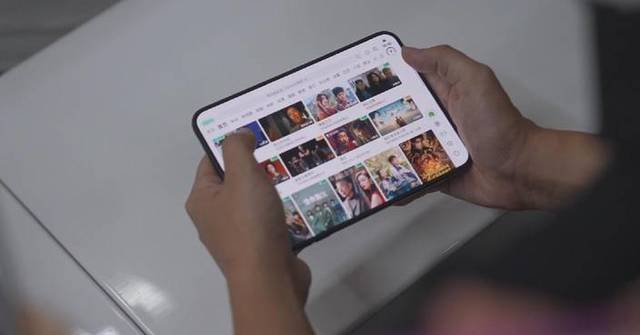
During a visit to iQIYI’s Beijing headquarters in October, Apple Executive Chairman Tim Cook watched company staff demonstrate the iQIYI streaming app on the new iPhone Duo, due to go on sale on Oct 23. The app highlighted a vertical navigation bar for browsing and watching videos, a tent mode for landscape viewing and a laptop mode that places video above the playback controls.
For Gong, adapting the app reflects a broader shift in how people use smartphones as overall entertainment devices, not just for short-form content but for high-quality movies and television shows as well.
“A smartphone is no longer just a communication device. It has increasingly become an entertainment device. As a film and television streaming company, we pay close attention to new technology in devices that people use for both communication and entertainment. The close collaboration between our teams to adapt our app for the iPhone Duo reflects that approach. Our goal is to give users the best possible viewing experience,” he said.
The company is also keeping an eye on tech developments beyond hardware. Gong noted his expectations that AI will help iQIYI adapt content for viewers across language and cultural boundaries.
“AI is also everywhere now, in both hardware and services like ours. For the film and television industry, its biggest impact is that it can lower the barriers to making content and bring down production costs. In particular, it can greatly reduce the cost of overcoming language and cultural barriers. That is a major help for a company like iQIYI as we expand into international markets,” said the CEO.
The work on the Duo is part of a wider effort to adapt iQIYI’s service for different devices, Gong said.
“We place great importance on making our software work well with a range of devices, including Apple’s, so users get the best possible experience. That way, young viewers and people from different countries and ethnic backgrounds can all enjoy high-quality video,” he said.
Returning to AI, he pointed to potential uses for the technology beyond production, including how streaming companies distribute content and earn revenue from it.
“Countries and regions are moving at different speeds when it comes to applying AI. From our perspective, China is among the global leaders in AI. It is also at the forefront of developing business models for streaming services. Strength in both areas gives us a head start in applying AI to film and television production, content distribution and monetization. Innovation in hardware and the use of AI can reinforce each other. Together, they can achieve more than either could alone and unlock greater potential,” he said.
China’s iQIYI streaming service adapts app for iPhone Duo, eyes AI cost cuts
Dubai businesses are optimistic about the future of trade with China as imports expand to include more advanced technologies and products, said Sultan bin Saeed Al Mansoori, chairman of Dubai Chambers.
Mansoori made the remarks on the sidelines of the Dubai Business Forum China, held by Dubai Chambers in Shenzhen, south China’s Guangdong Province, on October 14.
In an interview with China Global Television Network (CGTN), he noted that China’s manufacturing strength and Dubai’s global connections make for a complementary partnership.
“I’m very optimistic, of course, about bilateral trade between our two nations. We always work with a clear plan on how we do that kind of a progress in terms of our bilateral trade, and we identify the areas of trade not only for us as Dubai, but also how Dubai can serve the Middle East market, the African market, central Asia market, and even European markets, because everyone feels comfortable to do business there,” he said.
“And this is where the importance of China as an industrial nation, as an export nation, is actually exporting a lot of products to us in Dubai and from us. We are actually re-exporting it, maybe almost 40 percent of what comes to Dubai from Chinese products is actually re-exported to this market because we know the markets, we have the connection, we have the history with it. So this combination of partnership between us and China is really working very well for both sides,” he said.
In 2025, bilateral trade between the UAE and China reached 108 billion U.S. dollars, making the UAE China’s largest export market and second-largest trading partner in the Middle East. Chinese exports totaled over 72 billion dollars, while imports from the UAE amounted to 35 billion dollars. China’s direct investment in the UAE reached 2.6 billion dollars last year, official statistics show.
The growing business presence of Chinese firms is increasingly visible in Dubai. The number of active Chinese member companies registered with Dubai Chambers has more than doubled since 2016, reaching 6,650 by the end of September.
Mansoori also highlighted the expanding scope of bilateral trade, particularly in new energy and advanced mobility.
“The types of products, the portfolio of the products, we are now moving into more and more of areas such as green energy, solar cells manufacturing and export. We are looking at automobiles and basically driverless automobiles, that has been quite expanding in Dubai. We have about 65,000 now automobiles which are actually mainly most of them actually imported from China. 85 percent of these are actually imported from China. And mobility is beginning to be more and more technological, more advanced. And China has been going in this in more advancement than other nations. So I expect, for example, these kinds of vehicles will be expanded and this technology expanded not only to the private sector, but also going to be into buses, into other areas,” he said.
Furthermore, Dubai and China see expanding opportunities for cooperation across aviation, mobility, renewable energy, and food security, said Mansoori.
He also highlighted potential partnerships in research and development for solar and hydrogen energy, as well as plans to establish manufacturing bases in Dubai, combining Chinese expertise and technology with Dubai’s market access. This, he said, will create more tradable products and strengthen the two sides’ global competitiveness as partners.
Dubai Chambers Chairman upbeat on China-Dubai trade ties



