

Original Coverage & Source Attribution: whysoblu.com
November 12th, 2026 by Jordan Grout
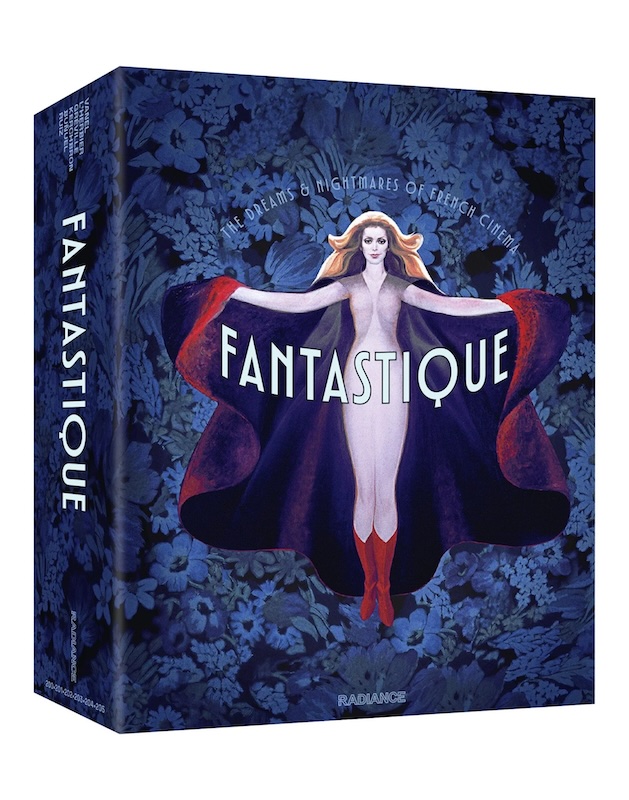
Though rarely thought of as a home for genre filmmaking, France has fostered a long lineage of films treading the line between realism and fantasy. Broadly gathered under the term cinéma fantastique, these works often find the magical and the surreal lurking in the ordinary. Uncanny dreams, fleeting visions, or eerie apparitions lift their protagonists out of the everyday, transporting viewers into atmospheric worlds where the usual rules structuring our reality do not appear to hold. Formally striking and thematically stimulating, these phantasmagorical films blur the boundary between horror and wonder as they weave beguiling tales around the mysterious and the unexplained.
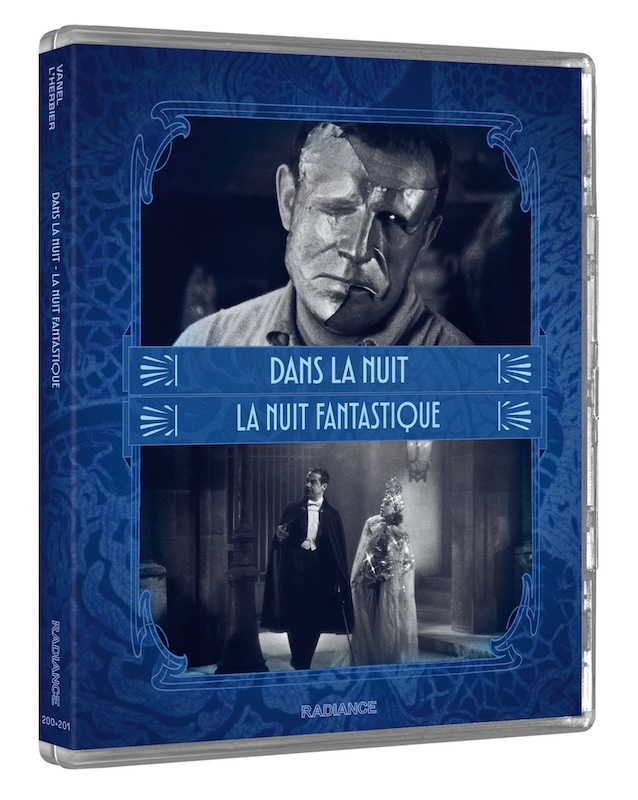
Dans la nuit (1930)
Film ★★★☆☆
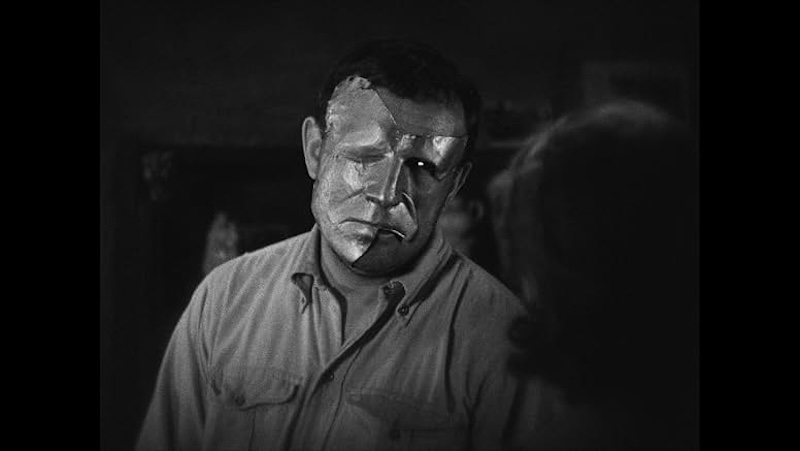
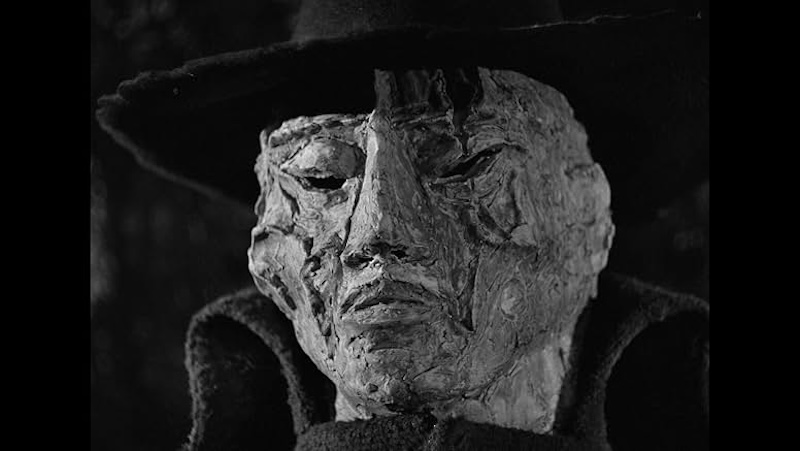
Charles Vanel’s only feature-length directing effort starts out pleasantly enough as a romance before switching gears. A quarry worker (Vanel) marries his sweetheart (Sandra Milovanoff). That happiness disappears when an explosion at the quarry leaves the husband horribly disfigured, forcing him to wear a metal mask, resulting in his wife’s growing discomfort which drives her toward another man.
The bright, lively opening gives way to increasingly oppressive interiors, heavy shadows, and moments of genuine cruelty. The husband’s mask is effectively unsettling, due to how little Vanel shows off the face underneath.
Completed in 1929 and released the following year, Dans la nuit arrived just as sound was taking over French theaters. Its disappearance is particularly unfortunate because Vanel shows promise. The opening sequences demonstrate impressive command of camera movement and editing, particularly the shots involving carnival rides and the workers at the quarry. Once the marriage deteriorates, he slows things down, allowing uncomfortable looks and small gestures to carry much of the drama.
There’s influence from the French Impressionist movement, but Vanel adds his own touch. The husband’s suffering is terrible, but his growing bitterness becomes frightening, while the wife’s desire to escape her miserable situation doesn’t excuse her behavior.
There’s a serious miscalculation with the ending, which abruptly undercuts much of the preceding tragedy. That conclusion was imposed by the producer over censorship concerns, so Vanel wasn’t entirely responsible for it. Even with that unfortunate compromise, this is an accomplished film, and it’s disappointing that Vanel never got another opportunity to direct a feature.
Video ★★★★☆
Encoding: MPEG-4 AVC
Resolution: 1080p
Aspect Ratio: 1.33:1
Clarity/Detail: There’s impressive definition to the quarry machinery, clothing, and the rough surface of the husband’s mask. Some fluctuations remain, but the film looks remarkably good.
Depth: Outdoor photography has a convincing sense of space, particularly during the wedding celebrations and scenes around the quarry.
Black Levels: Dark interiors have convincing contrast, with the mask and surrounding faces frequently emerging from heavy shadows without losing definition.
Color Reproduction: The black-and-white photography features a broad range of grays with clean highlights.
Flesh Tones: Faces retain natural gradations.
Noise/Artifacts: Fine grain remains visible throughout. A few passages exhibit deterioration in the surviving film elements, but it’s an overall great restoration.

Audio ★★★★☆
Audio Format(s): LPCM 2.0 Stereo
Subtitles: English
Dynamics: Louis Sclavis’s score has a pleasing range, moving from the lively wedding celebrations to the more ominous passages following the accident.
Height: N/A
Low Frequency Extension: N/A
Surround Sound Presentation: N/A
Dialogue Reproduction: As a silent film, there’s no recorded dialogue. The musical accompaniment maintains good instrumental clarity.
Extras ★★★☆☆
Introduction by Thierry Frémaux (9:35): The Institut Lumière director discusses Vanel’s filmmaking ambitions, the movie’s unfortunate release, and its eventual rediscovery.
Audio Commentary by Pamela Hutchinson: Hutchinson examines Vanel’s visual approach, the contrast between the film’s industrial and rural settings, and the troubled history of its ending.

La Nuit fantastique (1942)
Film ★★★☆☆
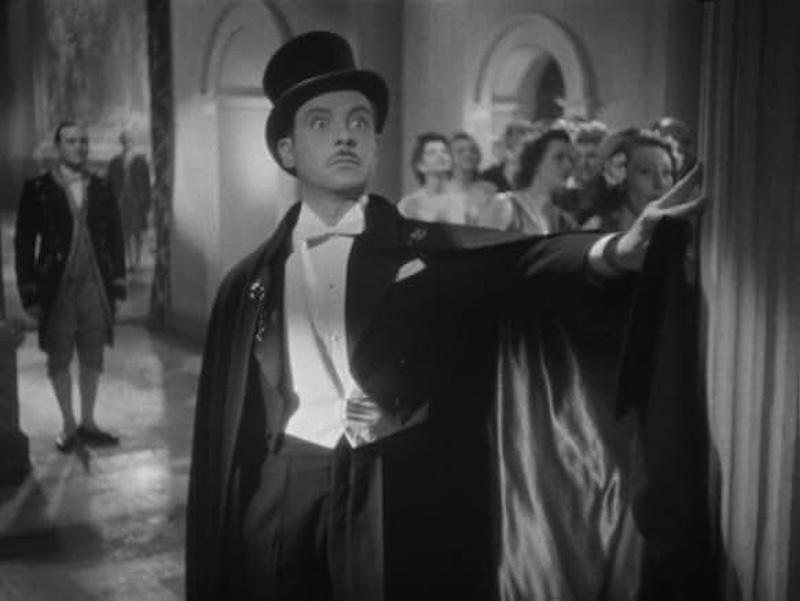
Denis (Fernand Gravey) is a philosophy student who works nights at a Parisian produce market and spends much of his time falling asleep. His dreams are dominated by Irène (Micheline Presle), a beautiful young woman dressed in white whom he eventually encounters while awake. At least, he thinks he’s awake. Following her leads to a bizarre series of adventures involving a magician, an asylum, an unwanted marriage, and a collection of peculiar characters who seem perfectly comfortable with everything happening around them.
Irène has problems beyond the young man pursuing her. Professor Thalès (Saturnin Fabre), whom she believes to be her father, has squandered her inheritance and is attempting to marry her off before she discovers the truth.
Director Marcel L’Herbier has fun with the situation, filling the film with visual tricks, elaborate sets, and absurd encounters. Gravey makes an amusingly bewildered leading man, although Presle is considerably more interesting. She’s resourceful, independent, and often several steps ahead of Denis, who seems to spend much of the movie wondering what he’s gotten himself into.
Made during the German occupation of France, La Nuit fantastique offered audiences an escape from circumstances that were considerably less amusing. L’Herbier embraces the fantastic with elaborate optical effects and theatrical compositions that might recall Georges Méliès. The results are often delightful, although the film sometimes gets carried away with its own eccentricity.
Henri Jeanson’s dialogue is witty but occasionally exhausting, and several sequences go on well past the point where they’ve made their joke. The more interesting material concerns Irène’s efforts to free herself from Thalès, whose attempts to control her future give the otherwise playful story a darker purpose.
The film received major critical recognition in 1942 but had a less enthusiastic response from ordinary moviegoers. L’Herbier’s imagination is more compelling than his storytelling, and narrative detours become tiresome.
Video ★★★★☆
Encoding: MPEG-4 AVC
Resolution: 1080p
Aspect Ratio: 1.37:1
Clarity/Detail: Fine patterns in clothing, interior furnishings, and facial close-ups are reproduced well. Some elaborate optical effects appear softer, but that’s consistent with original photography.
Depth: L’Herbier’s theatrical sets have a pleasing sense of dimension.
Black Levels: Contrast remains generally strong, with the darker sequences retaining enough separation to distinguish foreground subjects from their surroundings.
Color Reproduction: The monochrome photography has an attractive silvery appearance, with delicate highlights that complement the film’s fantasy elements.
Flesh Tones: Faces appear naturally rendered.
Noise/Artifacts: Grain becomes more pronounced during optical effects, and occasional scratches and minor brightness fluctuations remain. The overall presentation is otherwise clean.

Audio ★★★★☆
Audio Format(s): French LPCM Mono (24-bit)
Subtitles: Optional English
Dynamics: Maurice Thiriet’s music has great presence, although the overall range remains appropriately restrained.
Height: N/A
Low Frequency Extension: N/A
Surround Sound Presentation: N/A
Dialogue Reproduction: Voices are generally intelligible, and music fares particularly well.
Extras ★★★☆☆
Interview with Ginette Vincendeau (23:50): Vincendeau examines the film’s production during the German occupation and the challenges facing French filmmakers during the war.
Archival Interview with Marcel L’Herbier (12:28): In this 1971 television appearance, the director discusses the film, his artistic influences, and the circumstances surrounding its creation.

Le Diable souffle (1947)
Film ★★★☆☆
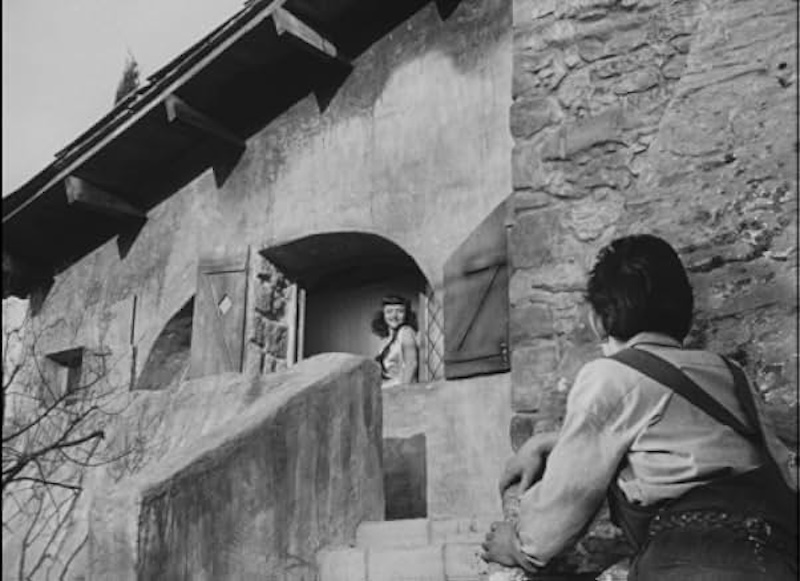
Edmond T. Gréville’s Le Diable souffle makes a familiar romantic triangle considerably more interesting by trapping everyone on an island where the weather is as unpleasant as the people.
Laurent (Charles Vanel) lives near the French-Spanish border and brings home Louvaine (Héléna Bossis), a troubled young pianist he hopes to marry. Their relationship is already strained when Diego (Jean Chevrier), a Spanish Republican fleeing Franco’s regime, arrives seeking refuge. Diego is also a doctor, and when Louvaine develops appendicitis, he’s forced to operate on her while violent storms cut the island off from the mainland.
Saving her life complicates an already uncomfortable arrangement, particularly as she begins developing feelings for him. Gréville makes good use of the isolated setting, with howling winds, heavy rain, and rising water gradually closing in on the characters. Henri Alekan’s black-and-white photography is particularly impressive. The interiors are filled with oppressive shadows, while the exterior scenes make the landscape hostile.
Set in 1937, the film brings the political consequences of the Spanish Civil War into what might otherwise have been an ordinary melodrama. Vanel handles Laurent’s growing desperation beautifully, conveying a lonely man whose affection gradually turns into possessiveness.
Unfortunately, the other performances aren’t nearly as convincing. Bossis sometimes pushes Louvaine’s emotional turmoil too far, while Chevrier fails to give Diego much personality. What makes the film interesting is his willingness to interrupt the drama with something unexpected.
The ending doesn’t fully earn the emotional resolution Gréville seems to want, but the direction is often terrific.
Video ★★★★☆
Encoding: MPEG-4 AVC
Resolution: 1080p
Aspect Ratio: 1.37:1
Clarity/Detail: Henri Alekan’s photography benefits from strong definition in clothing, weathered interiors, and architectural details. Some close-ups appear softer, but that’s due to the photographic techniques and surviving elements.
Depth: The island’s landscape have nice separation, while the enclosed interiors deliberately have a claustrophobic appearance.
Black Levels: Deep shadows are a major strength, particularly during the storm sequences and dramatic close-ups.
Color Reproduction: The black-and-white image features strong contrast.
Flesh Tones: Facial shading is well maintained, even when Alekan allows much of a character’s face to disappear into darkness.
Noise/Artifacts: Grain is somewhat coarse, and the source exhibits occasional wear.
Audio ★★★★☆
Audio Format(s): French LPCM Mono
Subtitles: English
Dynamics: The persistent winds and violent weather give the soundtrack energy, although the original recording limits its dynamic range.
Height: No dedicated overhead information.
Low Frequency Extension: N/A
Surround Sound Presentation: N/A
Dialogue Reproduction: Conversations remain generally intelligible.
Extras ★★★☆☆
Audio Commentary by Elena and Manuela Lazic: The critics discuss Gréville’s direction, the film’s psychological tensions, and the circumstances surrounding its production.
Interview with David Thompson (22:02): Thompson examines Gréville’s international career and his recurring fascination with sexuality, desire, and unconventional relationships.

The Golem (1967)
Film ★★☆☆☆
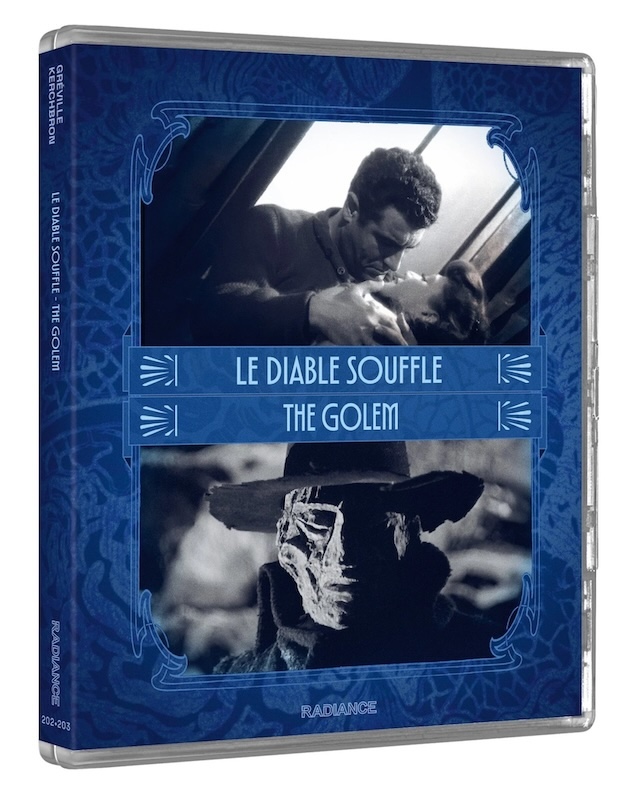
Jean Kerchbron’s The Golem has little interest in giving audiences the titular monster. Based on Gustav Meyrink’s 1915 novel, this French television production follows a man who accidentally exchanges hats with a stranger and finds himself experiencing the life of Athanase Pernath (André Reybaz), a gem engraver living in Prague’s Jewish quarter. His new existence involves a series of peculiar encounters, troubled relationships, and increasingly disturbing experiences that may be dreams, memories, or something else entirely.
Rumors circulate about the Golem, a mysterious figure said to return every thirty-three years, although the creature itself has surprisingly little to do with the story.
Unlike Paul Wegener and Carl Boese’s 1920 film The Golem: How He Came into the World, Kerchbron’s adaptation is concerned with Jewish mysticism, spiritual uncertainty, and the instability of personal identity. The two films approach the same legendary figure from entirely different directions. Kerchbron also had a personal connection to the material’s cultural background, having come from a Jewish family with Eastern European roots and survived imprisonment at Drancy during World War II. His treatment of the mystical elements is serious, although that doesn’t necessarily make them easier to understand.
Some of the dialogue is painfully dense, the pacing drags, and the story occasionally becomes so preoccupied with its own mysteries that the characters disappear beneath them.
Video ★★★★☆
Encoding: MPEG-4 AVC
Resolution: 1080p
Aspect Ratio: 1.37:1
Clarity/Detail: The restored 35mm photography reveals exceptional detail in facial close-ups, elaborate costumes, and intricate production design.
Depth: Enormous sets, narrow passageways, and strange compositions create an impressive sense of dimension.
Black Levels: Blacks are rich, with separation between shadowed figures and surrounding darkness.
Color Reproduction: The monochrome photography offers striking grayscale reproduction, moving comfortably between intensely dark interiors and bright exterior imagery.
Flesh Tones: Facial textures and subtle changes in lighting are well preserved.
Noise/Artifacts: Fine grain appears consistent throughout, with little visible damage or evidence of aggressive digital manipulation.
Audio ★★★★☆
Audio Format(s): French LPCM Mono
Subtitles: English
Dynamics: The restrained soundtrack makes effective use of music and unusual sound effects without overwhelming dialogue.
Height: N/A
Low Frequency Extension: N/A
Surround Sound Presentation: N/A
Dialogue Reproduction: Voices are consistently clear.
Extras ★★★☆☆
New interview with Kim Newman on The Golem and Gustav Meyrink’s novel: Newman explores Gustav Meyrink’s novel, the origins of the Golem legend, and the different ways filmmakers have approached the material.
Archival TV introduction to The Golem by journalist and writer Louis Pauwels: Originally broadcast in 1967, this introduction provides background on the adaptation’s mystical and philosophical concerns.
The Golem photo gallery: A collection of 26 images associated with the production.
The Woman with Red Boots (1974)
Film ★★☆☆☆
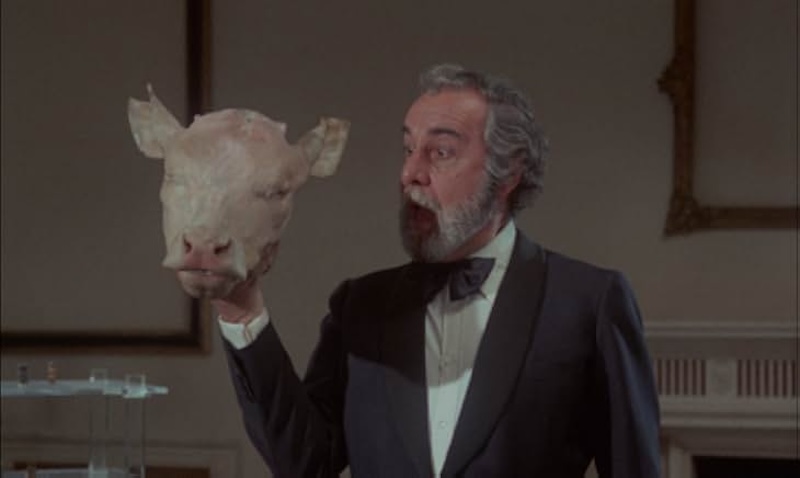
The Woman with Red Boots has an intriguing premise filled with terrific actors, but a frustrating tendency to make very little happen. Françoise (Catherine Deneuve) is a novelist with the unusual ability to make her wishes come true, attracting the attention of Perrot (Fernando Rey), a wealthy art collector who manipulates everyone around him.
He invites her to his country estate, where she becomes involved in an increasingly peculiar arrangement of sexual intrigue, jealousy, and psychological gamesmanship. Her painter boyfriend Richard (Jacques Weber) and an art-world figure named Marc (Adalberto Maria Merli) eventually become part of Perrot’s elaborate attempts to maintain control over the situation.
Françoise, however, isn’t someone he can easily manipulate. Her powers allow her to change ordinary circumstances without warning, sometimes making people or objects disappear between shots or turning a painting into something resembling a doorway.
Much of the film consists of people sitting around discussing their desires, and the psychological games become repetitive long before the story reaches its conclusion. Deneuve remains appropriately mysterious, and Rey is entertaining as a man whose wealth has made him thoroughly unpleasant. But the characters are too distant, the pacing is sluggish, and the film spends far too much time arranging situations that never become especially compelling.
Video ★★★★☆
Encoding: MPEG-4 AVC
Resolution: 1080p
Aspect Ratio: 1.66:1
Clarity/Detail: Fine textures in clothing, furnishings, Fernando Rey’s costumes, and the countryside environments are consistently well reproduced.
Depth: The estate interiors and exterior locations retain convincing dimensionality, with clearly separated foreground and background elements.
Black Levels: Contrast is stable, with satisfying shadow information.
Color Reproduction: It’s a restrained 1970s palette that emphasizes earthy greens and browns, while the various red accents stand out. It doesn’t pop and sometimes can seem on the cooler side, but don’t hold that against this solid transfer.
Flesh Tones: Skin tones remain generally natural.
Noise/Artifacts: Grain is fine and consistent, with no compression artifacts.
Audio ★★★★☆
Audio Format(s): French DTS-HD Master Audio Mono; Italian DTS-HD Master Audio Mono; English DTS-HD Master Audio Mono
Subtitles: English
Dynamics: The three lossless tracks offer a reasonably balanced presentation of dialogue, music, and occasional supernatural effects.
Height: N/A
Low Frequency Extension: N/A
Surround Sound Presentation: N/A
Dialogue Reproduction: Voices are generally clean and intelligible across the language options.
Extras ★★★☆☆
New interview with fashion expert Matteo Augello on The Woman with Red Boots: Augello examines costumes, makeup, and color, particularly in regards to Catherine Deneuve.
New visual essay on The Woman with Red Boots by critic and author Samm Deighan: Samm Deighan places the film within the wider history of fantastic literature and cinema.
Archival interview with Catherine Deneuve on The Woman with Red Boots: In this 1974 television appearance, Deneuve discusses the film and her experiences working with Juan Luis Buñuel.

Three Lives and Only One Death (1996)
Film ★★★★☆
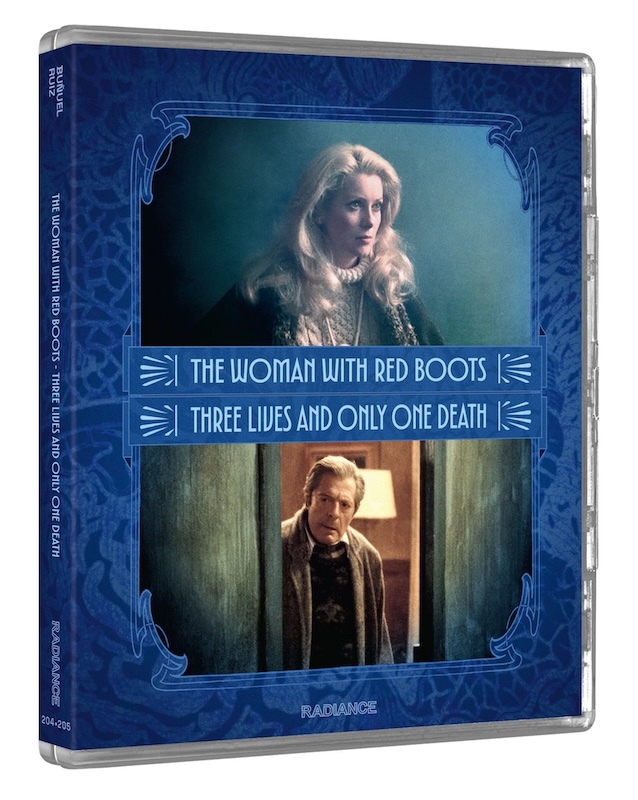
Marcello Mastroianni plays several different men in Raúl Ruiz’s Three Lives and Only One Death, although it becomes apparent their lives aren’t as separate as they initially seem.
One abandons his wife and returns twenty years later with an extraordinary explanation involving an apartment inhabited by creatures capable of stealing time.
Another is a respected university professor who suddenly gives up his comfortable existence to become a beggar.
A young couple inherit a luxurious château and discover that it comes with an unusually devoted butler, while a wealthy businessman finds himself confronted by the imaginary family he invented to explain his frequent absences.
Ruiz has a great deal of fun moving between the different narratives, gradually introducing connections and coincidences that make the individual stories considerably stranger. Mastroianni is wonderful, shifting between characters whose behavior ranges from charming to downright unpleasant. He plays them all with such casual assurance that the film’s most absurd developments are easy to accept.
Rather than constructing a mystery that can eventually be solved, Ruiz allows his characters to move through situations where identity, memory, and even personal history are constantly changing. There are moments when the constant complications become self-indulgent, and the final connections don’t necessarily justify everything preceding them. But Ruiz has a wicked sense of humor, and the film is frequently funny in ways that are difficult to anticipate. It’s the collection’s strongest film.
Video ★★★★☆
Encoding: MPEG-4 AVC
Resolution: 1080
Aspect Ratio: 1.66:1
Clarity/Detail: There’s great detail in clothing textures, facial details, and the elaborate interiors.
Depth: Ruiz’s unusual compositions benefit from increased definition, particularly when characters occupy different areas of the frame.
Black Levels: Darker interiors exhibit solid shadow..
Color Reproduction: Exterior scenes display attractive blues and greens, with some interior shots leaning slightly yellow.
Flesh Tones: Skin tones are generally convincing, with considerable detail in Mastroianni’s face.
Noise/Artifacts: Fine film grain is preserved.
Audio ★★★★☆
Audio Format(s): French LPCM Mono
Subtitles: English
Dynamics: Jorge Arriagada’s playful score has a pleasing fullness, while the more restrained passages retain a natural balance between dialogue and background sounds.
Height: N/A
Low Frequency Extension: N/A
Surround Sound Presentation: N/A
Dialogue Reproduction: Conversations sound clear and well balanced, with only minor limitations inherent in the original recording.
Extras ★★★★☆
New commentary on Three Lives and Only One Death by Adrian Martin: Martin discusses Ruiz’s unconventional storytelling, recurring themes, literary influences, and the film’s complicated narrative structure.
Archival TV interview with Marcello and Chiara Mastroianni on Three Lives and Only One Death: A 1996 television interview in which father and daughter discuss working together on the production.
New documentary on the French cinéma fantastique then and now, featuring directors Lucile Hadžihalilović, Bertrand Mandico, and Yann Gonzalez: A documentary examining the history and influence of French fantastique cinema, featuring contemporary filmmakers Lucile Hadžihalilović, Bertrand Mandico, and Yann Gonzalez.
Theatrical Trailer (1:50)
Summary ★★★★☆
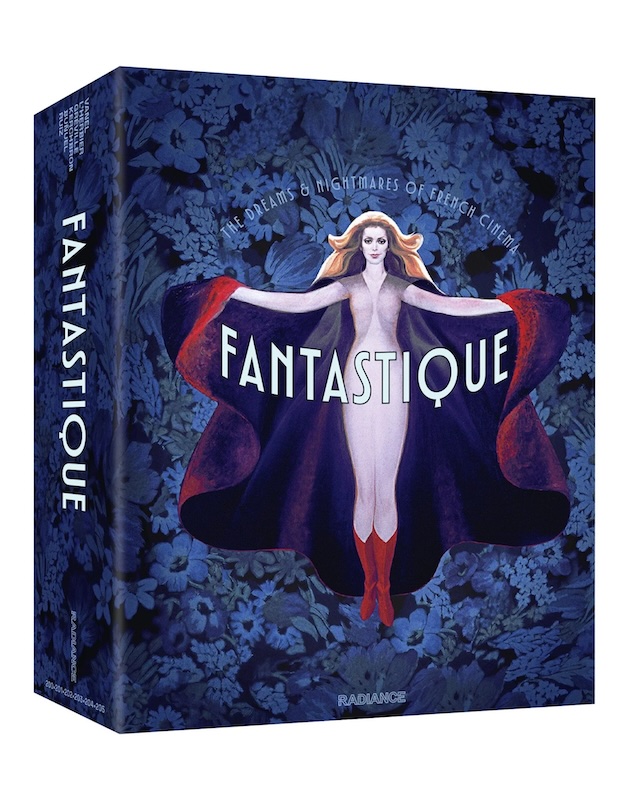
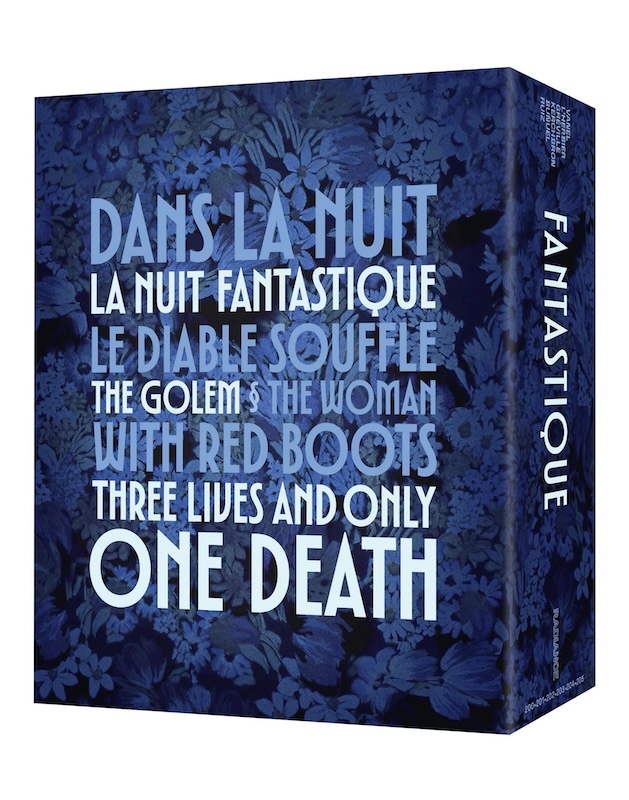
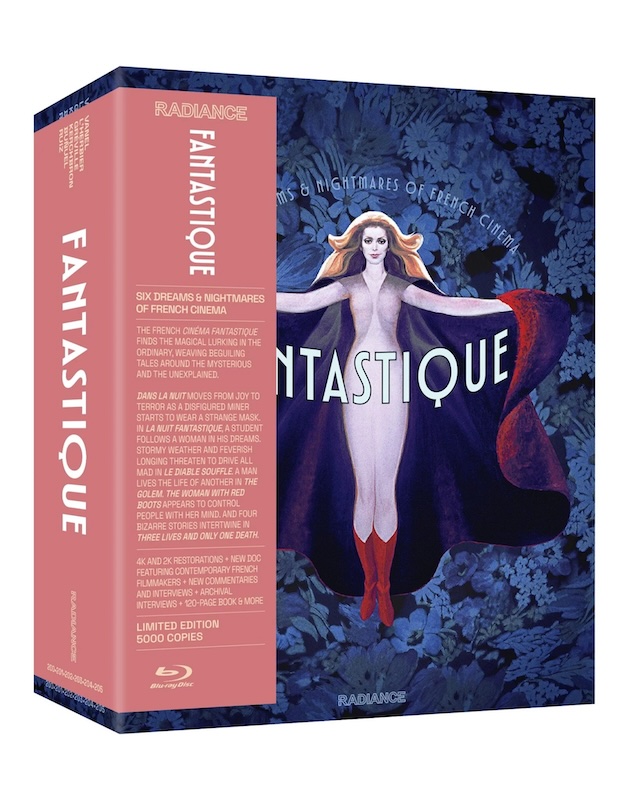
Radiance Films has assembled an unusual and frequently fascinating collection of six movies that explore the stranger side of French cinema. On top of all the extras already discussed, the films are housed in a Limited Edition rigid box with full-height Scanavo cases for each film and removable OBI strip. Each snap case has reversible sleeves featuring original and newly commissioned artwork by Time Tomorrow. And finally, it comes with a Limited edition 120-page book featuring new writing by Virgine Sélavy and David Cairns, as well as archival writing by Tzetan Todorov, André Bazin, and Henri Alekan.
The restored presentations are consistently impressive, while the lossless soundtracks remain faithful to their original recordings. The commentaries, interviews, documentary, and substantial accompanying book give viewers plenty of material to explore beyond the films themselves. Not every movie is equally successful, but this is an excellent release that’s highly recommended.


Jordan Grout


I never stand in front of the elevator doors when they open. All because of the movie The Departed.



