

Original Coverage & Source Attribution: en.ilsole24ore.com
The crisis currently unfolding in the Middle East can no longer be interpreted merely as a clash between the United States and Iran, nor as a simple extension of the war in Yemen or the competition for influence in the Gulf. The region is facing an increasingly interconnected security crisis, in which an escalation on one front can have immediate consequences on others, from the Strait of Hormuz to Bab el-Mandeb, from the Gulf’s oil infrastructure to civilian ports and airports.
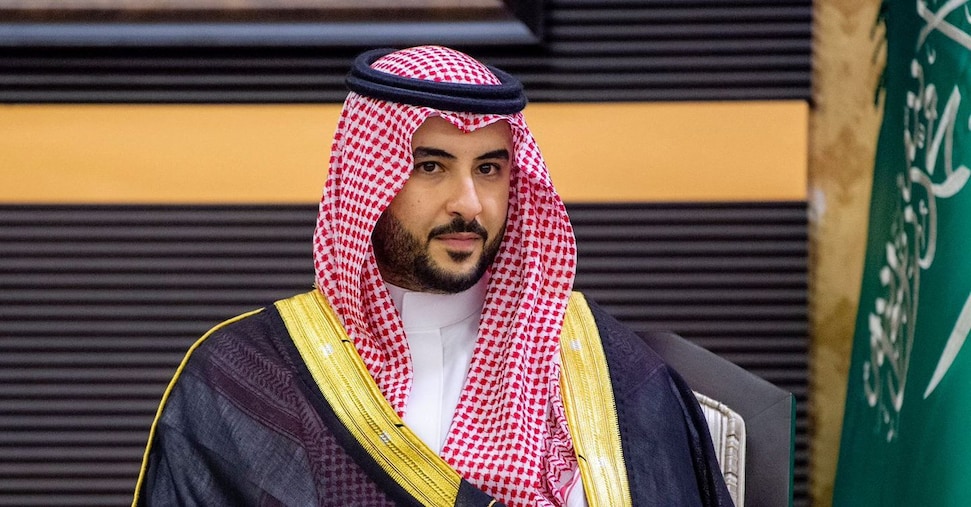
In this context, the visit to Tehran by the delegation from the signatory states to the Mecca Agreement on collective defence takes on a significance that goes beyond traditional diplomacy. The presence of the Saudi Defence Minister, Prince Khalid bin Salman, the Chief of the Pakistani Army, Field Marshal Asim Munir, and the head of Turkish intelligence, Ibrahim Kalın, sitting at the table with the Iranian leadership, reflects a growing realisation: military means alone are no longer sufficient to contain the risks of a wider regional conflict. But the significance of the visit lies not only in the calibre of the participants. It is above all the political message that deserves attention: countries that have strengthened their defence cooperation to tackle regional threats are now seeking to use that same strategic clout to open a diplomatic path capable of preventing the war from spreading.
A new approach: deterrence in the service of negotiation
Traditionally, defensive alliances are formed to strengthen the capacity to respond to military threats. The visit to Tehran, however, suggests a different possibility: transforming the weight of military cooperation into a tool for diplomatic initiative. Saudi Arabia, Turkey and Pakistan do not share identical interests nor the same international relations. Riyadh has a direct interest in the security of its own territory, its economic infrastructure and the future of Yemen. Ankara wishes to avoid further regional destabilisation that could jeopardise trade, energy and the security balance. Islamabad, for its part, maintains important relations with both Saudi Arabia and Iran and has channels of communication with various key players in the crisis between Washington and Tehran.
These differences could represent a diplomatic advantage, enabling the delegation to engage with Iran from complementary perspectives, rather than presenting a rigid and unilateral position. The success of this approach, however, requires a fundamental distinction between deterrence and threats. Deterrence can foster a conducive environment for negotiations when accompanied by credible assurances. Direct threats, on the other hand, risk hardening the other party’s stance, particularly when a concession might be interpreted as a sign of weakness.
What can be agreed?
It would be unrealistic to think that a single meeting could resolve differences that have built up over the years and been exacerbated by wars, sanctions and regional rivalries. Diplomacy, however, does not necessarily have to begin by resolving all the problems. It can start with concrete measures that prevent the situation from deteriorating further whilst negotiations continue. An agreement on specific security commitments could prove more effective than a general political declaration that is difficult to translate into verifiable results. The first commitment should concern the cessation of attacks on civilian and economic infrastructure, including airports, ports, energy facilities and oil pipelines. These facilities are no longer of merely national importance: they form part of economic networks on which millions of people and numerous countries depend.



