

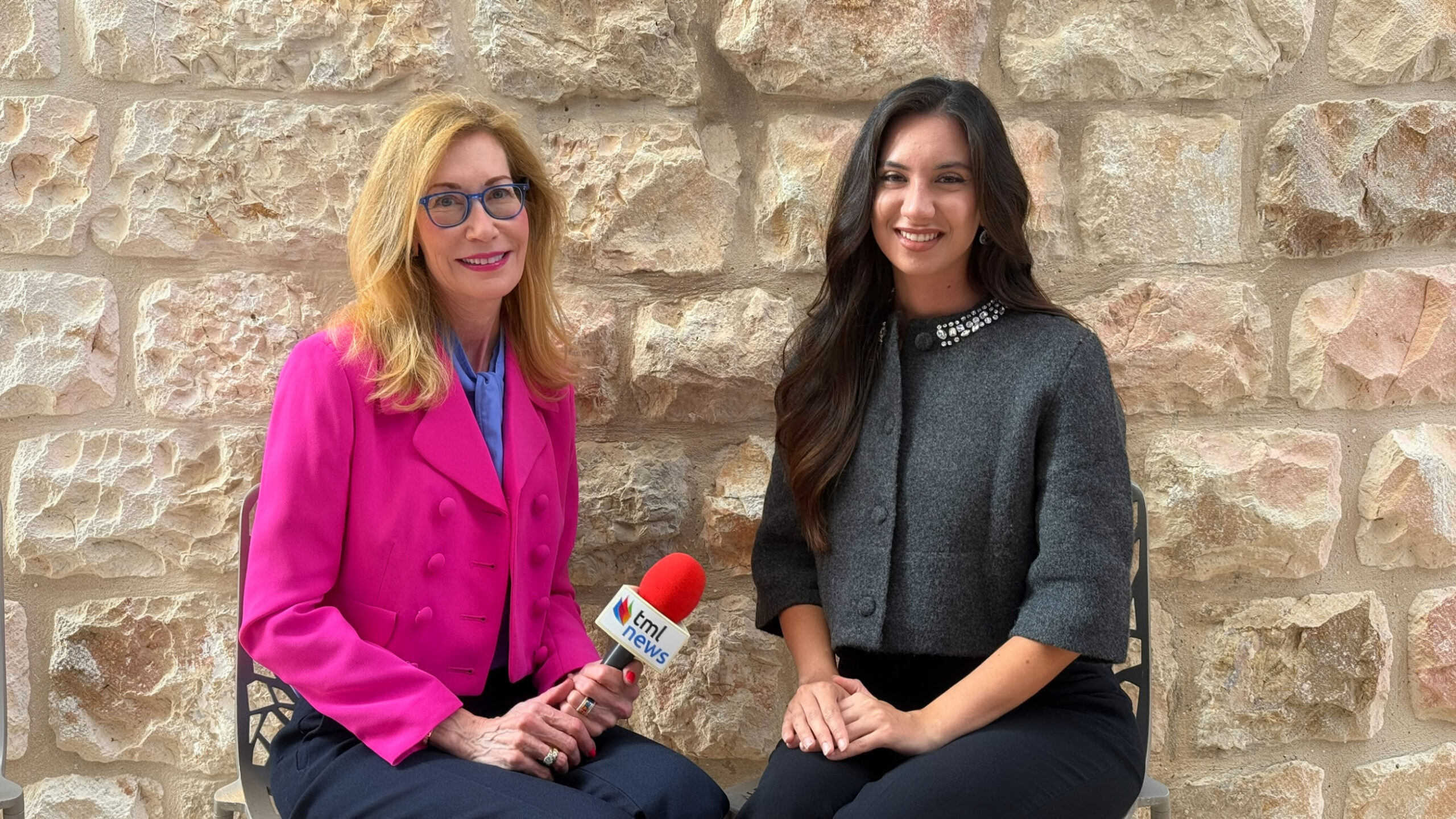
Original Coverage & Source Attribution: themedialine.org
The former Miss Universe contestant and data scientist tells The Media Line how her experiences at Berkeley, on the pageant stage, and in an unexpected conversation with a Lebanese driver inspired a new approach to representing Israel
Former Miss Israel Melanie Shiraz is establishing the Israel Cultural Diplomacy Institute, a new organization intended to help Israeli artists, musicians, athletes, and other cultural figures connect with international audiences through their talents rather than political arguments.
When I asked Shiraz about her new initiative, she traced its origins to her experiences in data science, campus advocacy, and representing Israel at the 2025 Miss Universe competition in Thailand.
Her goal is to provide training and support for Israelis who represent their country internationally but may lack the communication skills or professional guidance needed to engage with unfamiliar, and sometimes hostile, audiences.
Shiraz described the concept as “non-advocacy advocacy,” an approach that allows Israelis to introduce themselves through music, art, sports, and other shared interests rather than beginning with political disagreements.
Poised and articulate, Shiraz moved comfortably between the technical language of data science and deeply personal accounts of Jewish identity, fear, and encounters with people whose political views differ from her own.
The former beauty queen believes those different experiences have taught her something about communicating in a polarized world: Personal relationships can accomplish what arguments over historical facts and competing political narratives often cannot.
We are often flattened into this narrative that has to do with the war and with conflict, and people don’t get a chance to know us
“We are often flattened into this narrative that has to do with the war and with conflict, and people don’t get a chance to know us,” Shiraz told The Media Line.
Her institute is intended to help change that.
An Israeli Childhood, an American Education
Shiraz’s path to cultural diplomacy began long before she entered a beauty pageant.
Born in Israel, she spent much of her childhood moving between Israel and the United States, including periods in Florida and California. Her upbringing exposed her to both Israeli society and the Jewish Diaspora, giving her a perspective shaped by life on both sides of the Atlantic.
She is the daughter of Israeli American communications professional and commentator Estee Shiraz.
Melanie Shiraz as a child. (Courtesy)
Melanie Shiraz attended the University of California, Berkeley, where she earned degrees in data science and interdisciplinary studies. She became involved in Jewish student life through organizations including Chabad, Hillel, and the Jewish Student Union.
Berkeley was also where she first began publicly advocating for Israel.
“What a lot of people don’t know about me is that I actually started advocating for Israel publicly when I was myself a student at Berkeley,” she said.
The experience challenged her expectations about political debate at a prestigious university.
Shiraz had assumed that students would be receptive to evidence, research, and historical information. Instead, she often encountered people whose positions were shaped by moral convictions and emotional responses that did not necessarily change when confronted with additional facts.
She described the problem using concepts familiar from classical rhetoric.
One person is discussing Logos and facts and evidence, and the other is discussing ethos and pathos, the things that morally move them and emotionally move them
“One person is discussing Logos and facts and evidence, and the other is discussing ethos and pathos, the things that morally move them and emotionally move them,” she said.
When people approach a disagreement from those different perspectives, she explained, they may believe they are debating the same issue while barely communicating.
That realization influenced the approach she later adopted during speaking engagements on American campuses.
Melanie Shiraz graduates from the University of California, Berkeley, 2020. (Courtesy)
After graduating from Berkeley, Shiraz returned to Israel, where she subsequently earned a master’s degree in business administration from Tel Aviv University.
Her professional career took her into data science and financial technology. She worked with algorithms, became involved in startups, and co-founded a London-based financial technology venture developing payment-processing services for small businesses.
But the Hamas-led attacks on Israel on October 7, 2023, and the international reaction to the ensuing war prompted her to reconsider how she wanted to use her skills.
Eventually, she turned from technology to pageantry.
Why Miss Universe?
In July 2025, Shiraz won the Miss Universe Israel competition in Miami, competing under the designation Miss Caesarea. She went on to represent Israel at the international Miss Universe pageant in Thailand that November.
For someone with an academic background in data science and a career in technology, the change was striking. Shiraz, though, saw the competition as a communications opportunity.
“When I started investigating and thinking of how I can best advocate for my people, I stumbled across Miss Universe,” she said.
She was interested in the competition’s substantial following in Asia and South America, regions where she believed Israelis had fewer opportunities to engage directly with the public.
Those audiences might know Israel largely through international news coverage, she reasoned, without having met Israelis or learned much about their everyday lives.


Miss Universe Israel Melanie Shiraz. (Courtesy)
Shiraz wanted to offer a different picture.
The competition also exposed her to the intensity of online hostility surrounding Israel.
During Miss Universe, a video circulated on social media appearing to show her directing a hostile glance toward Palestinian contestant Nadeen Ayoub. Other footage showed that the two women were standing in different rows and that Shiraz was not looking toward Ayoub.
The controversy generated widespread abuse and threats against Shiraz, reinforcing her concerns about how misleading online material can shape perceptions.
Her experience also convinced her that people who represent Israel internationally need preparation and support, particularly when their appearances become entangled in political disputes.
Why Facts Alone May Not Change Minds
Shiraz’s understanding of algorithms has made her skeptical of the picture of public opinion presented by social media.
As a former data scientist, she said, she understands how platforms select, amplify, and distribute information.
Bots, artificial engagement, and recommendation systems can create impressions of widespread hostility that do not necessarily reflect interactions in everyday life.
She believes algorithms also encourage people to seek information that confirms their existing beliefs.
“What I’ve actually found out, especially now more than ever, because algorithms really modify what they show you to fit what you already believe, people are only seeking data points that already support what they believe,” she said.
The consequences extend beyond the internet.


Melanie Shiraz, Miss Universe Israel 2025, July 17, 2025. (Edgarpageants/Creative Commons)
When people become accustomed to consuming information that reinforces their worldview, they may be less willing to consider competing accounts of political events.
Shiraz has consequently become less interested in simply presenting additional facts to audiences that reject her positions.
Instead, she looks for subjects on which people can recognize one another’s experiences.
During campus appearances, for example, she has encountered accusations concerning the deaths of Palestinian children. Rather than immediately arguing over responsibility for the conflict, she said she tries to acknowledge the suffering of children and establish a conversation based on shared humanitarian concerns.
She recalled visiting Palestinian children receiving treatment in Israeli hospitals and discussing their care as an example of concern that extends beyond national identity.
That’s where the bridges get built
“And I think that’s where the bridges get built,” she said.
An Israeli and a Lebanese Driver
One of Shiraz’s most memorable experiences took place far from a university lecture hall or international pageant.
After speaking at a pro-Israel student conference in the United States, she entered an Uber on her way to the airport.
During the ride, she realized that her driver was Lebanese.
When he asked where she was from, Shiraz hesitated.
She was conscious of the hostility Israelis and Jews sometimes face when identifying themselves publicly. Revealing her nationality to someone from a country formally at war with Israel seemed potentially uncomfortable.
But she decided not to conceal her identity.
“And then I realized if I am to hesitate now and not say who I am, I am cowering in the face of all of the people that want me to cower,” she recalled.
Shiraz told the driver that she was Israeli and correctly identified him as Lebanese from his accent.
Rather than becoming hostile, their exchange developed into a conversation about the countries they came from and the cultural experiences they shared.
The driver eventually began asking questions about October 7.
To Shiraz’s surprise, he said he knew little about the attacks and wanted to understand what had happened.
She described the exchange as curious rather than confrontational.
“It ended up being one of the most profound conversations I have had on that entire tour,” she said.
In an opinion article published by The Jerusalem Post, Shiraz also reflected on the importance of listening to the driver’s experiences rather than treating the encounter solely as an opportunity to explain Israel’s perspective.
The exchange reinforced an idea that had emerged repeatedly during her campus visits: People whose national identities might place them on opposing sides of a conflict can sometimes engage more openly than those who view the region almost entirely through political arguments.
Shiraz said encounters like these have encouraged her to invest more energy in face-to-face relationships and cultural activities.
For her, the willingness to acknowledge another person’s experience is a more promising starting point than assuming that disagreement makes communication impossible.
Turning Personal Experience Into an Organization
The Israel Cultural Diplomacy Institute is Shiraz’s attempt to turn those lessons into a broader effort.
She wants to support Israelis whose careers naturally bring them into contact with international audiences, including performers, artists, athletes, and others whose work can introduce people to Israeli society without requiring them to attend a political event.
The initiative is not intended to turn every cultural representative into a political spokesperson.
Instead, Shiraz wants participants to have the confidence, communications training, and institutional backing to share their own experiences and respond thoughtfully when questions about Israel arise.
Her time as Miss Israel showed her that even talented, accomplished people may lack support when they suddenly find themselves representing their country on an international stage.
I know it sounds silly because of course we have so many people representing Israel already, but what I found out during my role is that there’s such little support infrastructure for these people
“I know it sounds silly because of course we have so many people representing Israel already, but what I found out during my role is that there’s such little support infrastructure for these people,” she said.
Shiraz acknowledged that she entered pageantry with an advantage: Years of campus activism, public speaking, and professional experience had prepared her to communicate under pressure.
Many other Israelis entering international competitions or cultural exchanges do not have that background.
They may excel at their chosen field while being unprepared for the political attention their nationality attracts.
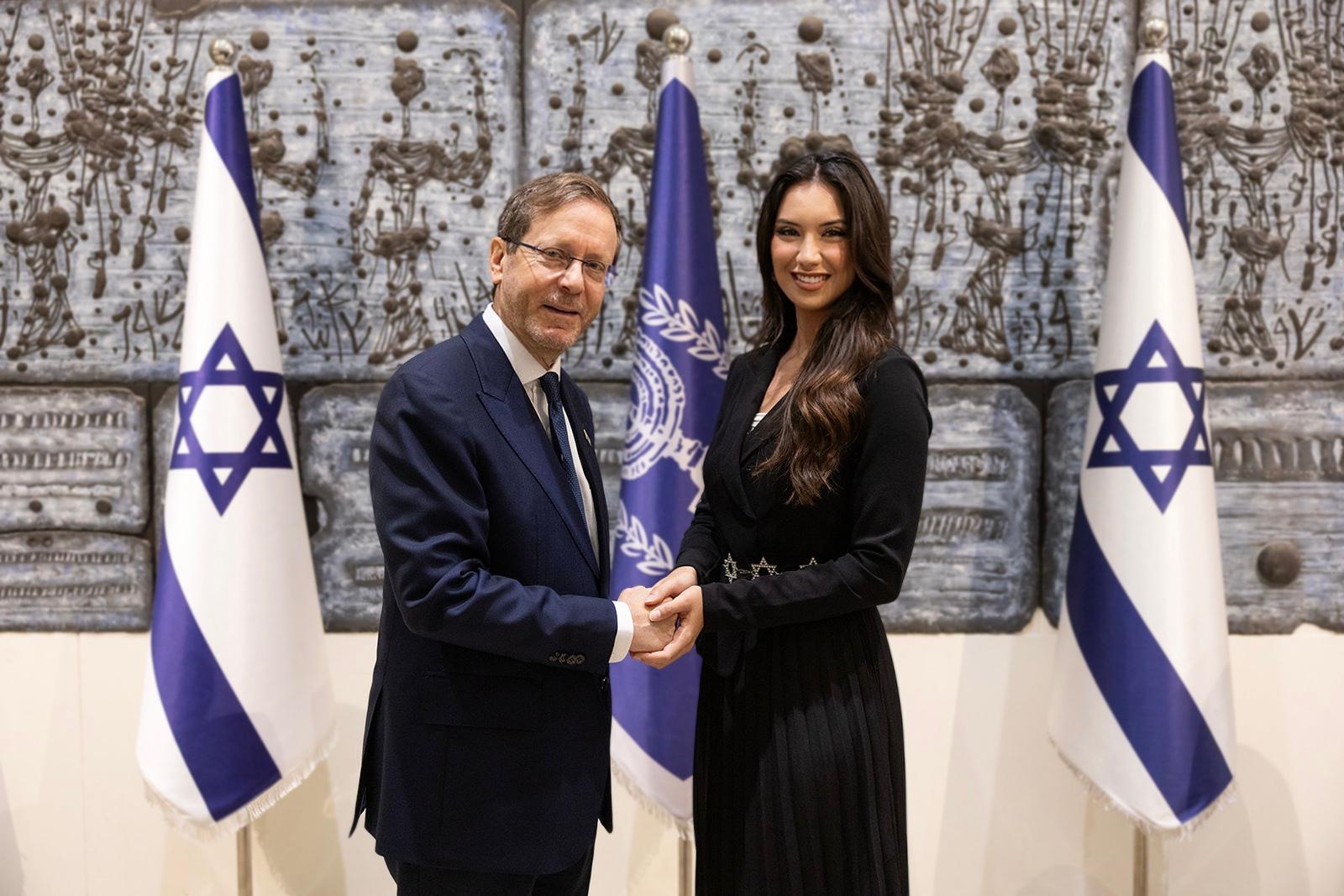

Melanie Shiraz meets with Israel’s president, Isaac Herzog, at his residence in Jerusalem, Oct. 11, 2026. (Courtesy)
Shiraz believes they deserve assistance.
“Not everybody is, and they should receive the training and the support to be able to do that,” she said.
She has not yet announced a launch date, funding arrangements, or the full organizational structure of the Israel Cultural Diplomacy Institute.
For now, its proposed mission reflects the philosophy she developed through an unusual sequence of experiences, from Berkeley classrooms and technology startups to the Miss Universe stage and an unexpected conversation with a Lebanese driver.
Shiraz wants Israelis to have more opportunities to be encountered as individuals, through their abilities, personalities, and shared interests, before they are judged by the political controversies surrounding their country.
The institute is intended to help prepare them for those encounters—and make more of them possible.



