

Original Coverage & Source Attribution: www.thenationalherald.com
ATHENS – Greece raised the ratification of the 2019 Turkey-Libya maritime memorandum by Libya’s House of Representatives at the United Nations Security Council, warning of the risks the move poses to security and stability in the Eastern Mediterranean.
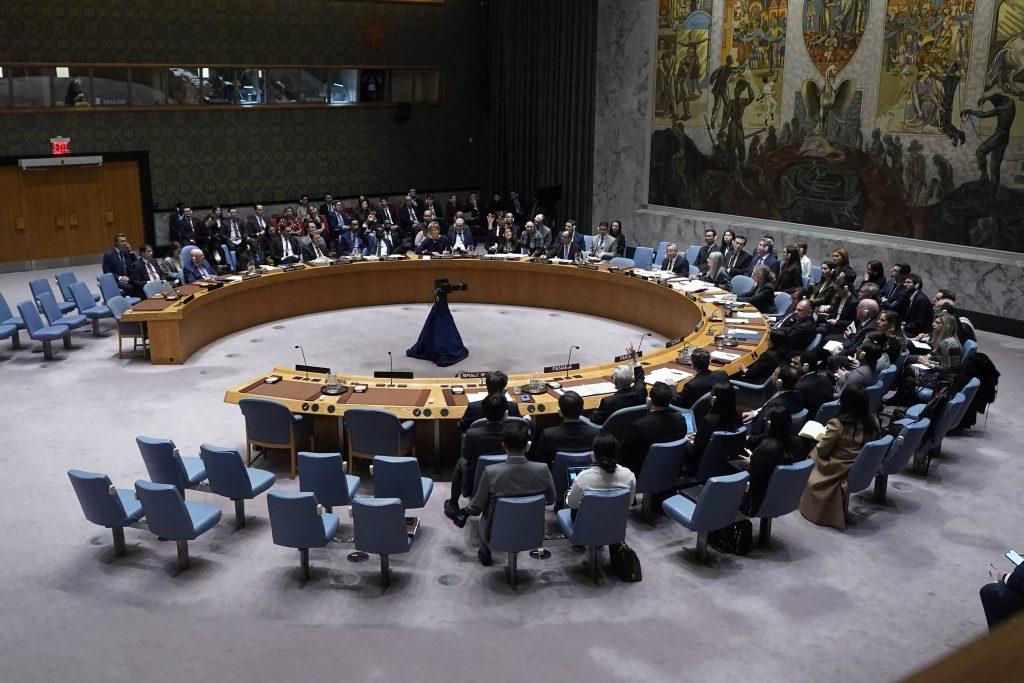
Acting on instructions from Foreign Minister George Gerapetritis, Greece’s Permanent Representative to the United Nations, Ambassador Aglaia Balta, briefed Security Council members on the issue during closed consultations on October 21.
Balta intervened in her national capacity, as Greece holds the Security Council presidency for October, highlighting the risks posed by the decision of Libya’s eastern-based parliament.
According to diplomatic sources, the Greek ambassador stressed that geography does not change and that the international law of the sea cannot be rewritten through unilateral decisions.
Greece emphasized that it had approached the Libyan authorities in good faith and engaged in talks on the delimitation of maritime zones.
Balta also reiterated Greece’s longstanding position, reaffirmed during the country’s two-year term on the Security Council, in favor of ending foreign interference in Libya. She stressed that the country should not become a battleground for geopolitical rivalries.
Greece reaffirmed its support for the unification of Libya’s institutions and the advancement of the political process. However, Balta underlined that these objectives cannot be pursued at the expense of the sovereignty and sovereign rights of third countries, nor can stability in Libya be achieved by creating instability beyond its borders.
Libya’s House of Representatives, based in the country’s east, ratified the memorandum on October 20. The agreement was signed in 2019 between Turkey and the then internationally recognized Libyan government based in Tripoli.
This was the first time the issue had been discussed at the Security Council. Until now, the positions of the parties involved had been conveyed to the United Nations through official letters and maps. Countries in the region, including Cyprus, Egypt and Italy, had also expressed objections and exchanged related correspondence.
France, a permanent member of the Security Council, has described the memorandum as invalid since 2020.
EU: Joint Statement by 27 Member States on Turkey-Libya Memorandum: “It Is Null and Void and Cannot Produce Legal Effects for Third States”
The 27 member states of the European Union expressed their strong dissatisfaction with the ratification of the Turkey-Libya memorandum by the Libyan parliament in a joint statement issued a short while ago by EU High Representative for Foreign Affairs and Security Policy Kaja Kallas on behalf of the EU.
“The EU expresses its strong dissatisfaction with the ratification, on October 20, 2026, by the House of Representatives of Libya, of the 2019 ‘Memorandum of Understanding between Turkey and Libya on the delimitation of maritime jurisdiction areas in the Mediterranean Sea.’
The EU position is consistent and clear. As set out in the European Council conclusions of December 2019 and reaffirmed in June 2025, the Turkey-Libya MoU violates the sovereign rights of third states and is incompatible with the Law of the Sea. It is null and void and cannot produce legal effects for third states.
The EU has a strategic interest in a stable and secure environment in the Eastern Mediterranean and calls on all countries to respect the sovereign rights of all EU member states, in line with EU and international law, including the United Nations Convention on the Law of the Sea (UNCLOS).”



