

Original Coverage & Source Attribution: www.mk.co.kr
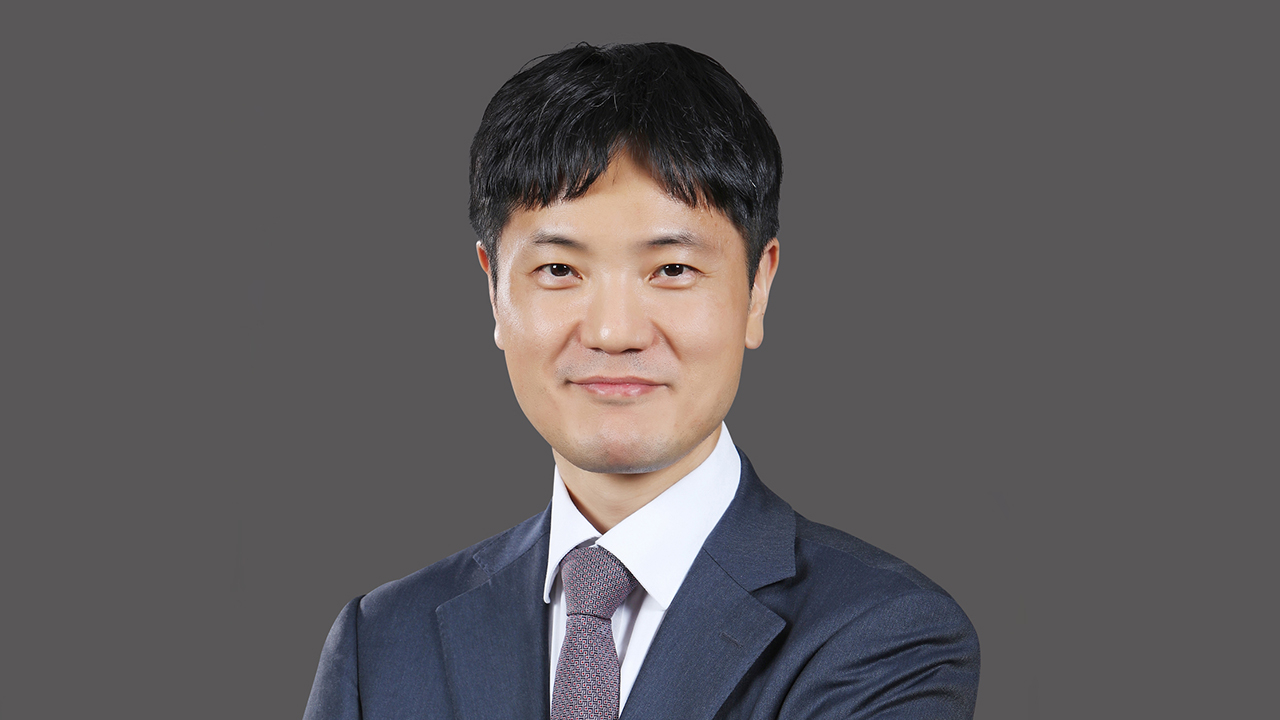
Choi Hwi-jin Law Firm Pacific Lawyers
Investment in the artificial intelligence (AI) field is exploding. Four U.S. big tech companies, including Alphabet (Google), Microsoft, Amazon, and Meta, raised their forecast for CAPEX in 2026 to about $750 billion in their second-quarter earnings report this year, a significant increase from about $410 billion to $450 billion last year. Much of this is understood as an investment in AI infrastructure. Despite concerns about the size and sustainability of investment in the AI sector, capital continues to be invested in the future as expected returns like SpaceX in the aerospace sector are so large.
AI service providers, including OpenAI and Antropic, require vast amounts of high-quality data to train and improve AI models using enormous computing resources. The importance of data is expected to grow in the future. Data is a key factor closely related to infrastructure and models among the main layers of the AI ecosystem. I think it is a very important issue in terms of competition law as to who will have the foundation to monetize AI and survive the competition and earn returns corresponding to investment and risk, and what role data will play in the process.
We need to look at the data access and lockdown effects
Competition seems to be very dynamic and fierce at all levels of AI. In addition, except for the foundation model layer, Korean companies, from large companies to startups, also seem to have a meaningful position and competitiveness in various layers of the AI ecosystem, and the same is true for data-related fields. Considerable caution is required for competition authorities to intervene in areas where performance competition is taking place, including competition in ways that provide integrated services that combine multiple functions.
This does not mean that there is no need for competition law. How vertical coupling affects competition in the data ecosystem and whether competitive advantages across multiple layers produce reinforcing effects can be closely monitored. The importance of access to data will also increase. It is necessary to consider the criteria for judging whether market participants have equal access to data, whether there is a blockade effect in the relevant market, and how it affects equally efficient competitors if the cost of access is a problem. Interoperability will also have more important implications.
EU court upholds ban on Booking takeover
A remarkable ruling has recently been made in Europe. The General Court of the European Union ruled in support of the European Commission’s 2023 decision to ban Booking Holdings (hereinafter referred to as “Booking”) from trading to acquire eTraveli, Europe’s largest online ticket booking company, on September 9, 2026.

![[Chat GPT]](https://pune.media/wp-content/uploads/2026/10/Investment-in-the-artificial-intelligence-AI-field-is-exploding-Four.png)
The executive committee believes that if Booking, which already has a dominant position in the hotel online travel agency (OTA) market, acquires OTA, it will secure a customer inflow route that converts ticket customers into hotel reservation customers, strengthening the so-called “connected trip” ecosystem, and further strengthening its dominance in the hotel OTA market based on network effects. Contrary to the traditional leverage that transfers the power of the dominant market to the neighboring market, it is called the “reverse leveraging” theory in the sense of strengthening its position in the existing dominant market (hotel OTA) by using activities in the non-dominant market (air ticket OTA). This ruling is the first case in which a court has recognized a ban on business combinations based on the theory of pure ecosystem damage.
The general court judged that it was not the direction of leverage or the size of the increase in market share, but whether the existing dominant position was strengthened through rising entry barriers. Even if the share increase is insignificant, it can be a problem if the network effect or customer inertia that supports control is strengthened.
Although it has not been confirmed yet, the ruling also has great implications for the data and AI ecosystem. If a business operator operating multiple floors acquires complementary services or data assets, there is a possibility that domestic and foreign competition authorities will examine it from the perspective of strengthening the ecosystem or entrenching control. As a company, it is necessary to check these risks from the beginning of the transaction and faithfully prepare evidence of increasing efficiency.
We need to balance innovation so that it doesn’t shrink
From the perspective of competition authorities, it is necessary to be cautious not to expand this theory too much. Business combinations that combine complementary products or technologies often have pro-competitive effects, and this is especially true in the field of AI, where innovation is rapidly progressing. The complexity and importance of this field requires prudence. Of course, faithful market research should be preceded as the foundation.
Care must also be taken in defining the market. Market boundaries are often unclear in the data and AI sectors, and this ambiguity will only grow in the future. As services that combine multiple functions compete, competing markets shift, and services that were viewed from different markets from traditional perspectives actually compete with each other. There is a need for a balanced approach that protects innovation and competition together through analysis based on empirical grounds without being bound by a fixed market concept.
[BKL Fair Trade Report] wants to analyze major regulatory issues, fair trade policy trends, major precedents and research cases faced by companies in the changing competition law environment and share implications that can help them manage and make decisions. Lawyer Choi Hwi-jin conducts advisory and transmission work at the Pacific Fair Trade Group, a law firm, focusing on fair trade and corporate regulation.



