

Original Coverage & Source Attribution: www.newsweek.com
Nearly five years after Boston police officer John O’Keefe was found unresponsive in the snow, a new Netflix docuseries, The Trials of Karen Read, revisits the high-profile case that sparked a media frenzy.
O’Keefe’s girlfriend, Karen Read, was tried twice in connection with his death, with a 2024 mistrial leading to a retrial the following year. She was acquitted of second-degree murder, manslaughter and leaving the scene of a fatal collision, but convicted of operating under the influence of alcohol.
The pair had been out drinking with friends on January 28, 2022, before heading to the home of Brian Albert, also a Boston police officer. Several hours later, O’Keefe was found unresponsive on the front lawn. The medical examiner later determined that he died from blunt-impact injuries to the head and hypothermia, but could not establish the manner of death.
Read More on Entertainment
Prosecutors alleged Read had struck O’Keefe with her SUV after they arrived at Albert’s house, leaving him to die during a snowstorm. They pointed to a broken taillight, angry voicemails and vehicle data as evidence that she had reversed into him following an argument.
However, Read’s defense team alleged O’Keefe had been involved in an altercation inside the home, noting deep scratches on his arm, and claimed police had covered up what happened.
Here are five of the biggest revelations and new perspectives featured in the documentary.
Karen Read’s previously unheard interview excerpts revealed
Read declined to take part in the documentary, so director Danielle Johnson Cutts used audio excerpts from a 2023 Boston Magazine interview, parts of which had never been released publicly, to tell her story.
“I was really surprised she granted me the interview,” reporter Gretchen Voss says.
The documentary features Read discussing what happened when she and O’Keefe arrived at Albert’s house—one of the most hotly debated details of the case.
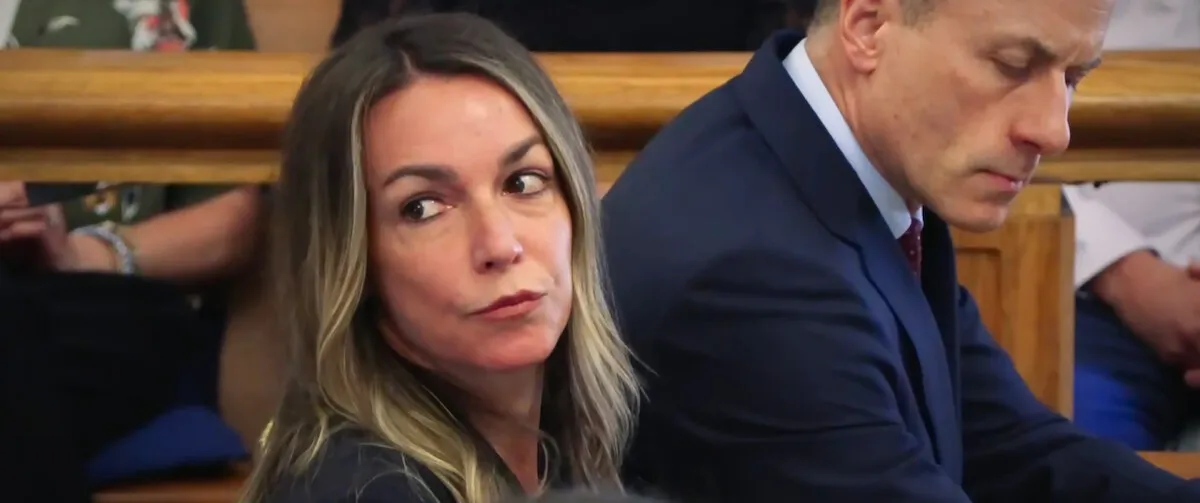

She recalls how, as they got to the house, she turned to O’Keefe and said: “It doesn’t look bustling with activity. Can you make sure, like, are we actually expected or welcome here?”
Read said she stayed in the car while O’Keefe went to check, but when he didn’t reemerge after about 10 minutes, she “started getting frustrated” and drove off.
Voss also asks about a blogger and YouTuber known as Turtleboy, whose real name is Aidan Kearney, who helped popularize the police cover-up theory.
“I didn’t even know he existed,” Read replies.
Later in the documentary, a former Turtleboy contributor alleges that Read had been communicating with Kearney through an intermediary before contacting him directly.
Brian Higgins disputes claims he challenged O’Keefe to a fight
Brian Higgins, an agent with the Bureau of Alcohol, Tobacco, Firearms and Explosives (ATF), was also at Albert’s home the night O’Keefe died. In the documentary, he acknowledges exchanging “flirtatious” text messages with Read a few weeks earlier, after sharing what he describes as an “unsolicited, unexpected” kiss.
The defense argued that Higgins was romantically interested in Read, pointing to surveillance footage from the Waterfall bar in Canton that it claimed showed him gesturing for O’Keefe to step outside for a fight.
“They are suggesting me waving in a direction is calling somebody out for a fight,” Higgins says, adding: “But what they don’t talk about in the video is that the first person John O’Keefe greeted when he walked in the bar that night with Karen Read, it was me.”
He continues: “In the first trial, they alleged that Colin Albert was responsible for the death of John O’Keefe, and then, for the second trial, they chose to make me the bad guy.”
Colin Albert responds to allegations in rare interview
Colin Albert, Brian Albert’s nephew, also came under scrutiny during the case amid allegations that he had been involved in an altercation with O’Keefe.
“John didn’t have issues with anyone except one,” Read says in audio footage. “The exception is Colin Albert.”
Kearney also alleged that Colin Albert had a history of making violent threats on social media and shared a photograph showing cuts on his knuckles weeks after O’Keefe’s death.
However, Colin Albert maintains that he left his uncle’s house before O’Keefe and Read arrived. He also denies having been involved in an altercation with O’Keefe.
“I am not the kid that these people were making me out as,” he tells cameras.
He also maintains that injuries to his knuckles came from a fall on an icy driveway at a party weeks after O’Keefe’s death.
John O’Keefe’s brother recalls heartbreaking question from niece
The documentary goes into detail about how O’Keefe became guardian of his young niece and nephew, following the death of his sister Kristen and her husband Steve.
“He wanted to create as normal of a life as possible for us,” his niece Kayley says.
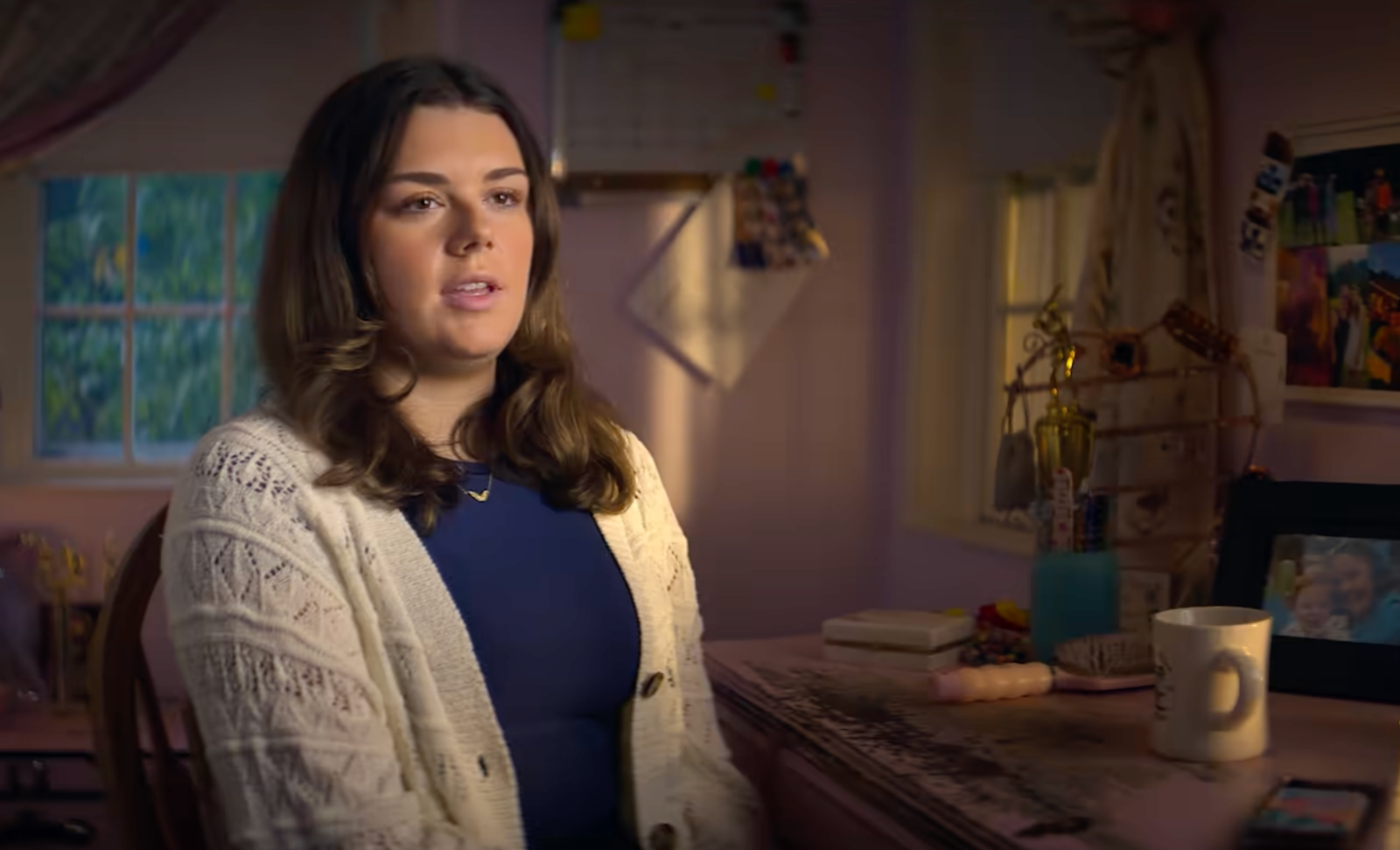

O’Keefe’s brother Paul vividly remembers a question Kayley asked the day after her uncle died.
“I remember her saying, ‘Why is this happening to me again?’” he says. “And I didn’t have an answer. I just said, ‘I don’t know, sweetie.’”
Kayley says she was in a “state of shock,” wanting things to go back to “how they were before.”
Juror reveals why she voted to acquit Karen Read
“Going in, I’m leaning guilty,” says Janet Jimenez, who was a juror on the retrial.
“Things that she had said about ‘I hit him,’ I’m thinking the cell phone data, I’m thinking the backup data.”
Despite Jimenez’s initial suspicions, the jury acquitted Read of the charges relating to O’Keefe’s death.
Footage shows Read’s defense team urging jurors to consider the importance of “reasonable doubt,” describing it as a “constitutional shield that protects the innocent.”
“You know what? I really did think, most likely, that she did it,” Jimenez admits. “But I think, by our legal system’s standards, she’s not guilty because there were so many different possibilities. He could’ve gone into the house, he could’ve gotten beaten up, he could’ve got hit by a plow. It’s almost like ‘doubt, doubt, doubt’ kinda hanging out there, and it was a lot of doubt – it was more than reasonable doubt.”
The prosecution was required to prove Read’s guilt beyond a reasonable doubt, rather than establish that its account was the most likely explanation.
Newsweek has contacted Karen Read, Yannetti Criminal Defense Law Firm and Aidan Kearney for comment.
Newsweek’s reporters and editors used Martyn, our AI assistant, to produce this story. Learn more about Martyn here.
Contact Newsweek editors on this story: Marc Vargas and Rhian Morgan.



