

Original Coverage & Source Attribution: aeworld.com
As wellness becomes increasingly associated with technology, performance, and the pursuit of longevity, a new retreat in Fujairah takes a different approach. KHUN, the brainchild of Ali El-Sakhawy, Tarek Abou Dib and Aya Khourshid, draws on centuries of Arab thought and the restorative qualities of the natural environment to create an experience centred on stillness, solitude and simplicity.
Set against Fujairah’s mountainous landscape, the retreat offers a self-guided, 48-hour experience called The Reset, designed to let guests disconnect from everyday demands. No compulsory activities or carefully scheduled itineraries. Instead, the emphasis is on sleep, nourishment, time outdoors and the opportunity to find a more natural rhythm.
Bringing together expertise in strategy, hospitality, and traditional wellness philosophies, the three founders share an interest in how our surroundings shape how we feel. Their approach also reflects a growing desire to explore the region’s own cultural understanding of wellbeing.
Ahead of KHUN’s opening this winter, A&E speaks to the founders about the inspiration behind the concept, the relevance of ancient Arab traditions and why sometimes the most valuable thing we can do for ourselves is very little at all.
What first inspired you to create KHUN, and what did you feel was missing from the wellness industry?
Ali: For a while, I was stuck in the same cycle: push too hard, get depleted, recover, repeat. Every fix meant adding something, while I kept returning to the same conditions that wore me down.
That became the question behind KHUN. Before asking people to change themselves, what happens if you change the conditions around them?
When we spoke to people, very few wanted more wellness activities. They wanted separation. But there was no place built for it. It was mostly spa resorts or glamping. Both can be lovely, but neither was designed around everything that helps a person truly switch off: sleep, light, heat, simple nourishment, the land. And neither drew on this region’s long tradition of thinking about rest and solitude.
Each of you brings a different background to KHUN. How have your individual experiences shaped the concept?
Ali: My career has moved between strategy, hospitality concepts and urban liveability: what makes cities work for the people in them, at a macro level. Over time, that made me just as curious about the micro level. Why some places leave you calm, and others drained, and how much of that comes down to design.
That’s why KHUN starts with the environment, and why I think of it as a system rather than a single experience. Having studied the Middle East at university, I’ve spent a long time thinking about what our region already knows, and what of that still matters today. My job is to keep that idea intact as KHUN grows.
Tarek: My background is in hospitality, events and building brands. Through the businesses I’ve built and run on this coast, I’ve spent much of my career creating experiences that bring people together and connect them to a place. I’ve learned how much surroundings influence how someone feels, often before anything else.
That’s the perspective I bring to KHUN. I think about how the philosophy translates into an actual stay: the welcome, the privacy, the atmosphere, and knowing when to be present and when to give someone space. There’s a lot of thought behind making an experience feel effortless. For me, hospitality has to make it easy for people to settle in and find their own rhythm.
Aya: For the past few years, my work has been about systems: how they form, and how they change. That led me to look at how the economy, climate, health and society shape one another, and to work alongside indigenous communities around the world who are reviving ancestral ways of living.
What struck me was that their knowledge wasn’t nostalgia. It was a practical answer to very modern problems. So, I started asking what our own region holds that we’ve stopped using. KHUN is one answer: retrieving Arab practices of wellbeing and rebuilding them for the way people live now.

How do you see the wellness industry evolving in the UAE?
Ali: Wellness is a big word, and in the UAE, it covers almost everything, from spas and fitness to clinics and longevity. It’s also big business: the Global Wellness Institute values the UAE’s wellness economy at around US$40.8 billion, the fastest-growing in the Middle East and North Africa.
Much of that growth has been globally standardised and performance-led: wearables, diagnostics, longevity science. It’s exciting, and it will keep growing. But I think the bigger shift is in where wellness happens. It’s moving from something you buy to something built into where you live: how our homes and cities are designed, the light we wake up to, how much of our attention is claimed.
As that happens, wellness will also become more culturally specific, because the way we live is. That’s the space we see for Arab wellness.
Why did you choose the UAE as the starting point for KHUN?
Tarek: The UAE felt like the natural place to begin. It has the region’s largest wellness market, a sophisticated hospitality scene, people from around the world living alongside one another, and a real willingness to experiment with new ideas around health, design, and quality of life. Wellbeing is also a national priority, with its own strategy to 2031.
Across the region, there’s also more confidence now in building from our own references, rather than assuming every new idea has to arrive from somewhere else.
Because KHUN is building a contemporary expression of Arab wellness that can eventually travel well beyond the Arab world, the UAE is an unusually good place to start. It lets us stay deeply rooted in where we come from while reaching an international audience from day one.
Which Arab traditions and philosophies have been particularly influential in developing KHUN?
Aya: When we say Arab wellness, we mean a contemporary category rooted in a broad intellectual tradition that spanned the Arab and Islamic worlds, written largely in Arabic and shared across many cultures.
We sometimes see ourselves as archaeologists, looking back through that scholarship and asking what still has something to teach us. One idea recurs again and again: body, mind, inner life and environment are connected. Ibn Sina described health through everyday conditions such as air, food, movement, sleep and the states of the soul. To us, it almost reads like a design brief.
Much of our inspiration comes from the bimaristans, the great hospitals of cities like Damascus, Cairo and Baghdad. They treated the environment as part of healing: courtyards, water, light and quiet were part of the care, not decoration.
We’re not recreating historical medicine. We’re asking what this inheritance can teach us about wellbeing now.
What made Fujairah the right location, and how does the landscape contribute to the experience?
Tarek: Fujairah is home for me. My family has been involved in hospitality here since the late 1970s, and I’ve spent much of my career on this coast. I’ve seen how quickly people’s pace changes when they arrive, sometimes before they realise it themselves.
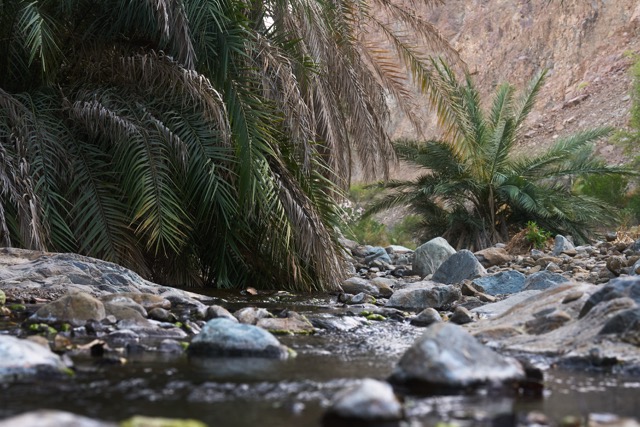
The mountains, sea, farms and quieter surroundings give the place a rhythm that feels very different from the city. For KHUN, that shapes everything: the light you wake up to, the shade you sit in, the sounds around you, and the space to walk without an agenda.
For us, the landscape is not a backdrop. It is part of the practice. We’ve realised that remoteness itself is not the goal. Psychological distance matters more. If you cross a threshold and quickly stop thinking about the world outside, that does more than driving another hundred kilometres into the desert.
What can guests expect from the 48-hour Reset experience?
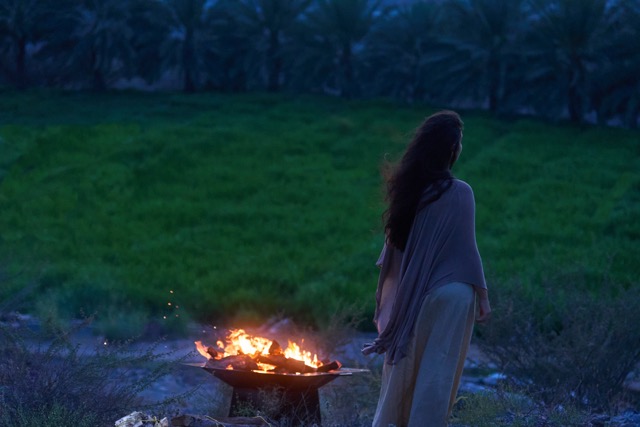
Aya: The Reset is 48 hours, self-guided, with no timetable. You put your phone away, and the stay moves through solitude, time in the land, simple nourishment, heat and cold, quiet and reflection. There are practices available throughout, but all of it is offered and none of it is required.
The difference is direction. Most retreats add more treatments, more classes, more content. We subtract. We remove the inputs that keep us constantly switched on and create enough space for the body and mind to settle on their own.
And it isn’t about pampering. There are moments of chosen discomfort, like early light or cold after heat, alongside long periods where nothing is being asked of you.
We hope you leave feeling not simply rested, but a little more like yourself.
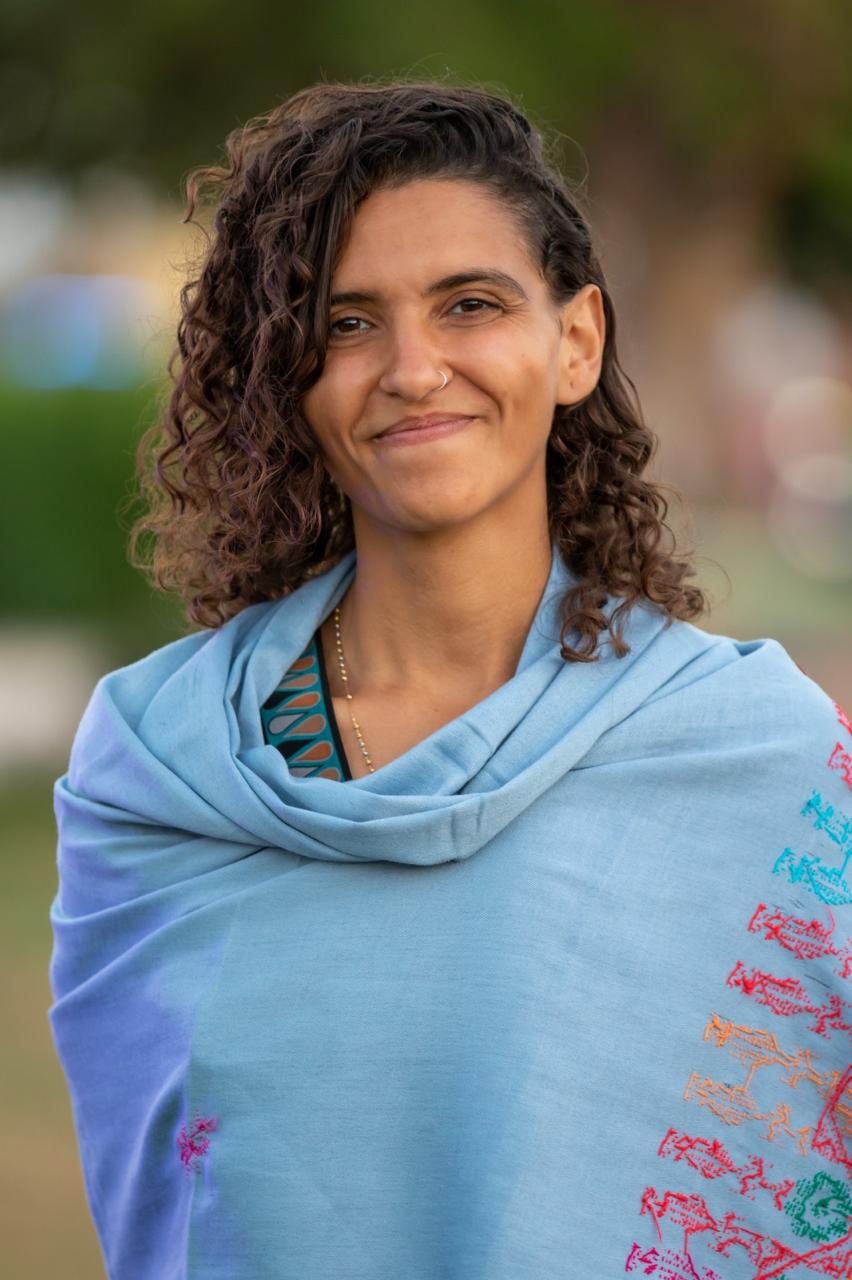

Aya, co-founder of KHUN
Why was it important to make the experience self-guided rather than follow a structured retreat programme?
Aya: Because a packed schedule brings the problem into the solution. Most of our guests live by the clock: back-to-back meetings, notifications, a constant sense that they should be somewhere else. Hand them a timetable of sessions, and we’ve rebuilt their week in a nicer setting.
In the tradition we draw on, khulwah, or withdrawal, is a condition you design for, not an activity you book. Al-Qushayri, writing in the eleventh century, saw solitude as restorative only when its conditions are right. Our job is to get them right, then step back.
Self-guided doesn’t mean unsupported. There’s a host, a structure that follows the day’s light, and practices waiting if you want them. But if all you do is sleep, walk and watch the sunset, you haven’t missed the experience. That may be exactly what your body needed.
How have you approached the architecture and interiors to encourage guests to slow down?
Ali: Our core belief is that the environment is the intervention, and every design decision follows one rule: the sanctuary must lose to the landscape.
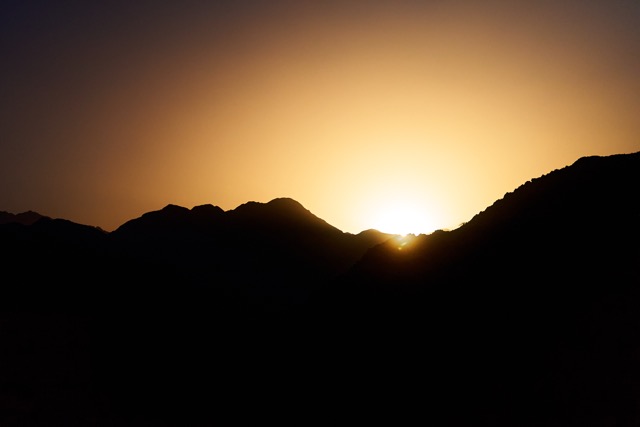
We think about the space less as an object and more as what surrounds the person: light, temperature, sound, privacy, views, and the relationship between inside and outside. So you wake to the land from your bed. Light shifts through the room as the day moves. Often, what you hear is silence.
The architecture should frame what’s already there, not compete with it. None of it tells you to slow down. The space simply makes it the natural thing to do.
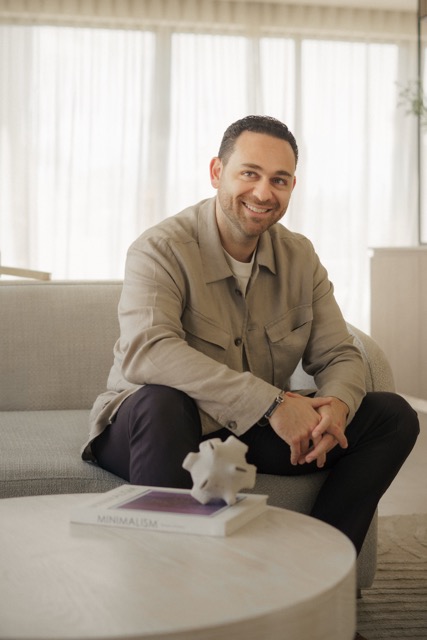

Ali, co-founder of KHUN
How does food fit into the experience, and which regional ingredients and traditions have influenced your approach?
Aya: Food is one of the conditions of the Reset, not a menu to choose from. Ibn Khaldun contrasted the excess of city life with the simpler diets of people living closer to the land, and that’s the spirit we follow. Our principle is lightness: not dieting or deprivation, but eating simply and in balance.
The region runs through every plate, from saffron, prized here for centuries, to black seed, known in Arabic as habbat al-barakah, the seed of blessing.
Meals are set rather than chosen, because part of the Reset is reducing the decisions we make all day. We understand dietary needs before arrival, meals follow the light, and tea marks the moments of the day.
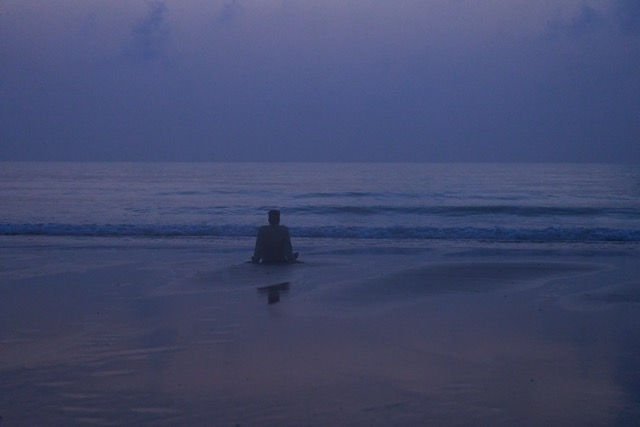
Are you seeing a shift in the way younger generations approach their health and wellbeing?
Ali: People are becoming much more willing to think about their health before something goes wrong, younger generations especially. They’re far more aware of sleep, stress and mental load than their parents were, and far more willing to talk about them.
But I also see growing fatigue with the idea that being healthy means constantly measuring and improving yourself. There’s a quiet move toward analogue wellness, where technology supports rather than leads. Sleep, light, movement, nourishment, rest and relationships aren’t new ideas. They’re just easy to overlook because they’re less exciting than the latest intervention.
KHUN sits upstream of all that. We’re not a clinic, and the Reset isn’t a replacement for medical care. But underneath the whole longevity conversation is a question I keep coming back to: what are we living longer for?
Has developing KHUN changed your own relationship with wellbeing or introduced any new habits into your daily lives?
Ali: I’m very much a work in progress. KHUN hasn’t suddenly given me a perfectly balanced life. I still have ambitious periods and busy days. If anything, it’s made me more aware of how easy it is to lose that balance.
What has changed is that I notice more. I’ve become better at slowing down and protecting my time, and more conscious of the environments I spend it in. I catch myself reaching for my phone the moment there’s an empty minute.
One thing I do every morning is what I call a noticing walk. No phone, no agenda. Just paying attention to what’s around me before the day starts asking things of me.
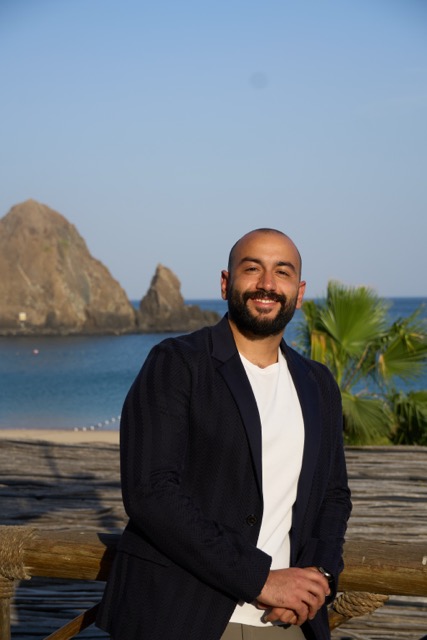
Tarek, co-founder of KHUN
Tarek: I enjoy building things, and I’m used to having several projects moving at once. There’s always something to improve or another idea to explore. Developing KHUN has made me notice how often I carry that mindset into my time off, where even a free afternoon becomes something to fill.
Working in hospitality, you spend a lot of time making sure other people enjoy where they are. It’s reminded me to allow myself to do the same, particularly in Fujairah, where work and personal life are so closely connected.
The habit I’m trying to build is leaving some time unplanned, and resisting the urge to make it productive. I still care just as much about what I’m building. I’m learning to give myself room to enjoy the life around it.
Aya: Working on KHUN has sent me back to the books. I’ve been reading the scholars and traditions we draw on, slowly and on paper. Our phones hand us information in bite-sized clips, so I’m retraining myself to learn the slower way, with less stimulus. It’s been hard not to reach straight for YouTube, but it’s worth it.
The habit I hold to most is a solitude of at least one week every year. No phone, no people, no talking, a complete recalibration. It’s my own khulwah.
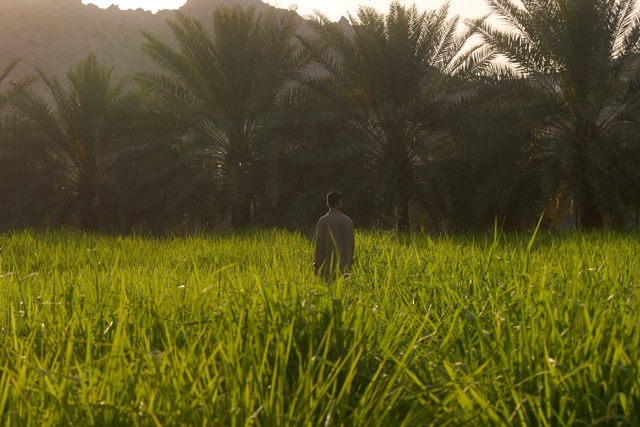
Looking ahead, what are your ambitions for KHUN beyond Fujairah?
Ali: Right now, we’re focused on getting our first season right, opening this winter in Fujairah.
More than a hundred people asked to hear about KHUN before we’d even opened bookings. But the first season is where we learn what really works. What do people value most? What do they carry home? What belongs to Fujairah, and what can travel?
We have a much bigger ambition for KHUN, but I don’t think we earn the right to build all of it on day one. Longer term, I’d love KHUN to become something clearly born from Arab thought, but that doesn’t only belong to the Arab world.
Finally, what is the one thing you hope guests take away from their time at KHUN?
Aya: That they realise they don’t need to add anything to feel well. Most people arrive expecting to be given something. We hope they leave recognising that what they were looking for was already there, and that they can find their way back to it at home.
Tarek: That they don’t have to reach exhaustion before making time for themselves. Most of us wait until we’re completely depleted before giving ourselves permission to stop. I hope KHUN reminds people how valuable a little space can be, and makes them more willing to protect it in everyday life.
Ali: Perspective. It’s rare to step far enough back from your own life to see it clearly: how you spend your time, the environments you live in, what you eat, who you give your attention to. I hope KHUN gives people that distance, and that they come back to the people who matter with more of themselves to give.



