

Original Coverage & Source Attribution: www.turkiyetoday.com
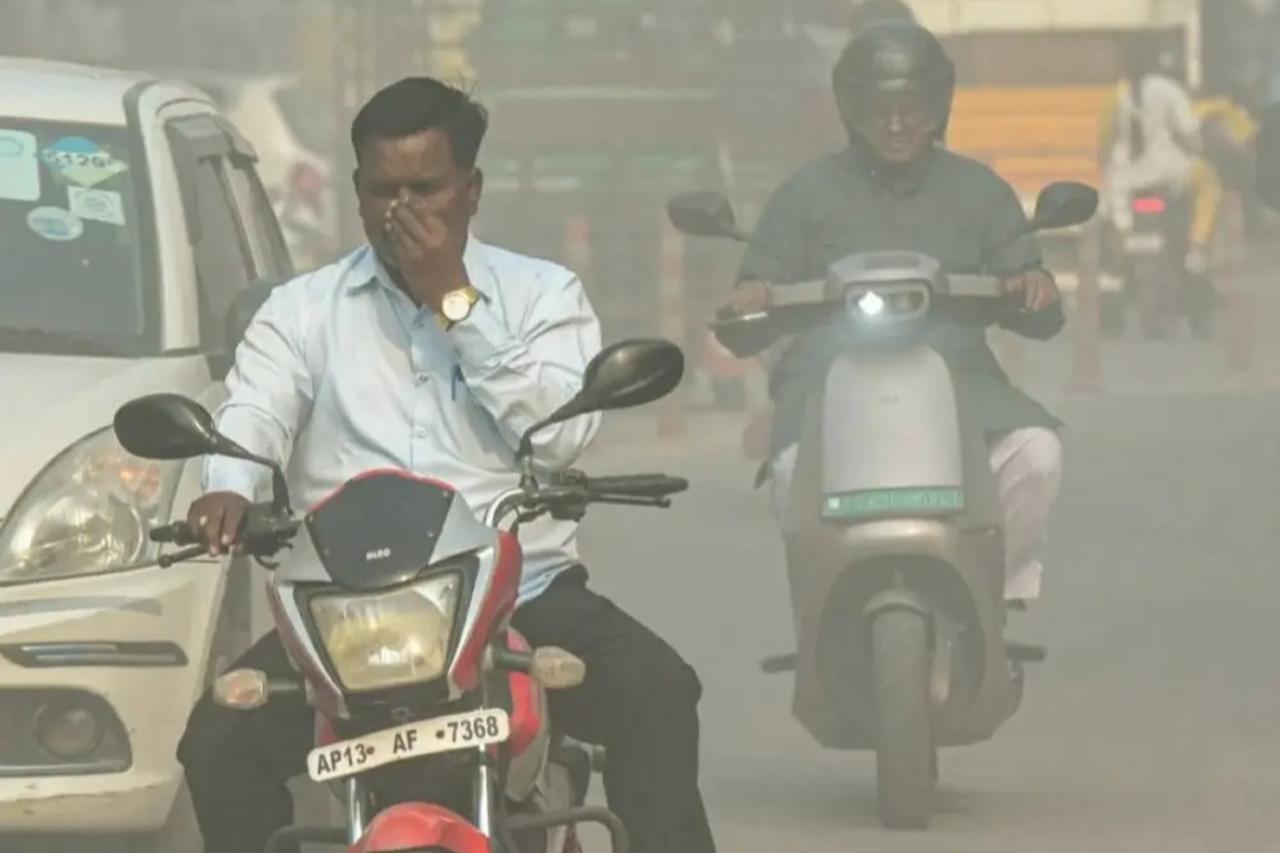
Motorists and pedestrians commute along a road in Hyderabad, Telangana, India, on March 23, 2026, through a haze of dust pollution from a nearby construction site. (AFP Photo)
November 01, 2026 10:17 AM GMT+03:00
Authorities in New Delhi doubled parking fees and ordered work-from-home arrangements on Sunday as part of tougher anti-pollution measures meant to curb toxic smog in one of the world’s most polluted capitals.
The restrictions, which came into force Sunday, include a doubling of vehicle parking charges and work-from-home arrangements for government and private-sector offices aimed at cutting traffic emissions.
Authorities will also bar vehicles that do not comply with mandated emission standards from entering the capital, while a ban on all dust-generating demolition and outdoor construction activity takes effect immediately.
“From Nov. 1… Delhi’s Winter Action Plan comes into effect with stricter pollution controls, stronger enforcement and 24×7 monitoring,” Chief Minister Rekha Gupta’s office said in a statement. The chief minister is the elected head of a state or territorial government in India.
“We humbly request all Delhiites to follow the guidelines and contribute towards making Delhi’s air cleaner and healthier.” Delhiites are residents of Delhi.
Delhi’s government has already rolled out a range of pollution-control measures over the past month, including a ban on garbage burning and restrictions on food stalls using coal or firewood.


People try to douse smoke emitted by the burning of husk in Kolkata, India, on January 3, 2026. Kolkata’s AQI level worsens as winter approaches the city. (AFP Photo)
Smog returns every winter
But similar efforts in previous years have done little to prevent the annual smog that engulfs the megacity from November to January, when cooler temperatures trap pollutants close to the ground. A megacity is a city with more than 10 million residents.
Major sources of pollution include vehicle emissions, coal-fired power plants, industrial activity, construction dust, and crop-residue burning in neighboring states.
Vehicles account for 23% of Delhi’s winter pollution, while biomass burning, including farm stubble fires, contributes 20%, according to India’s environment ministry.
Biomass burning is the burning of organic material such as crop waste, and stubble fires involve burning the leftover stalks after a harvest.
Industry, including coal-fired power plants, contributes about 9%.
Levels of PM2.5, tiny cancer-causing particles that can penetrate deep into the lungs and bloodstream, frequently exceed 300 micrograms per cubic meter during peak winter months, around 20 times the World Health Organization’s recommended daily limit. PM2.5 refers to airborne particles smaller than 2.5 micrometers in diameter.
Last year, pollution levels peaked at 846 micrograms per cubic meter, or 56 times the WHO guideline.
On Sunday, monitors recorded PM 2.5 at 201 micrograms per cubic meter, over 13 times the safe limit, a reading that was likely helped by intermittent rain over the last few days.
A 2024 study published in The Lancet Planetary Health estimated that 3.8 million deaths in India between 2009 and 2019 were linked to air pollution.


November 01, 2026 10:18 AM GMT+03:00



