

Original Coverage & Source Attribution: www.healthdigest.com
Stephane Cardinale – Corbis/Getty Images
Many celebrities have been candid about being forced to confront their mortality after receiving a prognosis that gave them a decade or less to live. Although these notable figures outlived their prognosis by a long shot, it still affected their lives in major ways. While they dealt with the immediate complex feelings from receiving the prognosis, many celebrities asked themselves what they could do differently to lead a happier and fuller life. For some, those reflections made them rethink their priorities and reshaped their perspective on life.
To make the most of their time, many celebrities also found ways to manage the physical health symptoms of their respective conditions and the mental health toll of their prognoses. One beloved sitcom actor chose to harness the power of positive thinking to go through her days without her prognosis bearing down on her. She also found alternative therapy methods for her symptoms and relied on her loved ones for some extra support. Meanwhile, a retired NFL player found assistive technology that enabled him to continue pursuing his passions, despite the physical symptoms of his condition.
Additionally, many of these known figures refused to be deterred by their prognosis and looked for treatment options that could help their case. For a lot of these people, these treatment options were experimental medications that helped them beat their prognosis. For one celebrity, the answer to outliving his prognosis didn’t lie in experimental medication, but in getting a second opinion, which revealed he had been receiving the incorrect treatment for his condition. While each celebrity’s experience is unique, their stories ultimately served as a reminder of the power of hope and resilience during hard times.
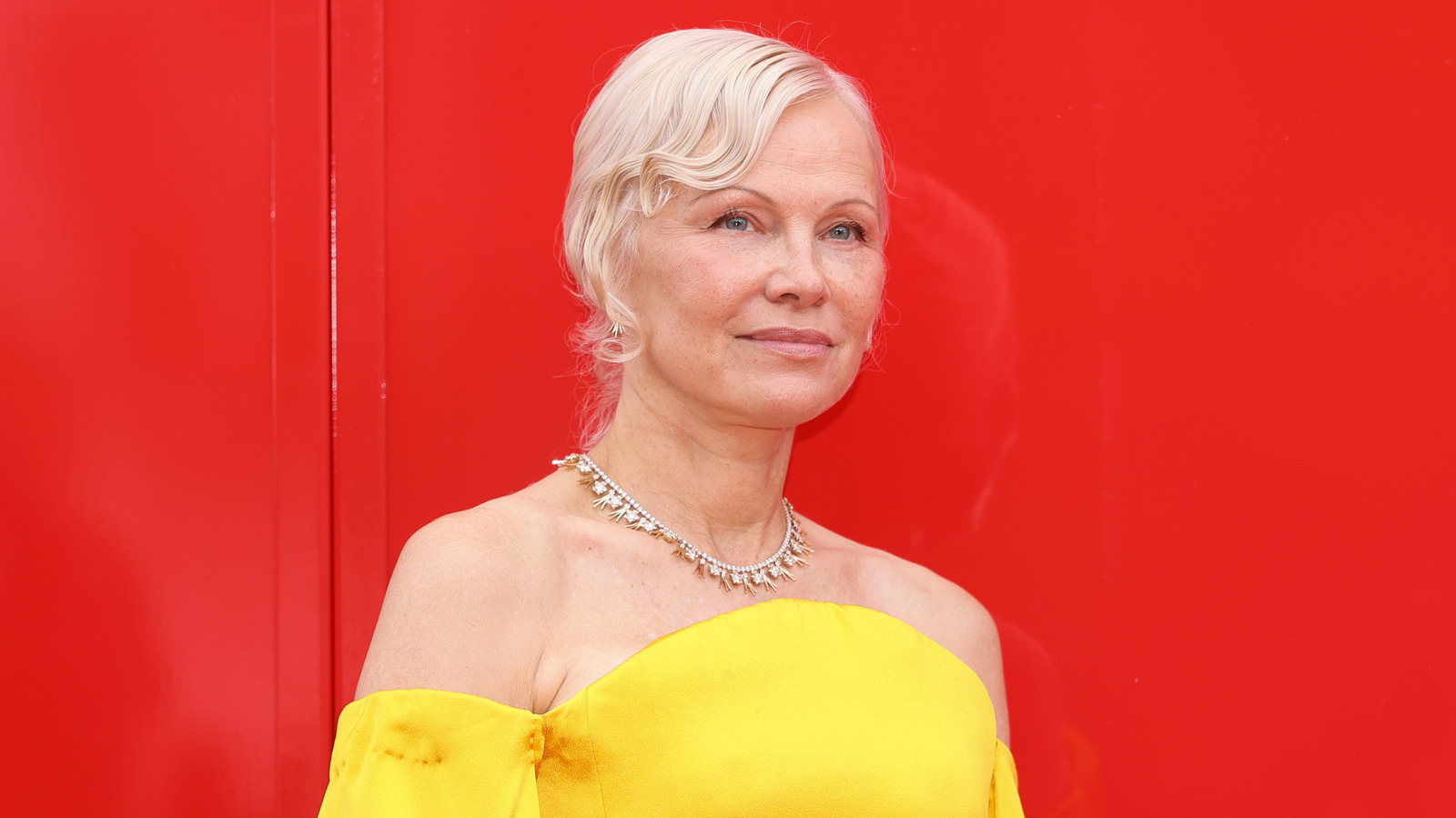
Pamela Anderson was given a decade to live with hepatitis C

Noam Galai/Getty Images
In a statement shared in March 2002, Pamela Anderson revealed that she had been diagnosed with hepatitis C after sharing a tattoo needle with her ex-husband, Tommy Lee. The “Baywatch” star wrote that Lee hadn’t informed her that he had the liver disease, which is brought on by direct contact with blood that’s been infected with the hepatitis C virus.
Speaking at the amfAR Gala (via Variety) in 2026, Anderson said that her diagnosis was essentially a “death sentence,” and doctors had told her she might only have a decade or so left. After admitting that the life-altering diagnosis had an effect on many of her decisions, she explained, “It was not fear of death, but fear of what might happen to my young children. It turned my life inside out.” Meanwhile, in a November 2015 chat with Entertainment Tonight, the “Naked Gun” star shared that Lee had encouraged her to undergo a three-month treatment for hepatitis C, and it had worked.
In her speech at the amfAR Gala, Anderson admitted that the treatment, which was relatively new in 2015, had cost essentially all her savings. While reflecting on her health journey, Anderson admitted that the shame and guilt from her diagnosis is still a part of her. Concluding her speech with an empowering message, Anderson said, “I’m not a victim, I’m a victor. I am strong and capable, more now than I could ever dream of … I’m not the damsel in distress, no matter how easy that role is to play.” Suffice it to say, Anderson’s reflections on her hepatitis C diagnosis hit home for survivors in more ways than one.
Valerie Harper tapped into her optimism after receiving a 3-month prognosis
Bettmann/Getty Images
Among the list of beloved ’80s sitcom stars who faced cancer decades later is Valerie Harper. In March 2013, the “Rhoda” star told People that doctors had diagnosed her with terminal brain cancer and informed her that she might only have three months left to live. However, Harper took many medical professionals by surprise, outliving her prognosis by several years.
During a November 2017 chat with People, Harper’s oncologist, Dr. Jeremy Rudnick, revealed that following her diagnosis, she had started taking a medication that hadn’t been on the market for long. While the medication worked for quite some time, she eventually began having seizures and cognitive issues, which led doctors to put her on another experimental medication that worked for her. Still, Dr. Rudnick believed that Harper’s journey was nothing short of a miracle.
When Harper appeared on “The Dr. Oz Show” in November 2014, the talk show host naturally couldn’t help but ask how she beat the odds. Harper credited acupuncture, herbal teas, her phenomenal team of doctors, and her husband, Tony Cacciotti, who encouraged her to stay physically active. Then, she detailed how she used positive visualization and envisioned herself as Tinker Bell tapping the cancer and watching it disappear into a white light. Harper also opened up about how her cancer diagnosis had reshaped her perspective on life, saying, “Every moment that you sit there in fear, letting stress and fear take over, you have forfeited that moment that could be filled with joy.” After continuing to spread her joy and positivity in the following years, Harper ultimately passed away in August 2019 at the age of 80.
Dolph Lundgren received an incorrect treatment for kidney cancer
Brianna Bryson/Getty Images
During a May 2023 appearance on “In Depth with Graham Bensinger,” Dolph Lundgren shared that he had undergone surgery in 2015 to remove a tumor from his kidney, which a biopsy later revealed to be cancerous. In the following years, the “Rocky IV” star continued undergoing regular screenings to mitigate his risk of cancer. However, even with all his diligence, an MRI scan from 2020, which he underwent due to acid reflux, showed tumors in his kidneys. While Lundgren underwent treatment for the tumors, his doctor didn’t share much information about his condition.
When the Swedish actor reflected on the doctor’s odd behavior, he felt they didn’t want to tell him much because they thought there wasn’t much hope for him. It wasn’t until 2021 that a doctor told him his cancer had spread and he likely had two or three years left to live. From the doctor’s tone, “The Expendables” star sensed he probably had less time than they were letting on. Reflecting on his reaction to the bleak prognosis, Lundgren said, “You kind of look at your life, and [go], ‘I’ve had a great life. […] I’ve lived like five lifetimes in one already.'”
However, he still felt sad that his now-wife, Emma Krokdal, and his kids would have to go on without him. In October 2026, Lundgren told Us Weekly that he had decided to get a second opinion on his cancer, which revealed that he had been undergoing an incorrect treatment. When he started undergoing the correct treatment, positive results soon followed. Eventually, he became cancer-free.
Tim Green’s ALS diagnosis came with a 6-month prognosis
Speaking to CBS News in November 2018, Tim Green shared that he first noticed signs that something was amiss when he couldn’t use a nail clipper. However, it wasn’t until summer 2016 that the former NFL player opened up about his symptoms, telling his son that he was finding it difficult to hold onto weights. Shortly afterward, a neurologist diagnosed him with ALS.
In May 2022, Green’s family told The Athletic that a well-reputed neurologist had informed him that he only had six months to live. However, Green is outliving his prognosis by a long shot. In a May 2026 interview with WABC-TV, he said that the bleak prognosis forced him to choose between two perspectives on life. “You can shrink or you can decide that your life still has meaning. I chose meaning,” he said. Green later elaborated, “My perspective shifted from asking, ‘Why is this happening?’ to asking, ‘What can still be done with what remains?'”
The former Atlanta Falcons player has written several middle-grade sports fiction novels since his diagnosis. Green notably uses eye-tracking technology to write some of his works after losing the ability to speak or move due to ALS. Green also uses assistive voice technology to co-host the “Nothing Left Unsaid” podcast with his son. He has also raised millions of dollars for ALS research through the Tackle ALS campaign. In his chat with WABC-TV, Green said that although a purpose-driven life helps him, it doesn’t magically erase his issues with the disease. However, it does make them smaller in comparison.
John Tesh discovered a way to manage aggressive prostate cancer
Michael Tullberg/Getty Images
Speaking to Forbes in November 2025, John Tesh admitted that in 2015, his hectic schedule and personal life caused him to delay his routine health checkups by six months. In the five years leading up to that checkup, his prostate-specific antigen (PSA) test, a blood test screening for prostate cancer, was a low 0.4. However, a rectal exam from his delayed health checkup revealed some red flags. After further testing, he learned that he had stage 3 prostate cancer.
The former “Entertainment Tonight” host said that he has a rare type of prostate cancer that doesn’t show up on the PSA test but has a Gleason score, a determinant of the level of aggressiveness of prostate cancer, of 9 out of 10. He was also told that his cancer was inoperable, and that he had 18 months to live. Recalling his reaction to the prognosis in an October 2025 appearance on “Good Morning America,” Tesh said, “I just was like, ‘OK, this is over.’ And so, there was some tears. It’s like getting a brick in the face.”
However, the musician’s wife, Connie Sellecca, pushed him not to give up hope. In November 2025, Tesh told People that he kept up his own research and ended up undergoing a radical prostatectomy. Sadly, the procedure didn’t work in the long run, and his scans from 2017 showed that his cancer had returned and spread. However, Tesh’s wife connected him to a friend who had undergone treatment at the MD Anderson Cancer Center at the University of Texas. Thanks to the help of doctors there, Tesh found ways to better manage the cancer.



