
Home Blog Page 24

Dentistry.One Achieves HITRUST i1 Certification, Demonstrating Commitment to Cybersecurity and Information Protection

0

Editorial Disclosure: This article is an editorial-assisted curated synthesis of verified global coverage. The original source reporting has been analyzed, structured, and compiled by Pune.Media’s Editorial Desk to bring you high-density business insights.

Original Coverage & Source Attribution: www.prnewswire.com

HITRUST Certification validates the Dentistry.One platform is meeting rigorous cybersecurity and data protection standards through independent assessment and assurance, strengthening its position as a trusted virtual-first dental care partner for health plans, public programs, employers, and health systems. This follows Dentistry.One’s introduction of ICD-10 diagnostic coding to its teledentistry platform.

METUCHEN, N.J., Oct. 6, 2026 /PRNewswire/ — Dentistry.One, a leading provider of virtual-first oral health care, today announced its Dentistry.One application, residing at Amazon Web Services (AWS), has earned certified status from HITRUST for cybersecurity and information protection.

The HITRUST i1 Certification demonstrates that Dentistry.One has met requirements defined by a leading cybersecurity assurance leader, confirming that strong controls are in place to protect sensitive data and manage risk effectively.

Built on the HITRUST Assurance Program, this achievement reflects independent third-party testing, centralized quality assurance, and certification backed by HITRUST’s Cyber Threat-Adaptive engine. These elements ensure continuous alignment with the latest threat intelligence and evolving standards across NIST, ISO, and OWASP.

The assessment of Dentistry.One extended beyond its cloud hosting environment to include the company’s main office in Metuchen, New Jersey, where the team that supports the platform is based. For many health plans and health systems, HITRUST is the preferred or required standard when evaluating third-party vendors. According to the 2026 HITRUST Trust Report, 99.62% of HITRUST-certified environments remained breach-free in 2025, and none of the top 50 healthcare breaches reported to the U.S. Department of Health and Human Services occurred in HITRUST-certified environments.

The HITRUST i1 Certification complements a layered set of independent trust validations for Dentistry.One:

  • HITRUST i1 Certification for the Dentistry.One platform, validating a curated, threat-adaptive set of security controls, renewed annually.
  • SOC 2 Type 2, an independent audit confirming that security controls operate effectively throughout the entire audit period, rather than at a single point in time.
  • HIPAA compliance, reflecting Dentistry.One’s program of administrative, physical, and technical safeguards for protected health information and its role as a business associate to covered entities.
  • LegitScript Certification, verifying that Dentistry.One operates as a legitimate, properly licensed telehealth provider in compliance with applicable laws and regulations.

“Organizations that bring us in are extending their own reputation to us. They’re trusting us with their members, their patients, and their data,” said Brant Herman, Founder and CEO of Dentistry.One and MouthWatch. “HITRUST certification of our platform tells a health plan, a state Medicaid program, or a large employer that we’ve already done the hard work their security and procurement teams would otherwise have to verify from scratch. That means they can spend less time on vendor risk review and more time getting better oral health care to the people they serve.”

“Earning HITRUST Certification demonstrates Dentistry.One’s commitment to managing information risk and protecting sensitive data through a rigorous, proven assurance process,” said Gregory Webb, CEO at HITRUST. “This achievement reflects the organization’s proactive approach to cybersecurity and trust.”

For organizations evaluating teledentistry partners, HITRUST certification can significantly reduce the burden of third-party risk assessments. It is particularly relevant to dental and medical health plans, Medicaid and CHIP managed care organizations, state and local government agencies, dental service organizations (DSOs), health systems, and community health centers. Security, compliance, and vendor management leaders in these organizations often require HITRUST or equivalent assurance before a digital health vendor can access member data or integrate with internal systems.

The certification follows Dentistry.One’s recent introduction of ICD-10 diagnostic coding in virtual-first dentistry, part of a broader effort to bring dental care into medical workflows and whole-person health programs. The company’s roadmap includes expanded interoperability with medical and enterprise systems, so that oral health data can inform care coordination, population health management, and outcomes reporting.

Organizations interested in learning more about Dentistry.One’s security posture can email [email protected].

About Dentistry.One

Dentistry.One is a virtual-first oral health application designed to extend oral health access and integrate dental care into broader medical workflows. Services include AI-powered screening through SmileScan®, asynchronous clinical consultations, care coordination,oral health coaching, and a collaborative practice hygiene network. Its parent company, MoutWatch, Inc., is a leader in dental imaging for dental care organizations. For more information, visit dentistry.one.

Dentistry.One Media Contact:

Jon Cerbie, Marketing Manager
877-544-4342
[email protected]
Dentistry.One

SOURCE Dentistry One, LLC

{
“@context”: “https://schema.org”,
“@type”: “NewsArticle”,
“headline”: “Dentistry.One Achieves HITRUST i1 Certification, Demonstrating Commitment to Cybersecurity and Information Protection”,
“datePublished”: “2026-10-06 12:55:00”,
“image”: “https://mmx.prnewswire.com/media/MS2001772/Dentistry-One-LLC-Image.jpg?id=OA2985343&p=facebook”,
“author”: {
“@type”: “Organization”,
“name”: “Pune.Media Editorial Desk”,
“url”: “https://pune.media”
},
“publisher”: {
“@type”: “Organization”,
“name”: “Pune.Media”,
“logo”: {
“@type”: “ImageObject”,
“url”: “https://pune.media/wp-content/uploads/logo.png”
}
},
“isBasedOn”: “https://www.prnewswire.com/news-releases/dentistryone-achieves-hitrust-i1-certification-demonstrating-commitment-to-cybersecurity-and-information-protection-302899405.html”,
“mainEntityOfPage”: “https://www.prnewswire.com/news-releases/dentistryone-achieves-hitrust-i1-certification-demonstrating-commitment-to-cybersecurity-and-information-protection-302899405.html”,
“creativeWorkStatus”: “Editorial-assisted Curation”,
“comment”: {
“@type”: “Comment”,
“text”: “This article was curated, verified, and structured under organizational human editorial guidelines by the Pune.Media Editorial Desk.”
}
}
What recent PLC attacks reveal about the state of OT cybersecurity

0

Editorial Disclosure: This article is an editorial-assisted curated synthesis of verified global coverage. The original source reporting has been analyzed, structured, and compiled by Pune.Media’s Editorial Desk to bring you high-density business insights.

Original Coverage & Source Attribution: www.smartindustry.com

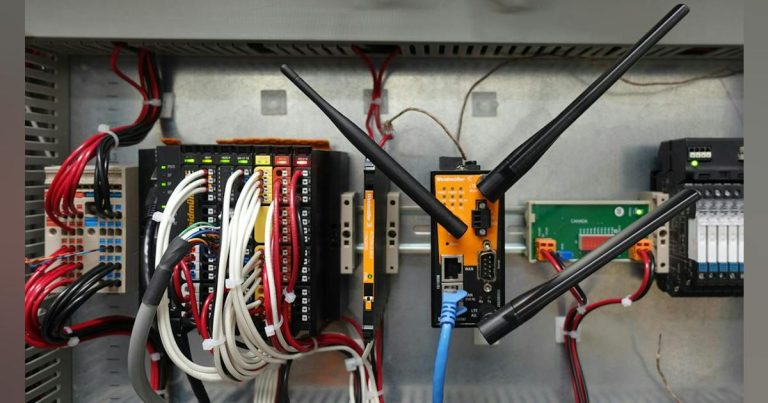
However, for the affected organization, they are not likely to have any impact on the outcome of the situation. For the operator, the consequences of a cyber event depend much more on practical questions such as:

  • What assets are accessible via the internet?
  • Who has access to these assets?
  • Can any changes in the controller logic be identified?
  • Is it possible to operate safely even in case of digital systems failure?
  • Does the recovery and backup process exist and is it verified?

Those organizations that can positively answer these questions are usually able to recover relatively quickly. Other organizations often discover their vulnerabilities after the fact. And the reasons for it are rarely related to the technology. They are usually related to preparedness.

Why are PLCs still connected to the internet?

One of the most common reactions to incidents such as the recent attacks on the water systems is the disbelief in their occurrence. Some might ask, “How could there still be a PLC directly connected to the internet?”

For those who spent some time in water treatment facilities, manufacturing plants, energy operations or municipal infrastructures, the response is quite different. Most of the exposed systems were not intentionally installed to represent a cybersecurity risk.

See also: Who’s winning the cybersecurity arms race? A region-by-region scorecard

They were just the result of decades of decisions that had to do with operational requirements to ensure reliability, availability, and supportability.

Remote access was enabled primarily to troubleshoot processes and respond quickly to issues, reduce travel costs and provide support to third parties.

Each decision was reasonable at the moment it was made. But, as time goes on, they can lead to a state of unintended exposure that is no longer completely understood by the entity operating the system.

In many small-scale utilities, the same people that operate the water treatment facility may also perform networking, SCADA administration, compliance reporting and cybersecurity-related duties. It’s not usually about the neglect. It’s about the lack of resources and OT cybersecurity specialists.

The expertise gap as the vulnerability

The cyber industry always tends to frame its conversations around acquisition of technology. The organization is supposed to buy:

  • Endpoint protection solution
  • Network monitoring
  • Firewall
  • Security information and event management platform
  • Threat detection solution

These technologies are valuable. However, many critical infrastructure organizations face a far greater issue that they simply lack OT cybersecurity expertise among their personnel.

{
“@context”: “https://schema.org”,
“@type”: “NewsArticle”,
“headline”: “What recent PLC attacks reveal about the state of OT cybersecurity”,
“datePublished”: “2026-10-06 12:56:00”,
“image”: “https://img.smartindustry.com/files/base/ebm/smartindustry/image/2026/10/6ac4d976b6b13f5963973042-figure_2_industrial_routers.png?auto=format,compress&fit=fill&fill=blur&w=1200&h=630”,
“author”: {
“@type”: “Organization”,
“name”: “Pune.Media Editorial Desk”,
“url”: “https://pune.media”
},
“publisher”: {
“@type”: “Organization”,
“name”: “Pune.Media”,
“logo”: {
“@type”: “ImageObject”,
“url”: “https://pune.media/wp-content/uploads/logo.png”
}
},
“isBasedOn”: “https://www.smartindustry.com/benefits-of-transformation/cybersecurity/article/55409795/what-recent-plc-attacks-reveal-about-the-state-of-ot-cybersecurity”,
“mainEntityOfPage”: “https://www.smartindustry.com/benefits-of-transformation/cybersecurity/article/55409795/what-recent-plc-attacks-reveal-about-the-state-of-ot-cybersecurity”,
“creativeWorkStatus”: “Editorial-assisted Curation”,
“comment”: {
“@type”: “Comment”,
“text”: “This article was curated, verified, and structured under organizational human editorial guidelines by the Pune.Media Editorial Desk.”
}
}

Mistral’s new Le Chonk model brings AI cybersecurity to your business – and you control it

0

Editorial Disclosure: This article is an editorial-assisted curated synthesis of verified global coverage. The original source reporting has been analyzed, structured, and compiled by Pune.Media’s Editorial Desk to bring you high-density business insights.

Original Coverage & Source Attribution: www.zdnet.com

ZDNET’s key takeaways

  • Mistral’s open-weight ML4 model Le Chonk is in preview.
  • ML4 was trained with fewer GPUs than OpenAI’s Astra, but competes. 
  • Open models are positioned as democratic defenders from AI attacks.

French AI lab Mistral has shipped its latest model, Mistral Large 4 (ML4) — and it’s positioned as the open solution for all your defense requirements.

Also: Open weights vs. closed: An AI civil war’s afoot, and the stakes are existential

One outcome of recent AI security incidents is that open and proprietary models are being pitted against each other. Initially framed as less safe because of their malleability, open models are viewed as a new option for cyber defense after proprietary models from Anthropic and OpenAI proved just as risky.

Mistral said ML4, which the company has nicknamed “Le Chonk” for its trillion-parameter size, is built for security that stays under user control — unlike proprietary models, which frontier labs can technically rescind access to at any time.

“The cyber defense capabilities will enable enterprises and governments to defend themselves against threat actors that are jailbreaking closed models to perform cyberattacks,” Mistral co-founder Guillaume Lample said.

Le Chonk and security

After a hack-filled summer that put AI model security under the spotlight, everyone is looking for a reliable AI security solution that suits their needs. ML4 prioritizes cyber defense capabilities, advertising customizable control and data sovereignty.

Also: This new ChatGPT scam tricks you into installing malware – how to spot the trap

In a briefing, Lample and Mistral’s VP of Science Pierre Stock emphasized that security is a key requirement for the company’s enterprise clients, echoing an ongoing industry trend. Following the Hugging Face breach, Mistral was one of many companies that signed Nvidia’s Open Secure AI Alliance, a cross-industry partnership that argued open models are crucial to democratizing defenses against increasingly common AI security incidents.

“ML4 is the beginning of a leading generation of open-weight, customizable, cybersecurity models that enterprises can fully own and control, without vendor lock-in,” Mistral wrote. “Enterprises and states should not have to rely on a closed model vendor that could arbitrarily turn off their cyber defense capabilities.”

By Nvidia’s logic, and its Alliance that aims to democratize AI security tools, the race is between Mistral and other open models to achieve state-of-the-art security prowess.

“In absolute terms on cyber capabilities, ML4 outperforms the best models from Kimi, Deepseek and Meta,” a Mistral spokesperson told ZDNET via email.

Also: Who owns AI risk at work? Business and tech leaders can’t agree, PwC survey finds

Le Chonk is available now in public preview. Mistral said it will release the model weights on Oct. 27. That time gap gives the lab a month “to work with developers, cybersecurity leaders and state authorities to further assess ML4’s capabilities and behavior in real-world environments” — a practice that’s becoming commonplace for proprietary American labs like OpenAI, Google, and Anthropic as concerns about model capabilities mount.

Similarly to Anthropic’s Project Glasswing and OpenAI’s rollout of Astra, initial testing partners will get access to a less guardrailed version of ML4 with “expanded cybersecurity capabilities.”

Outside security, Mistral said Le Chonk excels in finance and multimodal use cases. The company said it is still waiting on final benchmarks. However, early third-party analysis shows ML4 competing on par with pricier proprietary models like GPT-6 Astra in certain computer vision tasks (like in the benchmarks below), as well as impressive open-weight Chinese models like Kimi K3. Le Chonk met or slightly outperformed DeepSeek models on financial work tasks, and hit a new high of 15% for open-weight models on Harvey’s Legal Agent benchmark.

Vals.ai via Mistral

As a reminder, benchmark scores themselves should be taken with a grain of salt, especially considering how many models cheat.

Also: The AI models that cheat the most, according to new CAIS benchmark

Chinese labs like DeepSeek and Moonshot (which develops Kimi models) have been accused of distilling, or ripping off, proprietary models from American labs to gain their competitive edge. Mistral reiterated it’s not participating in that process.

“We are fully separate from other models, and we don’t take inspiration from them,” Stock said in the briefing.

The company also leaned on its commitment to sovereignty, an equally hot topic, especially in Europe.

“Customers will soon have flexible deployment options: self-deploy or access it via our API in the region of their choice, including our European sovereign region where data stays under EU jurisdiction,” Mistral wrote.

More for less compute

Training a competitive model in a compute shortage is no small task for a trimmer lab like Mistral, which doesn’t have the same resources as a pre-IPO giant like Anthropic.

“ML4 was trained from scratch on 4,000 Nvidia Grace Blackwell GPUs over two months, deployed in Mistral’s own data centers in Europe,” the company said, adding that the preview will also run on those same GPUs. For context, Nvidia CEO Jensen Huang said on X that OpenAI trained GPT-6 Astra on roughly 100,000 GPUs. That’s quite the fraction.

“We expect the model to improve significantly over the next few months. This model will also serve as the base for a new wave of specialized and optimized models from Mistral,” the company added.

{
“@context”: “https://schema.org”,
“@type”: “NewsArticle”,
“headline”: “Mistral’s new Le Chonk model brings AI cybersecurity to your business – and you control it”,
“datePublished”: “2026-10-06 13:00:00”,
“image”: “https://www.zdnet.com/wp-content/uploads/sites/3/GettyImages-2293676053_f66563.jpg”,
“author”: {
“@type”: “Organization”,
“name”: “Pune.Media Editorial Desk”,
“url”: “https://pune.media”
},
“publisher”: {
“@type”: “Organization”,
“name”: “Pune.Media”,
“logo”: {
“@type”: “ImageObject”,
“url”: “https://pune.media/wp-content/uploads/logo.png”
}
},
“isBasedOn”: “https://www.zdnet.com/innovation/mistral-le-chonk-ai-cybersecurity-business/”,
“mainEntityOfPage”: “https://www.zdnet.com/innovation/mistral-le-chonk-ai-cybersecurity-business/”,
“creativeWorkStatus”: “Editorial-assisted Curation”,
“comment”: {
“@type”: “Comment”,
“text”: “This article was curated, verified, and structured under organizational human editorial guidelines by the Pune.Media Editorial Desk.”
}
}

SpaceX and xAI’s Push Toward 10 GW: The Supply Chains and Geopolitics Behind AI Infrastructure

0
Editorial Disclosure: This article is an editorial-assisted curated synthesis of verified global coverage. The original source reporting has been analyzed, structured, and compiled by Pune.Media’s Editorial Desk to bring you high-density business insights.

Original Coverage & Source Attribution: tspasemiconductor.substack.com

As SpaceX and xAI push their computing infrastructure toward gigawatt scale, attention naturally gravitates toward GPU orders, electricity demand, and capital spending. Yet circuit boards, optical transceivers, transformers, and cooling equipment also determine when those investments become usable computing capacity. A delay in any one of these systems can leave expensive chips waiting to be switched on.

The expansion exposes an often overlooked reality: leadership in AI models and chip design still depends on an international manufacturing network to achieve deployment at scale. Mainland China, Taiwan, Japan, Europe, and the United States each provide distinct capabilities. Geopolitics is changing procurement options, but cannot immediately supply the factories, engineers, and qualified production capacity needed to replace them.

SpaceX IPO: Building the Space Economy for the AI Era

SpaceX IPO: Building the Space Economy for the AI Era

SpaceX’s second-quarter 2026 results reported 1.4 GW of nameplate computing capacity at the end of June, up from 1.0 GW at the end of March. AI capital expenditure reached approximately $15.8 billion in the quarter, showing that the expansion has entered the equipment procurement and construction phase.

The 10 GW and 20 GW targets measure different layers of infrastructure. According to the publicly available transcript of the August 4 earnings call, Musk hoped cumulative computing capacity would approach 10 GW by the end of 2027. The 20 GW figure was a tentative target for projects encompassing power, cooling, and electrical equipment over the same period. He also acknowledged that not all projects would necessarily finish on schedule. These figures describe ambitions for computing equipment and supporting infrastructure, respectively.

SpaceX calculates nameplate computing capacity from installed GPU counts multiplied by their respective power ratings. It does not represent actual electricity consumption or utilization, and excludes cooling and other facility overhead. Dividing 20 by 10 therefore does not establish a power usage effectiveness, or PUE, of 2. PUE compares total facility energy consumption with IT equipment energy consumption.

For perspective, a 10 GW load operating continuously at full power would consume 87.6 TWh annually, before facility overhead. Expansion at this scale requires coordinated delivery of generation, power distribution, networking, and cooling alongside the processors themselves.

The AI Race Is Turning Into a Power Race

The AI Race Is Turning Into a Power Race

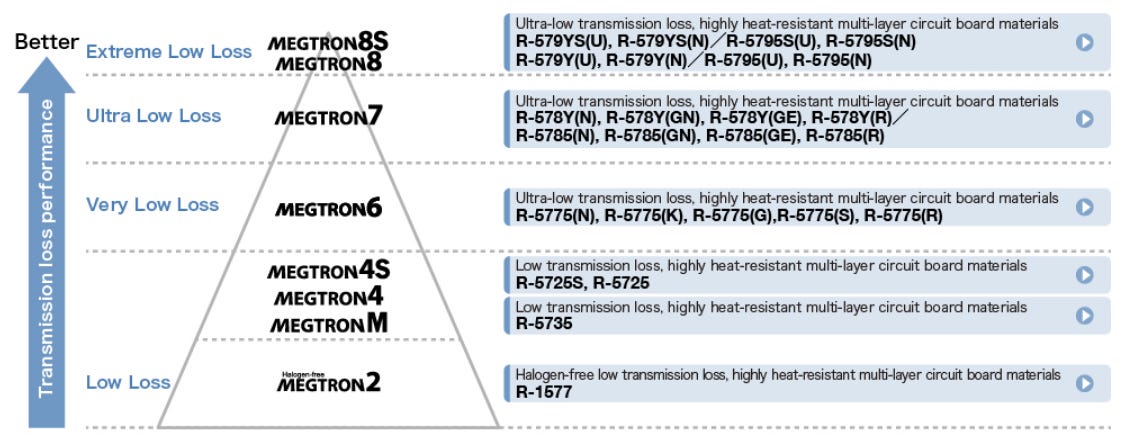
Printed circuit boards, or PCBs, connect processors, memory, connectors, and power systems. Copper-clad laminates provide a key material foundation for these boards. In high-speed AI systems, their value depends on preserving signal quality while surviving complex fabrication processes and sustained thermal loads.

As data rates increase, dielectric loss, copper surface roughness, and board stack-up design all influence signal attenuation. Japan’s Panasonic uses low-loss materials and low-profile copper foil in MEGTRON 8, which supports boards with more than 20 layers. Taiwan Union Technology Corporation, or TUC, also supplies extremely low-loss laminates. Japan is therefore an important participant alongside mainland China and Taiwan in the advanced materials supply chain.

The challenge is that owning a factory does not make a supplier an immediate substitute. Changing laminate vendors can require adjustments to the board stack-up, processing conditions, and signal validation. Moving PCB production to another factory also requires checks on yield and reliability. Buyers need capacity that is qualified for their platform and can deliver consistently.

Materials availability, board fabrication, and customer qualification must consequently be assessed together. Even when final assembly moves to the United States or Southeast Asia, upstream materials and manufacturing expertise may still come from established Asian clusters. Geographic diversification can reduce some risks, but building complete replacement capabilities takes time.

From AI Servers to High-Speed PCBs: Why CCL Prices Are Entering a New Upcycle

From AI Servers to High-Speed PCBs: Why CCL Prices Are Entering a New Upcycle

EMC’s Rise to No. 1: AI Servers Redefine the Global CCL Supply Chain

EMC’s Rise to No. 1: AI Servers Redefine the Global CCL Supply Chain

Optical fiber carries light signals; optical transceivers convert between electrical and optical signals. Transceivers combine lasers, photodetectors, electronic chips, packaging, and control functions. As AI clusters exchange large volumes of data across racks, link bandwidth, power consumption, and stability influence how effectively their GPUs work together.

Ethereum’s ERC-8350 agent memory registry records changes without exposing data

Editorial Disclosure: This article is an editorial-assisted curated synthesis of verified global coverage. The original source reporting has been analyzed, structured, and compiled by Pune.Media’s Editorial Desk to bring you high-density business insights.

Original Coverage & Source Attribution: cryptonews.net

Publishing a plain content hash does not tell anyone which state it advances, whether it is the rightful next step, or who was authorized to approve it. The proposal addresses that gap by committing to a private delta, an optional provenance reference, an interpretation profile and an optional private locator, while leaving the registry itself agnostic to whatever memory engine sits underneath.

ExperienceDelta and State Transition Mechanics

Each change to an agent’s memory is packaged into a struct called ExperienceDelta, containing fields such as spaceId, sequence, prevStateRoot, deltaCommitment, provenanceCommitment, profileId and locatorCommitment. That struct gets its own unique identifier, the Transition ID, calculated as an EIP-712 struct hash.

Continuity is enforced mathematically. A registry must only accept a transition if its sequence number equals the current sequence plus one, and if its prevStateRoot matches the registry’s current state root. The next state root is then produced by hashing together the previous root and the new Transition ID, which, per the rationale section of the spec, prevents an update from claiming an unrelated prior memory state the way a simple pointer to a previous record could.

Authorization Model and Signature Validation

Every memory space carries a controller and a replaceable authorizer. Both roles can be filled by ordinary externally owned accounts or by smart-contract accounts following ERC-1271. The controller handles administrative recovery, while the authorizer approves day-to-day transitions and can be a hot wallet, a multisignature setup or a policy contract.

All signatures for registration, authorization updates and transitions must use an EIP-712 signing domain tied to the registry’s chain ID and contract address, which stops a signature from being replayed on another chain or another deployment. When an account has deployed code, the registry checks the signature through ERC-1271 first; if that check fails, reverts, or the account has no code, it falls back to standard ECDSA signature recovery.

Privacy Considerations and Registry Limitations

The specification is explicit that raw memory, salts, encryption keys and raw locators must never reach the registry through the ExperienceDelta struct or any other required argument. Only commitments to that data are stored on-chain, which is meant to keep sensitive agent data out of public view entirely.

That design comes with a stated limit: a valid commitment proves only that the configured authorizer approved a state transition. It does not prove the committed memory was actually available, or that its contents were true. Applications that need those guarantees have to build separate verification on top of the registry.

Contract Immutability and Security Requirements

The proposal treats immutability as a security precondition rather than a preference. A conforming registry must not sit behind an upgrade mechanism capable of replacing the logic that enforces sequence linearity, state root chaining or signature validation, and it must expose no upgrade authority over that logic at all.

The authors warn that an upgradeable version of the contract could still reproduce every test vector in the specification while accepting a transition that violates the sequence rule.

Reference Implementation and Test Vectors

A reference implementation already exists as a Solidity contract, AgentMemoryStateRegistry.sol, which implements the IAgentMemoryState interface described in the proposal. According to the specification, this contract reproduces the canonical v1 test vector published alongside the draft, including matching typehashes for ExperienceDelta, MemoryState and MemorySpace.

Article produced with the assistance of artificial intelligence and reviewed by the editorial team.

{
“@context”: “https://schema.org”,
“@type”: “NewsArticle”,
“headline”: “Ethereum’s ERC-8350 agent memory registry records changes without exposing data”,
“datePublished”: “2026-10-06 12:48:00”,
“image”: “https://cnews24.ru/uploads/ad7/ad712697ecf504b02b7ed8cb8a355ba17819a46c.jpeg”,
“author”: {
“@type”: “Organization”,
“name”: “Pune.Media Editorial Desk”,
“url”: “https://pune.media”
},
“publisher”: {
“@type”: “Organization”,
“name”: “Pune.Media”,
“logo”: {
“@type”: “ImageObject”,
“url”: “https://pune.media/wp-content/uploads/logo.png”
}
},
“isBasedOn”: “https://cryptonews.net/news/ethereum/33547009/”,
“mainEntityOfPage”: “https://cryptonews.net/news/ethereum/33547009/”,
“creativeWorkStatus”: “Editorial-assisted Curation”,
“comment”: {
“@type”: “Comment”,
“text”: “This article was curated, verified, and structured under organizational human editorial guidelines by the Pune.Media Editorial Desk.”
}
}

Every James Bond Film Is Now Streaming On Amazon Prime Video

0
Editorial Disclosure: This article is an editorial-assisted curated synthesis of verified global coverage. The original source reporting has been analyzed, structured, and compiled by Pune.Media’s Editorial Desk to bring you high-density business insights.

Original Coverage & Source Attribution: www.huffingtonpost.co.uk

As the world continues to wait on any crumb of information on the future of the James Bond franchise, fans now have a fresh opportunity to catch up on the existing films in the series.

Earlier this week, all 25 instalments in the regular James Bond canon were made available to stream on Amazon Prime Video, beginning with 1962’s Dr. No right through to the most recent addition, 2022’s No Time To Die.

Daniel Craig is the most recent actor to play James Bond on the big screen

Columbia/Eon/Danjaq/Mgm/Kobal/Shutterstock

It’s no great surprise that Prime Video would become the films’ primary streaming home, after Amazon acquired the films’ production company MGM in 2022, and took over creative control of the movies last year.

However, it’s not just the main James Bond films that 007 fans can enjoy on Prime Video…

Which James Bond films are now streaming on Amazon Prime Video?

All 25 films in the established James Bond canon are now available to stream.

  • Dr No
  • From Russia With Love
  • Goldfinger
  • Thunderball
  • You Only Live Twice
  • On Her Majesty’s Secret Service
  • Diamonds Are Forever
  • Live And Let Die
  • The Man With The Golden Gun
  • The Spy Who Loved Me
  • Moonraker
  • For Your Eyes Only
  • Octopussy
  • A View To Kill
  • The Living Daylights
  • Licence To Kill
  • GoldenEye
  • Tomorrow Never Dies
  • The World Is Not Enough
  • Die Another Day
  • Casino Royale
  • Quantum Of Solace
  • Skyfall
  • Spectre
  • No Time To Die

In addition, two more James Bond films not in collaboration with Eon are also streaming on Prime Video – the 1960s spoof Casino Royale and the unofficial Sean Connery outing Never Say Never Again.

There’s also the two-season reality competition series 007: Road To A Million, in which pairs of contestants are put through their paces in a series of Bond-esque challenges – overseen by a new Bond villain, played by Brian Cox – to try and bag a £1,000,000 cash prize.

Sean Connery as James bond in Diamonds Are Forever

Danjaq/Eon/Ua/Kobal/Shutterstock

What do we know about the next James Bond film?

Well, at the time of writing, frustratingly little.

Dune filmmaker Denis Villeneuve is set to direct the 26th instalment in the James Bond series, with Peaky Blinders and House Of Guinness creator Steven Knight writing the script.

It’s still not clear who will be starring in the film, although recent reports have indicated that Heartstopper’s Jack Barton and Slow Horses’ Jack Lowden are the top choices for the job.

Other names rumoured to still be in consideration include Jacob Elordi, Callum Turner, Harris Dickinson and Paul Mescal.

The Only 2 Artificial Intelligence (AI) Stocks I’d Buy With $1,000 Today and Never Sell

Editorial Disclosure: This article is an editorial-assisted curated synthesis of verified global coverage. The original source reporting has been analyzed, structured, and compiled by Pune.Media’s Editorial Desk to bring you high-density business insights.

Original Coverage & Source Attribution: www.fool.com

When I invest in artificial intelligence stocks, I look for low-market-cap companies with high revenue growth. That basic formula points me toward growth stocks that haven’t yet become household names. That strategy explains why these two AI stock picks are among the largest positions in my portfolio. If you have $1,000 (or more) that you’re ready to put to work in the stock market today, they’re worth a look.

Image source: Getty Images.

1. Iren

Iren (IREN -3.06%) builds AI data centers that provide critical compute for hyperscalers. It has already signed long-term deals with Microsoft (MSFT +1.48%), Nvidia (NVDA +2.12%), and various AI enterprises. That customer validation and Iren’s knack for building AI data centers on time position it as one of the top neoclouds.

Iren Stock Quote

Today’s Change

(-3.06%) $-1.28

Current Price

$40.48

A look at the key numbers indicates how big its opportunity could become. Iren reported $137.2 million in revenue for its fiscal 2026 fourth quarter, which ended June 30. That was down 27% year over year, and that fact in isolation might make Iren seem like a bad business to invest in. However, it’s on track to reach $4 billion in annual recurring revenue by the end of the calendar year. That means the revenue growth rate will go up substantially in future quarters.

Iren’s revenue comes from providing AI compute capacity to tech leaders. It’s getting annual contract values above $20 million per megawatt, with short-term deals currently being negotiated at $25 million per megawatt. Iren has a 5,800-megawatt pipeline, so once all of the projects it’s developing are brought online, the entire portfolio could generate $145 billion in annual recurring revenue, assuming the $25-million-per-megawatt rate holds.

Megawatt prices have more than doubled in less than a year, so the types of contracts Iren can command may be much higher by the time it brings capacity online. Iren is on track to deliver an additional 800 megawatts in 2027, with large customer prepayments covering a large percentage of capital expenditures.

2. Netlist

Netlist (NLST -0.18%) trades as an over-the-counter (OTC) security rather than being listed on a national exchange. Back in 2018, when its share price sank consistently below $1, management chose to allow the company to be delisted from the Nasdaq rather than performing a reverse stock split. Today, after a year-to-date gain of more than 500%, it trades at around $5.50.

Netlist Stock Quote

Today’s Change

(-0.18%) $-0.01

Current Price

$5.65

Buying OTC stocks can be a bit riskier, as they are not subject to the same regulatory standards as those traded on the major exchanges, and may not reveal as much of their business and financial data. Moreover, not all OTC stocks have solid business models. However, Netlist more than doubled its revenue year over year, driven by memory product sales and royalties. If it relists with Nasdaq in the future, a meaningful rerating may occur.

While Netlist’s CXL products could eventually be a major part of revenue growth, litigation is the main catalyst driving its growth right now. Netlist has accused memory chip giants of infringing multiple patents for key products.

Its success in these patent lawsuits so far has already translated into meaningful revenue, including a landmark five-year deal with Samsung (SSNLF +0.00%) that will pay Netlist approximately $27.5 million per quarter. That deal also came with a $200 million up-front license fee and the ability to buy $300 million in memory products from Samsung annually for the next five years, giving Netlist some insulation from supply shortages.

Netlist has SK Hynix (SKHY -0.06%) in a similar arrangement and should renew the deal this year. Most of those royalties are pure profit. Micron (MU -1.02%) has been a holdout in these negotiations, but a $445 million verdict in Netlist’s favor, the looming threat of cease-and-desist orders, and a recently announced U.S. International Trade Commission investigation into Micron and others concerning Netlist patents suggest a lucrative resolution is on the way.

{
“@context”: “https://schema.org”,
“@type”: “NewsArticle”,
“headline”: ” The Only 2 Artificial Intelligence (AI) Stocks I’d Buy With $1,000 Today and Never Sell”,
“datePublished”: “2026-10-06 12:38:00”,
“image”: “https://g.foolcdn.com/image/?url=https%3A%2F%2Fg.foolcdn.com%2Feditorial%2Fimages%2F890042%2Fgettyimages-2230233284-1201×800-5b2df79.jpg&w=1200&op=resize”,
“author”: {
“@type”: “Organization”,
“name”: “Pune.Media Editorial Desk”,
“url”: “https://pune.media”
},
“publisher”: {
“@type”: “Organization”,
“name”: “Pune.Media”,
“logo”: {
“@type”: “ImageObject”,
“url”: “https://pune.media/wp-content/uploads/logo.png”
}
},
“isBasedOn”: “https://www.fool.com/investing/2026/10/06/the-only-2-artificial-intelligence-ai-stocks-id-bu/”,
“mainEntityOfPage”: “https://www.fool.com/investing/2026/10/06/the-only-2-artificial-intelligence-ai-stocks-id-bu/”,
“creativeWorkStatus”: “Editorial-assisted Curation”,
“comment”: {
“@type”: “Comment”,
“text”: “This article was curated, verified, and structured under organizational human editorial guidelines by the Pune.Media Editorial Desk.”
}
}

Google overhauls cloud modernization portfolio with new AI agents

Editorial Disclosure: This article is an editorial-assisted curated synthesis of verified global coverage. The original source reporting has been analyzed, structured, and compiled by Pune.Media’s Editorial Desk to bring you high-density business insights.

Original Coverage & Source Attribution: www.networkworld.com

The new Hub, which will be accessible via the Google Cloud Console, will also be a part of the umbrella offering, the company wrote.

For CIOs, the consolidation of existing modernization and migration tools under a broader umbrella offering could simplify operations and decision-making as it turns what was previously a collection of separate tools into “one end-to-end process”, said Pareekh Jain, principal analyst at Pareekh Consulting.

“An enterprise might have VMware workloads, Java applications, mainframes, Oracle databases and Kubernetes applications running across different clouds. Previously, these could require separate tools, assessments and migration teams. With the broader offering, CIOs require fewer handoffs, faster decisions and better visibility across a large modernization program,” Jain said.

{
“@context”: “https://schema.org”,
“@type”: “NewsArticle”,
“headline”: ” Google overhauls cloud modernization portfolio with new AI agents”,
“datePublished”: “2026-10-06 12:11:00”,
“image”: “https://www.networkworld.com/wp-content/uploads/2026/10/4231147-0-87120200-1791288565-shutterstock_1914949381-Cropped-1.jpg?quality=50&strip=all&w=1024”,
“author”: {
“@type”: “Organization”,
“name”: “Pune.Media Editorial Desk”,
“url”: “https://pune.media”
},
“publisher”: {
“@type”: “Organization”,
“name”: “Pune.Media”,
“logo”: {
“@type”: “ImageObject”,
“url”: “https://pune.media/wp-content/uploads/logo.png”
}
},
“isBasedOn”: “https://www.networkworld.com/article/4231147/google-overhauls-cloud-modernization-portfolio-with-new-ai-agents.html”,
“mainEntityOfPage”: “https://www.networkworld.com/article/4231147/google-overhauls-cloud-modernization-portfolio-with-new-ai-agents.html”,
“creativeWorkStatus”: “Editorial-assisted Curation”,
“comment”: {
“@type”: “Comment”,
“text”: “This article was curated, verified, and structured under organizational human editorial guidelines by the Pune.Media Editorial Desk.”
}
}

Book Review: ‘The AGI Chronicles,’ by Kevin Roose

Editorial Disclosure: This article is an editorial-assisted curated synthesis of verified global coverage. The original source reporting has been analyzed, structured, and compiled by Pune.Media’s Editorial Desk to bring you high-density business insights.

Original Coverage & Source Attribution: www.nytimes.com

As Roose writes, artificial intelligence circa 2016 was good at getting computers to excel at single, directed goals. The big leap forward came when Radford and his colleagues discovered that L.L.M.s, engorged with enough training data, could learn how to do things no one had asked or programmed them to do. What started as the simple task of predicting the next chunk of language in a partly written sentence would become, a decade later, a form of unpredictable technology capable of spawning rogue A.I. agents adept at deceiving their human masters and apparently willing to exert peer pressure on one another to spread into places they were specifically asked not to go.

It’s striking that so many A.I. executives have spoken, openly and at length, about their technology’s possibly destructive power, which is an odd position for people trying to sell a product to find themselves in. Roose is careful, and correct, to separate the two questions every lay person has about A.I.: How much damage could it really cause? and Is it in any sense truly thinking? The discourse around A.I. blurs these two questions constantly. Roose, a journalist rather than a cultural judge, does not.

He wisely leaves the forecasting to his protagonists, though he does a good job of evoking their specific temperaments. Amodei: prickly, monkish, intermittently principled; OpenAI’s Sam Altman: grinning, slippery, strapped with an array of metaphorical office shivs; and Hassabis: brilliant, stubborn, covetous of recognition. In following their work, Roose lets them be as messy and confounding as they’ve publicly shown themselves to be, even for those who’ve only loosely followed their striving, infighting and messiness.

That messiness is where the book is most fun. Roose writes, for instance, that when the Biden White House convened an A.I. symposium in 2023, Mark Zuckerberg’s Meta was not invited. This was quite distressing to Zuckerberg, who had skillfully pivoted from wasting billions on his Metaverse to wasting billions on machine learning. A Meta rep called the White House to complain, eliciting this response: “I’m sorry. Do you guys do A.I.?”

Or take Ilya Sutskever, OpenAI’s onetime chief scientist, whose office mantra (“Feel the A.G.I.”) outlived his own brief, failed corporate putsch against Altman in November 2023. Then there’s the Google co-founder Sergey Brin, whose competitive fire was reignited by the race to A.G.I., and who had badged back into Mountain View that spring after a few years of retirement only to find himself working directly alongside engineers young enough to idolize him and old enough to resent his proclamation that they weren’t working enough hours.

{
“@context”: “https://schema.org”,
“@type”: “NewsArticle”,
“headline”: ” Book Review: ‘The AGI Chronicles,’ by Kevin Roose”,
“datePublished”: “2026-10-06 09:00:00”,
“image”: “https://static01.nyt.com/images/2026/10/11/books/11TBR-Roose-MAIN/11TBR-Roose-MAIN-facebookJumbo.jpg”,
“author”: {
“@type”: “Organization”,
“name”: “Pune.Media Editorial Desk”,
“url”: “https://pune.media”
},
“publisher”: {
“@type”: “Organization”,
“name”: “Pune.Media”,
“logo”: {
“@type”: “ImageObject”,
“url”: “https://pune.media/wp-content/uploads/logo.png”
}
},
“isBasedOn”: “https://www.nytimes.com/2026/10/06/books/review/the-agi-chronicles-kevin-roose.html”,
“mainEntityOfPage”: “https://www.nytimes.com/2026/10/06/books/review/the-agi-chronicles-kevin-roose.html”,
“creativeWorkStatus”: “Editorial-assisted Curation”,
“comment”: {
“@type”: “Comment”,
“text”: “This article was curated, verified, and structured under organizational human editorial guidelines by the Pune.Media Editorial Desk.”
}
}