


Original Coverage & Source Attribution: www.haaretz.com
Prime Minister Benjamin Netanyahu instructed Israeli diplomats to support Argentina’s call for negotiations over the future of the Falkland Islands and acknowledge Argentina’s historical connection to the territory, The Telegraph reported Saturday, citing sources familiar with the matter.
The reported shift in Israel’s position follows Britain’s decision last month to impose sanctions on Israeli settlements in the West Bank. According to The Telegraph, the move reflects growing tensions between Jerusalem and London over Britain’s policies toward Israel and the Palestinians.
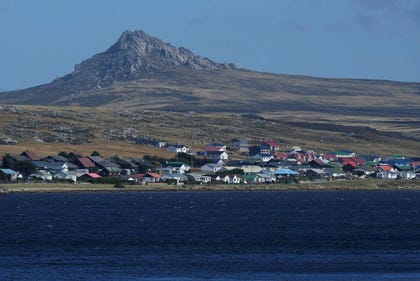
The Falkland Islands, known in Argentina as the Malvinas, are a British territory in the South Atlantic, roughly 480 kilometers (about 300 miles) east of Argentina’s coast. The dispute dates back centuries and culminated in 1982 when the two nations fought a war over the islands. Although Britain won, the Argentinians still claim the islands.

The diplomatic push comes as Israel seeks closer ties with right-leaning governments in South and Central America, while facing growing criticism from traditional European allies over the Gaza war and settler violence in the West Bank.
The change would not amount to formal Israeli recognition of Argentina’s sovereignty claim over the islands, but has raised concerns in Britain that Israel could go further if London imposes additional sanctions on settlements, the newspaper reported.
However, an Israeli Embassy spokesman in London, Alex Gandler, denied that Netanyahu had issued such an instruction. Israel’s Foreign Ministry also denied the report, saying: “The report is incorrect. There is no change in our position on the issue.”
I categorically deny this allegation. No such directive exists.
Israel’s Ambassador to the United Nations, Danny Danon, addressed the dispute at a UN session last week, calling for direct negotiations between Britain and Argentina. Sources cited by The Telegraph described his remarks as a significant departure from Israel’s previous position, particularly because they acknowledged Argentina’s historical connection to the islands.
Danon said Israel recognized the importance Argentina attached to the issue and its efforts to resolve it through diplomatic channels and in accordance with international law. He also called for direct, constructive and practical dialogue and said any progress should take into account relevant historical, legal and human considerations.
One source told The Telegraph that the wording of Danon’s statement had been approved at the highest levels of the Israeli government. The source described the intervention as the first time Israel had become involved in the dispute.
The report linked the shift to Israel’s close relationship with Argentine President Javier Milei, who has strongly supported Israel throughout the Hamas-led October 7, 2023, attack. Milei attended Israel’s Independence Day celebrations this year, where he lit a ceremonial torch.
Israeli officials cited by The Telegraph also pointed to deteriorating relations with Britain, particularly over the sanctions and critical statements by British leaders. The newspaper reported that the Israeli position could further strain ties amid the dispute over Israel’s West Bank policies.
Britain’s decision to sanction settlements has brought bilateral relations to their lowest point in decades, following London’s recognition of Palestinian statehood last year and its criticism of Israel’s conduct in the war in Gaza.
The sanctions announced last month by British Foreign Secretary Ed Miliband expanded Britain’s human rights sanctions framework to cover violations of international humanitarian law. The measures allow restrictions on individuals and entities involved in settlement construction, expansion and financing.


The new regulations took effect days before the October 19 deadline for bids on a construction tender in the E1 area of the West Bank, east of Jerusalem. Britain and other countries had warned contractors that participating in the tender could expose them to legal and reputational consequences. The planned construction between Jerusalem and the Ma’aleh Adumim settlement is opposed by Western governments because it could sever the territorial contiguity needed for a future Palestinian state.
Britain has also announced plans for a trade ban on settlements, joined by Canada and France. The British government has said the measure could take six to nine months to enter into force because of the legislative process required.
The measures followed Britain’s adoption of the International Court of Justice’s 2024 advisory opinion, which found Israel’s continued presence in the occupied Palestinian territory unlawful. Separately, the Fourth Geneva Convention prohibits an occupying power from transferring parts of its civilian population into occupied territory.

In response to Britain’s moves, Foreign Minister Gideon Sa’ar announced the closure of the British Consulate in Jerusalem. Seven British diplomats will continue to operate in the city under a reduced diplomatic presence.
At a UN Security Council meeting in February, Sa’ar had invoked the Falklands dispute while accusing Britain of hypocrisy over its opposition to Israeli settlements. Addressing then-British Foreign Secretary Yvette Cooper, he argued that Britain’s position on Israeli residence in the West Bank contradicted international law and the Balfour Declaration.
“It is our country; it’s not 13,000 kilometers from our country, like the Falkland Islands. The Argentinians call it the Malvinas Islands – a dispute you haven’t solved with Argentina until today,” Sa’ar said.

Despite the political tensions, Israeli government sources told The Telegraph that the two countries continued to cooperate closely on security and hoped to maintain the relationship.
Israel also has practical reasons to stop short of formally endorsing Argentina’s claim. Intelligence cooperation with Britain gives Israel an additional channel into the Five Eyes intelligence-sharing alliance, while Israeli companies have commercial ties with British firms involved in the Sea Lion oilfield project near the Falklands.
Britain’s Foreign Office has not commented on The Telegraph’s report.



