

Original Coverage & Source Attribution: www.donga.com
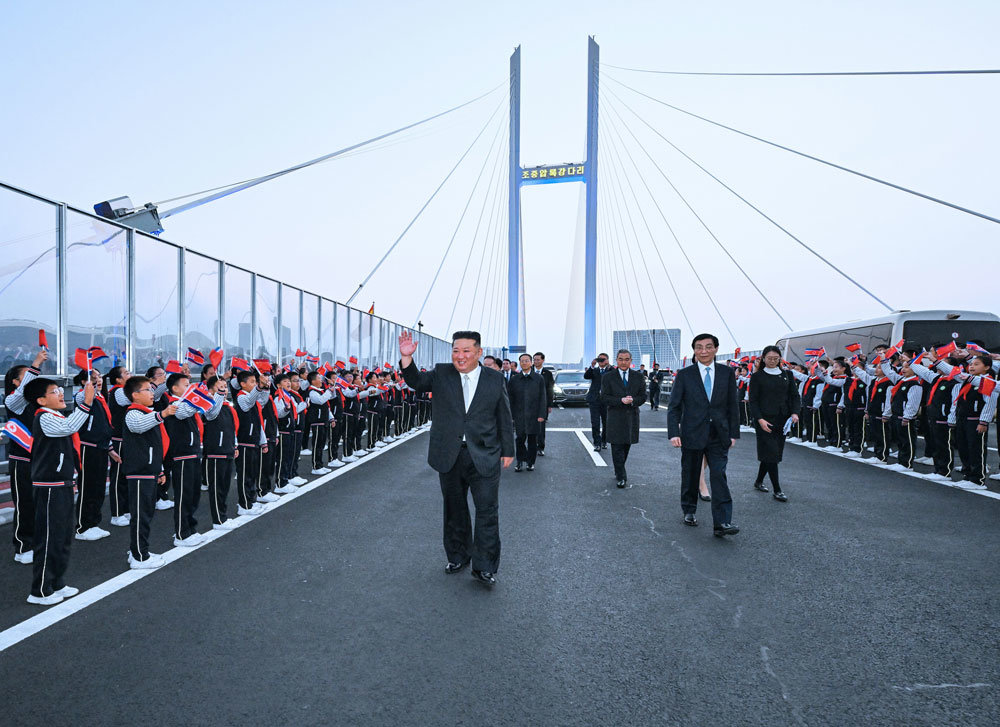
North Korean leader Kim Jong Un made an unannounced day trip to Dandong, China, on Oct. 24, crossing the New Yalu River Bridge by car before meeting Wang Huning, China’s fourth-ranking Communist Party official and chairman of the Chinese People’s Political Consultative Conference. Kim’s visit was his first to China in just over a year, following his attendance at Beijing’s Victory Day commemorations in September 2025. Ties between Pyongyang and Beijing appear to be deepening, with Chinese President Xi Jinping having visited North Korea in June.
Kim’s visit came just nine days after the New Yalu River Bridge opened to traffic. Completed 12 years ago, the bridge had remained closed amid worsening relations between the two countries. Its opening has now given a fresh boost to cross-border links, with Kim himself among its first high-profile users. Dandong handles more than 70% of trade between North Korea and China. Wang proposed expanding economic and trade ties through the bridge, and Kim said the prospects for cooperation were “very broad.” But a sharp rise in bilateral trade could also make it easier to smuggle into North Korea strategic goods banned for export because of their potential military uses.
International oversight of sanctions against North Korea has already weakened considerably. More than two years have passed since the U.N. Panel of Experts monitoring sanctions on Pyongyang was disbanded after Russia and China blocked the renewal of its mandate. Sanctions have been one of the few remaining tools for pressuring North Korea to abandon its nuclear weapons program. Until recent years, China enforced the measures despite the strain they placed on its ties with Pyongyang. If Beijing now helps North Korea evade those restrictions, efforts to resolve the nuclear issue will become even more difficult. China accounts for about 90% of North Korea’s foreign trade.
North Korea is already openly flouting sanctions while acquiring advanced military technology from Russia. Cooperation revealed so far includes air defense systems, electronic jamming technology and upgrades to ballistic missiles. Combined with the combat experience North Korean troops are gaining in Ukraine, these capabilities pose a direct threat to South Korea’s security.
The South Korea-U.S. alliance must help counter efforts by North Korea, China and Russia to hollow out the sanctions regime. South Korea, the United States and Japan have established the Multilateral Sanctions Monitoring Team to track enforcement of sanctions against North Korea, taking on a role once performed by the United Nations. The three countries must strengthen the monitoring system and step up diplomatic pressure on Beijing and Moscow to keep sanctions from becoming meaningless. Seoul and Washington also need to coordinate their negotiating positions more closely to ensure Pyongyang cannot secure rewards, such as sanctions relief, without making meaningful concessions in return. That will require repairing mistrust within the alliance, especially as public remarks increasingly portray South Korea-U.S. relations as strained.



