

Original Coverage & Source Attribution: www.firstpost.com
Pakistan’s courtship of Trump may have secured access to Washington, but it could now leave Islamabad exposed to congressional scrutiny
The democratic shift in the 2026 US midterm elections, which handed control of both chambers of Congress to the Democratic Party, has fundamentally transformed the landscape of US domestic oversight and foreign policy.
Armed with sweeping subpoena and committee powers, incoming Democratic leaders have launched aggressive inquiries into what they characterise as the “tentacles of corruption” and systemic self-enrichment within the Trump administration.
A prominent focal point of these investigations is the Trump family’s overlapping private business ventures and diplomatic pivots.
Specifically, Democratic probes targeting President Donald Trump’s commercial dealings with Pakistan carry profound significance. They serve as a key battleground for testing executive accountability, exposing the vulnerabilities of personalised foreign policy, and shifting the strategic equilibrium of South Asian geopolitics.
The domestic and institutional stakes of Democratic probes
At the core of the Democratic investigative strategy—spearheaded by key figures like incoming House Oversight Chairman Robert Garcia and Senate Finance Chair Ron Wyde—is a shift away from immediate, hyper-partisan impeachment proceedings towards building a methodical, corporate-focused body of evidence.
By using committees to demand internal documents and testimonies from private firms, tech titans, and major donors, Democrats aim to directly connect political corruption with the real-world economic anxieties of everyday Americans.
The domestic significance of these probes lies in their potential to expose “quid pro quo” arrangements involving administrative patronage, tariff exemptions, and lucrative government contracts granted to well-connected political donors and corporate allies.
More from Opinion
Historically, the executive branch could stonewall oversight by invoking executive privilege; however, targeting the private entities, foreign investments, and cryptocurrency platforms tied to the administration bypasses typical executive defences.
In doing so, Congress is reasserting its constitutional authority to police conflicts of interest, testing the boundaries of how public office can be insulated from private enrichment.
The geopolitical dimension: Trump’s Pakistan pivot
The geopolitical ramifications of these domestic probes become distinctly clear when examining the administration’s recent South Asian policy.
Breaking with a decades-long, bipartisan American strategy that prioritised India as a democratic counterweight to China in the Indo-Pacific, the administration enacted an aggressive policy pivot favouring Pakistan.
This shift was underscored by dramatic executive actions, including the imposition of steep 25 per cent to 50 per cent tariffs on Indian goods, contrasted against a reduction of tariffs for Pakistani imports.
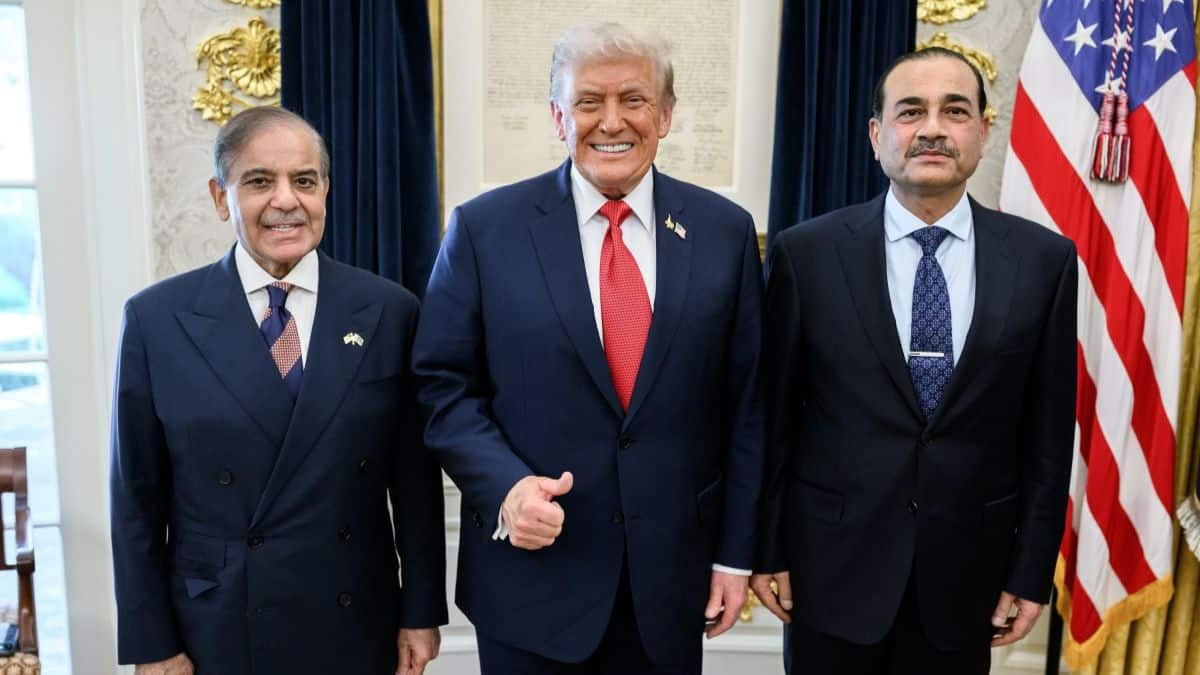
Furthermore, the administration enthusiastically engaged with Pakistan’s civil and military leadership—culminating in high-profile White House visits by Pakistan’s Chief of Army Staff, General Asim Munir—much to the dismay of regional allies.
While the Trump administration framed this realignment as a strategic move to facilitate counterterrorism cooperation and mediate complex regional disputes, critics and opposition lawmakers allege a far more transactional undercurrent.
High-ranking Democrats and foreign policy experts have openly questioned whether Washington’s strategic concessions to Islamabad were directly influenced by the financial interests of the first family and their inner circle.
Corporate entanglements under scrutiny
As the new Congress prepares its oversight docket, several specific, high-stakes business arrangements between Pakistan and entities linked to the administration’s allies are set to face intense scrutiny:
Cryptocurrency and Stablecoins: Pakistan’s Finance Ministry signed a memorandum of understanding to explore using USD1, a dollar-pegged stablecoin issued by World Liberty Financial. The crypto venture is highly controversial because it is heavily tied to the president’s immediate family, including his sons Donald Jr. and Eric, raising immediate flags regarding foreign sovereign involvement in first-family businesses.
The Roosevelt Hotel redevelopment: A multi-million-dollar deal concerning the redevelopment of Manhattan’s iconic Roosevelt Hotel—owned by Pakistan’s national airline PIA—was directly negotiated by the administration’s special envoy, Steve Witkoff, placing a major diplomatic intermediary at the centre of a real estate transaction.
Military technology procurement: Islamabad placed targeted procurement orders for unmanned aerial systems (drones) from Powerus, a defence technology firm whose primary backers and investors include the president’s sons.
Energy and resource deals: The administration actively backed major commercial proposals, including a $4.4 billion liquefied natural gas (LNG) project in Port Qasim and critical mineral extractions in Balochistan involving American firms, which opposition lawmakers suspect were fast-tracked via political favoritism.
The geopolitical fallout for Islamabad
For Pakistan’s leadership, the significance of these congressional investigations is both immediate and disruptive. Islamabad spent nearly two years aggressively courting Trump, bypassing traditional statecraft channels to secure direct access to the White House through commercial avenues.
This strategy initially paid dividends, securing prestigious Oval Office meetings for high-level officials and cooling traditional Washington pressure over cross-border security concerns.
However, the Democratic probes reveal the high risks of a purely transactional approach. Because Islamabad concentrated its diplomatic capital almost entirely on the White House, it left itself exposed and without allies in a newly hostile Congress.
The looming threat of televised hearings and mandatory data disclosures on crypto and mineral deals introduces significant instability into Pakistan’s economic planning.
Key financial goals, such as Pakistan’s request for a critical $10 billion Exchange Stabilisation Support Facility, are now unlikely to survive congressional review. The investigations serve as a stark lesson for developing states on the dangers of aligning national diplomacy with the volatile fortunes of a single political faction.
Correcting the South Asian strategic balance
Beyond the immediate ethics investigations, the Democratic probes are significant for their potential to reshape the strategic balance of power in South Asia.
Under Trump’s second-term policies, the traditional US-India strategic partnership was frequently sidelined in favour of Pakistani transactions, resulting in heavy tariffs on Indian exports and a public embrace of military leadership in Islamabad.
The following could be some of the objectives of the incoming Democratic Party’s Congress leadership:
1) Re-centring the relationship with India as a counterweight to China.
2) Challenging Trump’s unilateral tariff regimes; easing trade bottlenecks with New Delhi.
3) Increased scrutiny on human rights and pushback on hosting dictators like Asim Munir.
Conclusion
The convergence of domestic legislative probes and foreign policy decisions illustrates the shifting architecture of modern statecraft.
For Pakistan, a diplomatic strategy that relied heavily on cultivating transactional relationships within the executive branch now faces an institutional reckoning.
With a Democrat-controlled Congress poised to hold public hearings and issue subpoenas, problematic deals may face cancellation, and Washington’s broader South Asian strategy will likely be forced to pivot back toward traditional, institutional partnerships, such as the strategic alliance with New Delhi.
Ultimately, these probes signify that in an era of globalised wealth and fluid corporate borders, congressional oversight is no longer just a tool for domestic accountability—it is a powerful lever capable of reshaping international alliances and redefining the limits of foreign influence at the highest levels of government.
(The writer is a retired Indian diplomat and had previously served as ambassador in Kuwait and Morocco and as consul general in New York. Views expressed in the above piece are personal and solely those of the author. They do not necessarily reflect Firstpost’s views.)



