

Original Coverage & Source Attribution: news.sbs.co.kr
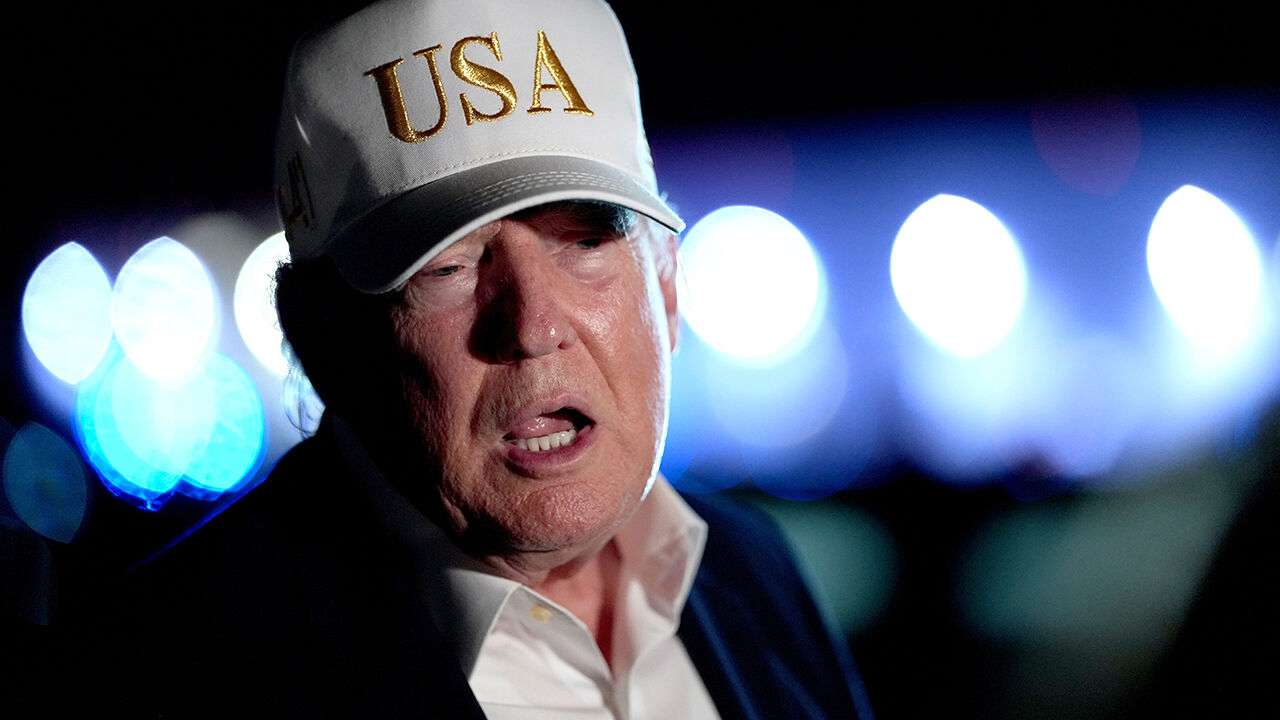
▲ U.S. President Donald Trump
The Group of Seven (G7) foreign ministers’ meeting opening in Paris, France, on November 9–10 (local time) is expected to serve as a stage to gauge how the crushing defeat of the ruling Republican Party, to which U.S. President Donald Trump belongs, will impact U.S. foreign policy.
Reuters reported, citing four G7 diplomats speaking on the condition of anonymity, that the meeting will be the first opportunity to measure whether the midterm election defeat will alter the Trump administration’s approach to Ukraine, the Middle East, and relations with its closest allies.
The diplomats projected that the increase in seats for the opposition Democratic Party could narrow the White House’s room for maneuver.
However, they warned that because foreign policy remains under Trump’s firm control, expectations should not be raised for a U.S. return to traditional multilateralism.
The Associated Press explained that the Russia-Ukraine war, the war with Iran, energy, and artificial intelligence (AI) will be among the main agendas.
According to Reuters, the meeting was originally scheduled to be held in Marseille, but the venue was changed to Paris for security reasons following weeks of protests across France.
U.S. Secretary of State Marco Rubio, viewed as a potential contender for the 2028 presidential election, will meet with allied officials for the first time since the midterm elections at the meeting.
In addition to France, the G7 includes the United Kingdom, Canada, Germany, Italy, Japan, and the United States, with the European Union also participating.
Ministers from Ukraine, Saudi Arabia, Egypt, South Korea, and Brazil have also been invited and are scheduled to attend the meeting.
The Ukraine issue is projected to be the top priority of this G7 foreign ministers’ meeting.
The meeting opens ahead of a trilateral consultation between Ukraine, Russia, and the United States scheduled to be held on Tuesday, November 10, in Abu Dhabi, the capital of the United Arab Emirates (UAE).
Officials from France, Britain, Germany, the North Atlantic Treaty Organization (NATO), and the European Commission are also pushing to visit Abu Dhabi, but they are not expected to participate in the trilateral consultation.
Secretary Rubio said that security guarantees for Ukraine and the rest of Europe following the war have been among the top concerns of allies.
Just before departing for Paris to attend the G7 foreign ministers’ meeting, he said in Florida on November 8 (local time), “There has been some progress regarding what the security architecture will look like after the war ends,” adding, “Nothing has been finalized yet, and there may be some progress in Abu Dhabi.”
Reflecting friction among European countries, Italian Prime Minister Giorgia Meloni warned on November 5 that if member states continue diplomatic efforts individually without agreeing on a joint representative and strategy, Europe risks losing its leverage in efforts to end the war in Ukraine.
Diplomats who spoke with Reuters assessed the situation in Ukraine grimly.
They warned that while the front lines have largely stabilized, making it difficult for either side to achieve a major breakthrough, Russia has shifted its tactics toward systematically attacking energy infrastructure to trigger blackouts across Ukraine during the winter.
They stated that a shortage of air defense systems, including Patriot interceptor missiles, is Ukraine’s most urgent military vulnerability, and that securing additional military, financial, and energy support for Ukraine while maintaining pressure on Russia is one of the goals of this G7 meeting.
The Iran issue is also expected to be discussed significantly at this G7 foreign ministers’ meeting.
Reuters pointed out that U.S. G7 allies have previously expressed skepticism toward the war and are concerned that further U.S. military action could worsen the crisis rather than resolve it.
According to Reuters, the talks could expose divergences between France and the United States over Lebanon.
France is pushing for discussions on a new UN-backed security framework to replace the current system in southern Lebanon, where the Israeli military continues to carry out airstrikes, and has put forward several options including an international force involving France and Italy.
French officials privately acknowledge that the United States is reluctant to accept some of the French proposals.
However, diplomats said that with the expiration of the current system approaching at the end of the year, the G7 meeting will provide an opportunity to narrow differences among allies.
The Associated Press noted that this G7 foreign ministers’ meeting follows the Group of Twenty (G20) foreign ministers’ meeting held in Atlanta, Georgia, USA, on October 30–31, and reported that French officials had signaled in advance that, as was the case then, no joint communiqué would be issued this time.
Few agreements on major international issues were reached at the Atlanta G20 foreign ministers’ meeting.
(Photo: AP, Yonhap News)
※ Please note: This article was translated by AI and may contain errors.



