

Original Coverage & Source Attribution: www.yahoo.com
The Trump administration is steadily ratcheting up pressure on Iran with sanctions, but experts and former officials say the penalties thus far are having a limited effect on the Islamic Republic’s willingness to negotiate.
Nate Swanson, who served as a State Department representative on the second Trump administration’s Iran negotiating team, said the pressure has failed to change Iran’s strategic calculations.
“Think about everything Iran’s been through in the last eight months. They’ve endured incredible setbacks to their physical infrastructure, military, and physical livelihood,” Swanson said. “We’ve not seen any kind of capitulation or even willingness to compromise, but a more rigorous hard ine taking form. They’re not more willing to negotiate, they’re actually less flexible. They would rather have more war than compromise. So I don’t see it leading to a positive strategic end game for the US at this point.”
Alex Vatanka, a senior fellow at the Middle East Institute, said that the blockade has been more difficult for Iranian authorities to manage than sanctions alone, as it has cut off much of Iran’s trade.
“The blockade is what’s different from sanctions. It will have an additional cost and impose a pain on an economy that was already in a very bad place,” Vatanka said. Yet “there is no sign — as far as I can tell — of an imminent collapse of the Iranian economy.”
A further limitation on the Trump administration’s strategy on sanctions is Iran’s ability to maintain trade ties with China, a country that has little incentive to enforce US restrictions.
“China views our sanctions as unilateral and illegal, so they have no interest in abiding by them,” said Philip Luck, director of the Center for Strategic and International Studies’ economics program. “As long as China’s not going to concur with our sanctions, Iran’s going to be able to get what it needs, and it’s going to be able to get some amount of revenue from its sales of oil.”
Luck added that Chinese manufacturers can supply many of the industrial goods and components Iran needs to rebuild damaged military components and infrastructure.
The failure of sanctions and the blockade to bring Iran to the negotiating table on Washington’s terms is likely why the US is reportedly considering renewed military strikes as another way to force concessions. But experts caution that escalating pressure does not necessarily mean Tehran will back down.
“The regime will try to bend, but not break,” Tom Warrick, a nonresident senior fellow at the Atlantic Council, said.
“The problem here is both sides are intent on wanting the other side to be seen to be defeated,” he continued, adding conflicts are harder to resolve when “your only way out to end the war is the strategic humiliation of your opponent.” Such conflicts, he warned, “tend to go on longer than they otherwise would have.”
The administration insists its strategy of inflicting economic pain is working.
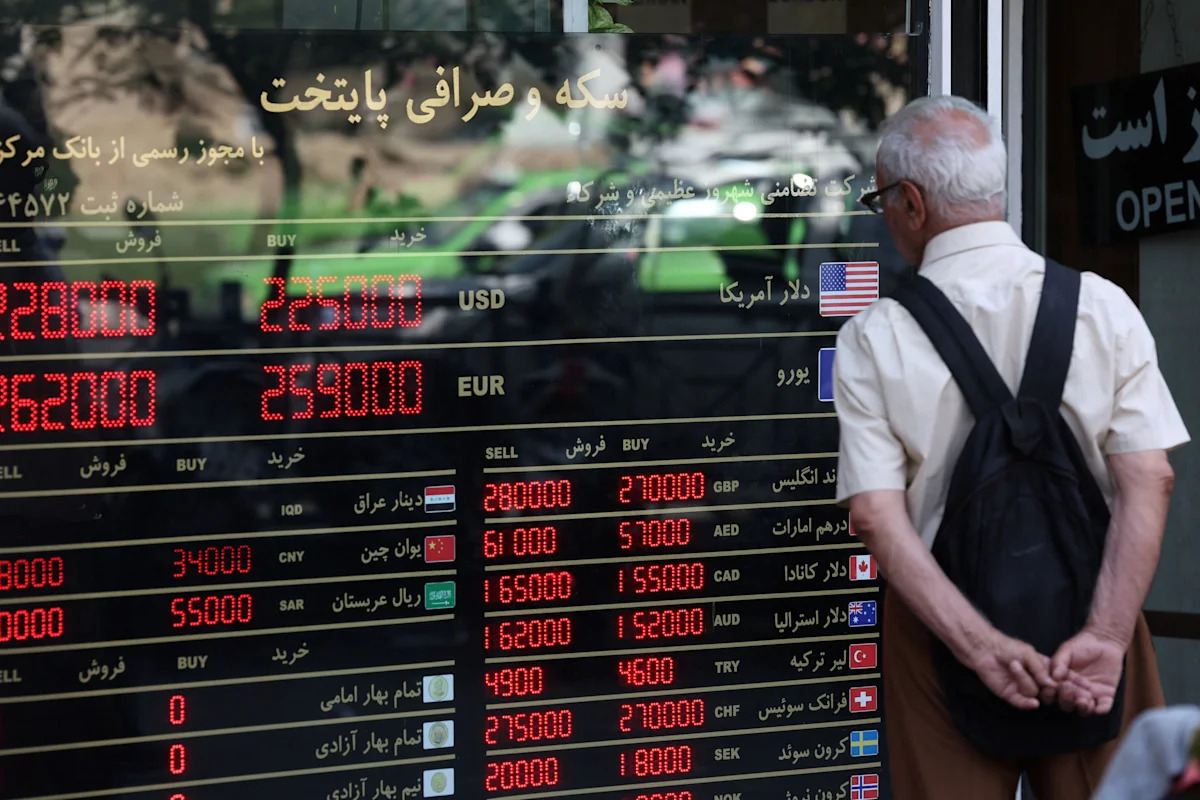
“Operation Economic Outcast is isolating the Iranian regime into desperation,” a Treasury spokesperson told Semafor. “Iran has loaded zero oil onto vessels since August 25, the day after Economic D-Day. The value of the rial continues to reach new lows. Inflation is through the roof as the regime scrambles to print more money. Iran’s access to foreign currency is severely diminished. We have seen flights grounded, Iranian bank branches shuttered, and trade halted. The regime is out of options, and the clock is ticking.”
Warrick also cautioned against dismissing sanctions as a tool for diplomacy, pointing to past diplomatic deals with Iran following sanctions, including the 1981 Algiers Accords; an agreement at the end of the Iran-Iraq War in 1988, and one alongside the Obama-era nuclear deal, formally known as the Joint Comprehensive Plan of Action.



