

Original Coverage & Source Attribution: diplomatic.substack.com
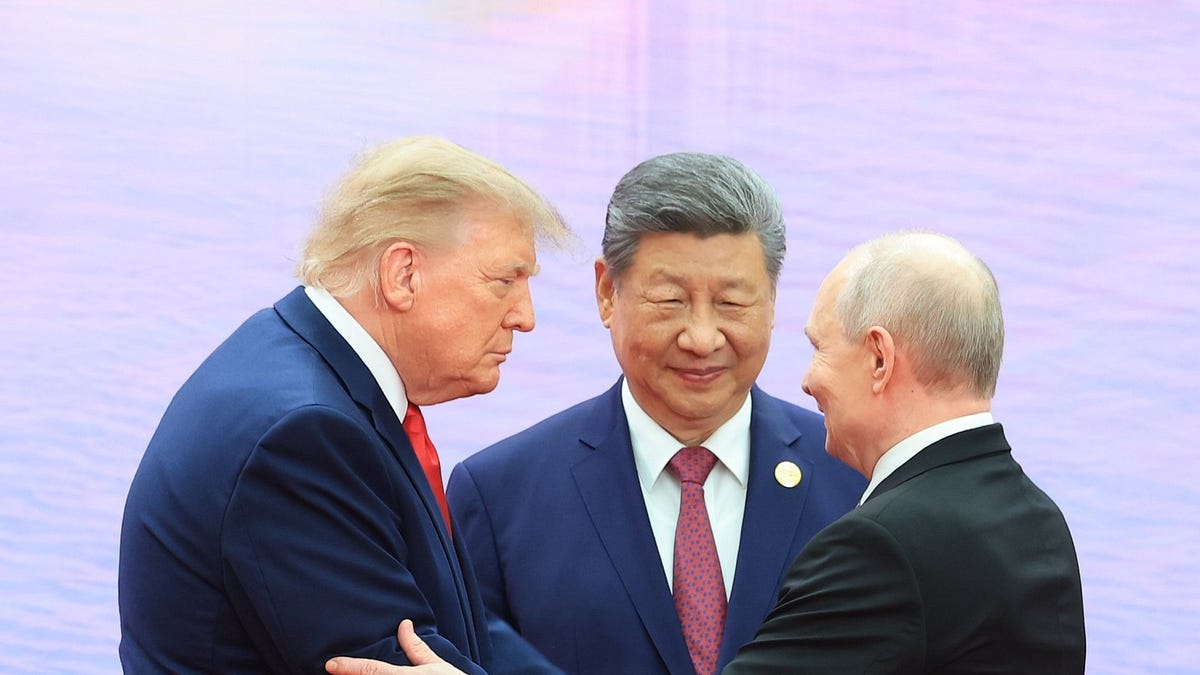
As a lame-duck Donald Trump sits down with Russian president Vladimir Putin and Chinese President Xi Jinping in Shenzhen, China, on Thursday, Trump’s son in law Jared Kushner and peace envoy Steve Witkoff will be conferring with Ukrainian and European officials in Berlin, at a meeting of the so-called Coalition of the Willing.
The Trump envoys are in an open rush to try to advance Ukraine/Russia peace talks, seemingly with an eye to getting Putin to attend the G20 summit that Trump is hosting at his Doral resort outside Miami, Florida, on December 14-15.
But a disturbing, fundamental facet of the Trump administration’s recent approach to trying to mediate the conflict has been to offer increasing concessions and inducements to Russia, the aggressor, while putting additional pressure on Ukraine, the victim of Russia’s full-scale invasion. And multiple diplomats and foreign policy scholars say, they have almost nothing to show for it.
Trump shifted after Oct. 9 phone call with Putin
U.S. diplomats had been focused on trying to deescalate the conflict ahead of winter and on how to make sure there is not a humanitarian crisis in Ukraine as a result of the Russian strike campaign against Ukrainian cities, critical infrastructure and the national energy system, said Russia scholar Andrew Weiss, vice president of the Carnegie Endowment for International Peace. But that agenda got scrambled after an October 9 phone call between Trump and Putin, he said.
“The tragedy of all of this is that the team of U.S. envoys was focusing before October 9 on the right issues, more or less, which are how to de-escalate the conflict ahead of winter,” Weiss told me. “So they’ve been re-vectored by Trump himself to focus on a big political package that has no prospect of coming together because Vladimir Putin isn’t ready.”
Trump seems heavily focused on trying to entice Putin to attend the G20 summit that he is hosting at his resort in Doral, Florida next month.
“My bottom line is that this current crisis in U.S.-Ukrainian relations is almost entirely the product of Trump’s desire to show on the world stage that he is still the dealmaker that he portrays himself as being,” Weiss said.
“I think he looked at the calendar for autumn/winter, and jumped to the conclusion that this was a good time to get something, anything done on Ukraine, because it would allow him to be center stage at this week’s APEC summit and the G20 gathering in Miami next month,” Weiss said.
Trump after the Oct. 9 phone call with Putin announced a controversial diesel deal with Putin, and gutted new US economic sanctions legislation on Russia, named in honor of the late Lindsey Graham, just before it was due to go into in effect.
When those economic sweeteners did not induce Putin to the negotiating table, Kushner on Nov. 5 “appeared to accept a Russian position that peace in Ukraine had to be linked to revision of European security arrangements in its favor,” former US ambassador Daniel Fried wrote at Just Security. “This new U.S. offer to renegotiate European security represents a significant, unearned victory for the Kremlin.”
Kushner has since modified his European security comments in a better direction, Fried told me. “But,” he added, “it is combined with nothing but offers to Russia and mostly pressure on Ukraine. That will confirm Putin’s decision to give nothing.”
GOP Senator: Further talks a “farce”
Even some staunch Trump Republican allies erupted in disgust at the inexperienced Trump envoys parroting Kremlin positions and talking points.
“NATO nations withdrawing from *their own* borders is a preposterous demand by Russia,” Sen. Tom Cotton (R-Arkansas) wrote on Twitter on Nov. 13 above a New York Times article on Russia reviving demands that NATO retrench to secure a Ukraine deal. “Putin has proved once again that he’s not serious about a negotiated peace.
“Further talks are a farce at this point,” Cotton, the chairman of the Senate Intelligence Committee, continued. “Putin will only agree to stop the war when he knows he can’t win. We need to help Ukraine prove that point.”
Tom Cotton@SenTomCotton
NATO nations withdrawing from *their own* borders is a preposterous demand by Russia. Putin has proved once again that he’s not serious about a negotiated peace. Further talks are a farce at this point. Putin will only agree to stop the war when he knows he can’t win. We need to…
9:48 PM · Nov 13, 2026 · 1.19M Views
2.62K Replies · 3.03K Reposts · 15.5K Likes
“President Trump must be prepared to tell Putin unequivocally that European security is non-negotiable and that there will be no talks about Ukraine without Ukraine,” Sen. Jeanne Shaheen (D-New Hampshire) and the eight other Democrats on the Senate Foreign Relations Committee today urged Trump.
“American security cannot be traded away for photo opportunities or personal aggrandizement,” they continued. “President Trump must demonstrate that he is prepared to impose real costs on Putin for his aggression, rather than reward him with concessions that undermine Ukraine, our NATO Allies and U.S. national security.”
A weakened Trump looking to Xi, Putin for looking for showy deal theater
Trump is coming to the meeting with Putin and Xi on Thursday in a weaker position after the US mid-term elections in which Democrats made sweeping gains, winning decisive control of both houses of Congress next year.
Indeed, US envoys Kushner and Witkoff have sought to use the closing window of Trump’s ability to maneuver to argue to their Russian interlocutors that “the terms available now may not remain on the table for long,” the Kyiv Independent reported today. Therefore, the argument goes, “Russia should take the opportunity to secure a deal while the current US administration still has room to maneuver.”
But Putin is unlikely to be persuaded by the argument, the Carnegie Endowment’s Weiss said.
Putin thinks “he can push Ukraine to the brink this winter, and he’s also hoping that Marine Le Pen will win the French presidential election in April/May,” Weiss said. “So he’s in absolutely no hurry.”
And both Putin and Xi are likely to see in Trump a US president whose time in office and leverage is declining.
“Both men know… that he will be irrelevant in a mere 26 months,” Brookings China scholar Jonathan Czin wrote. “Why would either man make a deal with a leader whose time and leverage are waning? They will only do it if they think they can pilfer more from Trump diplomatically than they will be able to gain from the next American president.”
**



