Original Coverage & Source Attribution: houseofsaud.com
The UN Security Council voted unanimously on November 12 to extend Yemen sanctions until 2027 while the Houthi military spokesman announced five drone and missile strikes on Saudi Arabia the same evening.
اقرأ هذا المقال بالعربية
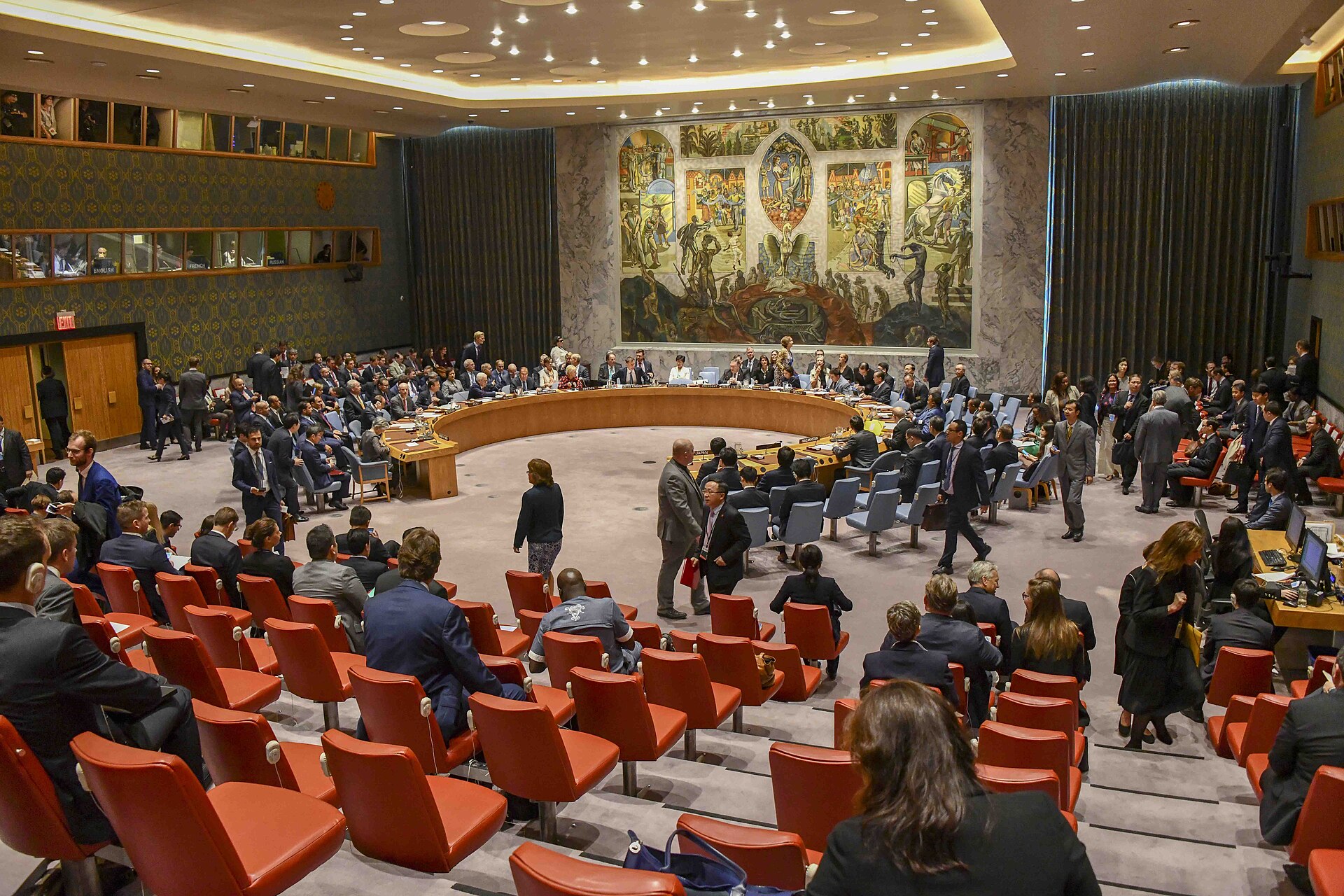
NEW YORK — The UN Security Council voted unanimously on November 12 to extend its sanctions on Yemen’s Houthis until November 2027, and that same night the movement’s military spokesman read out five drone and missile operations against Saudi Arabia, from a pumping station on the East-West Pipeline to the Riyadh headquarters of Saudi Aramco. The Council renewed those measures while holding a report from its own Panel of Experts which calls the arms embargo “totally ineffective” and says the Panel received no information on investigations by any state into the weapons transfers it had detected.
The UK-drafted text does contain something new: language aimed at the dual-use components and precursor chemicals the Houthis turn into drones and missiles, plus two extra seats on the Panel for maritime specialists. What it does not contain is any way of stopping the components already moving through Iranian supply chains. The arms embargo, the one thing most readers assume was being renewed, was never on the agenda at all, because it has been open-ended since 2015. The Council renewed asset freezes and travel bans, and the Houthis replied with five claimed operations on Saudi soil.
The House of Saud Daily Briefing
Saudi Arabia’s news in 3 minutes, every morning. Free. See today’s issue
✓ You’re in. Your first briefing arrives tomorrow morning.
What Did the UN Security Council Actually Extend?
The Council extended the asset freezes and travel bans first imposed under Resolution 2140 in February 2014 until November 14, 2027, and renewed the Panel of Experts mandate to December 15, 2027. It did not renew the arms embargo, because Resolution 2216 of April 2015 is open-ended and never expires.
Most coverage of the annual Yemen vote gets that distinction wrong, and the error matters, because it makes each November look like a fresh act of pressure on the Houthis. In practice the Council is voting to keep the 2140 machinery running: the Yemen Sanctions Committee, the targeted financial measures and travel bans, and the small team of experts who report on violations. The embargo itself, imposed under Chapter VII in April 2015, simply carries on whether the Council meets or not, which is why, according to Security Council Report, the embargo’s failures never come up for a vote of their own.
The 2026 resolution passed unanimously, according to Al Jazeera, while Yemen Monitor described it as adopted by consensus. Neither outlet published a resolution number for it, and the text is best described as the UK-drafted resolution adopted on November 12. A unanimous vote is still a change from a year earlier, when the 2025 renewal scraped through with two permanent members abstaining.
The new material in the text comes in three parts. First, according to Arab News and Security Council Report, the resolution adds language aimed at cutting off dual-use components and precursor chemicals used in Houthi drones and missiles, a provision absent from the 2025 text, Resolution 2801. Second, Yemen Monitor reported that the Panel of Experts grows from four members to six, with the additions drawn from maritime security. Third, the Council reaffirmed that arbitrary detention of UN, diplomatic and humanitarian personnel can be grounds for further sanctions, according to Al Jazeera, and the Panel’s October 2025 report counted 23 UN personnel still held by the Houthis, according to the Sanaa Center for Strategic Studies.
| Measure | Legal origin | Status after November 12 vote |
|---|---|---|
| Asset freezes | Resolution 2140 (February 2014) | Extended to November 14, 2027 |
| Travel bans | Resolution 2140 (February 2014) | Extended to November 14, 2027 |
| Panel of Experts | 2140 sanctions regime | Extended to December 15, 2027; expanded from 4 to 6 members |
| Dual-use components and precursor chemicals | New in 2026 text | Added; no interdiction mechanism |
| Detention of UN and aid staff as sanctions grounds | Reaffirmed | Reaffirmed |
| Arms embargo on the Houthis | Resolution 2216 (April 2015) | Open-ended; not voted on |
For Saudi Arabia, the result is a renewed set of penalties on Houthi bank accounts and passports, a stronger paper commitment against the components that end up in drones over the Eastern Province, and nothing that puts a boarding party on a dhow. Those gaps would matter less if the existing regime worked, and the Council’s own experts had already said, in writing, that it does not.
The Verdict in the Panel’s Own Words
UN expert reports are usually written to avoid upsetting anyone, with careful passive phrasing and every accusation hedged twice over. The Panel of Experts’ October 2025 final report, S/2025/650, was different, and the Sanaa Center for Strategic Studies quoted it at length: the arms embargo, the Panel concluded, is “totally ineffective” and “has made no significant dent in the capabilities of the Houthis.”
The arms embargo is “totally ineffective” and “has made no significant dent in the capabilities of the Houthis.”
UN Panel of Experts on Yemen, final report S/2025/650, October 2025 (via the Sanaa Center for Strategic Studies)
The evidence behind that line was physical. In June 2025, Yemeni government forces seized 750 tons of illicit materiel, according to Asharq Al-Awsat’s reporting on the Panel’s findings, a haul that included Ghadir anti-ship cruise missiles, Shahed drones, AM-50 anti-materiel rifles and Misagh shoulder-fired air-defence systems. The Panel found that the weapons resembled Iranian-produced systems, so this was not a pile of rusting rifles bought on the open market but a cargo built for sinking ships and shooting down aircraft.
The same report counted 25 verified Houthi maritime attacks between August 2024 and July 2025, and two of the targeted vessels went to the bottom. Those figures describe a movement whose anti-shipping capability had grown under an embargo that the Security Council had, on paper, kept in force throughout.
The sentence that ought to embarrass the Council is a quieter one. The Panel said it received “no information on investigations undertaken in response” to the transfers it detected, which means states were told, in an official UN document, that Iranian-pattern weapons were moving into Yemen, and none reported back that it had looked into them. Any enforcement system runs through detection, reporting, investigation and action, and the Yemen regime has handled the first two competently for years before stopping dead at the third.
Each November the Council treats the embargo as a structure worth preserving, while its experts describe a mechanism that detects, reports and then waits for action that never comes. The failure at step three is not mainly a matter of political will, either, because once a shipment leaves port the law of the sea starts working in the smuggler’s favour.
Why Can’t Anyone Stop the Weapons Reaching the Houthis?
Because no state has the legal authority to do it at sea. Resolution 2216 bans arms transfers to the Houthis under Chapter VII, but the Council has never authorised any navy to board foreign-flagged vessels in international waters without the flag state’s consent, so enforcement rests with individual states acting inside their own jurisdiction.
Raul “Pete” Pedrozo, the Howard S. Levie Professor of the Law of Armed Conflict at the US Naval War College, has set out the problem for the Lieber Institute at West Point. His reading is that states may inspect foreign-flagged vessels only “in their ports or their territorial sea and contiguous zone,” and beyond those areas flag-state consent is required, so a warship that finds a suspect dhow on the high seas flying someone else’s flag needs that flag state’s permission before a single sailor goes aboard. If the flag belongs to Iran, or to a third country with no interest in co-operating, that permission does not come.
From our partner

Chapter VII is the part of the UN Charter that allows the Council to authorise force, and Resolution 2216 uses its language, which is why the embargo sounds tougher than it is. Security Council Report and Pedrozo agree on the point that matters for anyone trying to enforce it: the Council has never given any body an operational mandate to stop and search foreign-flagged ships in international waters in support of the embargo. The ban therefore exists in law without any matching power to enforce it at sea.
The interdictions that do happen tend to prove the rule. In January 2024 US forces seized two stateless dhows in the Arabian Sea carrying Iranian weapons components, and those boats could be taken precisely because they flew no flag, so there was no state to ask for consent. Networks running Iranian-flagged or third-flag dhows face no equivalent exposure, and they have kept sailing.
Pedrozo’s proposed alternative, a Council-authorised maritime quarantine, comes with his own concession that Security Council paralysis makes formal authorisation impossible, since any text granting high-seas boarding powers faces a veto from at least one permanent member. For Riyadh the consequence is direct: the materiel that becomes a drone over Riyadh or a missile aimed at Khamis Mushait travels through waters where, under the Council’s own framework, nobody may stop it without the shipper’s flag state agreeing. The reason for that paralysis became plain in the voting record of the past three Novembers.
The Council at War With Itself
The voting record moved from yes to abstention to unanimity in three years while the substance of the dispute stayed almost exactly where it was. In November 2024 Russia voted for the renewal and described it, in a statement published by its UN mission, as a “technical” 12-month extension, which signals a vote cast to keep the paperwork alive rather than to endorse any tougher approach.
Twelve months later the mood soured. Resolution 2801 passed 13-0-2 in November 2025, with China and Russia abstaining, according to Africannews, after Beijing objected to maritime interdiction language and Moscow called the text “unbalanced” and “politicised.” The United States, for its part, criticised the final 2025 text for omitting dual-use provisions and maritime interdiction authority, so all three powers left the room unhappy for opposite reasons.
| Year | Outcome | China | Russia | Key dispute |
|---|---|---|---|---|
| November 2024 (Res. 2758) | 15-0-0 (unanimous) | Yes | Yes (“technical” extension) | High-seas inspection without flag-state consent |
| November 2025 (Res. 2801) | 13-0-2 | Abstained | Abstained (“unbalanced”, “politicised”) | Maritime interdiction language; US wanted dual-use clauses |
| November 12, 2026 | Unanimous / by consensus | Supported outcome | No objection recorded | Dual-use clause added; no interdiction mechanism |
The 2026 text shows how the dispute was settled. The dual-use language Washington wanted in 2025 is now in the resolution, while the interdiction authority Beijing objected to is still missing, so the unanimous vote bought agreement by dropping the one provision that might have changed events at sea. China’s ambassador, Fu Cong, explained Beijing’s thinking in the debate.
“Sanctions are merely a means, not an end in themselves.”
Fu Cong, China’s Permanent Representative to the UN, November 12, 2026 (via Al Jazeera)
China’s support for the outcome came after a sharper move a month earlier. In October 2026, according to Security Council Report, China questioned the Panel’s independence and disputed the experts’ findings on Chinese-origin dual-use items found in Houthi drone assembly. A permanent member that rejects the evidence on components can still vote for a clause banning those components, because the clause comes with no inspector, no boarding right and no penalty attached.
The unanimous vote shows that nobody on the Council wanted to be the government that let the Yemen regime lapse in the middle of a regional war. It says nothing about whether any member is prepared to make the regime work, and the Houthis appeared to read it the same way.
What Were the Houthis Doing While the Vote Happened?
Houthi military spokesman Yahya Saree claimed five operations against Saudi Arabia on November 12: a drone strike on pumping station No. 7 of the East-West Pipeline, attacks on the Yanbu oil facility, a cargo plane at Sharurah, Khamis Mushait airbase and Aramco’s Riyadh headquarters. Saudi Arabia confirmed interceptions but did not confirm damage.
Saree’s list, as reported by Al Jazeera and 24newshd, ran in a set order: a drone strike on pumping station No. 7, the targeting of the Yanbu oil facility, a drone aimed at a military cargo plane at Sharurah airport, a ballistic missile at the Khamis Mushait airbase that he claimed scored a “direct hit”, and the targeting of Saudi Aramco’s headquarters in Riyadh. Only the pumping station and Khamis Mushait claims used the language of hits, while the other three were claimed as targeting, a distinction worth holding onto before anyone describes a Saudi facility as struck.
The coalition’s account was narrower. Its spokesman, Maj. Gen. Turki al-Maliki, confirmed that drones were intercepted over Riyadh and the Eastern Province and that two ballistic missiles aimed at western Saudi Arabia were destroyed, according to Al Jazeera, but Saudi Arabia did not confirm damage to any infrastructure. Saree, for his part, rejected Saudi claims of an attempted strike on the Mecca region as “a grave falsehood”, leaving the two sides disputing even which targets were attacked.

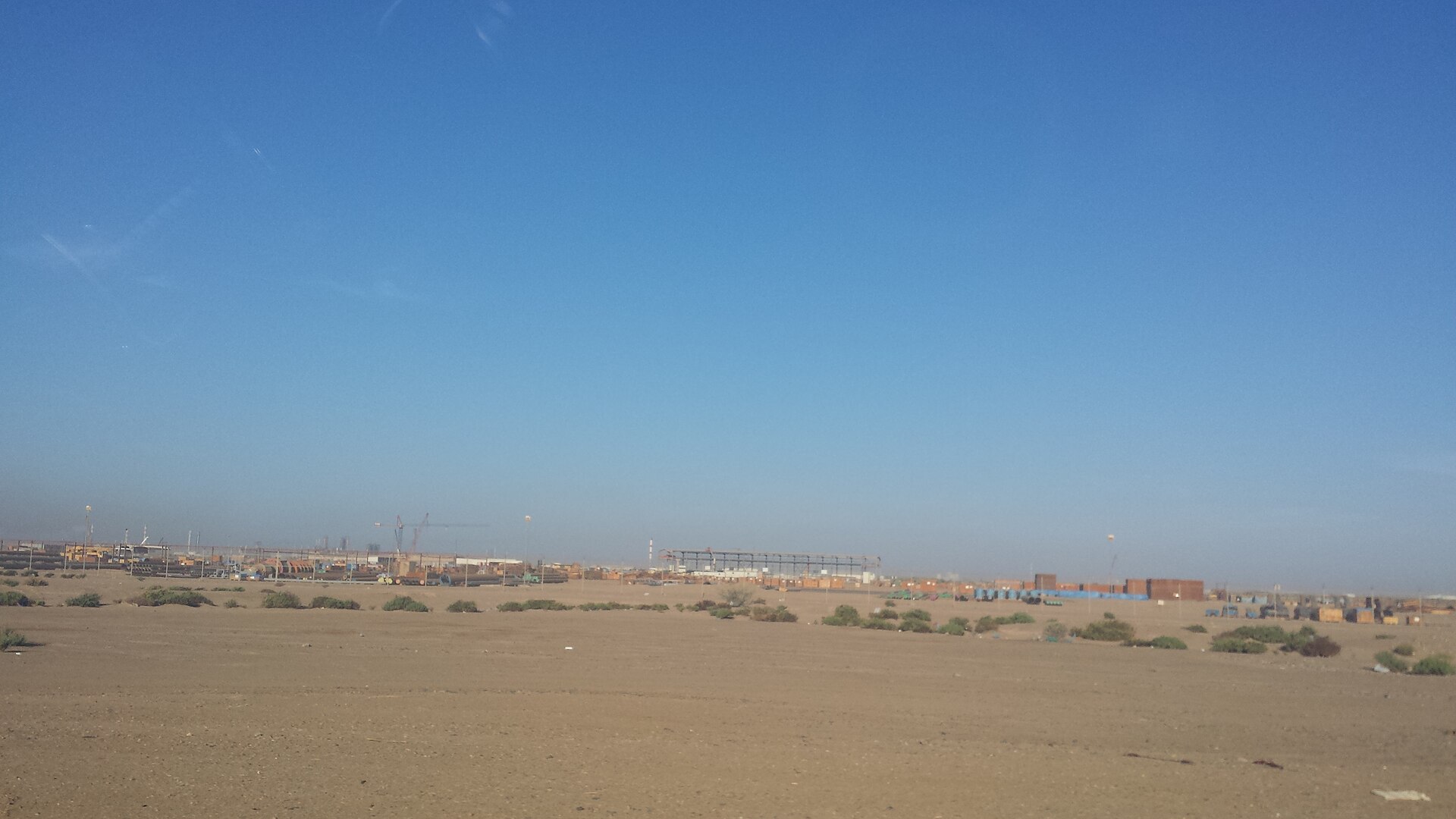
The choice of targets says more than the claims of damage. Earlier on November 12 the Houthis had already claimed strikes on the East-West Pipeline and Yanbu oil facilities, and the pipeline is now the kingdom’s main export route out of the Gulf. With Hormuz disrupted, Saudi Arabia has rerouted about 4 million barrels per day through the pipeline to Yanbu on the Red Sea, according to Al Jazeera, which is roughly 4 percent of global oil supply moving through one line of steel across the desert, with traders already watching OPEC+ October output and Brent below $90.
The attacks also fit a pattern of the past six weeks. Strikes on Saudi airports killed 20 people between October 6 and 11, according to Al Jazeera and the BBC, including 13 killed and 309 injured on October 10 alone, and the IRGC declared Hormuz closed on October 26. No formal Houthi statement on the Security Council vote was found, and nothing in the record proves the strikes were timed to the vote, but the timing left the Council’s resolution and the Houthi operations side by side in the same night’s news.
Why Workshops Inside Yemen Defeat Any Embargo
The Council could solve the boarding problem tomorrow and still miss most of the threat. The Panel of Experts has warned, according to Security Council Report, that “Houthi arms production increasingly based in Yemen”, meaning that a growing share of the drones and missiles fired at Saudi Arabia are assembled on Houthi-held territory rather than shipped in ready to fly.
That marks a change in how Iran supplies the movement. A finished anti-ship missile is large, recognisable and hard to hide in a dhow, whereas a crate of servo motors, circuit boards, engines or precursor chemicals looks like ordinary commercial freight and can be relabelled at every port on the route. Moving from complete weapons to components and local assembly lowers the risk of each shipment and hands the work of building the weapon to Houthi workshops beyond the reach of any naval patrol.
The new dual-use clause is the Council’s attempt to catch up, and it is aimed at the right target. According to Arab News and Security Council Report, however, it contains no enforcement mechanism for interdicting components already moving through Iranian supply chains, so it names the flow without obliging anyone to stop it. Because China disputes the Panel’s findings on Chinese-origin items, the countries that would have to police the trade in commercial parts do not even agree on where those parts come from.
The detention provision runs into the same limits. The Panel’s October 2025 report documented 23 UN personnel held by the Houthis, according to the Sanaa Center, and the 2026 resolution reaffirmed that arbitrary detention of UN, diplomatic and humanitarian staff can bring further sanctions. A movement that has shrugged off a decade of asset freezes and travel bans has little obvious reason to release UN staff in exchange for being spared more of the same, and the detainees give the Houthis a strong hand in any future negotiation.
For Saudi air defence crews, the shift to domestic production means a steady supply of targets that no sanctions committee will ever count at a port. Whether the Council now regards sanctions as pressure or as routine is the next question.
Has the International Community Given Up on Coercive Pressure?
Not formally, but in practice the annual renewal has become institutional habit rather than strategy. The Council keeps the sanctions alive while its own experts report receiving no information on state investigations into detected transfers, and the measures it renews target finances and travel rather than the weapons pipeline.
The gap is plainest when the Council’s public language is set beside the Panel’s written verdict. Diplomats speak of reaffirming and strengthening the regime, while the experts the Council pays to watch it have written “totally ineffective” in a formal UN report, and both statements have stood side by side for a year without the Council changing anything that would close the gap. Renewing a regime its own monitors call ineffective amounts to an admission that the Council has no better option it can agree on.
The cost of that failure lands well beyond Yemen. At the peak of Houthi disruption, about 90 percent of container ships rerouted around Africa rather than risk the Red Sea, according to Pedrozo’s analysis for the Lieber Institute. The Red Sea is also the route that Saudi crude now has to use to avoid Hormuz, so the Houthis’ anti-shipping capability bears directly on the kingdom’s export outlet.
Washington has not filled the gap the Council leaves. President Trump repeatedly declined the crown prince’s appeals for US strikes, according to CNN on October 10, and the region’s governments have been building their own arrangements in response. Turkey’s parliament ratified the Makkah Pact by 279 votes to 119 on November 5 after Pakistan ratified it on October 23, while Gulf capitals have been coordinating among themselves, as when the King of Bahrain visited Riyadh as the GCC approved a Kuwait defence post.
Riyadh’s own messaging has shifted to the waterways themselves, with the Saudi Cabinet addressing Hormuz and Bab al-Mandeb the day before the vote. Tehran, meanwhile, rejected talks and set out seven conditions on Hormuz, and Saudi Arabia is paying for the war out of a 2026 budget whose deficit has already been revised to 245 billion riyals, according to Reuters via Zawya. Coercive pressure has not been abandoned so much as moved out of New York to regional capitals and air defence batteries, which leaves the Panel’s expansion as the clearest test of what the Council still expects to achieve.
What the Expansion of the Panel Actually Signals
Taking the Panel from four members to six, with the new seats going to maritime security specialists, is the most concrete thing the November 12 resolution does, according to Yemen Monitor. It is also an admission that the threat at sea has outgrown a team that, by its own count, was logging 25 verified maritime attacks in a single year while also tracking finances, travel bans, detentions and the movement of weapons on land.
More experts will produce better reports, with sharper tracing of dual-use parts, more detail on dhow routes and closer analysis of the anti-ship weapons the Houthis field. That is useful work, and the Panel has already shown it can do it well, since its October 2025 report identified the Iranian pattern in the June 2025 seizure, counted the attacks and named the failure of the embargo without hedging.
The Panel, however, holds no enforcement power of its own. Under the 2140 regime it reports to the Council and the Sanctions Committee, and what follows depends on member states opening investigations, governments acting on designations and navies being allowed to board ships, which are the three links that have failed. Adding two experts to watch a system that its watchers say has stopped at step three means more detail on the same failure without any extra capacity to fix it.
The pattern since 2015 has been consistent. The embargo has stayed in force throughout, the Panel has documented the transfers, the Council has renewed the regime most years and complained about it every year, while the Houthis moved from receiving finished weapons to assembling their own and from harassing shipping to sinking it. The Panel’s extended mandate runs to December 15, 2027, a month after the newly renewed sanctions expire on November 14, 2027, which sets up another vote in New York next autumn.
When the six experts file their next final report, the most telling line will not be the tonnage seized or the drones counted but whether any state has told them it opened an investigation. Last time, the Panel received no information on any, and on the night the Council renewed the regime, Yahya Saree was claiming a drone strike on pumping station No. 7.
Frequently Asked Questions
Has the UN arms embargo on the Houthis ever led to a conviction or prosecution?
None of the sources consulted records a prosecution. CJ Pine, who served as Political Advisor at the US Mission to the UN from 2020 to 2025, has pointed to an “absence of investigations” after detected arms transfers and to the absence of “visible deterrence measures”, according to the Sanaa Center for Strategic Studies, which means the chain broke before any case could reach a courtroom.
What is UNVIM and why can’t it stop arms shipments to the Houthis?
UNVIM, the UN Verification and Inspection Mechanism for Yemen, inspects only vessels bound for Houthi-controlled ports that voluntarily request clearance. A dhow that sails without seeking clearance never enters its system, so the mechanism checks the shippers who choose to be checked and misses the smuggling networks entirely.
Can the Security Council authorise a naval blockade of Houthi-controlled ports?
Only if no permanent member vetoes it. Pedrozo has proposed a maritime quarantine modelled on the 1962 Cuba precedent, but Russia stated in November 2024 that it opposed any reading of the Yemen measures authorising high-seas inspection without flag-state consent, according to its UN mission, a position that rules out a Council mandate for such boardings.
What happens when the Panel of Experts finds evidence of sanctions violations?
Its findings go to the Yemen Sanctions Committee created by Resolution 2140, and from there any action depends on Council members. When findings implicated Tehran, the Council blocked itself: on February 26, 2018, Russia vetoed a Yemen sanctions renewal, objecting to references implicating Iran in non-compliance with the embargo.
How much shipping uses the Red Sea route the Houthis threaten?
About 19,000 vessels transit the Red Sea and Suez Canal each year, according to Pedrozo’s analysis for the Lieber Institute. That traffic is why a movement with no navy of its own can affect global trade through drones, anti-ship missiles and the threat of attack alone.
The House of Saud Daily Briefing
Saudi Arabia’s news in 3 minutes, every morning. Free. See today’s issue
✓ You’re in. Your first briefing arrives tomorrow morning.
From our partner
Most Read Today
Most Read This Month