

Original Coverage & Source Attribution: www.telegraph.co.uk
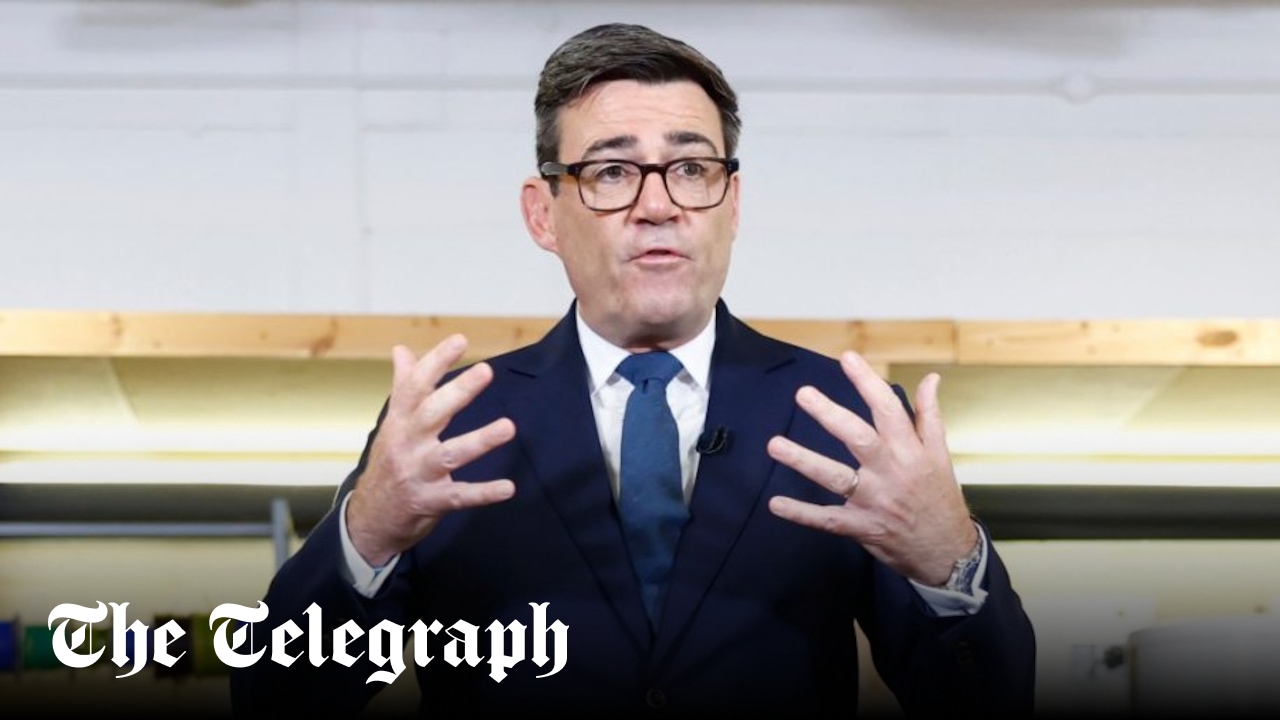
Andy Burnham’s pledge to take public control of water companies risks unleashing a fresh debt crisis for struggling suppliers.
Moody’s, the ratings agency, has warned that the Prime Minister’s plans for state ownership threaten to trigger a new cash crunch in an industry already under acute financial strain.
It said the backdrop of “persistent political scrutiny” of the sector under Mr Burnham “may weaken investor confidence and increase the cost of attracting capital needed to support substantial investment programmes”.
The ratings agency warned that uncertainty over the future ownership of utilities also risks triggering another sector-wide investment downgrade.
Though the Prime Minister has stopped short of endorsing outright nationalisation, Moody’s believes he has repeatedly advocated “greater public control”, a stance that is holding back vital reforms to the water sector.
Moody’s assesses the creditworthiness of individual suppliers partly on the stability of their regulation.
However, it said “further deterioration” of this “would increase business risk … and require stronger financial performance to maintain credit quality”.
Each rating downgrade exacerbates the industry’s financial pressures by making it more expensive for companies to raise critical funds from shareholders and the debt markets.
Suppliers typically fund much of their investment commitments and day-to-day operational requirements by borrowing from investors, banks and the bond markets.
Increasingly, however, the industry is turning to less conventional financing, largely in the form of aggressive hedge funds that charge a steep premium to lend to distressed companies.
Thames Water is seeking to borrow another £2.4bn from more than 100 creditors who have already lent the stricken company £3bn to keep it afloat.
The request forms part of a wider rescue proposal awaiting approval from Ofwat, the regulator, and government sign-off.
The Prime Minister has set up a “public control” taskforce, chaired by Louise Haigh, the First Secretary of State, to see whether state ownership of utilities can lower household costs.
His cost-of-living crusade is driven by a belief that voters strongly support reversing the privatisation of the water industry.
Mr Burnham described the privatised water sector as a “leaking monument” and a system where “shareholders never lose, and the public never win”.
Pollution incidents
The industry faces a further reputational hit from its worsening environmental record.
Despite a slew of large fines, forthcoming figures from Ofwat, the industry regulator, are expected to show that the overall number of pollution incidents has increased, including those deemed “serious” breaches.
Thames Water is finalising a revised £10bn rescue deal it hopes will win over the regulator. The proposal is expected to be tabled in the coming weeks.
The environment, food and rural affairs select committee urged the Government to reject the plan on Friday.
Alistair Carmichael, who chairs the committee, said: “Customers will be incredulous if the company’s creditors are now able to pile on another multi-billion-pound debt injection while the Government does nothing.”
He added: “The committee does not believe [that] Thames’s creditors have the company’s, the public’s or the environment’s best interests at heart … The Government needs to act decisively to draw a line under this sorry saga.”
A Defra spokesman said: “Our generational reforms to the water system will put the public first while bringing tougher regulation, stronger enforcement and greater accountability.
“The Prime Minister has been clear that the failures of the past must be corrected and that our strengthened Water Bill will start a journey to a new water system, including by removing existing limits on government share ownership, giving new powers to mayors to hold water companies account, and closing loopholes in the ban on executive bonuses.”



