Original Coverage & Source Attribution: www.france24.com
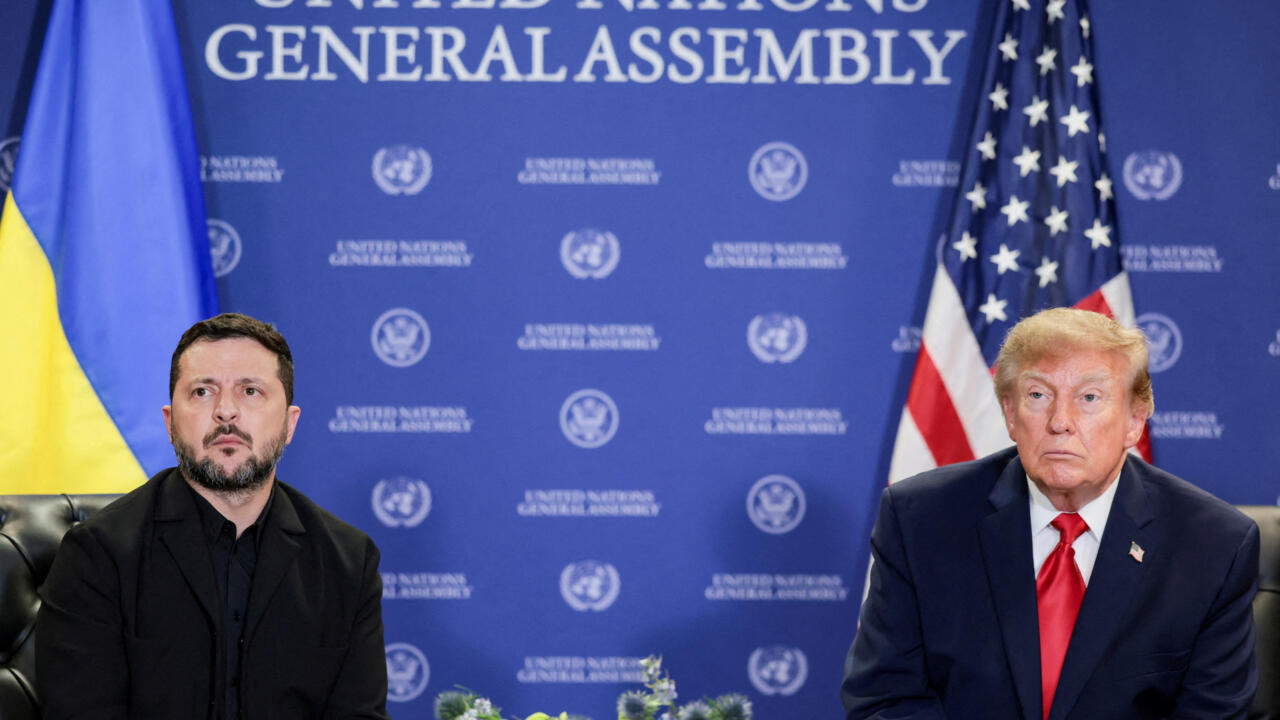
The Democrats’ sweeping victory in US midterm elections this week is already reshaping the political map, both domestically and abroad. In Kyiv, the mood is cautiously optimistic, shared FRANCE 24’s correspondent Emmanuelle Chaze, who said Ukrainians understand that US foreign policy still runs through the White House. Few of them expect an immediate shift in how the US approaches the war with Russia, especially given US President Donald Trump’s tense relationship with Ukraine as of late.
Ukrainians ‘not expecting drastic change in US policy’ after midterms
To display this content from YouTube, you must enable advertisement tracking and audience measurement.
Accept
Manage my choices
One of your browser extensions seems to be blocking the video player from loading. To watch this content, you may need to disable it on this site.
Try again
Ukrainian President Volodymyr Zelensky told German public broadcaster ZDF on Thursday that Democrats were “speaking very clearly about supporting Ukraine” and “renewing the connection between the US and Europe”. He added he was hopeful to be able to push for more funding and aid with defence. While the Democrats’ control of Congress could indeed lead to financial relief for Ukraine and more sanctions on Russia, their room for manoeuvre remains limited.
Trump said Friday that a “big, beautiful agreement” to end the war is close – one he claims could involve “all of Europe” – and US-mediated talks between Russia and Ukraine are due in Abu Dhabi next week. But the European Union (EU) said “a lot of work” was still needed and EU spokeswoman Paula Pinho noted it would “obviously be up to the EU to decide on matters which affect its security”.
FRANCE 24 spoke with James M. Lindsay, a senior fellow in US foreign policy at the Council on Foreign Relations, about what the results could mean for the war in Ukraine and US-Europe relations.
FRANCE 24: Now that the Democrats have gained control of Congress, how much room will they have to push for greater support for Ukraine? And how likely is it that they will make it a priority?
James M. Lindsay: The incoming Democratic Congress will be more supportive of Ukraine than the Trump administration has been. Congressional Democrats, however, are going to find it difficult to translate their policy preferences on Ukraine into actual policy change. The reason for that is because the president of the US – despite seeing his party lose in historic fashion on election day – retains significant authority over US foreign policy.
But I would anticipate that the Democrats will put ending the war with Iran, reaffirming US support for Ukraine, and reining in President Trump’s use of tariffs high on their to-do list.
Read moreTrump’s stillborn diesel deal: Why Russian oil tankers are not heading to the US
How much power does Trump hold over foreign policy and how might he leverage it following the midterms defeat?
First and foremost, the president alone decides who the United States negotiates with and what to negotiate over. Congress can have views on these issues. It can criticise the president in the hope it can persuade him to change his mind. But it cannot dictate the terms of the negotiations. So the big unknown that remains after election day – now that we know what Congress will look like in January – is how President Trump will respond.
Donald Trump prides himself as a dealmaker. Perhaps he will view the results as an opportunity to show how he can negotiate with the Democratic Congress. If so, the desire of many Democrats and many Republicans: to take a tougher line with Russia and to do more to help Ukraine, could have great success.
But if you look at President Trump, he is someone who historically when challenged, doubles down rather than backs down. So perhaps he will continue to push ahead with his policy towards Russia and hostility towards Ukraine.
Read moreDemocrats warn Trump camp to ‘lawyer up’ as anger over corruption drives midterms wipeout
What other challenges will the Democrats face trying to set their foreign policy agenda in Congress?
For Democrats, the victory on Tuesday has sent expectations soaring both inside the United States and abroad about how much a Democratic Congress will be able to redirect US foreign policy. They will find it very hard to satisfy these expectations, which could lead to very big disappointment down the road, both at home and overseas.
One challenge congressional Democrats are going to have – on Ukraine, as well as on the Iran War – is that they won the election in November, but they don’t take office until the beginning of January.
Congress is going to have a hard time putting its stamp on policy – no matter how many speeches senators and representatives give, affirming their faith in things like the transatlantic relationship. So in essence, if the president decides that he is going to persist with the disruptive foreign policies he has championed during the first two years of his second term, Congress will find it difficult to rein him in.
This interview has been edited for clarity and brevity.