

Original Coverage & Source Attribution: www.dailykos.com
Two weeks after Secretary of State Marco Rubio visited Athens, praised Greece as an important American ally, and signed a multibillion-dollar arms deal, Washington faced an uncomfortable diplomatic test. On October 20, Libya’s eastern-based parliament had approved the controversial 2019 maritime agreement between Turkey and Libya. The U.S. State Department initially responded with caution. Rather than directly criticizing the agreement, Washington urged the countries involved to settle their maritime disputes through good-faith talks.
Many Greeks and Greek Americans were disappointed. How could Washington call Greece an indispensable ally while shunning strong criticism of an agreement that Greece considers illegal? The response raised questions about American foreign policy and the value of U.S. promises. It also raised a larger question: Does Washington defend international law equally, or does it sometimes put political and military interests first?
The dispute goes beyond relations between Greece and Turkey. The agreement also affects the interests of Egypt, Israel, Cyprus, and the European Union. Bahrain and the United Arab Emirates have also supported Greece’s position. The agreement could make future energy exploration south of Crete more difficult and increase tensions in an already troubled region. It is therefore about more than maritime boundaries. It concerns regional peace, energy security, and respect for international law.
On October 25, the State Department issued a stronger statement. It described the announcement of the agreement’s approval as “unhelpful and provocative.” Washington also said that its basic policy had not changed. This statement helped clear up some of the confusion caused by its earlier response. However, an important question remains: How can the United States support Greece and other regional partners while continuing close relations with Turkey, a NATO member whose actions have often caused disagreements with Washington and its European allies, and which some have even described as a U.S. or NATO ally in “name only”?
The Turkish-Libyan Agreement and Its Political Background
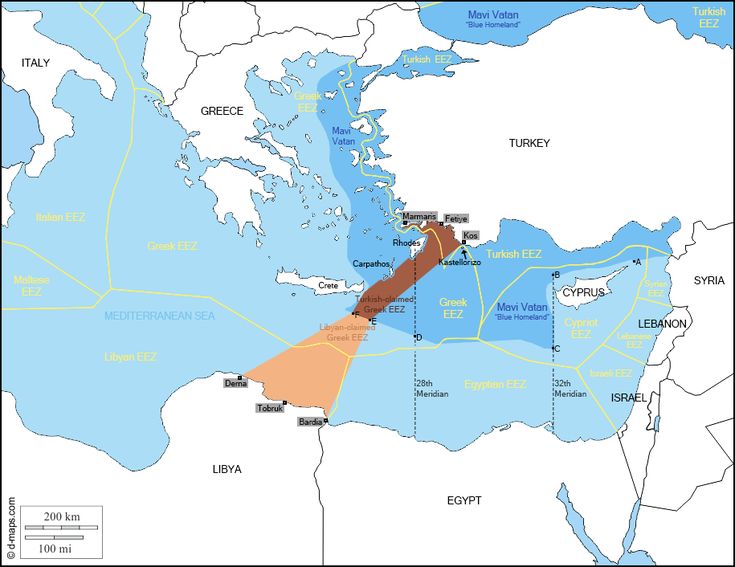
Turkey and Libya’s Government of National Accord (GNA) signed the maritime agreement in November 2019. It claims to establish a maritime boundary between the two countries and gives them rights to resources under the Mediterranean seabed.
Libya’s eastern-based parliament, which is linked to the Haftar family, originally opposed the agreement. However, it approved it on October 20, 2026.
Recent news reports have discussed Saddam Haftar’s political ambitions to become president of a unified Libya, and the possibility that Turkish support may be part of a larger political deal. However, there is not enough evidence to say that Turkey promised political support in exchange for approval of the agreement. Claims that Turkey paid the Haftar family for its support also require proof.
Still, the political situation deserves attention. Turkey seeks to expand its maritime claims, gain control over strategic routes connecting the Eastern Mediterranean to Europe, and make European countries increasingly dependent on Ankara for energy supplies, including oil and natural gas, as well as critical information networks. At the same time, Libya’s competing political groups have their own interests. These political relationships can seriously affect international law and regional order.
Why Greece Considers the Agreement Illegal
Greece argues that the Turkish-Libyan agreement violates international law because Turkey and Libya do not share an opposite or neighboring coastline that would support the maritime boundary they claim. Athens also argues that the agreement draws a line southeast of Crete while ignoring the maritime rights of Greek islands.
The United Nations Convention on the Law of the Sea (UNCLOS) provides the main international rules for maritime boundaries and rights. Under Article 121, islands generally have the same maritime rights as other land areas. They can have territorial waters, an exclusive economic zone (EEZ), and rights to resources under the seabed. The exception applies to rocks that cannot support human habitation or economic activity of their own.
Crete, Rhodes, Kasos and Karpathos are large, inhabited Greek islands. They therefore have important maritime rights that countries must consider when establishing sea boundaries. Turkey and Libya cannot simply ignore these islands or make an agreement that takes away the rights of another country.
Turkey has not signed or approved UNCLOS. However, it has followed some of its rules when doing so served its interests. In the Black Sea, for example, Turkey signed agreements establishing maritime boundaries with Bulgaria, Georgia, and the former Soviet Union.
Although Turkey is not a member of UNCLOS, some of its rules are also part of customary international law. This means that certain rules can apply to countries even if they have not signed the agreement.
Turkey argues that its geographic location makes it unfair to apply international maritime law in the same way to all countries. It argues that islands should not have full rights to maritime zones, including EEZs. Ankara points out that many Greek islands are located very close to Turkey’s coast but are not directly connected to the Greek mainland. Ankara believes that these geographic conditions require a more flexible interpretation of maritime law. It claims that continental shelves and EEZs should be measured primarily from mainland-to-mainland coastlines.
While Turkey argues that its position protects its interests, it also raises questions about whether countries should follow international rules consistently. Changing or applying international law only when it benefits a particular country weakens the international legal system. International law must be applied consistently to protect fairness, stability, and all countries’ rights.
International Law Must Apply to Everyone
During a press conference in Cairo on October 26, UN Secretary-General António Guterres stressed that violations of international maritime law were unacceptable. He said that the international community should not accept actions that go against UNCLOS. He also emphasized that “the rule of law must prevail over the rule of force.”
His message was clear: powerful countries should not be allowed to impose their demands simply because they have stronger militaries or greater political influence. International law exists to protect the rights of all countries, regardless of their size or military strength. This principle must apply equally to Turkey, Greece, Libya, and every other country. NATO membership ought not to give any country special treatment when its actions conflict with its neighbors’ rights.
The United States has often spoken about the importance of a world based on international rules. However, its commitment is tested when those rules conflict with its political and military relationships. Washington views Turkey as an important NATO member and has reasons to maintain good relations with Ankara. But these interests should not prevent the United States from defending international law and the rights of other U.S. allies, particularly those that have repeatedly demonstrated greater loyalty and reliability toward the West.
The Great Sea Interconnector: Another Test for the Eastern Mediterranean
The dispute is not only about lines drawn on a map. It could also affect the Eastern Mediterranean’s economic future and energy security.
One important example is the Great Sea Interconnector (GSI). This major project aims to connect the electricity systems of Greece and Cyprus and eventually Israel through an undersea cable. The European Union supports and funds the project. It could improve energy cooperation and help Cyprus reduce its dependence on its isolated electricity system. It would strengthen cooperation among Athens, Nicosia, and Jerusalem, while creating an additional energy connection between the Eastern Mediterranean and Europe. The project would provide an alternative way to transmit electricity to Europe and reduce dependence on vulnerable energy routes.
The United States has also supported the project. During his October 2026 visit to Athens, Secretary of State Marco Rubio said the project mattered because it would help Europe diversify its energy supplies. However, Washington faces a difficult challenge. It wants to maintain good relations with Turkey because it is a NATO member, and at the same time support Greece and Cyprus and protect Europe’s energy security.
Turkey opposes the project because it disagrees with Greece over maritime boundaries. Ankara argues that it must approve surveys along the cable’s planned route. It bases part of this claim on its 2019 maritime agreement with Libya.
Greece rejects Turkey’s position. Athens argues the project should proceed under international law and that Greece will defend its sovereign rights.
The Abeille Marengo, a French research vessel working for Nexans, the French company responsible for manufacturing and installing the submarine cable, arrived in Heraklion, Crete, on October 27, 2026, and is preparing to resume seabed surveys for the undersea cable project. Cable-laying operations are expected to begin in late 2027. The project is scheduled to become operational by late 2029 or 2030.
This controversy creates tension in the Eastern Mediterranean. It also tests the European Union and the United States. Will they support international law and let the project move forward under accepted legal rules, or will political pressure and competing claims block regional cooperation?
Washington Must Decide What Its Promises Mean
The Turkish-Libyan agreement shows how international law, regional politics, and military alliances can clash. It also highlights a continuing problem in American foreign policy: the difference between defending international principles and protecting relationships with powerful allies.
Greece is a NATO member and a long-standing American partner. Cyprus is an important European partner, while Egypt and Israel also have major interests in the Eastern Mediterranean. Washington should not ignore these concerns to maintain good relations with Turkey. It must speak clearly when any country’s actions, including those of a NATO ally, conflict with international law.
If Washington expects other countries to respect international rules, it must follow those same principles consistently. Otherwise, American statements about international law and regional peace will lose their meaning and credibility.
The Eastern Mediterranean should not become a place where military power and political deals determine who controls the sea. Its future should be based on international law, diplomacy, and cooperation—not threats, pressure, or one-sided claims.
The Turkish-Libyan agreement and the Great Sea Interconnector will test whether the United States and its European partners are truly willing to defend these principles. Moreover, the GSI project is not simply an electricity cable. It tests whether Greece, Cyprus, and the EU can build strategic infrastructure in the Eastern Mediterranean without allowing others to block them or control their decisions.
France’s role is especially important. French companies are directly involved in the project, and France has a strong interest in keeping the Eastern Mediterranean stable and ensuring ships can navigate freely through its waters.



