

Original Coverage & Source Attribution: www.todoalicante.es
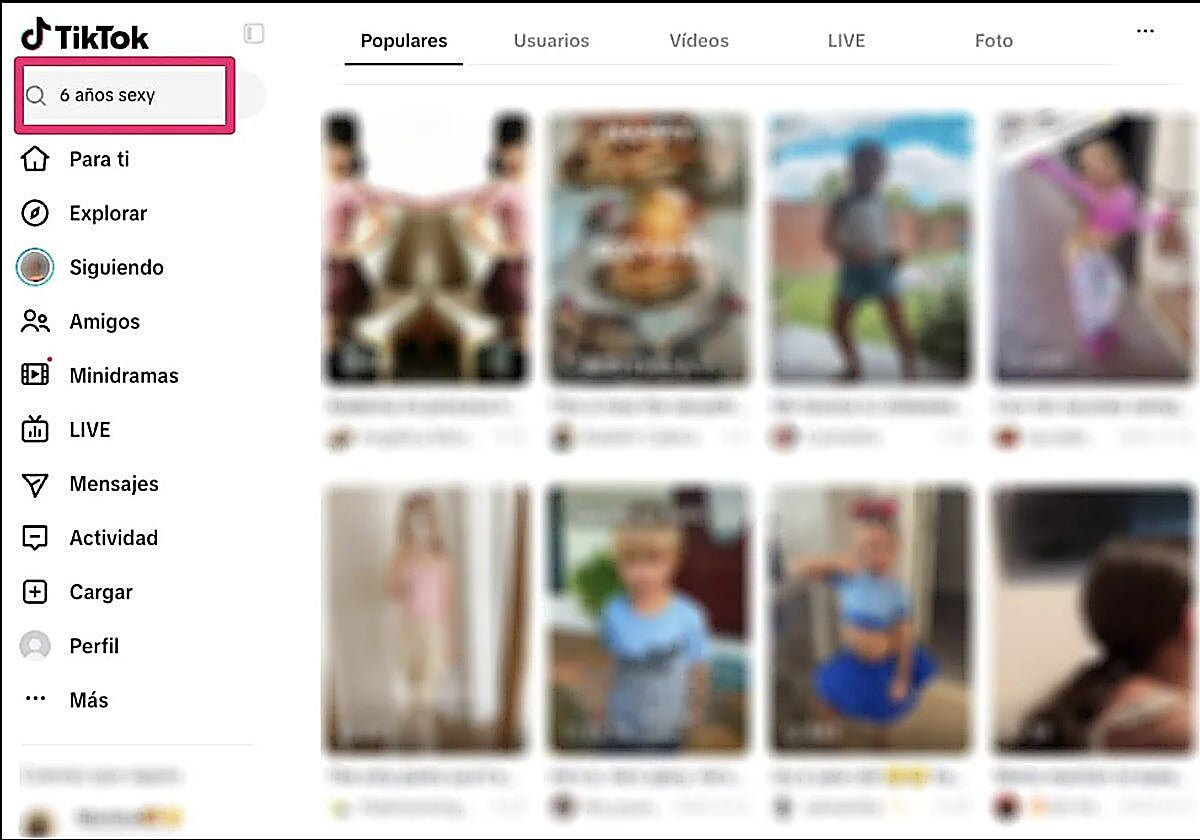
“If it had been down to me, TikTok would have been suspended in Spain yesterday.” With these words, the Minister for Youth and Children captured the outrage that erupted on Monday following the publication of an investigative report by the Maldita.es foundation into the dissemination, access to, and even trafficking of paedophilic material on the network. However, that power does not lie in her hands, nor in those of any ministry or the government itself. Not even the Public Prosecutor’s Office, called upon to act directly in this appalling case, has such authority.
The Public Prosecutor’s Office received the formal complaint on the very day the findings were made public. The authors of the investigation, titled ‘TikTok: Home of the Paedophile’, handed prosecutors “one terabyte (1,024 gigabytes) of information containing all the evidence,” noted Clara Jiménez, one of the journalists behind the report.
Concurrently, the minister, Sira Rego, called on both prosecutors and the Data Protection Agency to take decisive action—urging an outright ban on the social network if deemed necessary. The sheer firmness of the statements, echoed across the political spectrum, NGOs, and child protection experts, matched the severity of the findings. In practice, however, enforcing a blackout is an entirely different matter.
No matter how grave the public outcry, delivering the death blow suggested by the government is no simple feat, even on a temporary basis. Legal precedents demonstrate why. To begin with, prosecutors lack the legal authority to shut down a platform; that power rests solely with a judge. While they could have sought a temporary suspension as a precautionary measure during the inquiry, prosecutors merely referred the case to court on Friday, requesting “investigative steps to determine the facts and potential culprits (…) and the urgent, immediate removal of the reported abusive content.” A shutdown was not requested.
The Telegram precedent under Judge Pedraz
Spain already has a precedent of a high-profile judicial attempt to block a digital platform over illicit content that ended in failure. The judge in question was the well-known High Court magistrate Santiago Pedraz. In 2023, he launched an investigation into Telegram following complaints from media organisations regarding copyright infringement of films and television series. Having initiated proceedings in July 2023, by March 2024 he ordered Spanish telecoms operators to block access to the messaging app within three hours.
Just two days later, he halted his own order with a fresh ruling reversing the decision. The episode highlighted the crux of such legal actions: proportionality. The judge initially cited a “lack of cooperation” from Telegram’s operators, based in the Virgin Islands, to justify the clampdown.
Yet the platform had three million users in Spain—including businesses and professional organisations relying on it daily—whose legitimate activities would have been severely disrupted despite having no connection to the alleged offences. There was also a significant technical obstacle: users could simply deploy VPNs or proxy servers to circumvent the ban, meaning the block would do little to prevent illicit sharing. Within 48 hours, the dramatic prospect of shutting down the platform completely unravelled.
Maldita.es reports that paedophiles target minors via live streams, a practice that the platform ought to prevent.
(Óscar Chamorro)
Is a decisive move against TikTok out of the question given the gravity of the allegations? Not entirely, “but it is exceedingly difficult,” says Marina Echebarría, a board member of Spain’s National Commission on Markets and Competition (CNMC)—the body designated as Spain’s Digital Services Coordinator—and its delegate to the European Board for Digital Services. That European body is currently scrutinising the infringement proceedings launched against TikTok in 2024 over failures to protect minors.
In reality, only the European Union holds the authority to press the ‘off’ switch. Its primary mechanism is the landmark Digital Services Act (DSA), enforced since 2024. Echebarría explains that Article 51(3) of the regulation does envisage a complete platform shutdown as a measure of last resort, provided there is a persistent failure by the platform’s operators to remove illegal content or take required remedial action. “However, this has never happened so far,” she points out. In this instance—typical of Big Tech in regulatory crosshairs—TikTok has signalled its complete readiness to cooperate.
The strategy: legally binding commitments
The approach of the European Commission, which remains “deliberate and cautious” in its inquiries, has hitherto focused on issuing hefty financial penalties, flagging system failures, and mandating technical remedies. “The latter often inflicts more damage than the financial penalty itself, as it forces companies to overhaul their technology or core business models,” the CNMC expert notes.
When such findings emerge, tech platforms typically offer commitments that are negotiated with the Commission. The Board scrutinises them, refines the details, approves the plan, and monitors compliance. If these measures prove insufficient, formal infringement proceedings are resumed. “A total shutdown under Article 51(3) could theoretically occur” if commitments fail to produce real-world results, “but this remains an extreme exception,” Echebarría explains.
The Commission is on the verge of reaching a definitive ruling in the case against TikTok. In preliminary findings released in July 2026, Brussels warned that child accounts failed to meet European safety standards. “Minors can choose to set their accounts to ‘public’ (…). This exposure could lead to unsolicited contact by potential offenders and risks content being exploited for cyberbullying. This feature effectively grants strangers a window into a child’s life (…) which could leave lasting psychological scars,” the preliminary ruling stated.
“Neither the reporting mechanisms nor the recommendation algorithms worked on the platform. Automated moderation failed to catch this illegal material, and human review could not cope. It is a very serious failure.”
Marina Echebarría
CNMC Board Member
Just nine days ago, Brussels also censured the platform’s algorithmic architecture, specifically the ‘rabbit hole’ effect, whereby recommendations steer users into increasingly narrow, extreme, or obsessive content loops that are difficult to break. Such spirals can harm users’ mental health or subtly funnel them towards criminal material, such as child sexual abuse content now under intense scrutiny.
In Echebarría’s view, beyond the “abhorrent nature” of the material uncovered and “clear proof that safeguarding mechanisms failed”, the most alarming aspect is that while the platform occasionally took down flagged posts, “it did nothing to address the structural flaws that enabled their distribution, consumption, and even recommendation.” She added: “Automated moderation failed to catch this illegal content, and human moderation was insufficient. That is a grave systemic failure.”
It remains to be seen whether the evidence from Maldita.es will be incorporated into the existing European investigation or trigger a separate inquiry. “European authorities are aware of this Spanish investigation and the accompanying evidence, and parallel inquiries alongside Interpol are already underway,” the CNMC board member concluded.
Supreme Court precedentPrior to the Telegram case, Spain’s Supreme Court had already established legal precedent on blocking websites hosting illicit content. In 2019, an issue arose regarding a Canadian website selling abortion medication accessible to Spanish consumers. The Spanish Medicines Agency ruled that sales were unauthorised in Spain and warned the operator of the activity’s illegality. When the site failed to comply, administrative proceedings were initiated, and in June 2020 internet service providers were ordered to block access, a measure enacted on 23 September that year. The website operators appealed, and the Supreme Court ruled in their favour, laying down key principles for handling unlawful digital material. The court held that authorities could block the specific unlawful activity—the sale of two medicines—but not the entire website. Furthermore, the principle of proportionality had to be strictly upheld: “If it was technically feasible to block only the illegal section, shutting down the entire site was unwarranted.” This explains why Spanish prosecutors have, for now, simply asked the courts to order the immediate removal of the child abuse content uncovered by Maldita.es, rather than seeking a blanket ban.
comentarios
Reportar un error



