
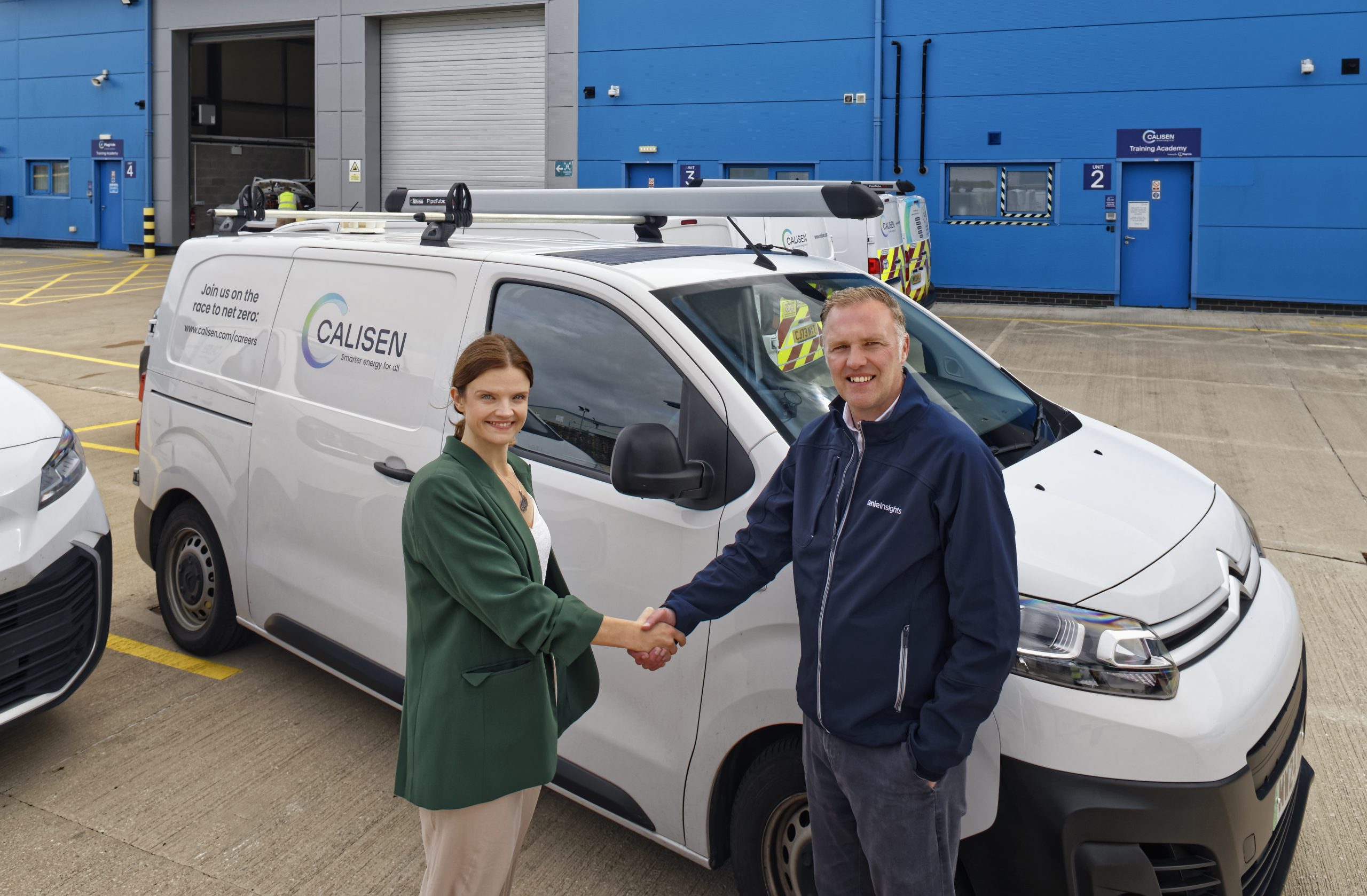
Original Coverage & Source Attribution: www.fleetpoint.org
Calisen, the UK’s largest smart meter provider, has fitted Genie Insights’ solar battery maintenance technology across its electric van fleet. The company supplies smart meters to around 40% of British homes and operates a fleet of approximately 350 vans.
The fleet includes 2.8-tonne electric van models from Stellantis and Toyota. These vehicles support a nationwide field force of around 1,100 engineers and technicians. One-third of Calisen’s fleet now runs fully on electric power.
Calisen expects the new solar battery technology to cut avoidable vehicle downtime by up to 50%. The move addresses a growing reliability challenge for electric commercial vehicles, where auxiliary electrical systems can place significant demands on 12V batteries.
Electric van batteries face growing demands
Electric vans rely on their high-voltage batteries for propulsion, but their smaller 12V batteries also play a vital role. These batteries power systems such as telematics units and other auxiliary equipment.
Telematics devices can continue drawing power while a vehicle sits parked. Extended periods of inactivity, including public holidays, can therefore increase the risk of battery failure. A flat 12V battery can leave an otherwise charged electric van unable to operate.
At the same time, manufacturers are reducing the size of some 12V batteries as demand for auxiliary electrical power increases. This creates a growing reliability gap. Lower reserve capacity must support heavier and continuous electrical loads.
Calisen has experienced the impact on fleet reliability and has responded by introducing a battery maintenance solution from Genie Insights. The system uses MIPV solar technology to provide additional power to the vehicle’s 12V battery.
The solution uses 50W solar panels to continuously top up the 12V battery during daylight hours. This helps maintain battery health and reduces the risk of failures that can take vehicles out of service.
Calisen has already retrofitted the technology to 40 vehicles. It will also feature on newly procured vehicles, which Calisen converts to a bespoke specification before putting them into service.
Solar technology supports fleet reliability
Briony Morgan-Wilcox, Calisen’s fleet sustainability and efficiency manager, said the reliability of its electric vans is critical to its field operations.
“Our engineers and technicians depend on their vehicles every day to deliver essential services to customers across the UK. We had to find a swift resolution to our battery problems and were introduced to Genie through a major fleet operator which had already rolled out solar panel technology to resolve a similar problem.
“The solar panels are already improving vehicle reliability, reducing avoidable downtime and ensuring our field staff can stay productive. The solar technology delivers a passive but always-on solution to a real operational headache while also supporting our wider sustainability objectives.”
Most of Calisen’s electric vans travel around 100 miles each day. This makes them well suited to electrification, while also creating a predictable operating pattern for the additional solar charging technology.
Drivers primarily charge the vans at home or through the public charging network. The solar system provides an additional layer of resilience by helping maintain the 12V battery between journeys.
For fleet operators, the technology highlights an important distinction between electric vehicle charging and auxiliary battery management. Keeping the main traction battery charged does not necessarily prevent a 12V battery from becoming depleted.
Calisen links reliability with decarbonisation
The solar rollout forms part of Calisen’s wider sustainability strategy. The company continues to support the UK’s energy transition while working to reduce emissions from its own fleet.
David Carlisle, sales manager at Genie Insights, said the technology could help Calisen improve vehicle utilisation while tackling a growing issue for electric light commercial vehicles.
“We have worked in partnership with Calisen to help resolve their battery problems and we look forward to increasing their fleet utilisation. Battery failure has become a common challenge for eLCVs, and we believe our solar power proposition is a reliable and cost-effective solution to take away downtime challenges and optimise the long-term life of vehicle batteries.”
The move also demonstrates how fleet operators are looking beyond vehicle range when managing the transition to electric vans. Reliability, charging behaviour and auxiliary power consumption all influence the day-to-day performance of an electric commercial vehicle.
For operators with large field fleets, even relatively small numbers of battery-related failures can create lost working time, replacement vehicle costs and disruption for mobile staff.
Calisen’s approach aims to tackle that issue before failures occur. By continuously supporting the 12V battery, the company expects to keep more electric vans available for its engineers and technicians while extending battery health and supporting its wider fleet sustainability objectives.