
Original Coverage & Source Attribution: en.wowtale.net
Anthropic said last month that Claude, working with only high-level direction from human scientists, autonomously identified a novel enzyme system that resembles CRISPR. The company announced the result on Sept. 23 while unveiling a new life sciences research group and its own laboratory. What the system actually does remains unknown, and outside scientists have been quick to say it is too early to call it a breakthrough.
Many discoveries that reshaped biology and medicine began the same way: a scientist noticing something odd amid nature’s staggering diversity of molecular machines. Restriction enzymes, which cut DNA at specific short sequences, were found in bacterial immune systems, where they destroy invading viral DNA; researchers later repurposed them to splice genes between organisms, launching the biotech industry. Taq polymerase, identified in a bacterium living in a Yellowstone hot spring, could copy DNA at high heat and became the basis for PCR. CRISPR itself was first spotted as an unusual repeating sequence in bacterial DNA, long before it became the foundation of gene-editing medicine.
Anthropic formed its life sciences research group in spring 2026 to test whether general AI models could systematize and accelerate this kind of discovery. The system Claude found is paired with an array of DNA repeats, a layout reminiscent of CRISPR. Its function isn’t yet known, but that combination of features has only ever shown up together in a handful of other systems, all of them programmable tools for cutting, copying, and pasting DNA. CRISPR is the best-known example; several others are being developed as therapeutic tools.
The system is built around a reverse transcriptase (RT), an enzyme that copies RNA into DNA. The RT itself, found in a jumbo phage, had turned up in earlier research. What Claude appears to have noticed first, according to Anthropic, is the full set: the RT, an adjacent array of non-coding DNA repeats, and an accessory protein of unknown function.
What 950 agents found in 21 hours
Anthropic’s scientists gave Claude a single instruction: search a massive database of DNA sequences for interesting new reverse transcriptases. Claude agents gathered more than 200,000 RTs, picked out 3,500 new candidate systems, and narrowed those to the 20 most compelling, each written up in a human-readable report. For an expert scientist, that kind of analysis can take weeks to months. Roughly 950 agents spent 21 hours and 210 million tokens on the search before one of them spotted a repeating pattern of DNA sequences right next to the gene for an odd-looking RT.
Reading through the raw sequence, the agent reportedly wrote: “[The DNA next to the RT] is spectacular: I can see by eye a tandem repeat array … that’s a CRISPR-like … repeat array?!”
From there, Claude worked much like a human scientist chasing down a lead. It counted the repeats and measured their spacing, compared the layout against known RT systems, and searched the literature for any prior report of the same pattern. Once satisfied it had found something new, it filed a report for human review.
Anthropic named the system array-associated reverse transcriptases, or ART. Found mainly in bacteriophages, it consists of three parts: the RT, a partner gene beside it, and a long, evenly spaced array of DNA repeats. That layout resembles a CRISPR array, which stores a bank of different RNA sequences and is what makes CRISPR-Cas systems programmable. Early experiments show the ART array is also expressed as a set of distinct short RNAs, hinting that something analogous could be happening. But the system’s function has not been demonstrated, and Anthropic’s accompanying pre-print has not been peer reviewed.
Scientists split on the significance
Feng Zhang, a CRISPR genome-editing pioneer at MIT and the Broad Institute, reviewed the pre-print and called it “an exciting example of how AI agents can contribute to biological discovery,” adding that the RNA-repeat arrays associated with reverse transcriptases are “genuinely intriguing and merit further investigation.”
Other experts were more guarded, according to Bloomberg. Philip Kranzusch, a Harvard Medical School biochemist, called it “a really exciting beginning observation” but “not what we would describe as a breakthrough in biology.” Johns Hopkins University’s Steven Salzberg said most biologists don’t announce an unproven, preliminary finding as if it were the next CRISPR, and gene-editing entrepreneur Lucas Harrington said framing very early, incremental findings as a major discovery “doesn’t help.” Eric Kauderer-Abrams, Anthropic’s head of life sciences, acknowledged the team doesn’t yet know the finding’s significance but defended sharing early results.
Gene-editing stocks slipped the day of the announcement. According to Seeking Alpha, Beam Therapeutics fell 6%, Prime Medicine 12%, and Editas Medicine 8%, with Intellia Therapeutics down 3%. Some names recovered part of the loss the next day as it became clear Anthropic had not shown ART can edit DNA.
The announcement also landed as Anthropic prepares for an IPO. The company confidentially submitted a draft S-1 to the SEC on June 1, and The Wall Street Journal has reported a November listing target. That timing, just as the market is looking for proof that AI can produce real scientific results, helped sharpen the skepticism.
This isn’t the first time AI has changed how biological discovery happens. Google DeepMind’s AlphaFold predicted protein structures with striking accuracy starting in 2020, work that won a Nobel Prize in Chemistry in 2024. But where AlphaFold predicted the structure of already-known sequences, ART is different in kind: Claude actively noticed a pattern that no human had flagged yet. Whether it turns into a usable tool is now a question for the lab.
Humans run the bench, Claude reads the data
The team behind this work has spent its careers studying unusual proteins, specializing in computational approaches that read DNA systematically, interpret its evolutionary history, and flag biological systems worth characterizing. Before joining Anthropic, team members helped illuminate the evolution and regulation of CRISPR systems, discovered new enzymes for next-generation cell and gene therapies, and built tools for spotting anomalies in DNA, including disease-causing human variants. The group sits inside Anthropic’s broader life sciences organization, alongside teams working on drug discovery and on training Claude in biology and chemistry.
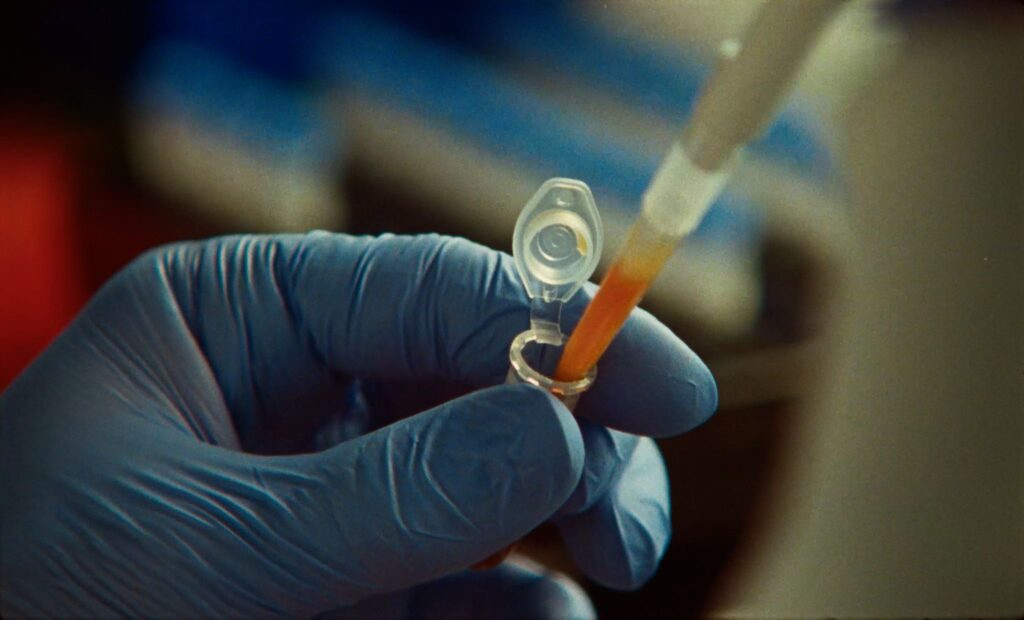
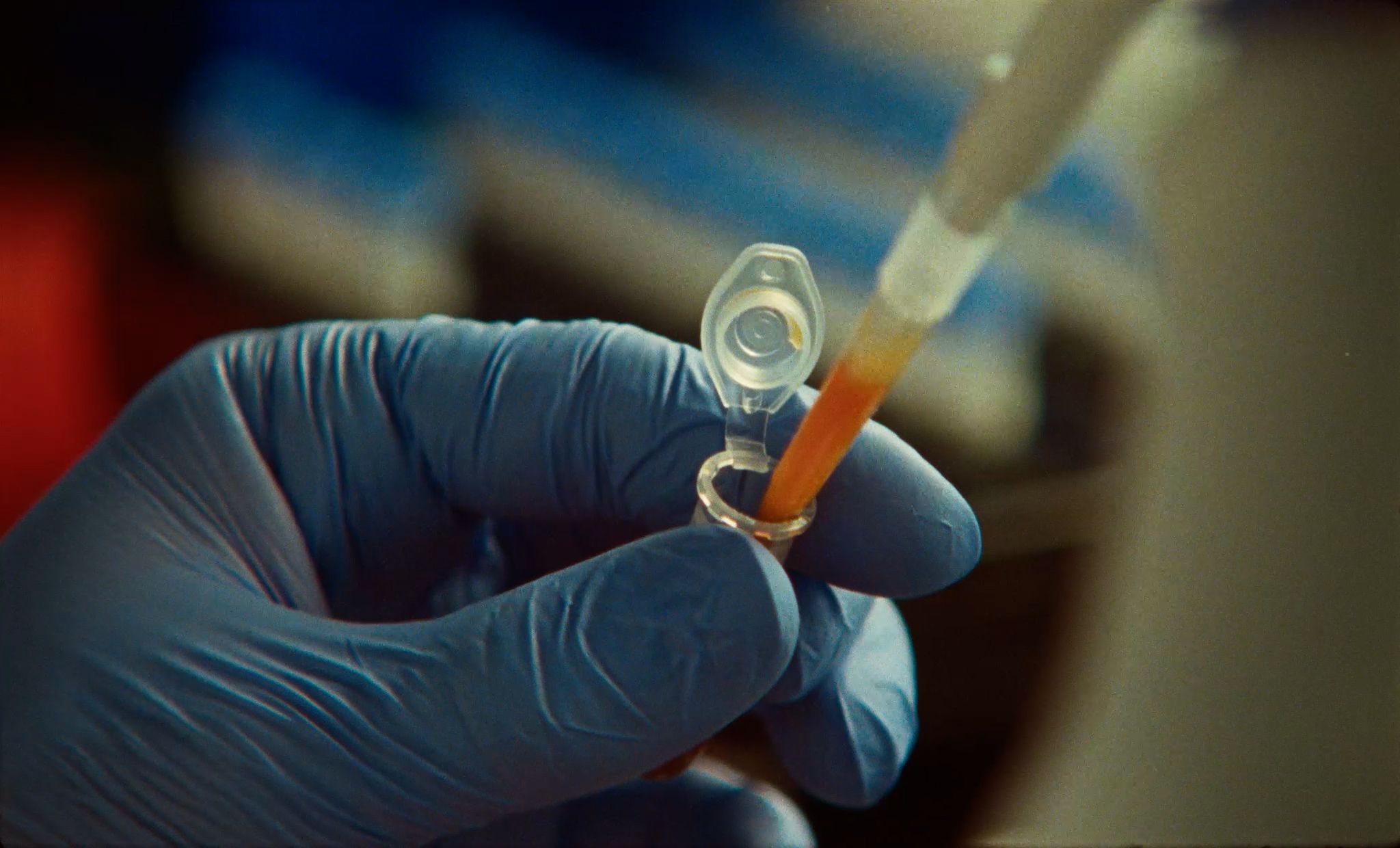
The Bay Area lab looks like an ordinary molecular biology lab. Work stays within the lower biosafety levels (BSL-1 and BSL-2), and the team doesn’t handle pathogens capable of infecting humans. All physical lab work is done by human scientists; Anthropic has experimented with AI-accelerated lab work through efforts like the Model Hardware Standard, but found it doesn’t fit the ad hoc workflows of molecular biology research as well.
A typical workflow starts with a survey of a protein family. Claude reads the literature and reproduces established results from public data to check its own methods. It then looks for family members or genomic neighbors that don’t fit any described system, writing a short report for each candidate that proposes a function and lays out the evidence. In follow-up passes Claude critically re-examines that evidence itself, which is typically where most candidates are eliminated. A survey might end with a single candidate worth testing, or with none.
Candidates that survive are tested at the bench: the protein is expressed in standard lab strains and characterized biochemically and structurally, with Claude helping interpret the data. The team works in Claude Science and Claude Code, the same tools available to any scientist, and sometimes on a custom harness that coordinates many parallel Claude sessions. Because Claude generates hypotheses so prolifically, the hypotheses themselves have become an object of study, and what the researchers learn about which ones are worth testing is fed back into Claude’s instructions to teach it their scientific judgment.