
Original Coverage & Source Attribution: vir.com.vn
The report, released on October 6, is an in-depth study evaluating the AI readiness of Vietnamese students transitioning from higher education to the workforce, forming part of a global survey spanning six markets: Brazil, Malaysia, Saudi Arabia, the United Kingdom, the United States, and Vietnam.
| Photo: Pearson |
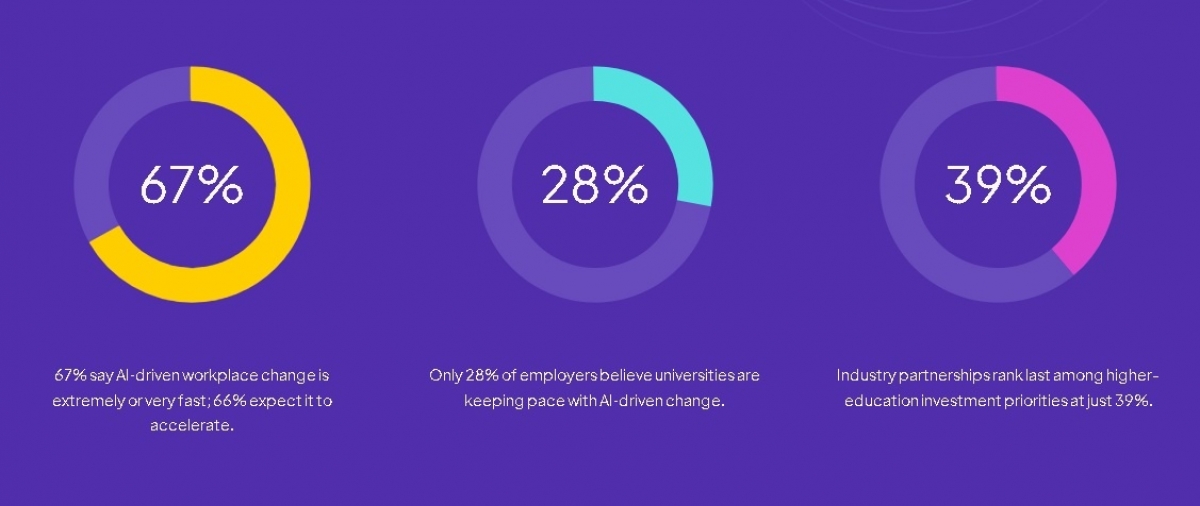
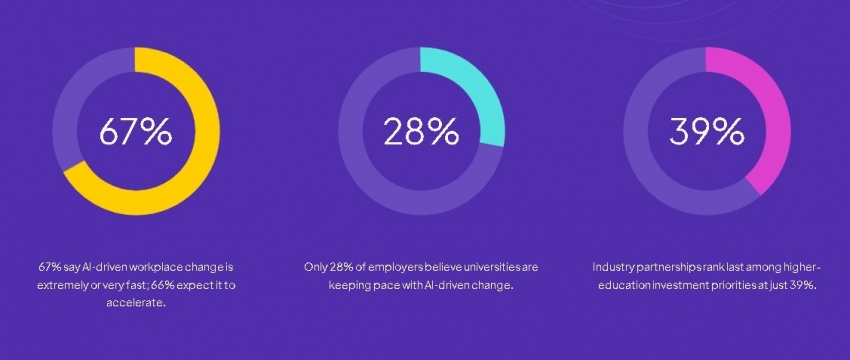
According to the report, Vietnam is categorised as a ‘high-velocity strategist’, a market cluster that treats AI as a core strategic priority alongside aggressive investment. 90 per cent of university leaders in Vietnam took part in the survey and perceived the pace of AI-driven change in the workplace to be ‘extremely fast’ or ‘very fast’, 23 percentage points higher than the global average (67 per cent). In particular, 100 per cent of surveyed academic leaders believe this rate of change will accelerate further over the next two years.
Notably, 96 per cent of surveyed higher education leaders reported that their institutions are investing in AI, with 84 per cent confirming active engagement with industry partners to align with market demands. On the student side, over 52 per cent of respondents rated their readiness to work in AI-integrated environments at a high level (8 to 10 out of 10) – the highest level of confidence recorded across all six surveyed markets.
This strong foundation of student readiness and confidence opens up significant opportunities to drive the practical application of AI skills in real-world business operations. However, the gap between student confidence and practical workplace expectations remains significant. The survey reveals that, averaged across eight competencies, only 15 per cent of employers in Vietnam rate recent graduates as ‘excellent’ in the key competencies for AI-integrated workplaces.
In other words, while Vietnamese students demonstrate high confidence and higher education institutions are actively investing in AI, employers still perceive a clear gap in the ability to apply AI to real-world work. This local reality reflects a broader global challenge. According to the survey, 53 per cent of international employers report struggling to find recent graduates with AI competencies that meet job requirements.
This misalignment stems from differing perspectives: while universities focus on instructing students to operate off-the-shelf AI tools, employers set higher expectations for advanced AI capabilities, where technical proficiency must be paired with critical thinking, data-driven reasoning, and collaborative communications to solve real business challenges.
The report also emphasises that the greatest challenge for today’s young talent is not a lack of ‘AI access’, but the ability to effectively integrate technical AI skills with core human strengths such as critical thinking, data-driven reasoning, and teamwork. This synergy is essential to ensuring that humans remain in the lead as primary decision-makers in the adoption and application of AI.
 |
| Photo: Pearson and AWS |
AI readiness depends on strong alignment between training programs and workplace realities. The Pearson and Amazon Web Services (AWS) report emphasises that getting familiar with AI tools is not enough; rather, learning and applying AI in the “flow of work” for employees and the ‘flow of learning’ for students is essential. Therefore, directly integrating AI into core curricula for both faculty and students will build a more practical foundation for application.
To overcome operational misalignments, the report offers two primary supports. First, the AI Readiness Friction Framework serves as a diagnostic tool to help higher education institutions and employers identify where they are challenged most across six core dimensions: pace, connection, capability, governance, experience, and skills.
Second, the four key capabilities’ framework – spanning functional AI proficiency, responsible and ethical AI stewardship, strategic intelligence, and critical human skills – establishes the core competencies that educators and industry should build together for the future-ready workforce.
Building on these frameworks, the report recommends specific solutions for each stakeholder: Higher education institutions should shorten curriculum review cycles through agile learning models and stackable credentials, shift faculty development towards applied pedagogy, and establish credit-bearing opportunities for real-world AI practice.
Employers are encouraged to actively engage in academic advisory boards, provide faculty with immersion in live business environments, and sponsor live challenges along with high-quality internships. Meanwhile, regulatory authorities play a vital role in enhancing policy frameworks to facilitate the integration of international digital skill certifications into higher education curricula.
 |
| Photo: Pearson |
By combining Pearson’s expertise in education systems, learning science, assessment, and credentialling with AWS’s deep technical insights into how AI is built, deployed, and governed in modern organisations, the report offers a shared vision of the AI-ready graduate: a common definition for institutions and employers alike.
Centred around four key capabilities: functional AI proficiency, strategic intelligence, ethical stewardship, and critical human skills, the report provides a clear roadmap to bridge the gap between workforce AI capabilities and practical employer demand.
For human resource leaders, the findings highlight the need for closer partnerships between employers and education providers, particularly as companies rethink entry-level roles, workforce planning, and capability-building strategies.
As AI adoption accelerates across industries, organisations that actively collaborate to bridge the gap between higher education and the workplace will be better positioned to build a future-ready workforce. This ensures future graduates are not merely AI-literate, but fully empowered with core human capabilities – such as critical thinking, adaptability, and collaboration – to work effectively and thrive alongside technology.
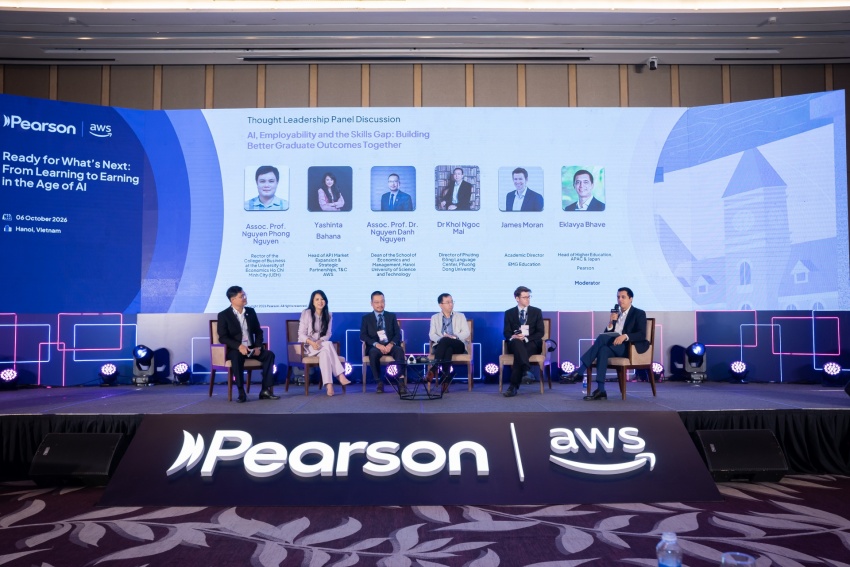
“Vietnam is moving rapidly in the AI wave, but speed alone cannot close the skills gap,” said Eklavya Bhave, Pearson’s head of Higher Education for Asia-Pacific. “Students are confident, and universities are investing heavily, yet employers are still looking for talent with practical application skills and the ability to critically verify AI outputs.”
“Pearson is committed to partnering with Vietnamese universities and enterprises to connect curriculum, skills assessment, and credentials into one clear pathway, helping learners translate education into sustainable career opportunities,” he added.
“Vietnam’s ambition in AI is clear, and its students are eager to lead the way,” said Yashinta Bahana, head of APJ Market Expansion and Strategic Partnerships for Training and Certification at AWS. “But this research tells us that access to AI tools is only the starting point. What employers and graduates need is help learning how to apply AI to solve real-world problems.”
“AWS is working alongside education and industry partners in Vietnam to help close that gap, building the AI literacy, practical judgment, and hands-on skills that move graduates from enthusiasm to impact,” she added.
window.fbAsyncInit = function() {
FB.init({
appId : ‘766611787348522’,
cookie : true,
xfbml : true,
version : ‘v11.0’
});
FB.AppEvents.logPageView();
};
(function(d, s, id){
var js, fjs = d.getElementsByTagName(s)[0];
if (d.getElementById(id)) {return;}
js = d.createElement(s); js.id = id;
js.src = “https://connect.facebook.net/en_US/sdk.js”;
fjs.parentNode.insertBefore(js, fjs);
}(document, ‘script’, ‘facebook-jssdk’));
{
“@context”: “https://schema.org”,
“@type”: “NewsArticle”,
“headline”: “Vietnam among fastest AI adopters, Pearson-AWS study finds”,
“datePublished”: “2026-10-07 05:26:00”,
“image”: “https://vir.com.vn/stores/news_dataimages/2026/102026/07/11/in_social/vietnam-categorised-as-high-velocity-strategist-market-cluster-treating-ai-as-a-core-strategic-priority-alongside-aggressive-investment-20261007113134.jpg?randTime=1791351571”,
“author”: {
“@type”: “Organization”,
“name”: “Pune.Media Editorial Desk”,
“url”: “https://pune.media”
},
“publisher”: {
“@type”: “Organization”,
“name”: “Pune.Media”,
“logo”: {
“@type”: “ImageObject”,
“url”: “https://pune.media/wp-content/uploads/logo.png”
}
},
“isBasedOn”: “https://vir.com.vn/vietnam-among-fastest-ai-adopters-pearson-aws-study-finds-162358.html”,
“mainEntityOfPage”: “https://vir.com.vn/vietnam-among-fastest-ai-adopters-pearson-aws-study-finds-162358.html”,
“creativeWorkStatus”: “Editorial-assisted Curation”,
“comment”: {
“@type”: “Comment”,
“text”: “This article was curated, verified, and structured under organizational human editorial guidelines by the Pune.Media Editorial Desk.”
}
}