

Original Coverage & Source Attribution: www.adgully.com
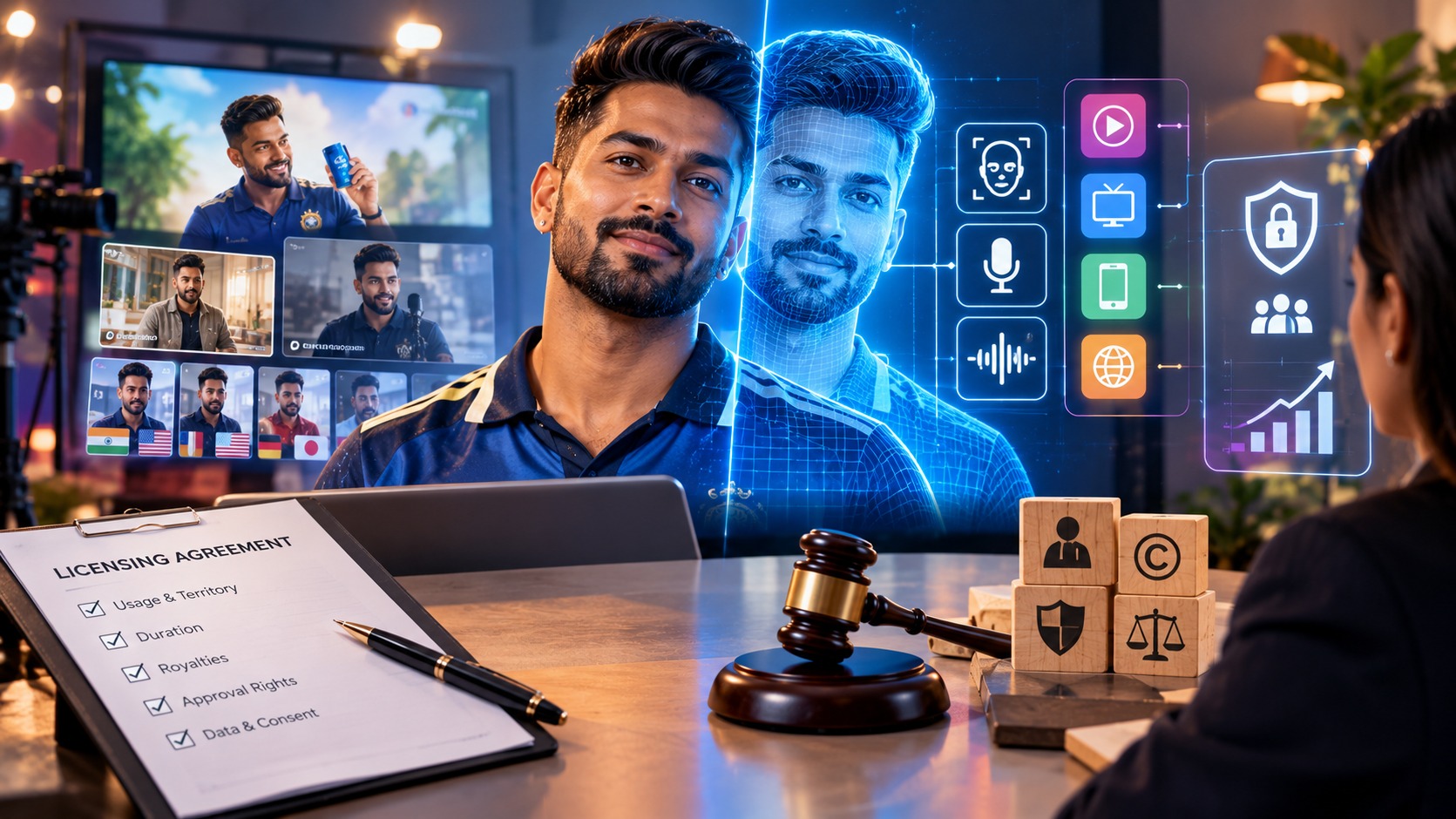
A celebrity no longer needs to be physically present to appear in a brand campaign. With artificial intelligence increasingly capable of replicating a person’s voice, face and mannerisms, a digital version of a star can deliver localized advertisements, generate voiceovers and engage fans at scale. For celebrities and content creators, this opens up a new monetisation opportunity. But as digital identities become commercial assets, who controls the clone?
In India, high-profile names such as Hardik Pandya and Shubman Gill are among those exploring the commercial potential of AI cloning. For brands, the appeal is clear: campaigns can be adapted across languages and markets without requiring repeated studio appearances. For talent, digital twins could generate recurring revenue from licensed use of their likeness, potentially extending their commercial value beyond traditional endorsements.
Yet, the technology is advancing faster than the rules governing its use. A digital replica created for one campaign could potentially be repurposed for another, reproduced across territories or used long after the original agreement expires. And if a clone can be created without permission, the same technology that offers a new revenue stream can also become a tool for impersonation, reputational damage and commercial exploitation.
The industry is, therefore, confronting two parallel challenges: how to structure contracts that protect talent while allowing brands and technology providers to share the value created, and whether India’s existing legal framework is equipped to protect a person’s identity in an era of scalable AI replication.
Licensing a likeness in the age of AI
For Shradha Agarwal, Co-founder and Global CEO of Grapes Worldwide, AI-twin agreements will need to move beyond broad, open-ended licensing arrangements and clearly establish the boundaries of permitted use.
“These contracts will have to spell out where, for how long and in what context a digital likeness can be used, instead of giving open-ended rights,” she says.
The commercial model, Agarwal explains, could combine a fixed licensing fee with a share linked to actual usage, depending on the role played by the talent and the technology provider. Equally important is ensuring that the person whose identity is being replicated retains approval rights over how the digital twin is deployed.
“Most importantly, talent should retain approval rights over how their likeness is used, along with clear provisions for data, consent and rights after the contract ends,” she says.
Sini Magon, COO and Global Partner of Grapes Worldwide, also expects agreements to become more specific about duration and scope. Perpetual rights, she points out, can become complicated when a digital likeness is capable of generating content for multiple campaigns over time. The commercial arrangement, meanwhile, will depend on the extent of usage and the technology involved.

The concern is that a conventional endorsement contract may not adequately account for the possibilities created by a digital replica. A single licensed asset could be used to generate multiple versions of an advertisement, in different languages and for different markets. Without clear restrictions, the original permission could become a much broader commercial entitlement than the talent intended.
Yasin Hamidani, Director, Media Care Brand Solutions, believes AI-twin contracts will need to be considerably more detailed than traditional endorsement agreements.
“The emerging approach is to define the exact use, brand category, platforms, languages, geography and duration, while retaining approval rights over every generated output,” he says.
Hamidani advises particular caution around perpetual or unrestricted rights because the same digital asset can generate an effectively unlimited stream of future content. He expects commercial arrangements to combine upfront licensing fees with usage-based royalties or revenue sharing, with separate economics for the talent and the technology provider.
The central principle is that permission to create a digital twin should not automatically translate into unrestricted permission to use it.
Who gets paid when a digital twin earns?
As AI cloning creates new opportunities to monetise celebrity identities, the division of revenue between talent, agencies and technology providers will become an important part of deal-making.
Sandeep Saini, Vice President Growth at Team Pumpkin, believes the industry is still working out the commercial models, but one distinction is already clear: a celebrity’s digital identity cannot be treated like an ordinary production asset.
“On the commercial side, I expect we will see different models depending on the scale of usage, from an upfront licensing fee to usage-based fees or royalty structures where the talent, agency and technology provider share the value created,” he says.
For Saini, the underlying identity remains the talent’s asset, even when technology makes its replication possible. Contracts should specify not only how long a digital twin can be used, but also whether it can be modified, sublicensed or used to create content beyond the original campaign. Talent should have a say in how their digital identity is deployed, particularly in categories that could affect their personal brand.
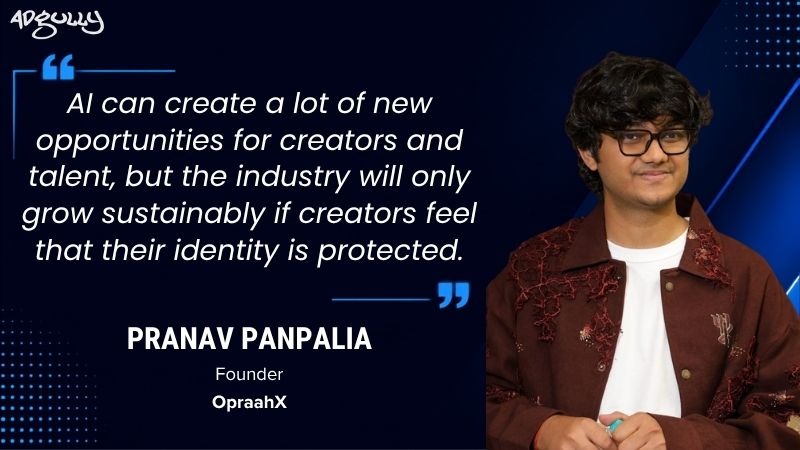
Pranav Panpalia, Founder, OpraahX, similarly stresses the need to distinguish ownership of the identity from ownership or provision of the technology.
“The creator or celebrity owns their identity, voice and likeness, while the technology company provides the infrastructure to create and operate the digital twin,” he says.
The commercial arrangement should reflect that distinction, with transparent terms and a fair share of revenue going to the talent. Panpalia recommends time-bound licences, defined territories, specific platforms and clearly stated use cases, while avoiding perpetual rights unless the talent has explicitly agreed to them and the commercial value justifies the arrangement.
He also highlights the need for clauses covering consent, approvals, data storage, termination and what happens to the digital twin after the contract ends. A deal should not leave unanswered questions about whether a model can continue to operate or retain a person’s likeness once the licence expires.
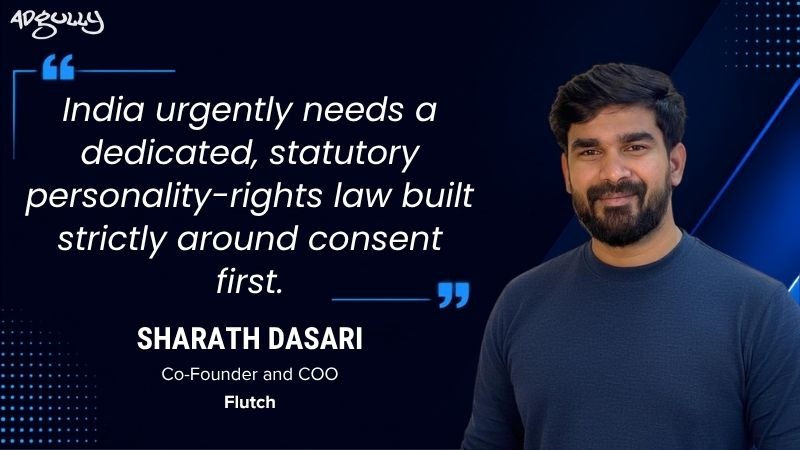
Sharath Dasari, Co-founder and COO of Flutch, takes an even firmer position on the scope of licensing.
“The smartest AI deals are narrow, not sweeping. Perpetuity is the ultimate red flag,” he says.
Dasari argues that talent should license a digital twin only for defined terms, specific use cases and specified languages or territories, with approval rights over every output and a clear exit clause requiring the training model to be permanently deleted.
On royalties, he believes technology providers should be compensated through flat fees or a small share, while the talent retains ownership of their likeness and the larger share of the commercial upside.
The debate highlights a fundamental distinction: technology may make a digital twin possible, but it does not erase the value or the ownership questions, attached to the person being replicated.
Copyright protects the work. But who protects the person?
Commercial agreements can define what happens when a digital twin is licensed legitimately. The more difficult problem arises when someone’s identity is cloned without consent.
India has existing legal routes through which individuals can seek protection against unauthorised use of their name, image, voice and likeness. But AI cloning creates a challenge that traditional intellectual property frameworks may not always address neatly: a person’s identity can be replicated even when a specific copyrighted photograph, film or sound recording has not simply been copied.
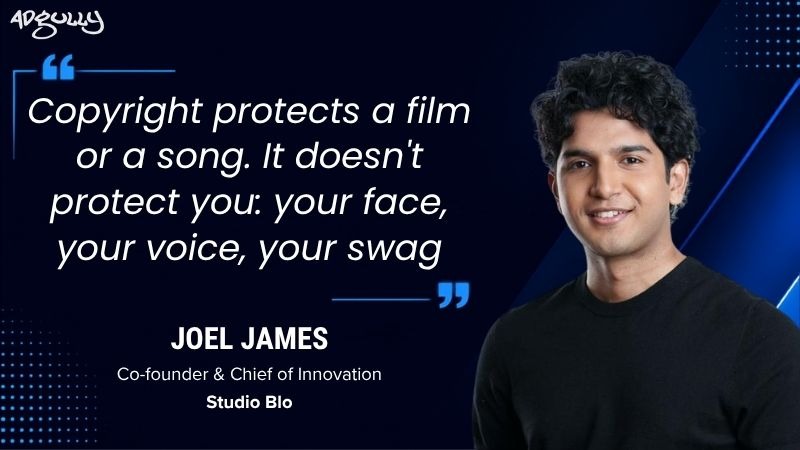
Joel James, Co-founder and Chief of Innovation at Studio Blo, captures the distinction bluntly: “Copyright protects a film or a song. It doesn’t protect you: your face, your voice, your swag.”
James notes that Indian courts, including the Delhi and Bombay High Courts, have acted to protect celebrities such as Anil Kapoor and Akshay Kumar from unauthorised commercial use of their identities. But he argues that relying on individual court orders is an inadequate long-term solution, particularly because legal action can be expensive and inaccessible to many creators.
“That’s justice, one injunction at a time, and mostly for people who can afford a legal team,” he says.
James believes India needs a dedicated personality-rights framework built around consent as the default, mandatory labelling of synthetic content and faster takedown mechanisms.
He also argues that the industry cannot wait for legislation before establishing safeguards. At FAIMOUS, he says, licensed clones are designed to be verifiable, traceable and ownable, enabling talent managers to distinguish authorised digital twins from fakes. An ethics board chaired by filmmaker Shekhar Kapur is part of that effort.
“The goal is simple: make the licensed version so easy that the fake one looks silly,” James says.
For Magon, the risk is similarly about scale. Existing legal provisions can address parts of the problem, but AI cloning allows a person’s face, voice and mannerisms to be replicated and distributed much more widely. A dedicated personality-rights framework could clarify consent, commercial use and the remedies available when an identity is used without permission.
Agarwal also sees the need for a clearer framework. While the current system offers some protection, she says AI cloning is moving faster than existing laws. Dedicated rules could define consent, commercial usage, takedown mechanisms and accountability, giving both talent and brands greater certainty as digital replicas become more common.
From reactive legal action to rules built around consent
For Hamidani, India is not starting from scratch. Courts have increasingly restrained unauthorised commercial use of celebrities’ names, voices, images and likenesses, including AI-generated replicas. But protection currently comes through a combination of privacy and personality rights, passing off, trademark, copyright and performers’ rights rather than one comprehensive statute.
He points to recent cases involving Varun Dhawan and Jubin Nautiyal as examples of courts responding to AI-related misuse. As the technology scales, however, he believes a clearer statutory framework should address consent, ownership, duration, revocation, compensation and posthumous rights.
“The law shouldn’t merely help celebrities remove a deepfake after it spreads; it should clearly define who has the right to create, license and monetise a digital identity in the first place,” Hamidani says.
Saini makes a related point: permission for one campaign cannot be interpreted as blanket consent for every future use. A celebrity or creator may agree to have their voice and likeness replicated for a specific product, but that does not mean they have agreed to its reuse for a different brand, purpose or audience.
Clearer rules around consent, duration, disclosure and takedowns, he argues, would establish boundaries without necessarily slowing innovation. The objective should be to make it clear both what has been licensed and what remains outside the licence.
Panpalia likewise believes India will eventually need more specific guidelines covering AI-generated versions of individuals, including ownership of digital replicas, commercial usage, penalties and takedown mechanisms. A clear distinction must be maintained between legitimate, licensed AI use and deepfakes or unauthorised cloning.
“AI can create a lot of new opportunities for creators and talent, but the industry will only grow sustainably if creators feel that their identity is protected,” he says.
Dasari agrees that the industry cannot rely indefinitely on litigation after the damage has been done. While court interventions and changes to the regulatory environment offer some support, he argues that post-damage injunctions are not enough as licensed digital twins become more widespread.
“India urgently needs a dedicated, statutory personality-rights law built strictly around consent first,” he says.
The digital twin needs a clear identity of its own
The commercial appeal of AI clones is unlikely to fade. For celebrities, they can create new income streams and extend the reach of endorsements. For brands, they offer a way to adapt campaigns across languages and markets, while potentially reducing the need for repeated physical production. For technology providers, they open up a new category of licensing and content services.
But the opportunity depends on trust. Talent must know that a digital twin cannot be used beyond agreed limits. Brands need confidence that the replica they are licensing is authorised. Technology providers need clarity on the rights they can use, the obligations they must meet and the point at which permission ends.
That means contracts must define more than price and duration. They must establish approval rights, permitted uses, data handling, territorial limits, revocation and deletion after termination. Alongside these private agreements, clearer legal standards could help address unauthorised replication, disclosure, compensation and accountability.
AI may make it easier than ever to reproduce a person’s face or voice, but replication should not be confused with ownership. The more valuable digital identities become, the more important it is to establish who can create them, who can commercialise them and who has the power to say no.



