

Original Coverage & Source Attribution: www.arabnews.com
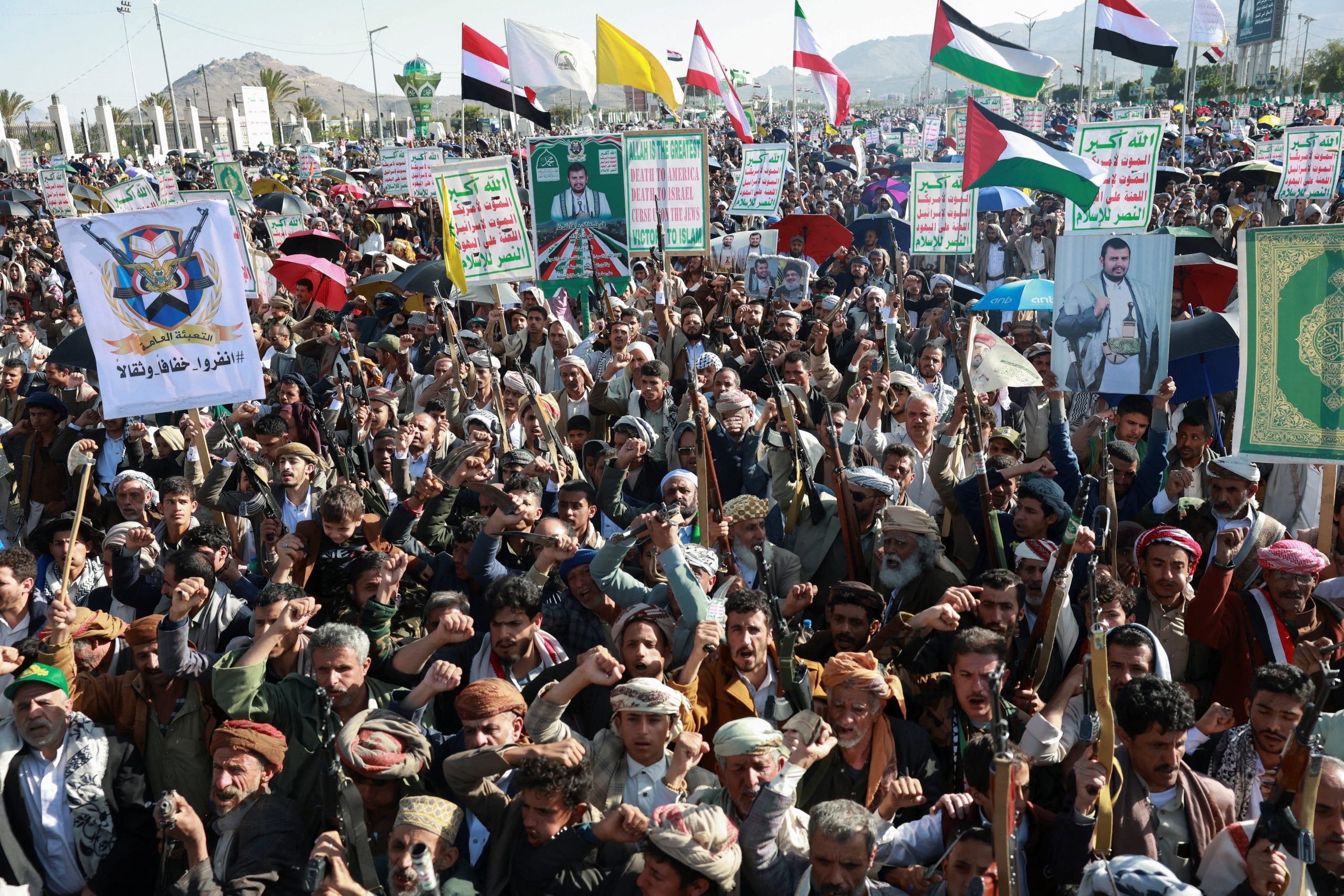
LONDON: The average Houthi fighter, dressed in a traditional futah wraparound skirt, carrying an ancient AK-47 and brandishing a curved jambiya dagger, might look like an unsophisticated throwback to another era.
But behind the ranks of the sandal-clad militia is a modern financial network, dealing in weapons, oil and people and moving and laundering billions of dollars through a combination of cryptocurrency wallets and traditional hawala networks.
“The Houthis are operating a sophisticated financing system,” said researcher Adam Rousselle, an expert in illicit finance and shadow infrastructure and founder of geopolitical risk research network Between the Lines.
“There’s an unfolding currency crisis happening in Yemen, but they are still able to extract foreign currency from the world stage and continue to purchase weapons and finance their operations.”
In part, this is because “they’ve become increasingly extractive locally and have practically cannibalized the private economy over the past year or so.”
Although the Houthis are a proxy of Iran, its financial relationship with Tehran is not simply a charitable one.
On the receiving end of hard-hitting sanctions, “Iran can’t afford to just give money to anyone right now,” said Rousselle. “On a macro scale, the Iranians are in a similar position to the Houthis and facing their own currency collapse.
“Iran makes weapons and the Houthis have every incentive to purchase them, but they do have to buy them. They have to find that money somewhere, and hence the wartime economy in Yemen.”
To feed that wartime economy, the Houthis have become increasingly inventive.
Ordinary Yemenis living in areas under Houthi control “are now paying really high taxes — about 70 percent of their income or more,” said Rousselle.
“But there has also been a push to take over local businesses and their import licenses and fill them with Houthi loyalists and commanders.
“In effect, they have taken over the private economy in the areas under their control and are extracting even more revenue from those businesses than they would have through taxation.”
According to an investigation in 2023 by the UN Panel of Experts on Yemen, the Houthis are even boosting their war chest by abusing zakat, the third pillar of Islam, which obliges Muslims to give a percentage of their wealth to charity.
In 2018, the Houthis established their own “General Authority for Zakat,” giving them “effective control over the collection, utilization and administration of zakat, including for their war efforts,” in the process depriving local authorities and charities of an estimated $865 million a year.
The Houthis are also estimated to make in excess of $800 million a year charging customs duties at ports they control, and even more by imposing high tariffs on goods imported to their areas from government-controlled parts of Yemen.
The Houthis control all domestic oil and gas sales in their areas, earning up to $2 billion a year charging Yemenis extremely high prices.
As the US Treasury has noted, “Houthi leaders have devised numerous revenue-generating schemes to enable their attack campaign, often at the expense of Yemen’s most vulnerable populations.”
But Houthi money-making does not stop at exploiting their fellow Yemenis. Smuggling Iranian oil to China and other destinations is another big earner.
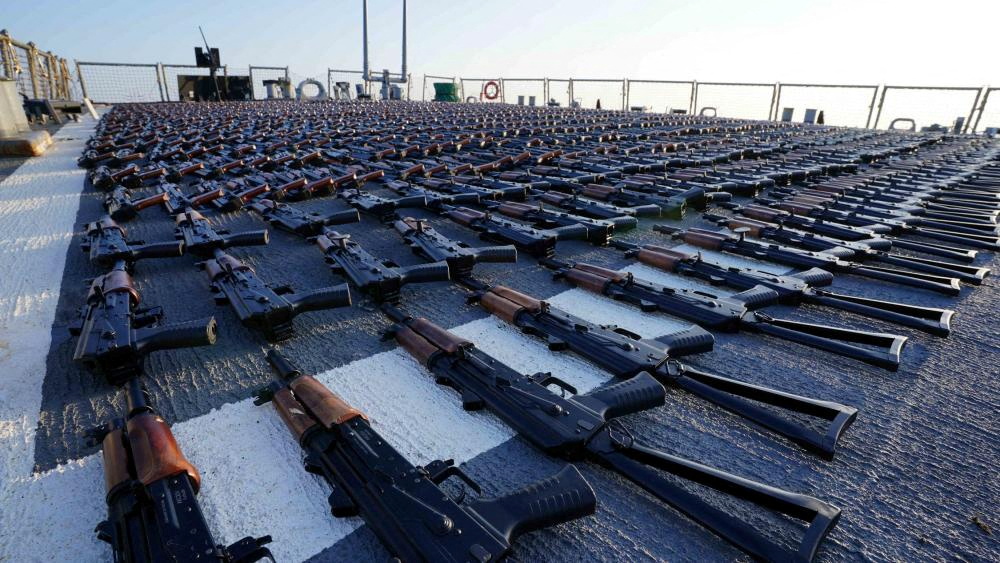
After more than a decade of war, Yemen is awash with weapons, and the Houthis are also known to smuggle arms to East Africa, charging premium prices for guns acquired for nothing from international backers.
Currently unknown is how much the Houthis might be making by charging ships to pass unmolested through the Bab Al-Mandab Strait.
In July, Reuters reported that a week after declaring a naval blockade on Saudi Arabian shipping, the Houthis were considering imposing fees on commercial vessels sailing through the southern Red Sea.
The claim was denied by the Houthis’ Humanitarian Operations Coordination Center.
In fact, according to the UN Panel, the Houthis had been collecting fees from shipping agencies to guarantee immunity from attack as early as 2024. The panel report that year claimed the Houthis were earning as much as $180 million a month, accepting payments through the hawala system.

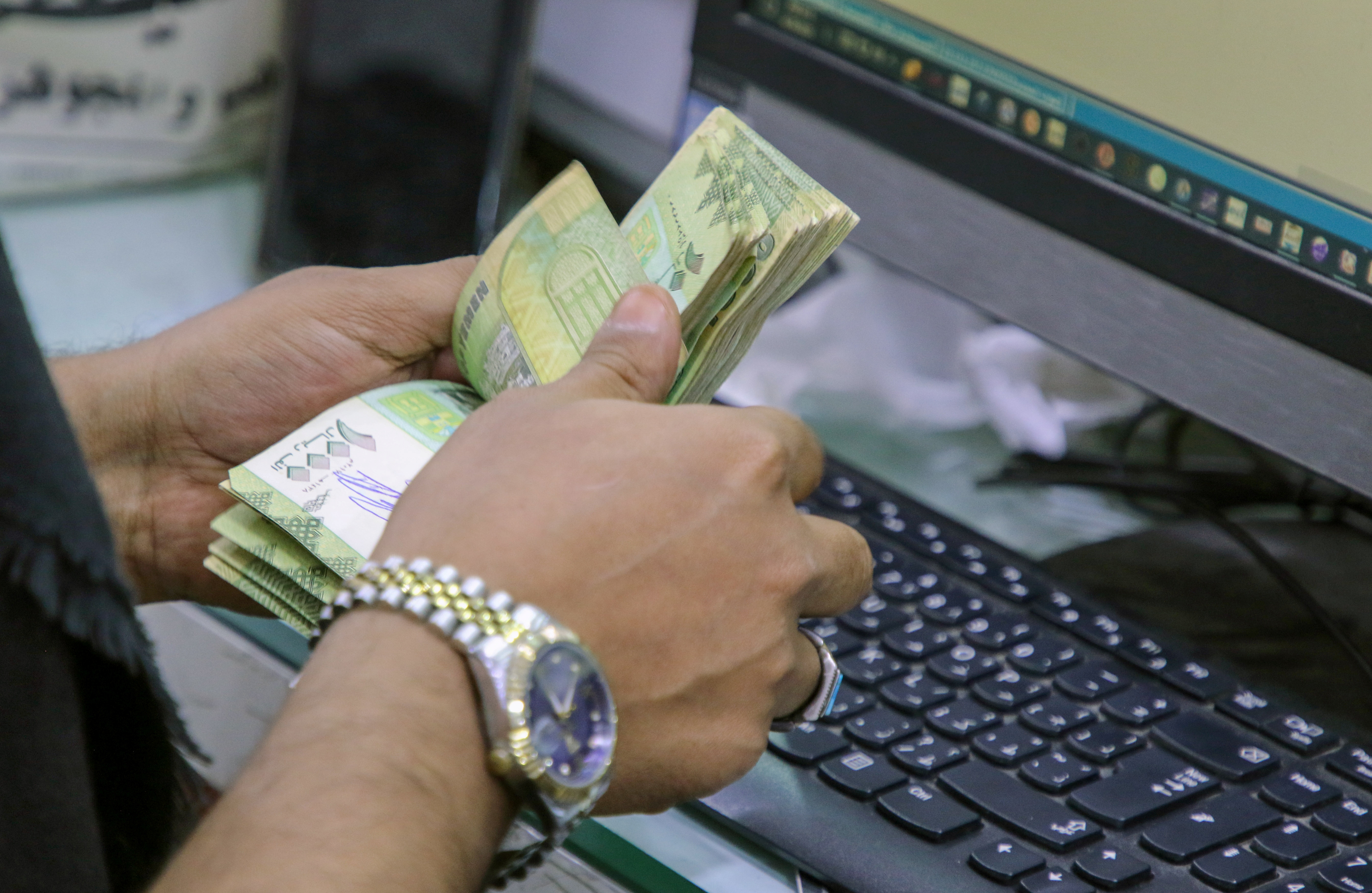
Such claims may never be proved. No shipping company or agency will admit to making payments which would automatically expose them to penalties under US sanctions regimes.
But paying off the Houthis would almost certainly be less expensive than the enormous premiums insurance companies currently charge to cover the passage, and cheaper than rerouting ships around the Cape of Good Hope.
Such payments, while unconfirmed, are “very plausible,” said Rousselle, and “the mechanism through which such payments would be made would likely be through crypto and hawala.”
Much of the Houthi economy, in fact, is built on a complex network of cryptocurrency systems.
In December 2024, the US Treasury’s Office of Foreign Assets Control (OFAC) announced it had identified five cryptocurrency wallets associated with Islamic Revolutionary Guard Corps-Qods Force-backed Houthi financial official Sa’id Al-Jamal.
An analysis of the five wallets by blockchain data platform Chainalysis found that over the course of about a year, Al-Jamal had received more than $178 million in funds.
While cryptocurrency’s borderless and instantaneous features “may make it appealing for moving large amounts of value,” Chainalysis commented, “it also provides unprecedented transparency into Al-Jamal’s financial network and the Houthis’ illicit financial activity.”
But while blockchain analysis can reveal how much money has moved between addresses and help investigators identify connections between financial networks, it does not, by itself, establish the original source of the funds, their ultimate destination or what they were used for.
Nor does identifying and sanctioning wallets demonstrate that the flow of money to the Houthis has been significantly reduced.
Since 2014, the US government, the UN and various European states have imposed dozens of sanctions on individuals and entities linked to the Houthis.
In the details of each of these actions can be found clues to the full extent of the group’s international financial support networks, and the impact of the ruthless war economy they have imposed on the Yemenis in areas under their control.
“The Houthis rely on a series of front companies and trusted facilitators to clandestinely generate revenue, procure weapons components, and advance their reign of terror in partnership with the Iranian regime,” said Deputy Secretary of the Treasury Michael Faulkender on June 20, 2025, launching sanctions against four individuals, 12 entities and two oil tankers involved in the import of oil and other illicit goods.
The action targeted Houthi front companies, their owners, and other key Houthi operatives accused of generating “significant revenue for the group through the sale of oil and other commodities on Yemen’s black market and by engaging in smuggling operations through Houthi-controlled ports.”
The latest action, said Faulkender, “underscores our commitment to disrupting the Houthis’ financial and shipping pipelines that enable their reckless behavior in the Red Sea and the surrounding region.”
The Houthi support network is extraordinarily complex and far-reaching. Sanctions documents have named and targeted individuals and companies involved in funding and weapons-procurement activities in countries including Yemen, Iran, Somalia, China, Hong Kong, Malaysia, Oman, Djibouti, the UAE and Russia.
According to one set of OFAC sanctions, issued last year, the Houthis are not even above trafficking their fellow Yemenis as mercenaries to raise money for the cause.
On March 5, 2025, OFAC designated one Houthi-affiliated operative and his company “that have recruited Yemeni civilians to fight on behalf of Russia in Ukraine and generated revenue to support the Houthis’ militant operations.”
According to OFAC, the man behind this particular scheme is Abdulwali Abdoh Hasan Al-Jabri, who has used his Al-Jabri General Trading and Investment Company to facilitate “the transfer of Yemeni civilians to Russian military units fighting in Ukraine in exchange for cash.”
The same document named and designated seven senior Houthi political operatives, including Oman-based spokesman Mohammad Abdulsalam, who has “played a key role in managing the Houthis’ internal and external financing network.”
As part of this, Abdulsalam has “traveled to Moscow to meet with Russian Ministry of Foreign Affairs personnel and has coordinated with Russian military personnel to arrange for additional Houthi delegations to visit Russia.”
Senior Houthi financial official Al-Jamal is another key character named frequently in US sanctions documents.
On April 2, 2025, Al-Jamal was sanctioned as part of a network of “Houthi financial facilitators and procurement operatives (which) has procured tens of millions of dollars’ worth of commodities from Russia, including weapons and sensitive goods, as well as stolen Ukrainian grain, for onward shipment to Houthi-controlled Yemen.”
Also named were two Russia-based Afghan businessmen, brothers Hushang and Sohrab Ghairat, who have “assisted Sa’id Al-Jamal with Houthi commercial initiatives in Russia, including arms procurement” and in 2024 “orchestrated at least two shipments of stolen Ukrainian grain from Crimea to Yemen.”
Key to all such operations are “financial facilitators,” middlemen including “Turkiye-based Iranian money launderer Hassan Jafari,” who has laundered dollars to enable Al-Jamal’s network to “evade sanctions” and “arranged payments worth millions of dollars in support of shipments benefiting the Houthis.”
The latest tranche of sanctions came in January, when OFAC designated 21 individuals and entities implicated in transferring oil products, procuring weapons and providing financial services for the Houthis.
Houthi leaders, read the sanctions document, “charge ordinary Yemenis exorbitant prices for oil and oil derivatives, pocketing the proceeds of these sales for personal gain and to fund the group’s military operations.”
The designation, issued on Jan. 16, 2026, revealed how the Iranian government “both sells and provides a free monthly shipment of oil to the Houthis using Iranian-owned or affiliated companies based in Dubai, UAE.”
The Houthis pay the Iran-affiliated companies by sending money to UAE-based exchanges, via exchange companies in Sanaa.
But just how effective such disruption has been remains open to question.
In January this year the US Treasury admitted that “despite the pressure of international sanctions, the Houthis continue to acquire a significant amount of revenue through illicit oil sales, generating over $2 billion annually.”
And despite dozens of sanctions over more than a decade, the Houthis and “a sprawling network of front companies, logistics firms, and shipping facilitators” continue to operate, with apparent impunity.
“My assessment is that sanctions have value as a tool of disruption, but there is limited public evidence that they have durably reduced the Houthis’ overall operational capacity,” said Rousselle.

“Access to foreign currency is essential to sustaining international procurement, and the networks generating and moving those funds have proved adaptive.”
The US Treasury itself highlighted an example of this in January, when it was obliged to designate a “new” UAE-based exchange it had previously designated under another name.
A major limitation of sanctions, said Rousselle, “is that key organizers operate from relative safe havens. Sa’id Al-Jamal is based in Iran, while the Ghairat brothers, who have supported his procurement activities, are based in Russia.
“Their commercial connections remain vulnerable, but the people with the expertise and relationships to rebuild them are harder to reach.
“Sustained results depend on closing replacement channels — and securing cooperation from jurisdictions that may have little willingness to act against the organizers themselves.”



