

Original Coverage & Source Attribution: www.aljazeera.com
Bangladesh’s per capita gross domestic product (GDP) is projected to be higher than that of Asia’s third largest economy, India, this year, according to the International Monetary Fund (IMF).
GDP is a measure of all goods and services produced within a country during a specific period. India’s GDP is nearly eight times larger than Bangladesh’s. But its neighbour’s per capita GDP, which is GDP divided by the total population, is expected to surpass that of India, the world’s most populous nation.
The projected 2026 per capita GDP of Bangladesh, home to about 175 million people, is $2,886, compared with $2,749 in India as Dhaka emerges as one of South Asia’s notable economic success stories over the past two decades. Bangladesh’s economy is currently larger than that of Pakistan, from which Dhaka seceded in 1971.
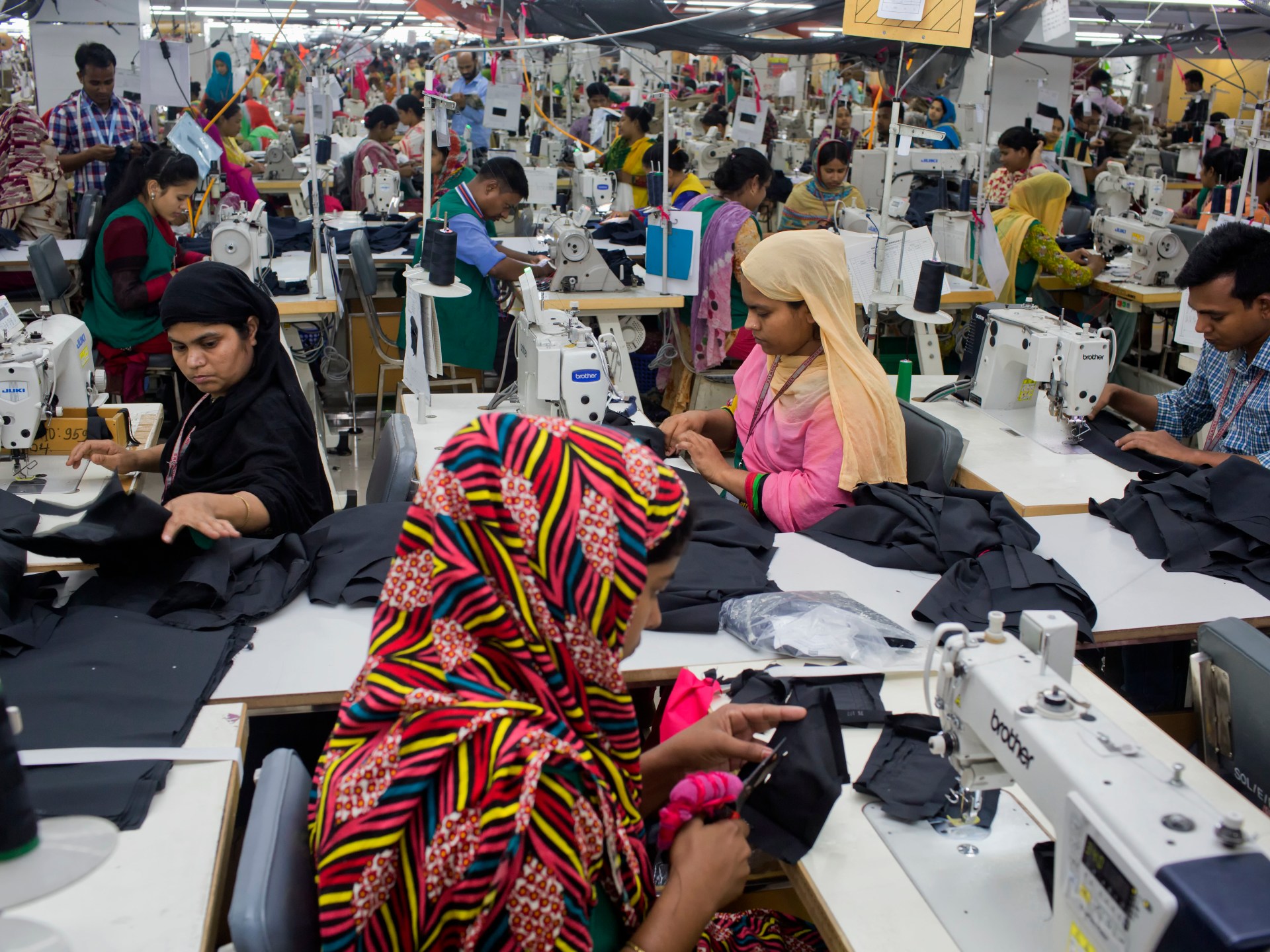
Experts link the rise to the country’s $38bn garment industry, remittances and growing participation of women in the workforce.
But high inflation and slowing growth are now putting that progress under pressure. Meanwhile, the Indian economy is expected to grow by 7 percent this year, compared with 3.6 percent in Bangladesh.
So how should one read these numbers, and what do they really mean for millions of people living in these countries?
What’s in the IMF report?
The IMF’s October 2026 World Economic Outlook report underscores differences in how the Indian and Bangladeshi economies are reacting to inflation and the economic pressures caused by two major wars that have jolted energy markets.
Bangladesh is expected to have a GDP of $506.4bn in 2026, compared with India’s $4.15 trillion. But its lead in GDP per capita reverses when adjusted for purchasing power parity (PPP), which accounts for differences in local prices. On this measure, India is projected to have a GDP per capita at $12,998, compared with Bangladesh’s $10,884.
PPP is an economic metric that represents what money can actually buy in different countries after adjusting for the cost of living. The figures mean that Indians have a higher buying capacity than Bangladeshis.
The IMF projected India’s average consumer-price inflation at 5 percent, compared with 8.7 percent in Bangladesh, pointing to greater cost-of-living pressures in Dhaka.
India is relatively wealthier than Bangladesh and is home to a big industrial base, including its significant technology sector.
India’s economy is expected to grow by 7 percent in 2026, nearly twice Bangladesh’s 3.6 percent rate.
For context, the average per capita GDP in developing economies is about $7,746 – and the global average is about $15,889 – against Bangladesh’s $2,886 and India’s $2,749.
Where are India’s and Bangladesh’s economies expected to go?
In the next year, the IMF report projected that Bangladesh’s per capita GDP would reach $3,219, still higher than India’s $3,036 – a difference, according to the estimates, that should continue marginally in 2028.
In 2029, based on current growth forecasts, India’s per capita GDP of $3,661 would top Bangladesh’s $3,334, according to the IMF.
Experts noted that Bangladesh is facing a weaker near-term growth outlook, even as its projected GDP per capita edges above India’s.
But GDP per capita alone does not paint a complete economic picture because it conceals inequalities in income and wealth distribution. The dollar-denominated figure also changes with the exchange rate, which means that a change in a currency’s value can alter the relative numbers without a change in economic output.
In brief, the growth in Bangladesh’s economy in the past two decades has focused on export-oriented manufacturing, particularly its ready-made garment industry, which has been a major source of export earnings and employment, in addition to remittances from Bangladeshis working abroad.
Meanwhile, India has a diversified economy, with services playing a major role alongside manufacturing and agriculture. Its domestic market, technology and business services, industrial base and consumer demand provide multiple sources of economic activity.
In both countries, however, economic growth over the past decade has been unequal with increasing concentration in wealthier households.
Is Bangladesh a South Asian success story?
To some extent, yes, analysts said while expressing caution about unequal growth.
Santosh Mehrotra, an Indian economist, told Al Jazeera that Bangladesh’s economy has shown consistent economic growth of 6 percent per annum alongside a long-term decline in population growth.
The country has also seen its manufacturing contribution to gross value added shoot up from 16.6 percent in 2014 to 22 percent in 2025, Mehrotra said. On the other hand, World Bank data showed India’s manufacturing value added falling from 15.1 percent of GDP in 2014 to 13.5 percent in 2024.
“That’s a positive side of export-oriented manufacturing growth that Bangladesh is getting right,” he said.
However, the global energy shock from the United States-Israel war on Iran, which has disrupted maritime traffic in the Strait of Hormuz, has jolted Bangladesh.
Bangladesh imports 95 percent of its oil and liquefied natural gas (LNG), and much of these imports comes from the Middle East.
The ready‑made garment industry, which accounts for more than 80 percent of Bangladesh’s export earnings, has also been hit as its shipment routes via the Red Sea and the Middle East have been disrupted.



