

Original Coverage & Source Attribution: indiantelevision.com
MUMBAI: Hollywood rolled out the red carpet for its women, but the speeches on the night made it clear that the industry still has some ground to cover. Elle’s annual Women in Hollywood celebration brought together some of the biggest names in film on Monday, with the evening balancing tributes to women’s achievements against pointed questions about representation, creative control and who gets to call the shots.
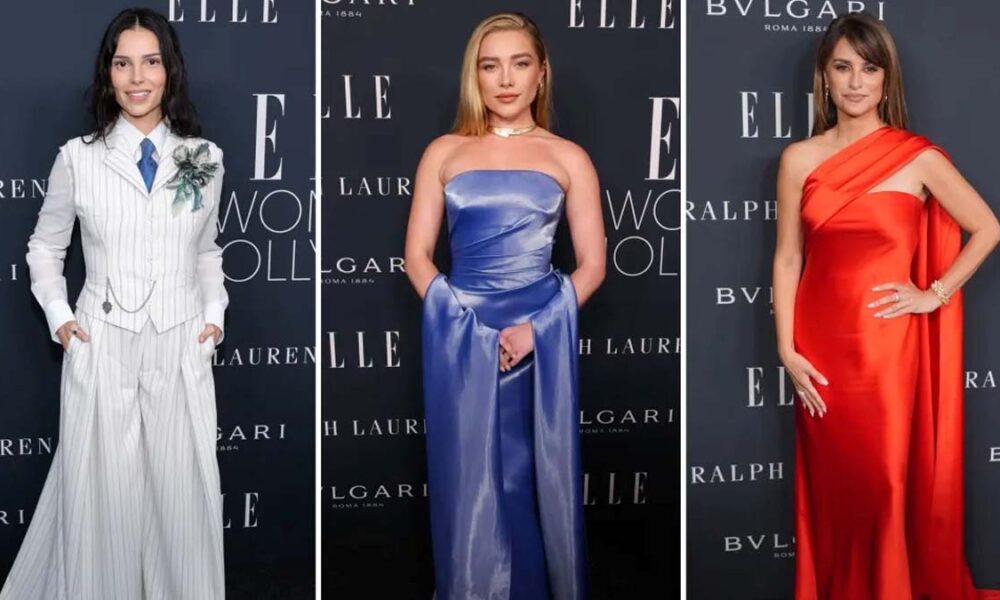
This year’s honourees included Carrie Coon, Florence Pugh, Julianne Moore, Penélope Cruz, Elizabeth Debicki, Rosalind Eleazar and Samantha Morton. Breakout star Inde Navarrette received the Ralph Lauren Spotlight Award. While the gathering celebrated their individual journeys, several speakers used the occasion to turn the spotlight on the women working behind the scenes and the structural barriers that continue to shape Hollywood.
Pugh, introduced by Dune director Denis Villeneuve, reflected on the women who helped her find her feet in the industry when she was still learning how to stand up for herself. Describing the experience of being a woman in Hollywood as a “bonkers ride”, she thanked costume designers, make-up artists and crew members whose contributions often remain outside the frame.
Speaking to The Hollywood Reporter on the red carpet, Pugh said many of these women had supported her before she knew how to advocate for herself. “It’s the unseen, it’s the unnoticed work that shapes the women that we grow up to be,” she said.
Her remarks brought attention to an often overlooked part of filmmaking: the people whose work may not make the credits’ headlines but can have a lasting influence on the careers and confidence of women in front of the camera.
Coon, however, took the conversation from recognition to representation, questioning the power structures that determine which stories reach screens and who gets to make those decisions.
“Patriarchy, capitalism. These are hierarchical systems of domination that rely on fear, and in this paradigm, women and girls, like our natural resources, are a disposable commodity,” she told the audience at the Four Seasons Beverly Hills.
Drawing on the writings of feminist scholar Bell Hooks, Coon argued that women’s stories are not interchangeable and that expressing their experiences through art can itself be an act of resistance. Praising her fellow honourees, she said she saw “the fight for the living world”, “moral clarity”, imagination and courage in their work, describing these as antidotes to fascism.
She also challenged the tendency to treat women’s representation as a special-interest issue. Referring to a recent remark by fellow actor Julianne Moore, Coon pointed out that women make up 52 per cent of the population. “That’s not a special interest group,” she said.
Her proposed solution was less ceremonial and considerably more ambitious. “I’m going to start with a really stupid question,” she told the room. “Can we start a studio?!”
The suggestion was more than a punchline. Speaking to The Hollywood Reporter earlier in the evening, Coon had raised concerns about the recent departures of prominent female executives from Hollywood and the possible impact on projects led by women.
“When women don’t have greenlight power, then fewer female-led films with either directors or female protagonists get made,” she said, warning that the industry could see a drop in such projects. “We’re going to see a drop. We know this. It’s just statistics. It’s just math.”
Cruz also turned attention to the industry’s treatment of women behind the camera. Reflecting on her experience working with Olivia Wilde on The Invite, she questioned why she was still being asked whether working with a female director felt different.
“After 30 years working, when are we gonna get to the day where that is not worth asking anymore?” she said. Her question underlined a concern that should have become less unusual by now: women directing films ought to be part of the industry’s everyday conversation, rather than a talking point in itself.
Moore, meanwhile, spoke about the importance of being placed at the centre of a story. She thanked Jesse Eisenberg for writing her a leading role in The Debut, a story inspired by his own experiences but told through the perspective of a middle-aged woman.
“He did what female actors crave. He put me in the centre of the narrative,” she said, highlighting the value of roles that allow women to lead stories rather than simply support someone else’s.
The evening was not without its lighter moments. Seth Rogen and Alexander Skarsgård introduced honourees, while Daniel Kaluuya and Bryce Dallas Howard joined the list of speakers paying tribute. Debicki recalled the casting director who helped launch her career, while Eleazar spoke about her mother, who raised her on her own and shaped her understanding of strength.
Morton was unable to attend because of illness, with Matt Damon delivering a tribute on her behalf. In a prepared statement read to the audience, Morton reflected on the importance of women supporting one another, writing: “To truly be a woman in Hollywood is not about location, but community.”
That idea brought the evening’s different threads together. From Pugh’s acknowledgement of the women who supported her early career to Coon’s call for greater institutional power, the speeches suggested that recognition alone cannot change an industry. Women also need opportunities to make decisions, finance projects and shape the stories that reach audiences.
Coon made that distinction clear in her closing remarks. “Nights like these shouldn’t be one-off nights where we celebrate,” she said. “They should be the beginning of those conversations.”
For Hollywood, the applause may have lasted one evening. The question is whether the conversations that followed will translate into lasting change.



