

Original Coverage & Source Attribution: influencermarketinghub.com
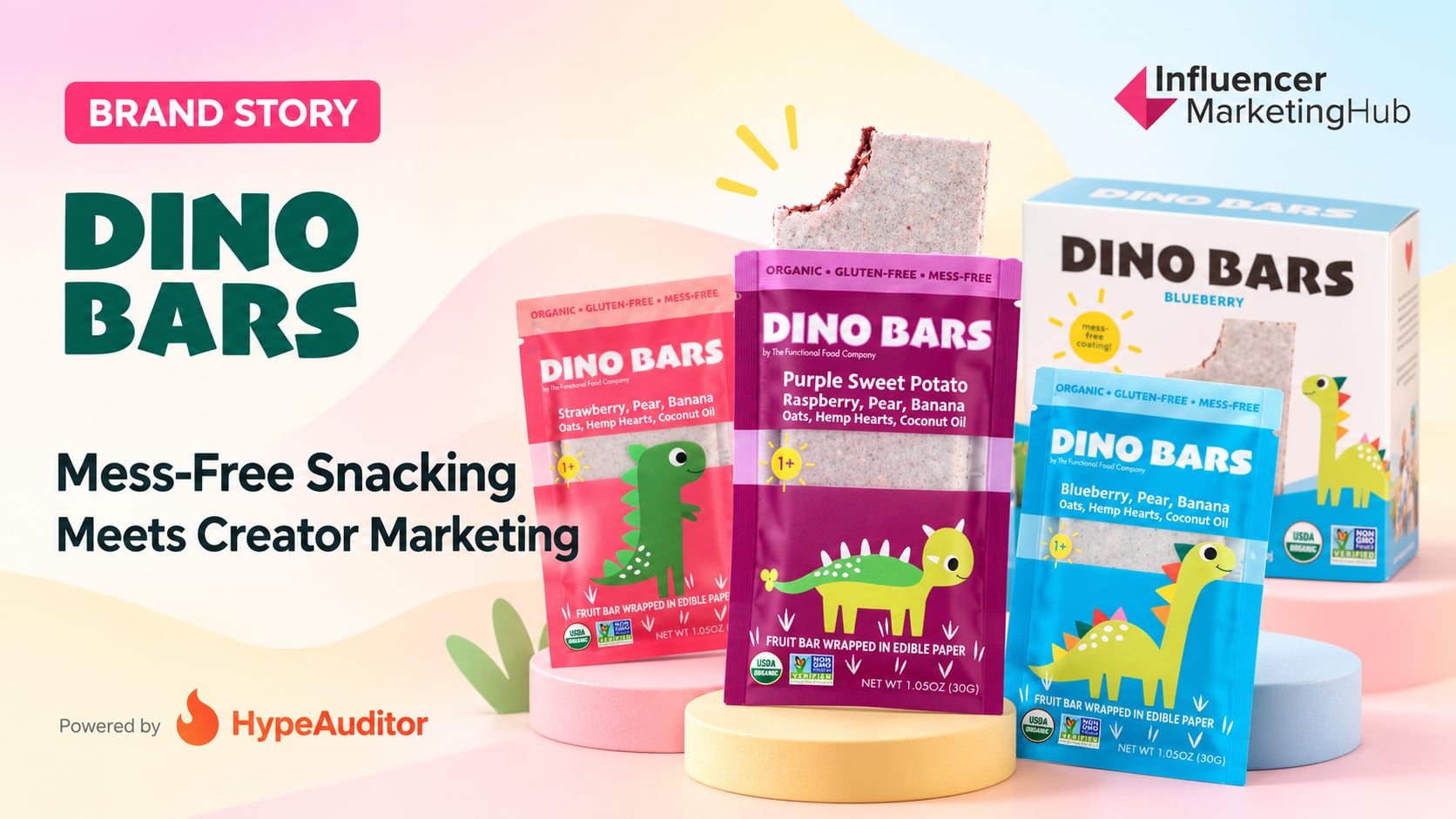
A parent hands their toddler a fruit bar in the back seat of a car. The child takes a bite, but there are no sticky fingers to wipe afterward. The reason is unusual enough to deserve its own explanation. DinoBars covers its fruit bars in a thin layer of edible paper.
Across TikTok, parents repeatedly stop to show viewers that covering, explain why it exists, and then let their children try the snack. The detail has an outsized role in how people discuss the brand.
Behind the demonstrations is a family business founded in 2020 by Jessica and Ian Saultz. DinoBars has since developed a broader range of fruit bars and built ways for families to sample, purchase, and review them.
We examine how DinoBars developed its signature product, how parenting creators communicate its benefits, what our HypeAuditor analysis reveals about its social media presence, and how the brand connects discovery with purchasing and loyalty.
How DinoBars Started With a Parenting Problem
DinoBars’ origin is closely tied to the experience of its founders as parents. The problem was personal.
Jessica grew up in Germany, surrounded by fresh produce and home-prepared food. When her first child, Liam, had difficulty tolerating refined sugars, she and Ian sought suitable packaged alternatives for busy days.
After the family moved from Germany to the United States in 2018, the couple found fewer options that matched their preferences. Jessica started making fruit bars in her kitchen, testing recipes with her children and friends’ families. Early enthusiasm encouraged the couple to develop them as a business.
They spent months refining recipes and packaging before launching DinoBars in May 2020. Without food-manufacturing backgrounds, they had to learn production and design. Jessica later recalled the difficulties of explaining the edible wrapper and finding suitable manufacturers.
The business recorded approximately $200,000 in direct-to-consumer revenue in 2020, according to a 2021 Retail Brew report. Its $800,000 target for 2021 was a forecast, not a confirmed result. Ian also told Retail Brew in 2021 that the company’s marketing relied largely on Instagram to reach parents aged 25–40 with children up to seven.
DinoBars initially offered Strawberry, Blueberry, and Mango varieties. A limited-edition Sweet Potato Raspberry flavor was also reported in 2021, while the assortment has since expanded to six flavors, including Pineapple Carrot and Cherry Beet.
The edible covering made the new product especially easy to explain on camera.
Why DinoBars’ Edible Wrapper Became Its Defining Product Feature
DinoBars combines a familiar product with an unusual way of eating it. Its fruit-and-oat bars use recognizable ingredients, but the covering gives them an immediately visible point of difference.
How Edible Paper Addresses Messy Snack Time
Each bar is coated with edible paper made with organic potato starch and oil. Rather than peeling the layer away, children can eat it along with the bar. The covering is intended to reduce contact with the sticky fruit mixture, particularly when families are traveling, packing lunches, or eating between activities.
The bars are marketed for children aged 1+ who eat solid food. DinoBars also emphasizes USDA Organic certification, gluten-free ingredients, and the absence of artificial flavors and preservatives. Its product ingredients include fruits, oats, hemp hearts, and coconut oil. The brand also emphasizes no refined sugar.
A distinctive feature also needs explanation. Namely, DinoBars tells customers that the paper is meant to be eaten and that it can be peeled away if a child prefers. Several creators echo that explanation, sometimes after admitting they initially misunderstood the coating themselves.
Parents can demonstrate the covering in seconds and connect it with an everyday frustration. Product education becomes content.
How Parenting Creators Demonstrate DinoBars on TikTok
Mess-Free Demonstrations Turn a Feature Into Practical Advice
One parent opens her video by praising the edible paper, then explains that it prevents the fruit bar from feeling sticky. She connects the benefit to the realities of being an overstimulated parent with a toddler sensitive to food textures. Rather than repeating a slogan, she explains why the feature matters in her household.
Another creator says she kept seeing DinoBars online and wanted to test them with her daughter. She shows how easily the wrapper opens before describing a post-swimming-lesson car snack with less mess. The routine gives the demonstration a credible setting.
Both examples show the problem the product addresses during an ordinary parenting moment.
Ingredient Reviews and Children’s Reactions Address Different Concerns
Parents also spend substantial time explaining what’s inside the bars. A creator who identifies herself as a holistic health mentor reads the ingredients and discusses food allergies in her household while several children choose flavors and taste the products. Her children supply the reactions, while she explains her purchasing criteria.
Another parent describes herself as a “Crunchyish mom” who checks labels, while others emphasize the lack of artificial flavors and preservatives. These are personal recommendations, not independent verification of every nutrition or allergy claim.
Children’s responses have a separate function. A toddler requesting another bar, siblings choosing different flavors, or a child reluctant to share the last one helps address a question ingredient lists cannot answer. Will the intended customer actually enjoy it?
Honest Evaluations Also Reveal Buying Objections
Not every review is unqualified praise. In one video, a creator identifying herself as a pediatric dietitian and nutrition PhD examines the ingredient list and nutrition label, but says $21.90 for 10 bars is expensive. The price reflects the video period, not necessarily today’s pricing.
Another parent says her children like the bars but prefer that she remove a layer before serving them. Together, these objections reinforce the need for clear product education and a manageable first-purchase offer. The edible paper gets attention, but families still evaluate price, ingredients, and personal preference.
What Our HypeAuditor Analysis Reveals About DinoBars’ Instagram Creator Network
How far does DinoBars’ visibility extend beyond conventional sponsored posts? To examine its broader recommendation network, we analyzed HypeAuditor’s data for @eatdinobars between April 19 and October 16, 2026.
Nano and Micro Creators Account for Most Classified Profiles
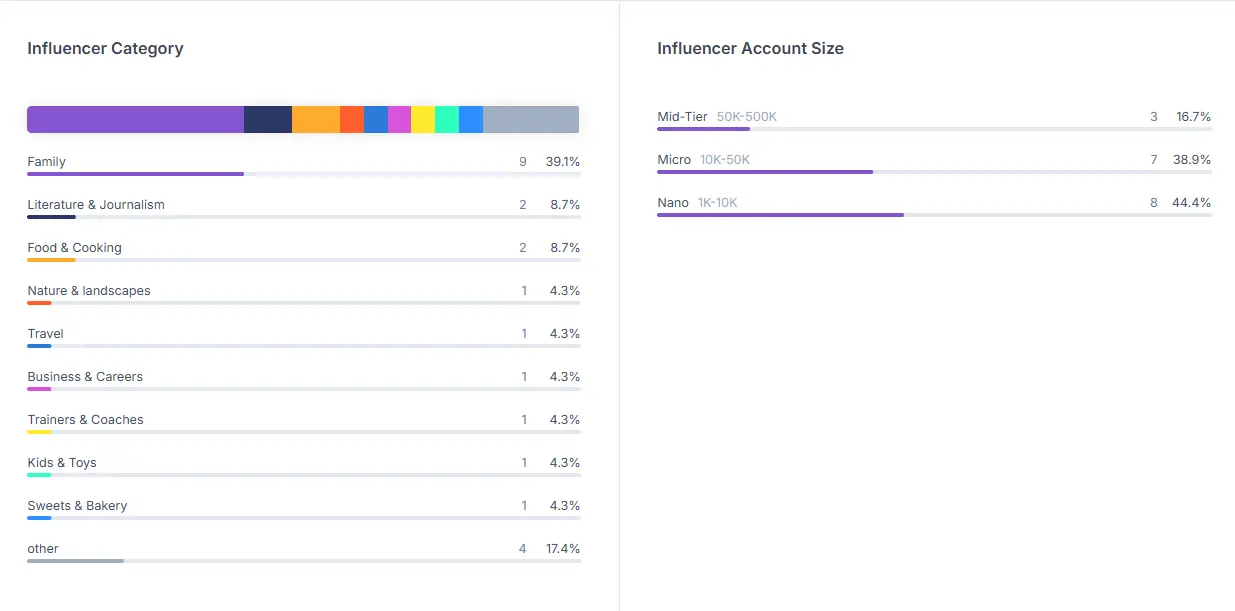
HypeAuditor tracked 26 brand mentions from 19 influencers, with modeled total reach of 119,500. Of 18 creators with account-size classifications, eight were nano creators with 1,000–10,000 followers, seven were micro creators with 10,000–50,000, and three were mid-tier. Nano and micro accounts therefore represented 83.3% of the size-classified network.

The system classified 18 posts as organic, seven as likely sponsored, and one as sponsored. These labels are estimates rather than payment records. An organic classification, for example, cannot rule out free products or other commercial arrangements.
Parenting and Nutrition Content Expand the Recommendation Context
Family was the largest recorded creator category, with nine category assignments. Accounts also included nutrition professionals, natural-living parents, family activity creators, and child-focused businesses. Reels represented 14 of the 26 posts, with nine carousels and three static images.
A post from toddler dietitian @toddlerdietitiantiff illustrates why context matters. Her toddler meal-preparation content included packaged snacks among easier options for busy families, positioning DinoBars within useful parenting advice rather than a standalone product pitch. The post invited followers to comment for recipes, so its substantial engagement cannot be attributed to DinoBars alone.
View this post on Instagram
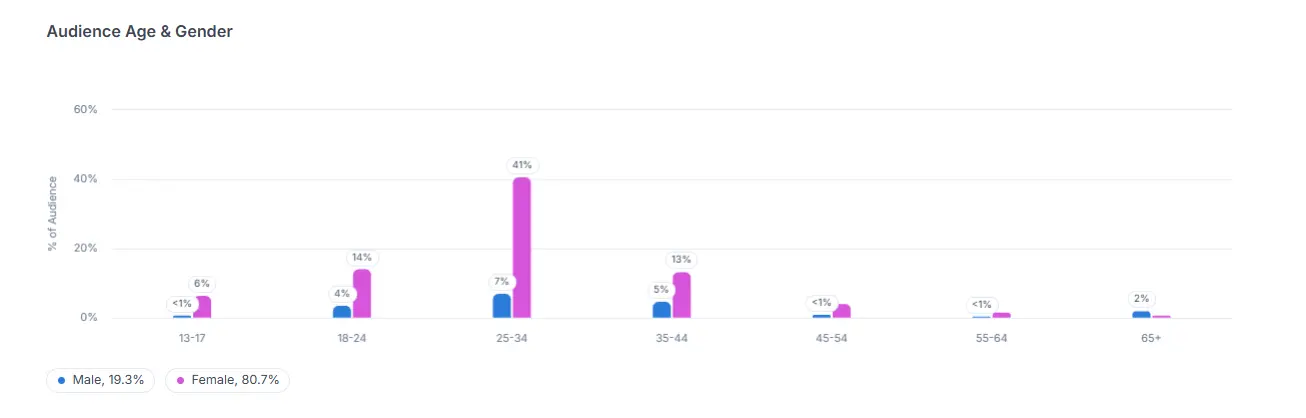
Across the broader measured audience, HypeAuditor reported 80.7% female and 55.5% based in the United States. Those estimates are broadly consistent with the brand’s parent-focused positioning, but they describe creators’ audiences, not verified purchasers.

The modest network places DinoBars in contexts ranging from lunchbox planning to family outings. It cannot establish attributable sales or influencer ROI.
How DinoBars Uses Sampling and Creator Offers to Encourage Product Trial
Even an effective demonstration leaves a commercial obstacle. Families who have never tried edible paper still need a reason to make their first purchase, particularly if they consider the snack relatively expensive.
One TikTok creator received a free sample pack before a road trip. She opens the box with her child, explores the flavors, notes the included coloring activity, and films a taste test. The video concludes by pointing viewers toward a shopping-cart link.
The packaging creates several useful moments for content, from the initial reveal to a child’s first reaction. The sample also removes the need to commit to a larger purchase before knowing which flavor a child prefers. DinoBars currently offers samples and variety packs through its own store.
The Instagram research contains a more direct promotional example. Creator @griffinmckenzie advertised a 12-bar variety box for $8 with a personal code, against a stated usual price of $30. It is a documented creator-linked offer, although the report does not show whether the code earned a commission or generated purchases.
View this post on Instagram
Together, product samples and introductory discounts make practical sense for a brand selling an unfamiliar format. They support product trial without proving how many consumers ultimately purchased.
How DinoBars Encourages Repeat Purchases and Expands Distribution
DinoBars has also built mechanisms for reaching families beyond their first order. Its ecommerce and wholesale activities indicate an interest in both replenishment and easier access.
Roarwards Rewards Purchases and Customer Reviews
The Roarwards loyalty program gives members 10 points for joining, one point per dollar spent, and additional points for birthdays and reviews. A standard review earns 10 points, while a review with a photo or video earns 50. Points can be applied at checkout and do not expire.
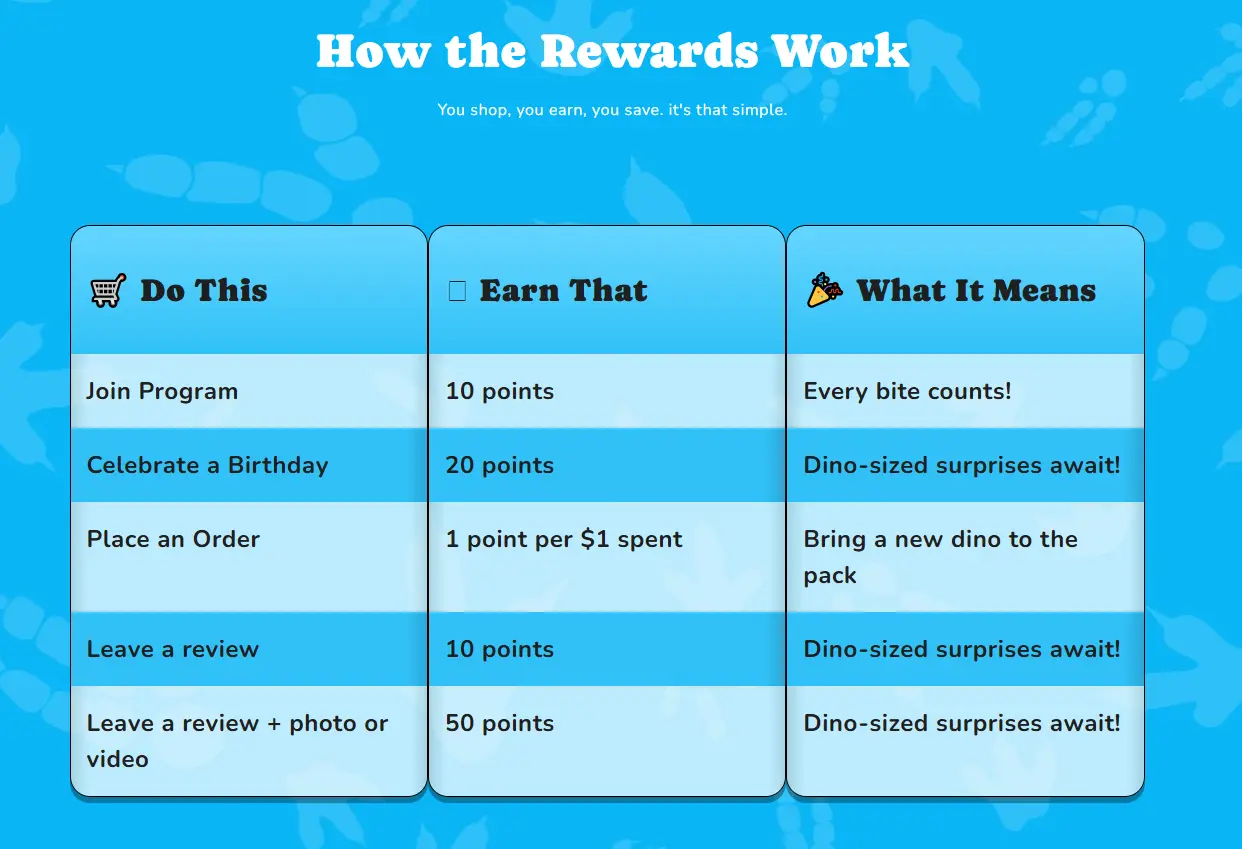

The fivefold incentive for visual reviews is especially relevant for a product that benefits from demonstration. Customer photos and videos could help other parents understand the edible wrapper, although there is no evidence showing how many such reviews Roarwards produces or whether they are reused in marketing. The program also references friend referrals.
What DinoBars’ Product-Led Creator Marketing Shows
DinoBars began with parents looking for a convenient snack they felt comfortable serving their children. The resulting product had something creators could show almost instantly, with edible paper making a practical benefit visible on camera.
Parenting videos explain that feature, ingredient-conscious creators add context, and children’s reactions address taste and acceptance. Samples and discounts offer ways to try the product, while rewards and retail distribution create opportunities for future purchases.
No available evidence isolates the sales contribution of influencer marketing. Still, the relationship between product design and content is clear. DinoBars gives creators a concrete problem to discuss, a useful feature to demonstrate, and a familiar family moment in which to show it working.


Writer
Nadica Naceva writes, edits, and wrangles content at Influencer Marketing Hub, where she keeps the wheels turning behind the scenes. She’s reviewed more articles than she can count, making sure they don’t go out sounding like AI wrote them in a hurry. When she’s not knee-deep in drafts, she’s training others to spot fluff from miles away (so she doesn’t have to).



