Original Coverage & Source Attribution: spectator.com
We need to build up pan-European co-operation and co-ordination on defence and security – a common security framework as much as a common market. The EU is changing to respond to that, but it cannot be the EU alone when Europe’s periphery is core to its defence.
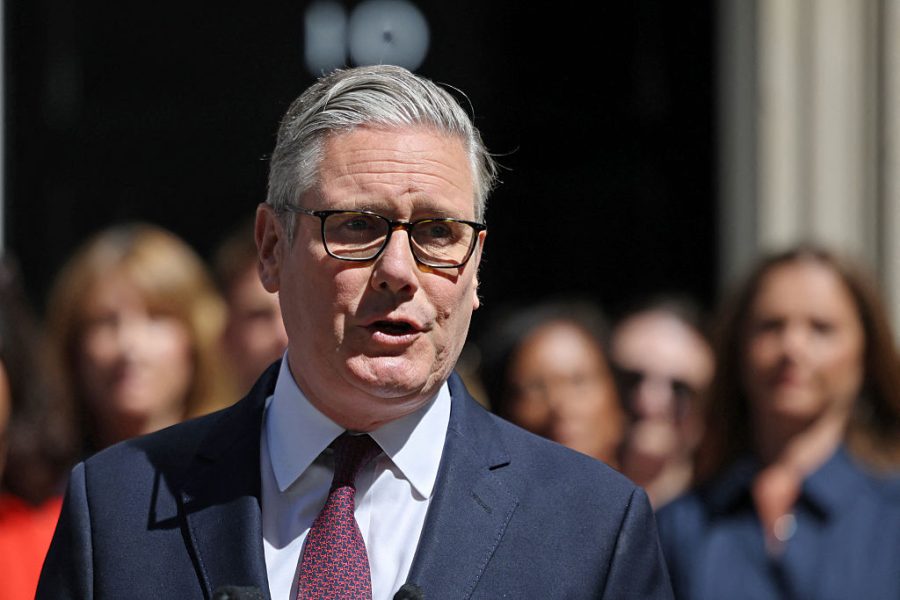
It seems hard to believe, but 15 weeks ago, Sir Keir Starmer was still prime minister. Now, to read his name in the current news as anything but a reference point is oddly jarring. But last week he was in Dublin to receive honorary life membership of the British Irish Chamber of Commerce and spoke out as an ex-premier.
To say, as Starmer did, that a European ‘security framework’ is as important as a common market is quietly revolutionary. The European Economic Community (EEC), which became the European Union when the Maastricht Treaty came into force in 1993, was often referred to as ‘the Common Market’. It was emblematic of what British EEC enthusiasts liked to imagine was the purpose and limit of the community: a free trade zone, eliminating barriers and tariffs between neighbours.
Perhaps, freed from the constraints of office and reality, Starmer is now experiencing visions
That was never true, of course. The very first line of the 1957 Treaty of Rome stated the objective of the EEC as being to ‘lay the foundations of an ever-closer union among the peoples of Europe’. It was so much more than trade, and it was by definition a constant evolution towards federalism.
Starmer refers to a ‘common market’ of which the country he used to lead is not a member. Yet he made clear that his vision was not limited to the 27 EU member states. He is trying to do something broader: he is trying to undo what many see as the besetting sin of 1952, Europe’s failure to act in concert on defence.
The EEC grew out of the European Coal and Steel Community (ECSC), established under the Treaty of Paris in 1951 by France, West Germany, Belgium, the Netherlands, Luxembourg and Italy. But the ECSC was only supposed to be half of the story.
A second Treaty of Paris was signed in 1952, this time creating the European Defence Community (EDC); the governments of the same six partner nations agreed to set up a European defence force with a shared budget and joint procurement. It was committed to ‘the most complete possible integration’ within a ‘supranational European organisation’.
In 1954, however, the Assemblée Nationale voted to postpone indefinitely a vote on France’s ratification of the treaty; the Italian parliament was never asked to vote. Without those ratifications, the EDC never came into being. Starmer wants to give it new life, an EDC 2.0 going beyond the boundaries of the original six countries, beyond the current EU. He wants a pan-European organisation which also takes in Europe’s ‘periphery’ which is ‘core to its defence’. It does not take much examination of a map to suspect that one geographically peripheral part of Europe which is at the core of the continent’s defence is the United Kingdom.
Starmer is not wrong about everything. He is right to say that ‘things will not go back to the way they were’ once President Trump leaves office in January 2029 and that reductions in the American contribution to European security are likely to be permanent. But his reaction to that reduced participation in Nato seems to be that Nato is therefore unsalvageable and European nations must look for a new security architecture.
The former prime minister has come a long way from the manifesto on which his party fought the last general election. That expressed almost religious devotion to the North Atlantic Treaty:
As the party that founded Nato, we maintain our unshakeable commitment to the alliance… our commitment to Nato as the cornerstone of European and global security is unshakeable.
This was clearly part of the brief for Lord Robertson of Port Ellen and the team which prepared last year’s Strategic Defence Review. ‘Our defence policy,’ it stated unequivocally, ‘is “Nato First”.’ One of its priorities was ‘stepping up on European security by leading in Nato’. Starmer has clearly now concluded that the ‘by’ in that sentence cannot bear the weight demanded of it: the UK can step up on European security, but it will not be through Nato.
This is dangerously deluded. In his conception of a new European security framework, Starmer has apparently decided the strongest we already have, Nato, is unworkable, despite being battle-tested in Bosnia, Kosovo and Afghanistan. It is, to use a Starmerism, laser-focused on defence and security, and it embraces the ‘periphery’ of Europe: the High North, the UK, Portugal, the Balkans, Turkey, Poland and the Baltic states. It is still working to accommodate a diminished American footprint, but it is much closer to the end goal than any other organisation.
The EU’s Common Security and Defence Policy is weaker, inexperienced in handling major kinetic operations and more fissiparous. It also excludes the UK, Iceland, Norway, Turkey and most of the Balkan nations. So much for the periphery.
Starmer wants Europe to assume ‘far more responsibility for its own defence and security’ and ‘build up pan-European co-operation and co-ordination’. None of that is beyond Nato’s capabilities, absent deliberate American sabotage.
Perhaps, freed from the constraints of office and reality, Starmer is now experiencing visions. The European Defence Community reborn in success: the UK inside the organisation, atoning for the original sin of Brexit; Sir Keir lauded for his leadership, in a Coalition of the Willing that actually works; close and amicable relations with the European leaders whose approval he so earnestly wants; seamless, selfless cooperation on procurement.
But that’s not how it works. If Europe is serious about continuing to assume responsibility for its own defence and security, it needs one organisation to anchor that. Not the EU, not some new EDC 2.0, not a Coalition of the Willing. As I said, Starmer is not wrong about everything: Nato first.