Original Coverage & Source Attribution: www.domain.com.au
AA
Australia’s property market is facing a domino effect of negative change following yet another interest rate hike, with experts delivering a dire warning for house prices and buyers.
The Reserve Bank of Australia agreed to increase the official cash rate by 25 basis points in an attempt to curb inflation at its monetary policy meeting on Tuesday.
The hike is the fifth for the year and takes the cash rate to an 18-year high of 4.85 per cent, putting further pressure on mortgage holders already struggling with the cost of living.
In the wake of the central bank’s decision, market experts have weighed in, with analysis that is unlikely to provide much comfort.
“Restrictive interest rates have had a significant impact on residential property demand and have been one of the key drivers of the fastest downturn across the combined capital cities over the past 40 years,” Cotality research director Tim Lawless said.
“The cumulative impact of the five rate increases in 2026 has lifted mortgage costs and reduced the borrowing capacity of households.”
In line with the rate call, Australians with the average home loan of $730,719 will now have to pay $538 more per month, or $6460 more per year, in mortgage repayments.
To put this sum into perspective, that could have paid for up to six months of groceries for an average family of four, or a modest holiday within Australia.
Those with a $1 million mortgage will see their repayments rise by $737 per month – an extra $8,840 per year – compared to what they were paying at the start of the year.
Lawless noted the hike, combined with existing affordability constraints, cost-of-living pressures, pessimistic consumer confidence and the retreat of investors following May’s federal budget, have driven potential buyers to the sidelines.
“Our estimate of sales volumes for the combined capitals in the three months to October was almost 26 per cent lower than the same period last year,” he said.
“Home values in the combined capital cities have fallen 8.1 per cent from the peaks of March, close to the record peak-to-trough decline seen between late 2017 and mid-2019.”
Lawless is not alone in his thinking, with Commonwealth Bank senior economist Trent Saunders delivering a dire 45-year-low warning for house prices.
“On our updated forecast, national dwelling values ultimately fall by around 14 per cent peak to trough,” Saunders said.
“That would make the current downturn the largest decline in national dwelling prices in the history of the monthly series, which extends back around 45 years.”
Saunders noted since releasing its September update, the downturn has accelerated further.
“National dwelling prices fell by 1.2 per cent in October, the seventh consecutive monthly decline, and are now 6.7 per cent below their March peak,” he said.
“The combined five capitals index is 8.2 per cent below its March 2026 peak. This is the fastest pace of decline in at least 40 years and is already close to the 8.6 per cent peak‑to‑trough fall recorded in the 2017–19 downturn.”
He noted historical revisions have also shown the downturn was “earlier and sharper than initially reported”.
“The revisions mean that the downturn was more firmly established at the time of our September update than the available data indicated, while the market response since then has also been materially weaker than we expected,” Saunders said.
“The scale of the revisions reinforces the need to treat initial monthly home price estimates cautiously around turning points. We now expect a deeper correction.”
According to Lawless, the signs for this week’s rate pain were in plain sight.
“The probability of this rate increase rose in the latter part of October, particularly following commentary by Deputy Governor [Andrew] Hauser that noted the inflation outlook was materially worse than the RBA had previously forecast, citing higher energy costs, the AI investment boom and capacity constraints in the economy,” he said.

“Hauser also highlighted concerns that inflation expectations in the business sector were moving higher and downplayed the recent increase in the unemployment rate.
“The former is particularly important as prolonged above-target inflation erodes the credibility of the RBA’s inflation target, with Hauser describing the higher inflation expectations as a central banker’s nightmare.”
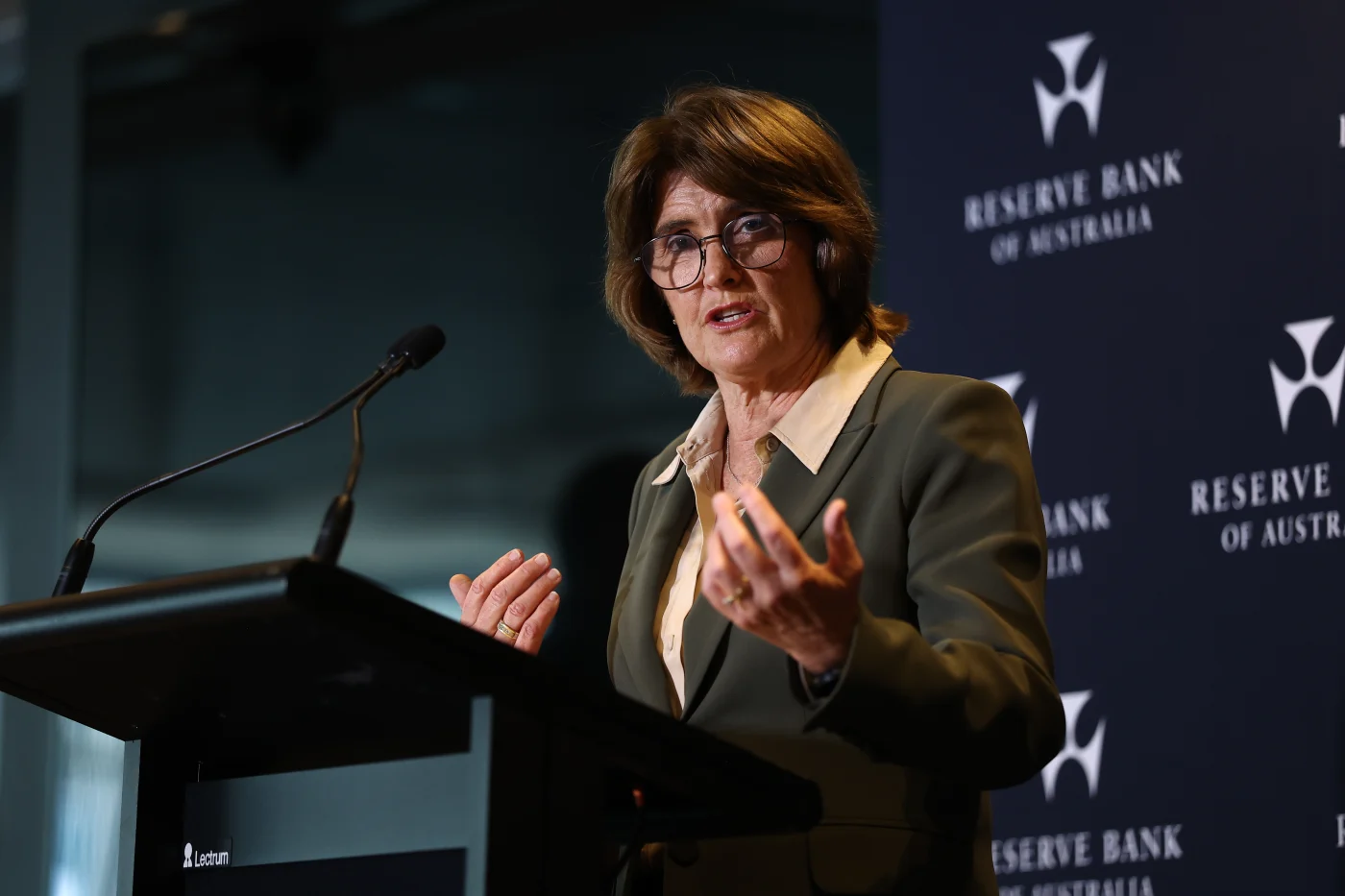
RBA Governor Michele Bullock distanced herself from speculating on the future rate stance of the central bank’s board during Tuesday’s post-rates press conference.
“I don’t know what the next move will be. As you know, I don’t give forward guidance, but the point is that we’ve done five rate increases in the system now, the last couple haven’t even started to flow through yet,” she said.
“So it is probably a good point to just take stock for a minute and see what comes in terms of the data to see if we’re travelling more or less in line with the forecasts.”
Bullock did stress the central bank is not forecasting a recession.
“We do have a dual mandate, and although, at the moment, we are focusing on inflation … we haven’t lost sight of the fact that we want to try and maintain, if we can, the gains in the labour market,” she said.
As for what this means for future rate decisions, Lawless said uncertainty remains.
“Pricing in the interbank futures markets on 2 November implied a 36 per cent probability of another rate hike by April, and given the RBA’s apparent focus, there could be another rate rise if inflation remains stubbornly above target,” he said.
“For the housing market, restrictive rates will continue to impact the confidence and financial capacity of potential buyers.”
Lawless expects housing values and turnover to continue trending lower.
“It may take rate cuts, which currently look unlikely until the second half of 2027, to underpin a broad-based market recovery,” he added.