

Original Coverage & Source Attribution: www.theb1m.com
Video hosted by Fred Mills. This video contains paid promotion for Incogni.
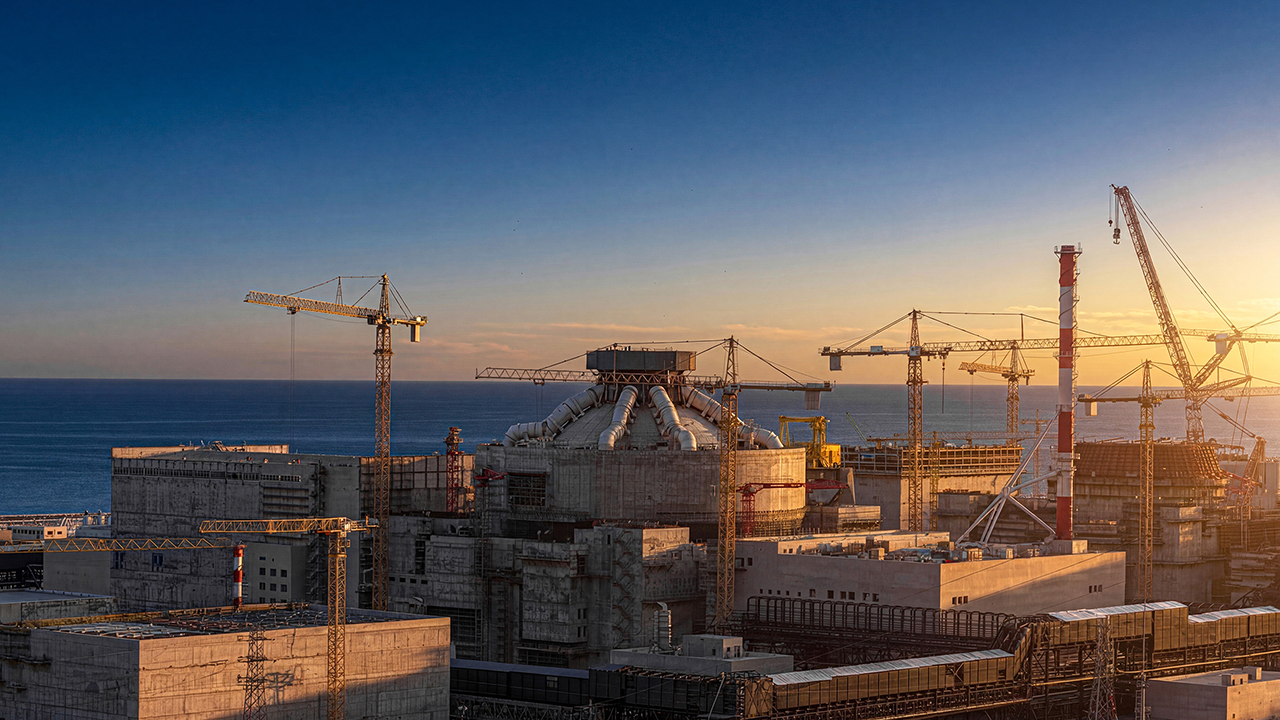
THIS is one of the largest nuclear power plants currently being built anywhere on Earth.
Dominating a stretch of the Turkish Mediterranean coast, it’s set to provide around 10% of the nation’s electricity needs. And in a country with almost 90 million people, that’s massive.
It’s a megaproject that’s been more than 50 years in the making. Four huge reactors are constructions simultaneously on a site that actually survived an earthquake midway through the build.
And it’s proving to be controversial, and not just because of that word nuclear. The deal that underpins this project is unlike anything we’ve seen before.
But while it’s had its fair share of complications and challenges, the end of this astonishingly complex construction project, is now finally in sight.
Going nuclear
Now, there are a few reasons why a new nuclear power plant under construction in Turkey can be considered a big deal.
To start with, this is the first one that’s ever been built here and it’s happening down in the Mersin province, around 500km south of Ankara.
The Turks have gone big with it because their current sources of energy are no longer enough.
According to the International Energy Agency, Turkey has the fastest growing electricity demand of all its member countries, and there are 32 of them.
Alongside that is the fact that almost three quarters of its energy is imported and over a third of it still comes from coal. But that isn’t going to be the case for much longer.
“The Turkish economy underwent a very interesting transformation in the last two decades. Turkey is more and more interested in diversifying its energy resources and energy potential,” said Dr. Zaur Gasimov, associate professor at the Turkish-Germany University in Istanbul.
“Turkey receives gas and oil through the Black sea from Russia — also via pipelines with Azerbaijan.”
Above: The Akkuyu Nuclear Power Plant is being built down in the Mersin Province of Turkey, around 500km south of the capital Ankara.
For decades it’s been wanting its own supply of clean, abundant, reliable power in the form of a nuclear plant, and the one the country is now getting is huge in scale.
Together, its four huge reactors will give the Akkuyu Nuclear Plant an overall capacity of 4.8GW.
The only other plant now in construction that’s of a similar size — well, it’s the same size actually — is the El Dabaa plant in Egypt.
That’s because they’re technically identical and the same organisation is building both at the same time.
As for what all of this actually produces in terms of energy, we’re talking 35BN kWh per year.
To put that into perspective, Hinkley Point C, the big nuclear power plant that’s currently being built in the UK, which has around 20 million fewer citizens, is only going to supply around 25BN kWh per year.
The corporation behind it all is the Russian state-owned Rosatom and they’re building it under a build-own-operate model, which is unusual. In fact, it’s never been done before.
It means Russia is responsible for financing the $25BN project along with the design, planning and construction.
It also takes care of some other areas that Turkey wouldn’t be able to handle, like supplying the nuclear fuel and dealing with the waste.
Then, as the name suggests, Russia becomes the owner and operator of the plant once it’s all up and running.
Normally, when countries collaborate on a new nuclear power station, the host nation retains ownership. But that’s not the case here.
Worth the wait?
The first reactor is set to go live by the end of 2026, but as with most nuclear power stations it’s taken a while to get to this stage.
The deal with Russia was signed way back in 2010, but it took another eight years for the real work to begin.
In fact, Turkey’s been wanting to build a plant here since the early 1970s but it took decades to find a partner. Now, half a century later, that collaboration has produced some impressive engineering feats.
We’re going to start with the most important elements where the nuclear fission actually takes place — the four 1.2GW reactors.
Each reactor has two containment buildings constructed around it. The one on the outside is made of reinforced concrete while the inner containment, with its steel lining, sits underneath.
This creates a leak-tight boundary ensuring that radioactive material stays inside should nothing go wrong and it’s topped with a massive dome.
The dome is made up of 15 sections that were pre-assembled on site before a heavy-duty crawler crane came along and hoisted it up into position.
It’s big and heavy, but also extremely thin, so it could have got damaged pretty easily when it was swung around. And this procedure had to be done three more times.
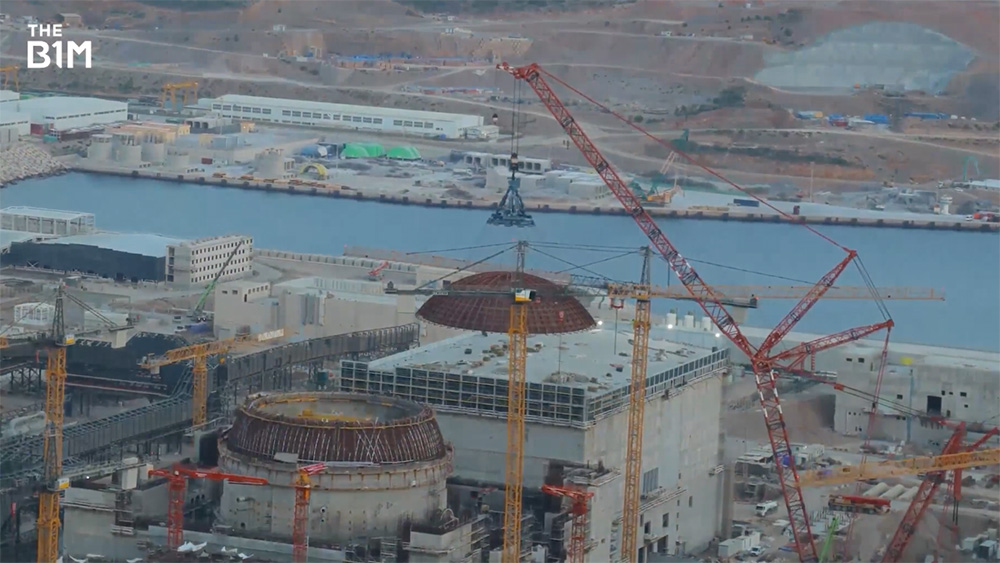

Above: The dome lift was one of the most complex procedures of the entire project, requiring months of preparation. Image: Akkuyu Nuclear JSC.
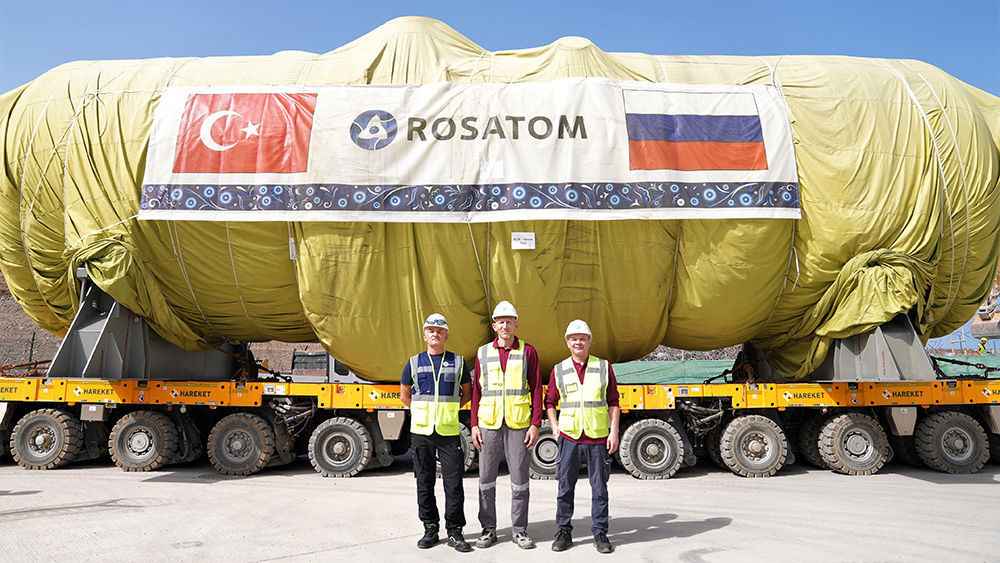
By mid-2026, the last major piece of reactor hall equipment was being lifted into place. It’s one of the 16 giant steam generators, and there are going to be four of them on each unit.
Weighing 340 tonnes, with a 14-metre length and four-metre diameter, their job is to take thermal energy from the reactor and, yes, generate steam from it, which is then used to turn turbines that generate electricity.
They were all manufactured in the Russian city of Volgodonsk and had to make the 3,000 kilometre journey to Akkuyu by sea via the Volga-Don Canal.
Now because we’re talking about nuclear energy here, a lot of safety features have had to be built in.
Take the passive core flooding system, for example. It’s basically a series of tanks filled with a boric acid solution.
If the reactor pressure drops too low, which could in theory cause a meltdown, their contents would be automatically released into the core, cooling it down very quickly.
Another important precaution can be found offshore. A massive new breakwater was constructed to protect the vital systems that pump coastal water into the reactors for cooling and then discharge it back out again.
And because the plant is situated in a seismically active region, it creates a layer of defence against possible floods, surges and even tsunamis.
We’ve seen what can happen when one of those hits a nuclear power plant. Just look at Fukushima in 2011.
On firm footing
Akkuyu has already proven that at least some parts of the plant can handle an earthquake. The two that devastated Mashup Turkey in 2023 happened during construction, although the epicentre was hundreds of kilometres away.
But even if one was to hit closer in the future, the plant should be able to handle it. Each reactor building lies on a foundation slab that was designed to withstand up to Magnitude 9 on the Richter Scale.
Meanwhile, under each reactor vessel is what’s called a core catcher, which prevents radioactive leakage in the event of an emergency and offers high seismic resistance, which is very reassuring.
It looks like Turkey’s going to end up with a substantial piece of infrastructure at the end of all this, but some are still questioning whether siding with Russia was the right thing to do.
Despite shouldering all the construction, operational and financial risks as part of the agreement, Russia will have majority ownership.
And this is a critical infrastructure site that’s expected to last for 60 years, sitting near NATO’s largest nuclear weapons store.
Above: The fact that Turkey, a NATO member, has given Russia control of such an important infrastructure site has caused some concern. Image: Akkuyu Nuclear JSC.
Although it’s shown no signs of any wrongdoing here, Russia hasn’t been on the friendliest terms with other NATO states this past decade over its actions in Ukraine.
Even Turkey itself has had its own disagreements with Russia since construction began, but never quite enough to affect the project.
“Turkish-Russian relations proved in the last two decades to be quite stable with their own ups and downs in Ukraine. Turkey supports the territorial integrity of Ukraine and condemned the Russian occupation of the Crimea,” said Gasimov.
“It was a huge challenge for mutual relations when the Russian military aeroplane was shot down over the Turkish territory and the relations aggravated. However, the Akuyu project was not stopped even then.”
But the actions of some of Turkey’s allies over Russia’s activities in Ukraine have slowed things down. Western sanctions on Russia have held up critical components which in turn has led to delays.
One example is the gas-insulated switchgear system from Siemens Energy which is essential for power distribution.
That was withheld by German authorities meaning that a new deal had to be agreed quickly with a Chinese supplier.
Behind schedule
That partly explains why the product is set to complete years later than planned. It was originally due to finish in 2023.
Now, nuclear power plants do often take longer to build than expected and there have been worse cases than Akkuyu in recent years.
There are the examples that we’ve mentioned before in the UK, US and France which have experienced far longer delays. Namely Hinkley Point C, Vogtle 3 + 4 and Flamanville 3.
And while the timeline may have slipped, there’s been no slowdown in Rosatom’s efforts to train up the workforce.
Hundreds of Turkish engineers working on the project have come through a programme that saw them learn their trade at Russian universities.
And there could be plenty of work for them in the future as well. Although Turkey is still waiting for its first plant to complete, it already has plans to build more.
It’s not yet decided who it’s going to team up with for the next one which is going to be situated on the Black Sea coast right at the other end of the country. Russia is one of the contenders again but so too are South Korea, Canada and China.
A third facility, northwest of Istanbul, is another possibility and Turkey is even looking to join the list of nations developing small modular reactors. But that would take time, it’s looking like 2050 at the earliest.
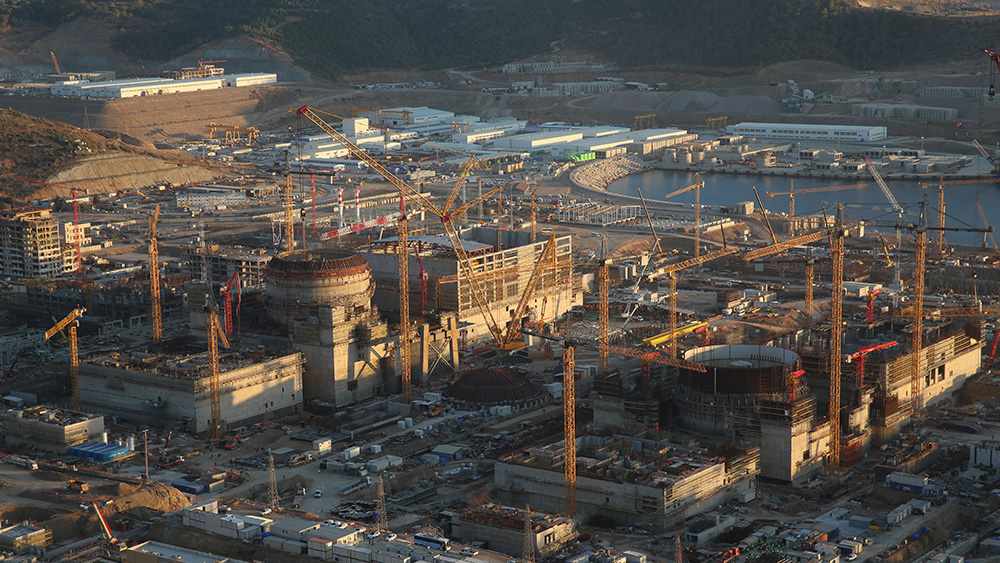
Above: Turkey wants to construct at least two other nuclear power plants, even though Akkuyu (pictured) is yet to finish.
In the meantime, Turkey can look forward to one of the largest construction products in its history finally coming to an end and producing results in the coming months and years.
Yes, it’s taken longer than it should have done and critics will say that the deal with Rosatom means it’s still dependent on another country for energy.
As for what the outcome of Russia’s involvement will be, well, we’ll have to wait and see.
They can’t harm you, if they can’t find you! Use code theb1m at the link below and get 60% off an annual plan:
Additional footage and images: AKUUYU NUCLEAR JSC, BBC News, Channel 4 News, CGTN, DW News, NPPA and TRT World.
We welcome you sharing our content to inspire others, but please be nice and play by our rules.



