Original Coverage & Source Attribution: londonlovesbusiness.com
NATO’s multinational brigade in Latvia has launched its largest-ever force deployment exercise, as growing concerns over Russian military activity and hybrid threats drive efforts to strengthen the alliance’s eastern defences.
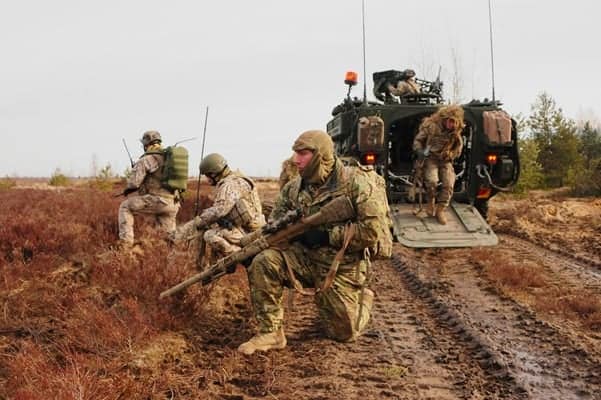
The Resolute Reforger 2026 exercises, running from October 26 to November 2, will involve approximately 3,000 soldiers and 1,000 units of equipment moving across Latvia by road and rail, according to the Latvian army.
The scale of the deployment is intended to test whether the brigade can rapidly move, supply and coordinate forces across long distances — a critical capability for NATO as it reinforces its eastern flank following Russia’s full-scale invasion of Ukraine.
“The aim of the drill is to test the brigade’s ability to move, supply, and guide units at long distances in cooperation with the National Armed Forces,” the Latvian army said.
Training areas will feature soldiers and Canadian CH-146 Griffon military helicopters. Following the exercises, units are scheduled to clear the training sites and return to their bases between November 4 and 8, according to Latvian media outlet Delfi.
Read more related news:
Brits warned ‘we have a little over 1,000 days’ to prepare for war with Russia
The Canadian-led multinational brigade has become a central element of NATO’s deterrence posture in the Baltic region, drawing on operational lessons from the war in Ukraine as alliance members prepare for a more demanding security environment.
Regional concerns extend beyond conventional military confrontation. NATO officials have warned of Russian drone incursions, airspace violations, sabotage and other forms of hybrid activity, prompting countries across the region to strengthen their defensive capabilities, including air defences.
Since Moscow launched its full-scale invasion of Ukraine, NATO has reinforced its eastern flank with additional troops and developed plans intended to enable a rapid response to emerging threats.
Latvian President Edgars Rinkevics has stressed that allied forces stationed in eastern member states must be prepared to act without prolonged political deliberations.
Speaking to the Kyiv Independent on September 22, Rinkevics said NATO troops would respond swiftly in the event of a Russian incursion.
“If someone plans something, we are not expecting two weeks’ debate in Brussels,” he said. “We are expecting a very, very swift response from NATO troops that are stationed in Eastern flank countries.”
The Latvian exercise provides a practical test of that readiness, focusing not simply on the presence of allied forces but on their ability to move and operate together across national territory.
As Baltic governments continue to strengthen their defences, the deployment highlights a central challenge for NATO: ensuring that troops and equipment positioned along its eastern flank can be mobilised quickly and coordinated effectively if a crisis escalates.