

Original Coverage & Source Attribution: www.newsweek.com
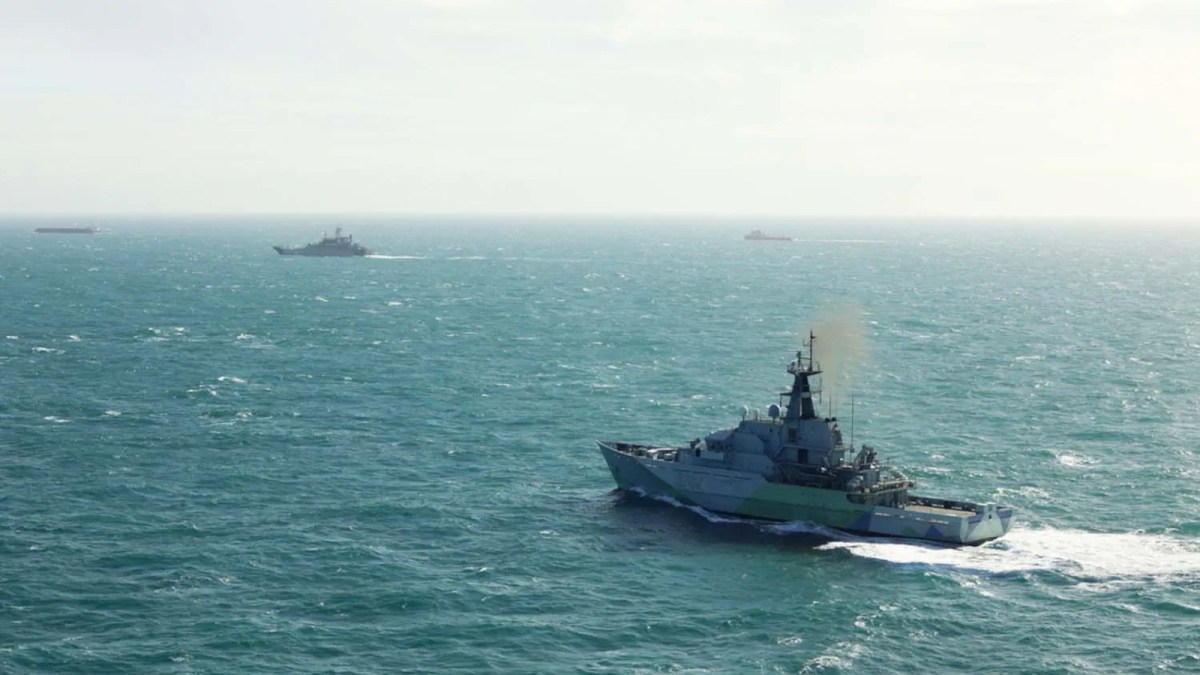
A Russian spy ship has been caught monitoring NATO warships off the U.K. coast while allied forces conducted a large-scale training exercise.
The Vishnya-class ship Viktor Leonov closely monitored the allied vessels as they took part in Exercise Strike Warrior in the Outer Hebrides—a naval military drill involving eight warships, 19 aircraft and more than 2,000 personnel from six nations.
In response, Britain’s Royal Navy deployed warships and helicopters to intercept the intelligence-gathering vessel and two separate Russian frigates at the end of September and during the first two weeks of October.
Read More on World
The urgent operation, dubbed Operation Iceblast, saw Wildcat and Merlin class helicopters deployed at short notice from Royal Naval Air Station Culdrose in Cornwall to Glasgow Prestwick Airport in Scotland.
Having flown 376 miles from the south coast of the U.K., the Merlins utilized their sensors to keep track of the Viktor Leonov from September 29 until October 8.
Captain James Hall, the commanding officer of RNAS Culdrose, said: “I am immensely proud of the efforts of our people, who have once again demonstrated that the U.K. is prepared to respond to immediate operational requirements.
“This tasking was part of a wider series of operations, known collectively as Operation Iceblast, which was designed to test the ability of Merlin Helicopter Force to deploy away from its home base of RNAS Culdrose in force and at short notice.
“This operation has been a critical means for demonstrating to ourselves, our adversaries and the nation that we are willing and capable of securing the homeland 24/7.
“The Merlin Helicopter Force stands ready to answer the call at a moment’s notice.”
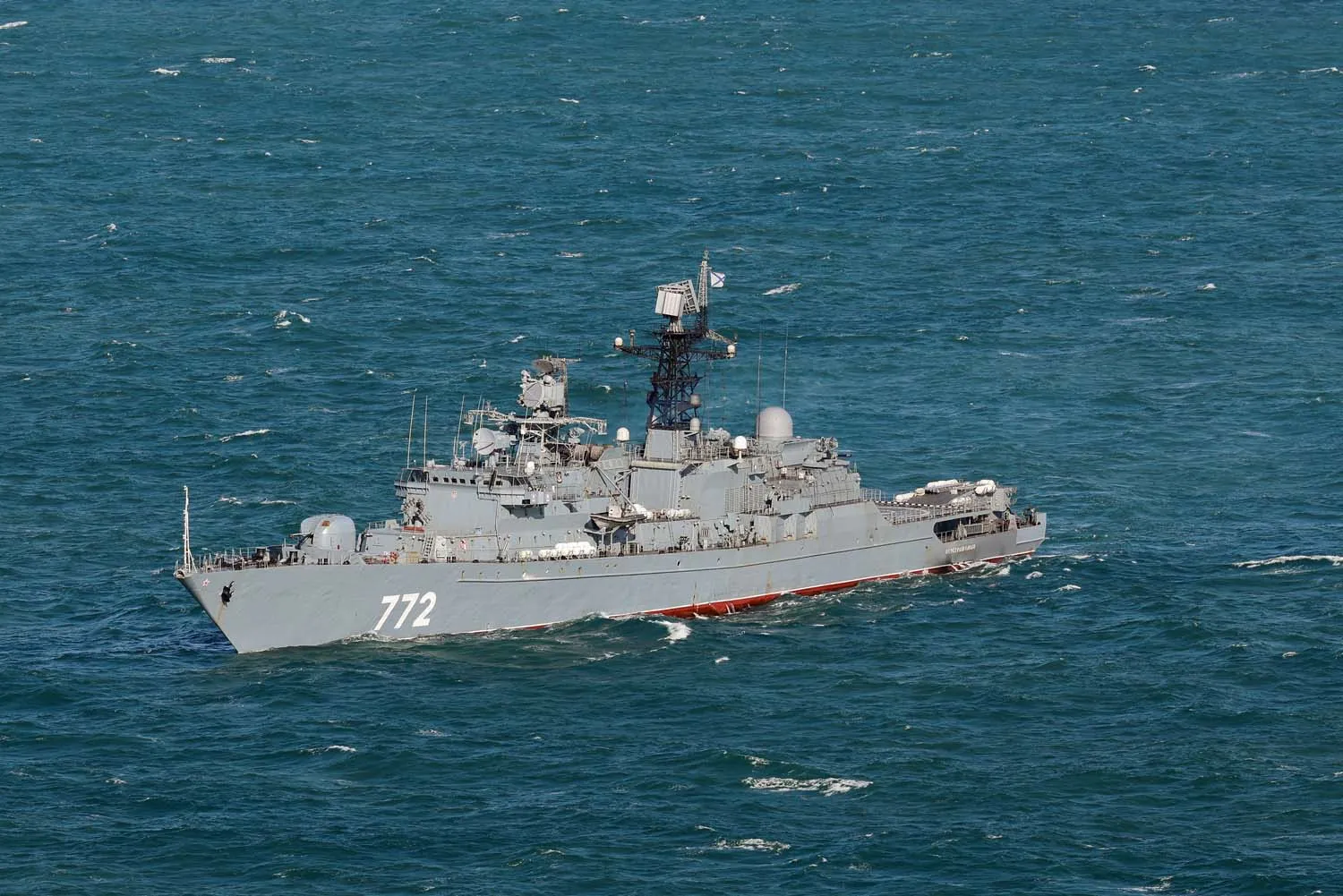
Separately, HMS Tyne and HMS Dauntless were deployed to monitor RFN Neustrashimy from October 1-14.
However, HMS Tyne handed over responsibility for the Neustrashimy to HMS Dauntless, allowing it to intercept a second vessel, RFN Aleksandr Shabalin, between October 11-14.
Both Russian vessels were escorting sanctioned cargo ships through the English Channel.
Lieutenant Commander Sam Fields, HMS Tyne’s commanding officer, said: “Operating from the North East to the English Channel in quick succession, HMS Tyne’s recent activations demonstrate the flexibility and enduring utility of our patrol ships.
“Maintaining a persistent presence around the U.K. and beyond, we stand ready to respond at a moment’s notice to protect our nation’s interests. I am proud of my ship’s company for their unwavering professionalism and adaptability.”
HMS Dauntless‘ commanding officer, Commander Neil Skinner, added: “The Royal Navy’s ability to monitor and respond to activity around the United Kingdom is fundamental to our role in protecting the nation’s interests at sea.
“HMS Dauntless maintained the close and proficient monitoring of the Russian warship Neustrashimy during her operations within the English Channel, providing reassurance to the U.K. and our allies while contributing to a comprehensive understanding of the maritime environment that surrounds us.
“I am immensely proud of the professionalism, dedication and operational readiness displayed by every member of HMS Dauntless throughout this tasking.”

June 2026 marked the first time Britain intercepted one of Russia’s shadow fleet vessels.
The fleet, comprising of more than 700 ships, carries approximately 75 percent of Russia’s sanctioned oil, according to Britain’s Ministry of Defence, which the department said helped generate a war fund for Russia’s war against Ukraine.
The U.K. has already sanctioned over 600 vessels to date.
Last week, the U.K.’s Treasury chief, John Healey, unveiled a £10 billion ($13.4 billion) economic and military support package for Ukraine in the Autumn Budget.
The fund included £500 million of additional military support “to plug urgent gaps in Ukraine’s air defenses this winter.”
In total, the U.K. will spend £4.5 billion on military support for Ukraine this year, its largest contribution since the invasion began in February 2022.
Newsweek’s reporters and editors used Martyn, our AI assistant, to produce this story. Learn more about Martyn here. Contact Newsweek editors for this story: Robert Greenall and Matthew Robinson



