

Original Coverage & Source Attribution: www.euronews.com
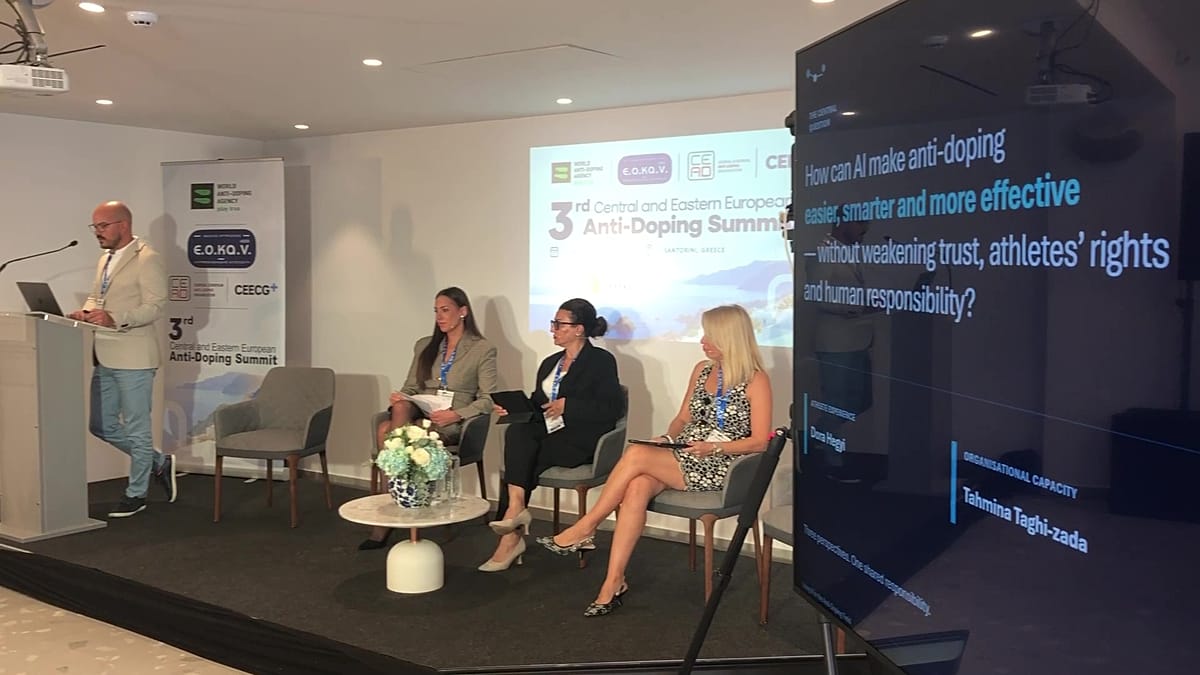
The use of artificial intelligence in the fight against doping was one of the key topics at the 3rd Anti-Doping Summit of Central and Eastern European Countries, held in Santorini with the participation of World Anti-Doping Agency (WADA) officials and representatives from 26 countries.
The event looked at new technologies that could help support data analysis, improve the planning of tests and contribute to investigative procedures. Some of these tools are able to process large amounts of data and could help many competent organisations – and others elsewhere.
“We use AI in anti-doping, but… it also helps the cheats”
“Artificial intelligence is, of course, a new tool that all of us are now learning to use, in every area of life and in every part of the world,” Sébastien Gillot, director of WADA’s European Office, told Euronews.
He adds, “It has tremendous power to help us understand trends, to identify the patterns offenders may be using and to analyse data so we can improve what we do, particularly when it comes to testing.”
“Naturally, if these are useful tools for us, they can also be useful tools for those who cheat. So we need to be able to grasp precisely how we can use them and make sure they help us become stronger, all together.”
Dora Hegyi, a former Hungarian gymnastics champion who serves as vice-chair of WADA’s Athletes’ Council, said, “It was a very interesting discussion about the use of artificial intelligence and how it can help athletes to be more informed, but also how it can help national anti-doping organisations operate more effectively or more easily in their efforts to combat doping.”
She added, “We had a very good discussion about the legal aspects, how national anti-doping organisations are already using artificial intelligence and what athletes really think about using AI.”
“An athlete’s AI search could be used against them”
Regarding the legal dimension, lawyer Penny Konitsioti, who also serves as vice-chair of the Disciplinary Committee of Greece’s National Anti-Doping Organisation, explained, “When an athlete logs on to a platform and searches for something relating to their health or any other information connected to doping, they must know from the outset.”
“It must also be clearly stated on the platform and in the terms of use, not hidden in the ‘small print’ but clearly summarised – that the information they search for might later be used in legal proceedings and could end up being used against them.”
Konitsioti also stressed that artificial intelligence should be treated as a tool to support competent authorities, for example, in collecting evidence in a trial or helping a sports judge, but never as a substitute for the procedures laid down or for human judgement.
Need to protect personal data is “crucial”
Participants at the event agreed that technological progress must be accompanied by specific safeguards, including the need to maintain human oversight in disciplinary procedures. Issues including ensuring transparency in the use of new tools and the protection of personal data were strongly underlined too.
“If trust is ‘built’ so that AI systems are developed with athletes and not only for athletes, then it can work and can bear fruit in future programmes to fight doping”, said former gymnast Dora Hegyi.
The use of modern digital systems in the anti-doping field creates new opportunities but also greater demands when it comes to handling sensitive information.
The Summit stressed the need for technological applications to operate within a clear framework for the protection of personal data.
Transparency, information security and human oversight
Transparency, data security and human oversight emerged as essential elements for maintaining trust in the testing system at the Santorini event. At the same time, changes to rules for therapeutic use exemptions and results management procedures were also discussed.
The summit also saw participants reiterated that the goal of the global anti-doping community is to implement reliable and consistent procedures while fully respecting international regulations and athletes’ rights.



