
Original Coverage & Source Attribution: www.vox.com
This story appeared in Today, Explained, a daily newsletter that helps you understand the most compelling news and stories of the day. Subscribe here.
The Trumpy tech billionaire Larry Ellison has wrapped his tentacles around the US branch of TikTok, an entire Hawaiian island — and now, officially, a very large share of the world’s news and entertainment production.
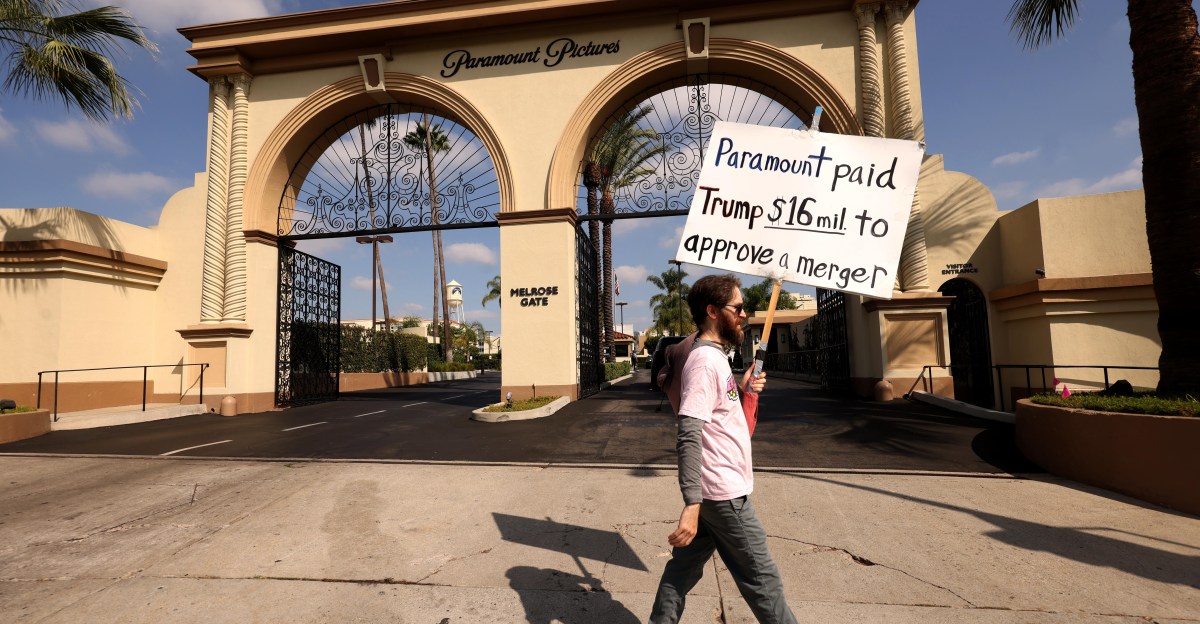
On Tuesday, the media behemoth Paramount — which is headed by Ellison’s son — completed its $110 billion mega-merger with Warner Bros. Discovery, in a controversial and hard-fought deal backed by the elder Ellison.
The merger combines a sprawling collection of brands, including HBO, CBS, and Paramount Pictures under one rebranded umbrella. It also concentrates much of the US film and television business in the hands of just five companies. Unions, theater owners, media watchdogs, and several state attorneys general were accordingly concerned: Combining two major competitors in any industry inherently concentrates power over what gets made, what consumers pay, and what workers earn.
Critics of this deal argued that, in the media industry, the fallout could be particularly intense. In addition to layoffs, opponents warned the new company could produce fewer, more boring movies, raise subscription prices for its combined streaming services, and inject political bias into news programs on CBS and CNN. (We’ll review the evidence for some of these claims in a minute.)
The new company agreed to address some of these concerns in a September 21 settlement agreement with 12 state attorneys general, which let the merger proceed. A group of consumers also launched a last-minute bid to block the deal, but the Supreme Court declined their emergency request on Monday.
One of the conditions of that September AG settlement was a minimum film guarantee: The merged company agreed to release at least 30 films a year for the first two years after the merger, then 32 films a year for three years after that. The requirement was designed to address one of the major fears around the deal: namely, that mergers can result in fewer films.
Recent history, and the basic economics of acquisitions, help explain the concern. Debt-financed acquisitions, like this one, can leave companies under pressure to cut costs. There are a few ways to do that, such as producing fewer new films or cancelling unreleased films that they don’t want to promote. According to Cinema United, a theater industry group, Disney and 21st Century Fox put out about half as many theatrical releases after their 2019 merger as they did before it, excluding 2020 and 2021.
But that doesn’t mean the new Paramount/Warner Brothers (formally rebranded Skydance) would do the same thing. Disney, for instance, makes a lot of its money from properties and products that aren’t movies. When the European Commission took up the question of whether this new merger would reduce output earlier this year, it concluded that Paramount and Warner were comparatively more dependent on film revenue. In other words, cutting back the number of movies they make post-merger “would not make economic sense” the way it did for Disney after its acquisition.
Still, consolidation could certainly change which movies get produced. Critics argue that fewer studios mean fewer opportunities for Hollywood creatives and less pressure on the remaining players to take creative risks.
In a report released over the summer, academics with the Media and Consolidation Research Organization at UC San Diego warned this particular deal would likely result in less diverse and more formulaic films. I, for one, won’t be holding my breath for a Larry Ellison biopic.
➨ Resist the temptation of the Prime Day “deal.” Today marks the start of Amazon’s twice-yearly discount days, which have spilled over to many other retailers. But before you load up your cart, double-check that the sale is actually a good one…and that you truly want or need the item in question. The psychological rush of scoring a deal is so strong that it can lead you to buy things you never planned to purchase.
- Did you know…that Hollywood (and communism) brought the Reagans together? The pair met when Ronald was the president of the Screen Actors Guild and Nancy was a young actress trying to prove she wasn’t a communist sympathizer.
- Today’s trivia: What is the 24th and final letter of the Greek alphabet? (You can find this and other brain puzzles in Vox’s daily crossword. Look for the answer in tomorrow’s edition.)
- Yesterday’s trivia: Yesterday we asked you for the name of the Indian Ocean island where the UK displaced inhabitants roughly 55 years ago. That would be Diego Garcia, which was forcibly cleared to make way for a joint US-UK naval base.