

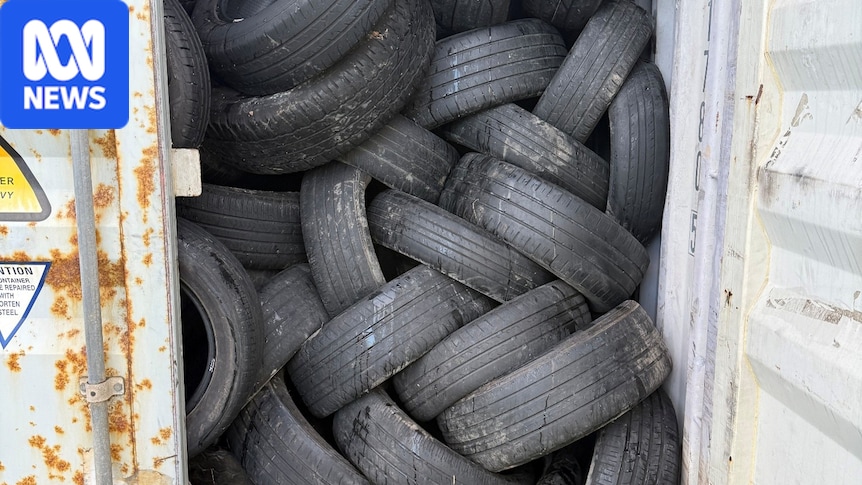
The EPA says the group used false credentials to collect waste tyres while posing as legitimate registered controlled waste transporters. (Supplied: Environmental Protection Authority Tasmania)
Original Coverage & Source Attribution: www.abc.net.au
Tasmania’s Environment Protection Authority says it has disrupted an interstate waste tyre operation that unlawfully collected thousands of tyres from Tasmanian dealerships and mechanics.
The EPA’s investigation began last year, after it received reports that an unlicensed company was approaching businesses posing as “legitimate registered controlled waste transporters” approved by the EPA and Tyre Stewardship Australia.
At least 30 instances of unlawful tyre collection involving around 20 Tasmanian businesses were identified.
The unlawful operators made approximately $50,000 in 10 days.
Investigators located six shipping containers filled with waste tyres, four in Bridgewater and two in Launceston. (Supplied: Environmental Protection Authority Tasmania)
Investigators uncovered a tyre network that had been operating in various Australian states over recent years, using rented vehicles, short-term shipping container leases and false credentials to collect the waste tyres.
In June, six shipping containers filled with waste tyres, four in Bridgewater and two in Launceston, were located, with an estimated 4,000 to 5,000 tyres having been collected and stored across the state.
The EPA said the investigation resulted in enforcement action against one operator, with warning notices issued to “retailers who should reasonably have recognised and acted on suspicious activity.”
Report crime
- Call Crime Stoppers on 1800 333 000
- Report anonymously via the Crime Stoppers website
Evidence gathered across the investigation included alleged breaches of the Environmental Management and Pollution Control (Waste Management) Regulations 2020 and potential fraud offences.
EPA chief executive and director Catherine Murdoch said the investigation would assist other jurisdictions in tackling the unlawful activity.
“The EPA undertook its largest proactive industry-targeting exercise in response to organised environmental crime to date.
“Waste crime can have significant financial and environmental consequences for local businesses and the wider community.
“This investigation shows how important it is to identify suspicious activity early and take action before it becomes more established,”
she said.



