

Original Coverage & Source Attribution: foreignpolicy.com
Welcome back to Foreign Policy’s Latin America Brief.
The highlights this week: Bolivia and Chile mend ties with a historic state visit, hundreds of U.S. troops reportedly deploy to the region, and Meta is accused of favoring far-right posts in Brazil’s presidential campaign.
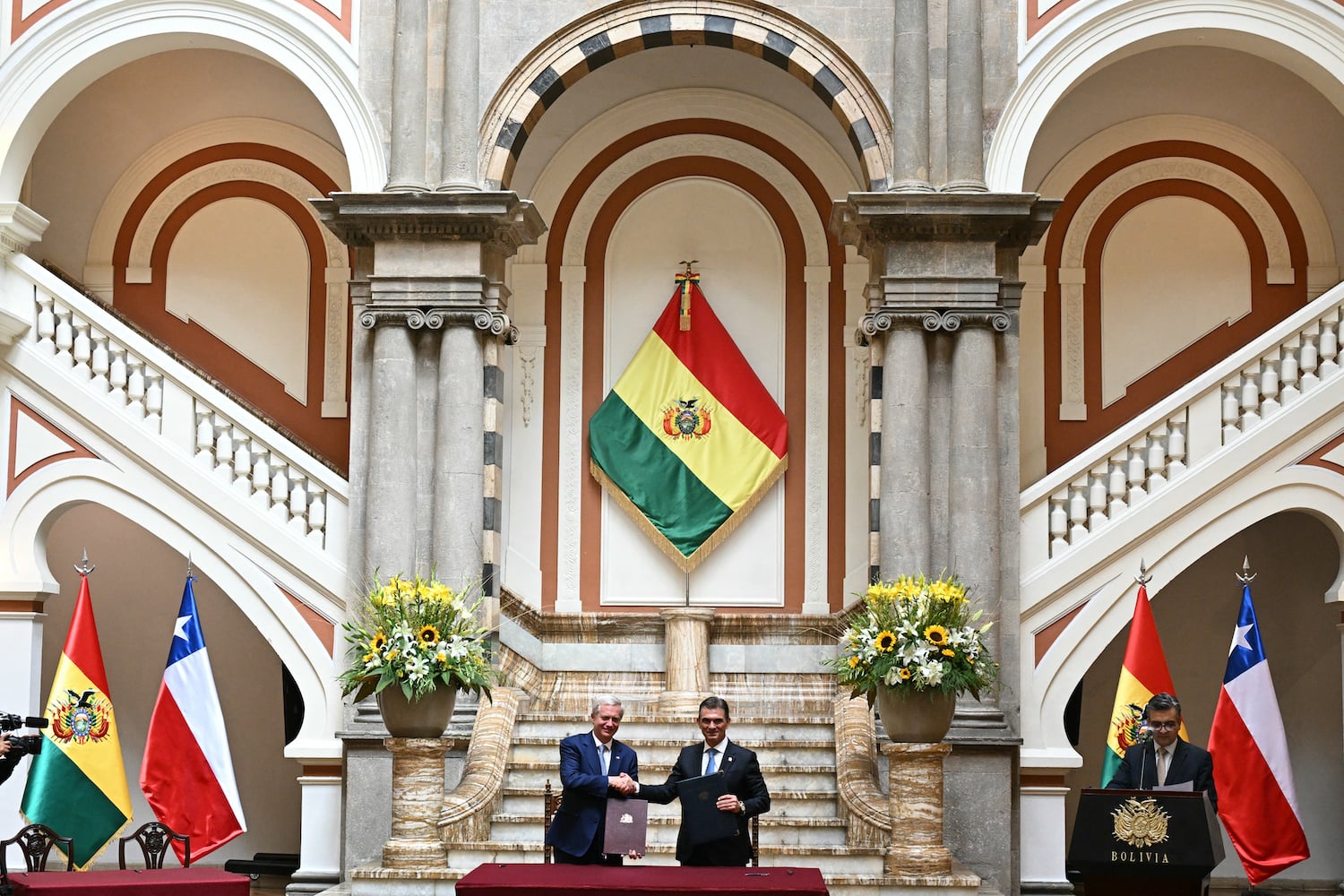
Last week featured a historic moment in South American politics: The presidents of Bolivia and Chile held a state visit for the first time in more than 70 years. The two neighbors have had a territorial dispute for more than a century and severed official diplomatic ties in 1978, maintaining only consular relations since then.
In the Bolivian capital of La Paz on Oct. 16, Chilean President José Antonio Kast signed several new agreements with Bolivian President Rodrigo Paz. Kast said he pledged to work “step by step … toward the full normalization of our relationship.” Mining and critical minerals are set to form a key pillar of cooperation.
The two countries have been at odds since the War of the Pacific in the late 19th century, which ended with Chile gaining a chunk of land with ocean access that had previously belonged to Bolivia. Relations began to thaw in the past few years following a pair of international court decisions on the matter and the arrival of a moderate-left president in Bolivia in 2020, Luis Arce.
Arce’s hard-left predecessor, Evo Morales, had dug in his heels on the territorial dispute. But Arce was open to overtures from the leftist Chilean government of President Gabriel Boric, which worked to gradually collaborate on issues such as fighting crime in the border region, said Andrés Villar, who served as an official in Boric’s Foreign Ministry.
Today, both Bolivia and Chile have right-wing presidents, which makes rapprochement even easier. The leaders signed multiple agreements in La Paz last week. An ex-consul general for Chile in Bolivia told La Tercera that it was likely that full diplomatic ties could be restored before the end of Paz’s term in 2030.
Paz, for his part, said that landlocked Bolivia was not abandoning its demand for access to the ocean. But “more than our history, what’s important today is to resolve the present and future of our people,” he said. Paz accepted an invitation to visit Chile next year.
The two countries agreed to connect an underground fiber-optic cable, study the possibility of linking their electricity grids, exchange information on mining techniques, and accelerate trade talks that could lead to tariff reductions.
Thanks in part to plans to expand shipping through a border crossing and railroad, Bolivia expects that it could more than double the amount of its mining products exported through Chile, Bolivian officials said. The plans include building out more of South America’s Capricorn Bioceanic Corridor, designed to stretch from a Pacific port in Chile to an Atlantic one in Brazil.
The countries’ pledge to cooperate on mining was vague. But it represents “real interest in the private sectors from both sides on moving forward,” Villar said. Bolivia stands to gain more in this exchange of know-how: Chile is a global mining powerhouse, while most of Bolivia’s bountiful lithium reserves are still underground.
The announcement comes on the heels of an August pledge by Argentina, Bolivia, Chile, and Peru—which comprise the so-called lithium triangle—to work together on critical minerals.
That mining has been named as a priority in the Bolivia-Chile rapprochement “is a positive sign,” Villar said, suggesting that the sector could emerge as a concrete area of regional cooperation under right-wing governments.
Sunday, Oct. 25: Brazilians vote in a runoff presidential election.
Tuesday, Oct. 27: The United Nations General Assembly discusses the U.S. embargo against Cuba.
Tuesday, Oct. 27, to Wednesday, Nov. 4: The U.K.’s King Charles and Queen Camilla visit the Bahamas, Guyana, and Antigua and Barbuda.
U.S. troop deployment. A 600-soldier U.S. battalion that will train on the ground in Colombia, Honduras, and Panama has started deploying to the region, unnamed U.S. officials told the New York Times last week. The move comes after the United States finished winding down its remaining troop presence in Iraq last month.
The Times also reported that the U.S. military has relocated multiple MQ-9 reaper drones—which can cost up to $50 million—from posts in Africa to Colombia and Ecuador. The troop and hardware movements suggest that U.S. land operations in the region may increase after more than a year of maritime attacks.
The operations at sea have killed at least 239 people so far but done little to stop the flow of cocaine to the United States, according to U.S. Defense Department and Drug Enforcement Agency assessments reviewed by the Washington Post. Nevertheless, the strikes have continued at a pace that Alexander Main and Guillaume Long call “unprecedented—and seemingly unlimited” in Foreign Policy.
Thanks to growing ideological alignment in Latin America with President Donald Trump, the next phase of U.S. military actions appears poised to unfold with greater cooperation from partner governments.
A killing in Guatemala. One of Guatemala’s most prominent anti-corruption lawyers, Juan Francisco Solórzano Foppa, was shot dead in front of his son on Saturday at a Guatemala City sports complex. Foppa was a former head of the country’s tax authority and a close cooperator with a U.S.- and U.N.-backed anti-corruption commission in Guatemala in the 2010s.
Political observers in the country are calling the killing one of Guatemala’s most significant political assassinations in years. President Bernardo Arévalo attended Foppa’s funeral, where other attendees shouted out calls for justice. Though police arrested two men immediately after the attack, they subsequently released them due to lack of evidence.
Arévalo was elected on an anti-corruption platform, and Foppa’s murder has become a “trial by fire for the government” to see whether it can bring the perpetrators to justice, former anti-corruption prosecutor Juan Francisco Sandoval told El País.
Demonstrators are sprayed with a police water canon during a protest in front of National Museum in Bogotá on Oct. 18.Sebastian Barros/AFP via Getty Images
Right-wing culture wars. The region’s newly inaugurated right-wing presidents made moves on their cultural agendas in recent days. Peruvian President Keiko Fujimori’s administration announced rules for public school attire that are expected to take effect by the end of the year: Boys must keep their hair cut short, while girls may not wear makeup or paint their nails.
While Fujimori’s government argues that the measures will protect girls from sexual harassment, women’s rights groups in the country have shot back that it is the harassers who should be held responsible for their behavior.
In Colombia, President Abelardo de la Espriella declared war on “wokism” and the start of a “cultural counter-revolution” last week. His government removed art and historical artifacts in the National Museum that it deemed inappropriate, including some related to women’s and LGBTQ rights as well as the 2016 peace agreement with a major guerrilla group.
The measure sparked protests outside the museum.
Colombia’s National Museum is home to which famous piece of art?
Abaporu by Tarsila do Amaral
Las Dos Fridas by Frida Kahlo
Lección de Guitarra by Fernando Botero
El Toro y El Cóndor by Oswaldo Guayasamín
Botero was a Colombian painter and sculptor.
The other paintings are all housed in the painters’ home countries, with the exception of Brazilian painter Tarsila do Amaral’s Abaporu, which is exhibited at the Latin American Art Museum of Buenos Aires.
A protester holds a mask depicting Meta CEO Mark Zuckerberg with red devil’s horns during a demonstration in front of Meta’s headquarters in São Paulo on Oct. 19.Nelson Almeida/AFP via Getty Images
Demonstrators gathered on Monday in front of Meta’s São Paulo office to denounce what they called interference in Brazil’s presidential election. Voters go to the polls this Sunday for a runoff to elect either left-wing incumbent President Luiz Inácio Lula da Silva or right-wing Sen. Flávio Bolsonaro, who won the first round and holds a polling lead.
Ahead of the runoff, multiple technology watchdogs have issued reports flagging what they say are cases of Meta unfairly limiting the reach of pro-Lula posts or boosting his opponents. Lula’s Instagram profile was blocked from promoting posts for almost 24 hours this month. Meanwhile, a pro-Flávio Brazilian lawmaker recently received more views on his Instagram reels than Beyoncé or Kim Kardashian.
Lula’s campaign filed an official complaint about the alleged mistreatment to the country’s electoral court on Oct. 10. Meta responded by saying that it experienced technical glitches related to Brazilian election content but that they were unintentional.
Both Meta’s own oversight board and a panel of U.N. experts issued unusual public statements of concern over the company’s treatment of Brazil election content. “Information, including from Meta employees, suggests that accounts linked to one side of the presidential race were disproportionately curtailed,” the U.N. experts said.
The prospect that a U.S.-based company could alter the course of the election hit a nerve in a contest already characterized by allegations of interference from Washington.
In recent days, Lula supporters have tried to trick the algorithm by wearing yellow and green in their photos, colors associated with the Bolsonaros. Alleging that the digital playing field is tilted, a hyper-online pro-Lula congressman has called for allies to stop “playing cute” and instead “play like adults.”



