

Original Coverage & Source Attribution: www.thefp.com
It’s Friday, October 23. This is The Front Page, your daily window into the world of The Free Press—and our take on the world at large. Today: Kara Kennedy attends SlutCon, where “flirt girls” teach awkward men how to get laid. A Parisian bakery owner shares a harrowing first-person account of watching rioters loot her store. And much more.
But first: the method to Trump’s foreign policy madness.
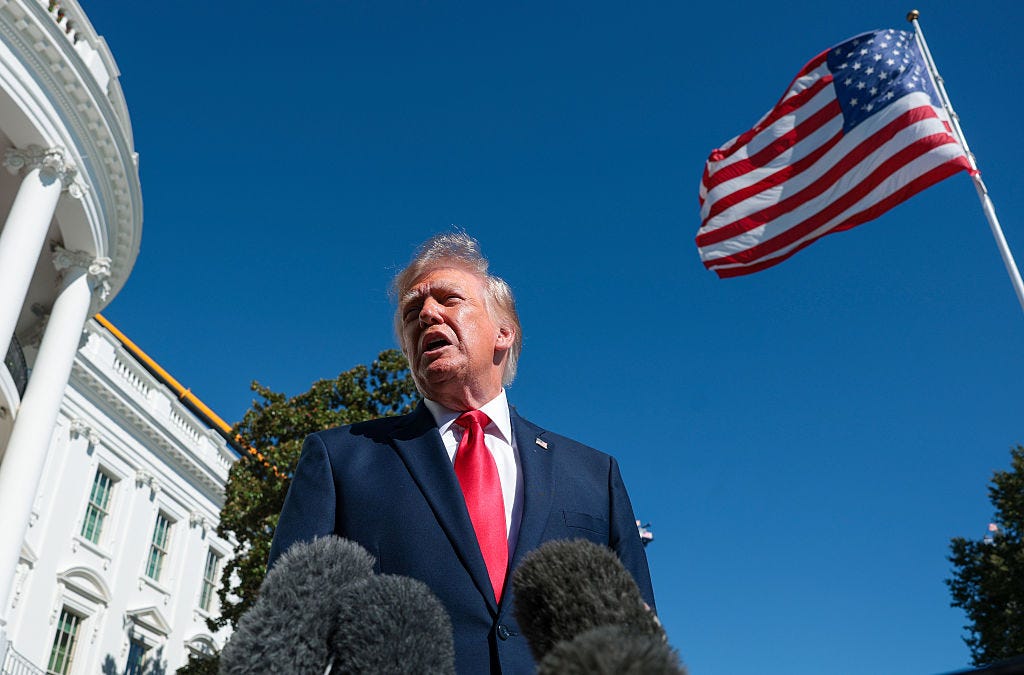
Anyone hoping to keep up with U.S. foreign policy this week had their work cut out for them. The week began with news that Russian president Vladimir Putin had proposed a summit to discuss Ukraine. The participants? Donald Trump and Chinese leader Xi Jinping—but not Ukrainian president Volodymyr Zelensky. Trump reportedly did not reject the proposal. Then we learned that Elon Musk had green-lit a slowdown of a military-grade Starlink that Ukraine uses for many of its drones.
If this all sounds backward to you, you’re not alone. “Confused is how many people today feel about U.S. foreign policy,” Niall Ferguson writes in our lead story today.
“For some people,” he continues, “the only possible explanation for all of this is that President Donald Trump is simply a crazed man-child emperor.” Those people would be wrong, he says. “To understand Trump’s approach to foreign policy, and particularly his counterintuitive approach to the war in Ukraine, you have to understand the debt he . . . owes to a 20th-century president: Richard Nixon.” Read Niall’s column to understand how the 47th president’s strategy borrows a page from the 37th’s—and the one key difference that may determine whether Trump ultimately succeeds.
Still, Trump’s apparent courting of Putin is hard for many to stomach. That’s especially true when you consider the case of Evan Gershkovich, a Wall Street Journal reporter who was imprisoned by Russia for 491 days on trumped-up espionage charges. Evan has written a new book about his time in prison, and today he talks to Tanya Lukyanova about his experience, his thoughts on ongoing hostage diplomacy, and what Putin still gets wrong about him. Click below to watch the interview.
—The Editors


Jhemima Sheilha • International
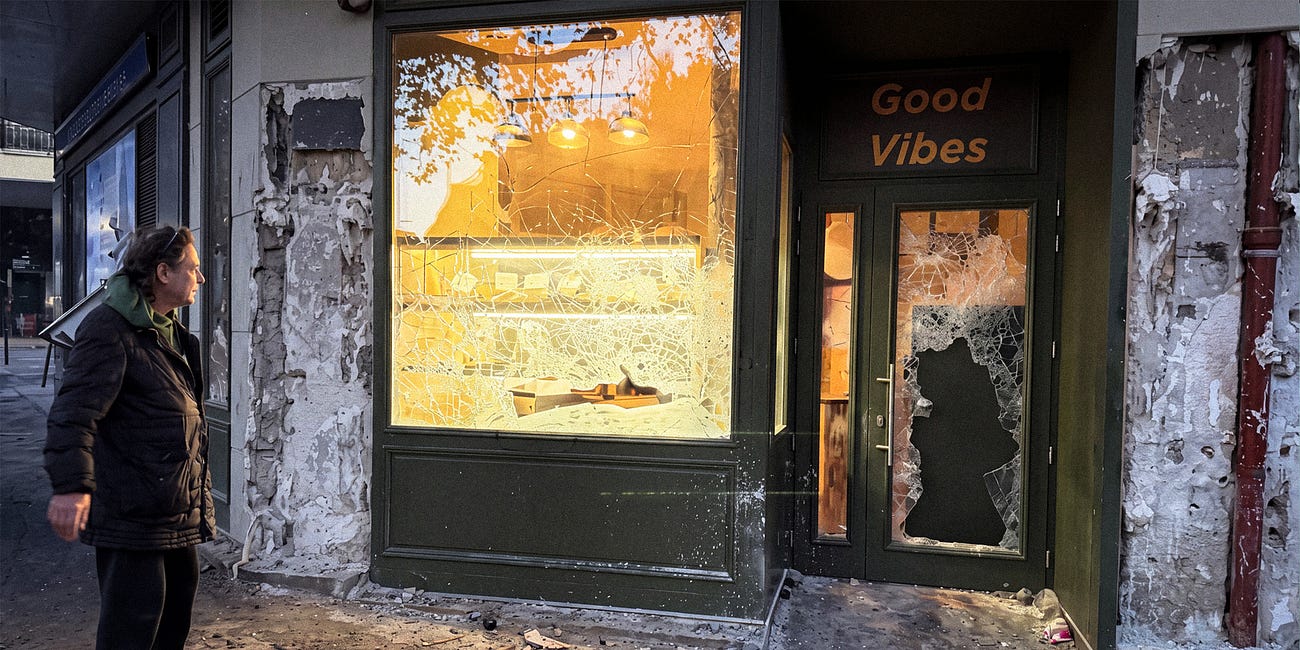

“Your shops, so sweet,” sneered Lola-Fleur Whittaker, a leftist political influencer, on national television as she defended the violent riots that swept France this past weekend. The remark was too much for Jhemima Sheilha, a fellow guest on the program, to let pass in silence. An immigrant from the Democratic Republic of the Congo, Sheilha owns a chain of French bakeries—one of which was ransacked in the riots. Today, in our pages, she recounts her experience last weekend, her arduous journey from poverty in the Congo to building a business in France, and how, in a matter of hours, everything she had worked for came crashing down. “In large swaths of our population,” she writes, “there is a hatred of the French Republic.”
Kara Kennedy • Sex and Gender
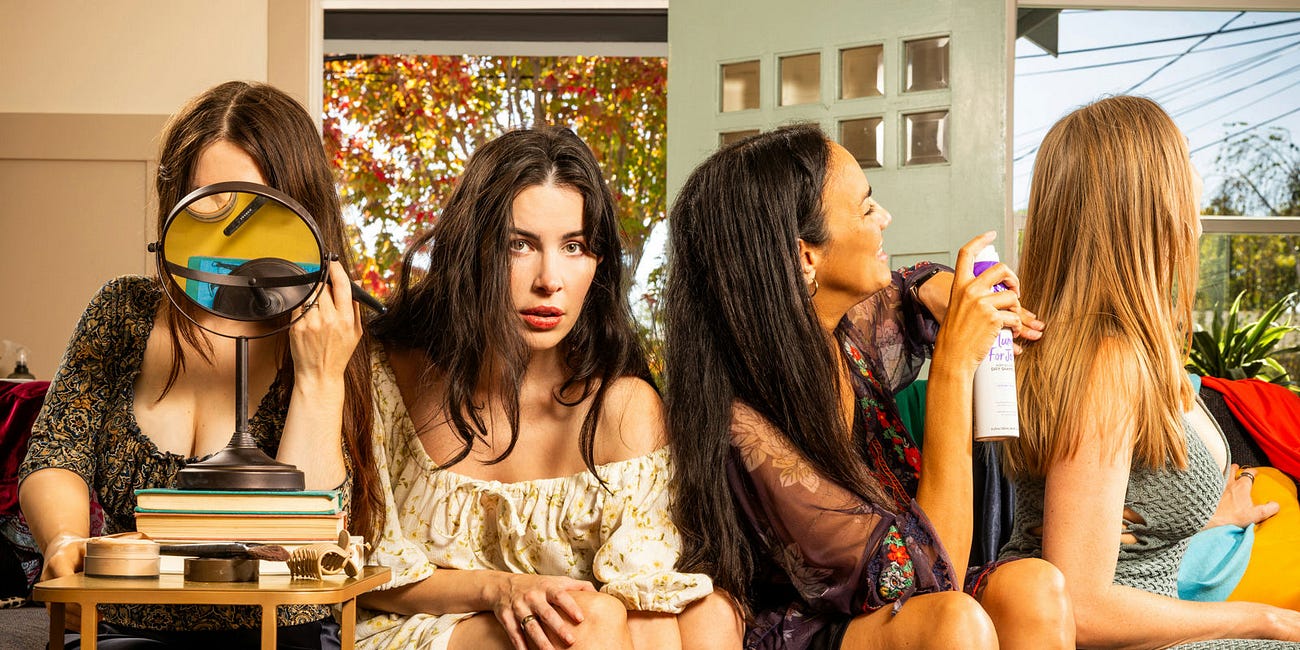
A few weeks ago, we sent Kara Kennedy to an annual event where sex workers teach men how to talk to women. Yes, really. At SlutCon, men pay anywhere from $2,100 to $18,000, granting them access to some 90 “flirt girls” who teach them how to hit on women, and share sex tips. The event has, unsurprisingly, raised eyebrows. But what Kara found was a group of men desperate for help with their love lives and earnestly committed to being better versions of themselves. Read Kara’s dispatch from the sex conference where flirtation comes without fear of cancellation and where no question is too awkward to ask.


EDITORS’ PICKS
The biggest story this week was the rioting in France, and for the past five days, we’ve brought you a series of stories to help make sense of the violence. With unrest threatening to resume this weekend, don’t miss Douglas Murray, Simone Rodan-Benzaquen, and Nora Bussigny on the essential questions raised by the riots: Who is behind them, what is at stake, and can French culture and the Republic endure their aftermath?
In case you missed it, we recently brought a new columnist aboard. Ross Douthat is writing for The Free Press every Thursday, and this week, he took on a topic he knows better than almost anyone: the so-called religious revival in the West. Despite the cultural cachet enjoyed by today’s Catholics, he wrote, “the form of Christianity that’s most adapted to late-modern America” isn’t Catholicism—“it’s evangelical Protestantism.” In his latest column, he revealed why the sect of Christianity most often criticized by the left has more to teach us about ourselves than we might think.
In the early 20th century, Portsmouth, Ohio, was a bustling metropolis, home to an NFL team and booming manufacturing plants. Then, in the 1990s, the town was hollowed out by deindustrialization and devastated by the opioid crisis, swiftly becoming the “pill mill” capital of America. Today, it’s been overrun by addicts seeking treatment, leading to the emergence of a new cottage industry: substance abuse recovery. But when Frannie Block went to Portsmouth, she found something troubling: an industry that locals say is rife with exploitation, abuse, and fraud. Her latest investigation takes us to a forgotten corner of America, where the cure to the opioid crisis may have become worse than the disease. It’s a must-read.
Irish author Sally Rooney is not only a master of her craft—she’s proof that novels still matter. But her latest dustup with her publisher over her support for Palestine Action, designated as a terror group by the UK, reveals a tension with which longtime Rooney fans are intimately familiar: Her work never achieved the sort of political significance she so desperately desired. This week, Sarah Ditum looked beyond the culture war to explore the conceits of the world’s most famous young fiction writer: “Rooney’s success as a novelist is, within her own moral schema, the mark of her failure: A true political radical would never have been embraced by the system.”




