

Home Blog Page 11

Azure Standard founder pens new book, stays true to farm roots

Editorial Disclosure: This article is an editorial-assisted curated synthesis of verified global coverage. The original source reporting has been analyzed, structured, and compiled by Pune.Media’s Editorial Desk to bring you high-density business insights.

Original Coverage & Source Attribution: capitalpress.com

Azure Standard founder pens new book, stays true to farm roots

Published 7:30 am Tuesday, October 6, 2026

Founder and CEO wants to encourage farmers, those with health issues

DUFUR, Ore. — This small town, population 650, holds the headquarters for an organic and natural foods distributor with 500 farm partners around the world and deliveries to 100,000 customers across the U.S. every month.

“I don’t think very many local people know how big we are,” said David Stelzer, founder and CEO of Azure Standard, which sprang from his family’s wheat farm nearly 40 years ago.

Stelzer’s new book, “Seeds of Hope: The Azure Standard Story,” will be released Oct. 13.

He started writing to encourage people with health issues and fellow farmers feeling stuck in their practices or commodity markets.

“You can win, but think outside the box,” Stelzer said.

He succeeded with direct marketing and value-added products.

The book also details challenges such as an IRS raid at the family farm, a devastating fire that destroyed a warehouse and a battle over weeds with Sherman County, which wanted to spray Azure’s organic acreage.

Stelzer wrote that a social media campaign, which flooded the county with phone calls and emails, forced officials to find a reasonable solution.

More room for growth

Stelzer said Azure stayed true to its roots as it scaled up from a single delivery van.

In the 1980s, he delivered his family’s wheat to Northwest health food stores and cooperatives.

Stelzer saw a need and refocused on distribution, but home deliveries quickly became too time-consuming so he established community drop locations.

Azure now has 5,000 sites throughout the U.S.

While most sales are online, the business still has a call center and paper catalog.

Stelzer said there’s more room for growth.

“The demand for high quality organic food is through the roof,” Stelzer said.

The pandemic boosted demand with Americans cooking more at home and wanting better options, said Crystal Stelzer, Stelzer’s daughter and Azure’s bakery manager.

An explosion of orders put Azure on solid financial footing and led to expansion.

The business more than tripled its employees to 550 in a few years.

That includes 70 in Dufur — where the business operates a bakery, grocery store, hardware store and gas station — and 150 distribution center employees in nearby Sherman County.

Azure is building a processing center for value-added products outside Dufur and the facility will include an individual quick freeze plant.

The business also has customer service, warehouse and delivery workers throughout the country.

A mission to create quality food

Azure Standard started, in a way, because Stelzer was constantly sick as a boy.

A naturopath convinced his parents to change their diet to natural foods.

Stelzer’s health returned and his father committed to organic farming in the 1970s.

From one generation to the next, the family’s health changed dramatically. Stelzer said his 11 children only had one doctor visit growing up, for a broken bone.

“I want to create hope that we can change the trajectory of the health of our families, because it changed for my family,” he said.

“My whole mission is to connect farmers who produce quality food with consumers,” Stelzer added.

{
“@context”: “https://schema.org”,
“@type”: “NewsArticle”,
“headline”: “Azure Standard founder pens new book, stays true to farm roots”,
“datePublished”: “2026-10-06 14:36:00”,
“image”: “https://capitalpress.com/wp-content/uploads/sites/11/2026/10/news_azure_100926_cap_01.jpeg”,
“author”: {
“@type”: “Organization”,
“name”: “Pune.Media Editorial Desk”,
“url”: “https://pune.media”
},
“publisher”: {
“@type”: “Organization”,
“name”: “Pune.Media”,
“logo”: {
“@type”: “ImageObject”,
“url”: “https://pune.media/wp-content/uploads/logo.png”
}
},
“isBasedOn”: “https://capitalpress.com/2026/10/06/azure-standard-founder-pens-new-book-stays-true-to-farm-roots/”,
“mainEntityOfPage”: “https://capitalpress.com/2026/10/06/azure-standard-founder-pens-new-book-stays-true-to-farm-roots/”,
“creativeWorkStatus”: “Editorial-assisted Curation”,
“comment”: {
“@type”: “Comment”,
“text”: “This article was curated, verified, and structured under organizational human editorial guidelines by the Pune.Media Editorial Desk.”
}
}


Zylo Ushers in a New Era of Agentic SaaS Management

Editorial Disclosure: This article is an editorial-assisted curated synthesis of verified global coverage. The original source reporting has been analyzed, structured, and compiled by Pune.Media’s Editorial Desk to bring you high-density business insights.

Original Coverage & Source Attribution: aithority.com

General availability for Zylo Clarity AI marks a new phase of agentic SaaS Management, as growing adoption of the Zylo MCP Server expands what enterprises can accomplish at scale

Zylo, the enterprise leader in SaaS and AI spend optimization, today announced the general availability of Zylo Clarity AI, its SaaS Management agent embedded directly in Zylo’s platform. Teams can ask Clarity to uncover unused licenses, prepare for renewals, update portfolio records at scale, and build and run workflows directly from a plain-language request.

Zylo has spent nearly a decade building the trusted system of record enterprises rely on to manage software. That foundation now powers an agentic system of action, drawing on over $100 billion in SaaS, cloud, and AI spend data and a decade of SaaS Management expertise.

“For years, SaaS Management has given enterprises the visibility and intelligence to find savings and optimization opportunities across their software portfolios,” said Ben Pippenger, Co-founder and VP of Strategic Partnerships at Zylo. “Agents change what enterprises can do with that intelligence, reducing the resources required to drive outcomes and opening up savings and optimization across the portfolio at an entirely new scale.”

Also Read: AiThority Interview with Gou Rao, co-founder and CEO at NeuBird AI

Zylo Clarity Brings Agentic SaaS Management to Every Client

First introduced in May, Zylo Clarity AI is now generally available to all Zylo users.

Clarity plans the steps needed to complete a request and calls the appropriate Zylo tools to execute them, adapting its approach as results come back. Built-in controls allow people to review and approve consequential actions before they are taken.

Making Zylo Agent-Ready Across the Enterprise

Zylo is bringing agentic SaaS Management wherever enterprises choose to build their agents. While Clarity puts an agent directly inside the platform, the Zylo Model Context Protocol (MCP) Server makes Zylo agent-ready across the enterprise, extending its data, intelligence, and actions to AI tools including Claude, ChatGPT, and Gemini.

Through MCP, Zylo becomes a data and action layer for enterprise agents, giving them access to live spend, contract, and usage data and enabling agentic workflows that extend across other MCP-enabled systems. Usage of the Zylo MCP Server has nearly tripled within Zylo’s client base since early August, with enterprises building SaaS Management directly into their agents and AI workflows.

Zylo continues to expand the foundation for agentic SaaS Management across Clarity, MCP, and its API. Workflows, automations, Activity History, and enhanced Custom Field capabilities are now available across all three, while new Company Context allows administrators to provide company-specific context for Clarity and MCP users.

Zylo’s agentic innovation comes as AI transforms both how enterprises manage software and the spend they need to manage. On October 29, Zylo will host the AI Spend Summit, a virtual event convening industry leaders to explore what it takes to manage AI costs at scale, with Zylo unveiling a new AI spend management solution as part of the program. To learn more and register, visit zylo.ai.

Also Read: ​​AI and The Future of Work: Artificial Intelligence Is Expanding Organizational Intelligence Beyond Human Limits

[To share your insights with us, please write to [email protected] ]

{
“@context”: “https://schema.org”,
“@type”: “NewsArticle”,
“headline”: “Zylo Ushers in a New Era of Agentic SaaS Management”,
“datePublished”: “2026-10-06 14:21:00”,
“image”: “https://aithority.com/wp-content/uploads/2026/10/automation-industry-3d-rendering.jpg”,
“author”: {
“@type”: “Organization”,
“name”: “Pune.Media Editorial Desk”,
“url”: “https://pune.media”
},
“publisher”: {
“@type”: “Organization”,
“name”: “Pune.Media”,
“logo”: {
“@type”: “ImageObject”,
“url”: “https://pune.media/wp-content/uploads/logo.png”
}
},
“isBasedOn”: “https://aithority.com/saas/zylo-ushers-in-a-new-era-of-agentic-saas-management/”,
“mainEntityOfPage”: “https://aithority.com/saas/zylo-ushers-in-a-new-era-of-agentic-saas-management/”,
“creativeWorkStatus”: “Editorial-assisted Curation”,
“comment”: {
“@type”: “Comment”,
“text”: “This article was curated, verified, and structured under organizational human editorial guidelines by the Pune.Media Editorial Desk.”
}
}

Senator Collins Receives 2026 Clean Energy Champion Award

Editorial Disclosure: This article is an editorial-assisted curated synthesis of verified global coverage. The original source reporting has been analyzed, structured, and compiled by Pune.Media’s Editorial Desk to bring you high-density business insights.

Original Coverage & Source Attribution: barharborstory.substack.com

WASHINGTON, D.C. – U.S. Senator Susan Collins was named a 2026 Clean Energy Champion by Citizens for Responsible Energy Solutions (CRES). CRES recognized Senator Collins for her longstanding work to strengthen grid resilience, advance energy storage and clean energy technologies, and support investments in the nation’s energy infrastructure.

“CRES has been an important partner in advancing responsible energy policies that strengthen our nation’s economy and energy security, and I am grateful to be recognized by the organization as a Clean Energy Champion,” said Senator Collins. “As Chair of the Senate Appropriations Committee, I will continue working across the aisle to advance an all-of-the-above energy strategy that helps make energy more reliable and affordable while encouraging American innovation.”

Senator Collins was a member of the bipartisan group of ten senators who negotiated the 2021 Infrastructure Investment and Jobs Act, which established the Grid Resilience and Innovation Partnerships (GRIP) grant program to strengthen and modernize the nation’s electric grid. Through the GRIP program, Form Energy received a nearly $150 million federal award for a new battery-based energy storage facility located at the site of the former Lincoln Paper & Tissue Mill. In August, Senator Collins joined U.S. Secretary of Energy Chris Wright and local leaders in Lincoln to discuss the plans for the new facility.

The Better Energy Storage Technology (BEST) Act, bipartisan legislation authored by Senator Collins to support grid-scale energy storage research and development and improve the efficiency of the nation’s electric grid, was signed into law in 2020.

Share

Leave a comment

Webinar explores digital banking platform chang…

Editorial Disclosure: This article is an editorial-assisted curated synthesis of verified global coverage. The original source reporting has been analyzed, structured, and compiled by Pune.Media’s Editorial Desk to bring you high-density business insights.

Original Coverage & Source Attribution: pluang.com

Uber buys ezCater for $2.3B to expand into catering services via Uber Eats

Uber is acquiring ezCater, a leading U.S. catering platform, for $2.3 billion in cash to expand its Uber Eats offerings into large-scale catering and workplace meals. ezCater, founded in 2007, has generated over $2.5 billion in gross bookings in the …

{
“@context”: “https://schema.org”,
“@type”: “NewsArticle”,
“headline”: “Webinar explores digital banking platform chang…”,
“datePublished”: “2026-10-06 14:15:00”,
“image”: “https://image-cdn.pluang.com/web/news-cards/v2/GSS/41b04736981190ba1d205eca44d3581e2dc2569b8cc6c487ba8a61c3f5db8e68-en.webp”,
“author”: {
“@type”: “Organization”,
“name”: “Pune.Media Editorial Desk”,
“url”: “https://pune.media”
},
“publisher”: {
“@type”: “Organization”,
“name”: “Pune.Media”,
“logo”: {
“@type”: “ImageObject”,
“url”: “https://pune.media/wp-content/uploads/logo.png”
}
},
“isBasedOn”: “https://pluang.com/en/news-feed/alkami-bawa-keahlian-implementasi-ke-keputusan-digital-banking-tetap-atau”,
“mainEntityOfPage”: “https://pluang.com/en/news-feed/alkami-bawa-keahlian-implementasi-ke-keputusan-digital-banking-tetap-atau”,
“creativeWorkStatus”: “Editorial-assisted Curation”,
“comment”: {
“@type”: “Comment”,
“text”: “This article was curated, verified, and structured under organizational human editorial guidelines by the Pune.Media Editorial Desk.”
}
}

‘Below’: When to Watch Josh Hartnett Battle a Mysterious Sea Creature on Netflix

0
Editorial Disclosure: This article is an editorial-assisted curated synthesis of verified global coverage. The original source reporting has been analyzed, structured, and compiled by Pune.Media’s Editorial Desk to bring you high-density business insights.

Original Coverage & Source Attribution: www.cnet.com

Move over, Widow’s Bay — there’s a new seaside horror show in town. Below is the name of the program in question, and by the looks of things, the upcoming series will be less comedic than Apple TV’s Emmy-winning show and more atmospheric, like the numerous shows Mike Flanagan created for Netflix.

Below stars Josh Hartnett as a Newfoundland fisherman named Calvin Penney who gets involved with a growing mystery impacting his home: Something dangerous is in the water, and it’s not going away. Is it a sea monster of the Loch Ness variety? That’s unknown at this time, but something tells me this creature isn’t like anything Penney or his tight-knit community have dealt with before.

Starring opposite Hartnett are Stranger Things alum Charlie Heaton, Mackenzie Davis, Willow Kean, Ruby Stokes, Rohan Campbell and Kaleb Horn. The program hails from creator Jesse McKeown, who most recently served as a writer on The Umbrella Academy.

Read on for more information on when to stream Below on Netflix.

Read more: 15 of the Best Horror Movies to Watch on Netflix Right Now/

When to watch season 1 of Below on Netflix

All six episodes of Below will rise to the surface on Netflix all at once on Thursday.

Netflix offers three different subscription plans to choose from. If you’re fine with commercials, you can opt for the Standard with Ads plan for $9 per month. The Standard plan costs $20 per month. For Premium, your out-of-pocket cost would be $27 per month. For more information on the streamer, check out our in-depth review.

Aaron is a writer for the streaming entertainment team. Previously, he wrote about TV and movies for places like Rotten Tomatoes, Inverse, TheWrap, Washington Post and The Hollywood Reporter. Aaron is also an actor and played a nerd on TV a lot in the ’90s. Seriously.

See full bio

CrowdStrike Launches Fourth Cybersecurity Startup Accelerator With AWS and Nvidia

Editorial Disclosure: This article is an editorial-assisted curated synthesis of verified global coverage. The original source reporting has been analyzed, structured, and compiled by Pune.Media’s Editorial Desk to bring you high-density business insights.

Original Coverage & Source Attribution: finance.yahoo.com

Cybersecurity ©Peachaya Tanomsup

CrowdStrike (NASDAQ:CRWD) has announced the fourth edition of its annual Cybersecurity Startup Accelerator in partnership with Amazon Web Services (AWS) (NASDAQ:AMZN) and Nvidia (NASDAQ:NVDA).

Applications are open globally until November 2, 2026, with the eight-week programme scheduled to run from January 11 through March 8, 2027.

The accelerator is designed to connect early-stage cybersecurity companies with technical and business representatives from CrowdStrike, AWS and Nvidia. Up to 10 finalists are expected to pitch at RSAC 2027, scheduled for April 5-8, where one winner will be selected.

Participating companies may also be considered for investment from the CrowdStrike Falcon Fund.

Accelerator Adds CrowdStrike Falcon Development Tools

This year’s programme will provide participating startups with access to CrowdStrike’s Falcon Foundry agent development tools and Falcon APIs.

Participants will also be able to develop verified integrations and potentially publish their products through the CrowdStrike Marketplace.

AWS is expanding its go-to-market support through AWS Partner Network onboarding, technical validation and AWS Marketplace listings. Nvidia will provide technical training and developer resources through its Nvidia Inception programme.

“Together with AWS and Nvidia, we’re putting the scale and power of our companies and ecosystems behind the best founders to help them build faster, reach more customers, and grow,” said Daniel Bernard, chief business officer at CrowdStrike.

CrowdStrike Says Accelerator Has Supported More Than 90 Startups

According to CrowdStrike, the accelerator has supported more than 90 startups globally, with participating companies collectively raising nearly $1 billion in funding.

Previous participants include Onum, which was subsequently acquired by CrowdStrike, as well as Terra Security and Remedio, which raised $38 million and $65 million, respectively. Another previous participant, Fabrix Security, was acquired by Silverfort.

CrowdStrike also said last year’s accelerator winner, Jazz, reported that its revenue nearly tripled and its pipeline increased tenfold following the programme. These figures represent company-reported results and do not establish that the accelerator was solely responsible for the changes.

CJ Moses, chief information security officer at Amazon, said the programme gives founders access to cloud infrastructure and technical expertise to develop products for enterprise customers.

Saša Zdjelar, chief security officer at Nvidia, said participants will have access to accelerated computing and artificial intelligence technologies through the programme.

Crowdstrike stock price

Amazon stock price

Nvidia stock price

{
“@context”: “https://schema.org”,
“@type”: “NewsArticle”,
“headline”: “CrowdStrike Launches Fourth Cybersecurity Startup Accelerator With AWS and Nvidia”,
“datePublished”: “2026-10-06 12:51:00”,
“image”: “https://s.yimg.com/lo/mysterio/api/5cfa7468772880e0564b1130ebff9f9971a9f2894a703f6ba243d09db6493862/lightyear_networkapi/resizefill_w1200%3Bquality_80%3Bformat_webp/https%3A%2F%2Fmedia.zenfs.com%2Fen%2Finvestorshub_458%2F76b7b8d46a608a3e9d3c0a88e760b294.png”,
“author”: {
“@type”: “Organization”,
“name”: “Pune.Media Editorial Desk”,
“url”: “https://pune.media”
},
“publisher”: {
“@type”: “Organization”,
“name”: “Pune.Media”,
“logo”: {
“@type”: “ImageObject”,
“url”: “https://pune.media/wp-content/uploads/logo.png”
}
},
“isBasedOn”: “https://finance.yahoo.com/technology/articles/crowdstrike-launches-fourth-cybersecurity-startup-125113629.html”,
“mainEntityOfPage”: “https://finance.yahoo.com/technology/articles/crowdstrike-launches-fourth-cybersecurity-startup-125113629.html”,
“creativeWorkStatus”: “Editorial-assisted Curation”,
“comment”: {
“@type”: “Comment”,
“text”: “This article was curated, verified, and structured under organizational human editorial guidelines by the Pune.Media Editorial Desk.”
}
}

Cybersecurity Budgets Tighten, Change As AI Adoption Continues

0

Editorial Disclosure: This article is an editorial-assisted curated synthesis of verified global coverage. The original source reporting has been analyzed, structured, and compiled by Pune.Media’s Editorial Desk to bring you high-density business insights.

Original Coverage & Source Attribution: www.dice.com

Even with artificial intelligence spending expected to reach into the trillions, those dollars are not filtering down to internal cybersecurity teams as quickly. Security budgets are expected to grow by an average of 5 percent in 2026, compared with 4 percent last year, according to a recent survey of industry leaders.

At the same time, 55 percent of CISOs report flat or declining budgets this year. While nearly seven out of 10 security leaders noted that AI is a major priority for new budgets heading into 2027, AI alone accounts for about 3 percent of security spending, while software and AI combined represent 35 percent of the security budget – about two percentage points behind staff and compensation.

Additionally, about 38 percent of organizations fund AI security outside the security budget through areas such as IT, data or innovation, according to the report published by cyber-risk consulting company IANS Research and recruiting firm Artico Search. The data includes responses from 500 CISOs and security leaders from interviews conducted between April and August.

The research suggests that while overall AI spending is still increasing, some of the capabilities CISOs and their internal security teams are using are coming from other budgets within their organizations. This trend could change how security leaders approach their budgets in 2027 and beyond, especially as cybersecurity teams are increasingly tasked with securing these AI technologies and assessing risk.

“Another implication of investing in emerging technologies is that security is gaining tailwinds from other investments in AI and broader technology, meaning some security capabilities are particularly funded out of someone else’s budget,” Steve Martano, IANS Faculty and partner in Artico Search’s cyber practice, noted in the report.

An uncertain economy is also driving tighter evaluations of cybersecurity return on investment, as well as greater scrutiny of security spending, including hiring and recruiting talent, said Robb Reck, chief information, trust and security officer at Pax8.

“Rather than expanding teams, organizations today are looking to AI to increase their existing workforce’s effectiveness. Still, leaders need to remain careful, continuing to gauge how AI adoption will ultimately affect team dynamics and resource needs,” Reck told Dice.

Budgeting Cybersecurity in an AI World

As AI spending becomes an increasingly pressing priority, CISOs and internal security teams face three pressure points in their cybersecurity budgets, said Collin Hogue-Spears, senior director of solution management at security firm Black Duck. These include:

  • The first is pressure from the board, which mandates that enterprise AI is already a top CEO priority. Security then gets its budget because nobody can defend the rest of the program without it.
  • The second pressure point is capacity. Alert backlogs and unfilled seats were constraints before AI arrived, so teams buy the throughput they cannot hire for.
  • The third is the attacker-side clock. Since the board believes the other side already has the tool, a matching purchase needs no ROI model. That means AI becomes an arms-race purchase rather than a capital-budget purchase.

This also means developing new budget proposals that document how AI agents work and what it takes to secure them, as well as how they affect the rest of the organization.

“Security leaders must price the work the model actually does. Hold back a set of alerts the model never sees, then compare: what did each correctly closed alert cost, and how often was the auto-close right? Run a board slide that turns a quiet quarter into a win for the model and the first auditor who asks for the comparison group takes it apart,” Hogue-Spears told Dice. “Measure what the model closed, not what the quarter avoided.”

Some of today’s largest cybersecurity expenditures are coming from investments in application security, security operations and AI usage governance, principally driven by automated code patching and the need to protect corporate models from data leakage.

At the same time, dedicated budgets are increasingly carved directly out of existing money earmarked for Security Operations Centers (SOCs) and legacy automation allocations to help fund the so-called “token budgets” and autonomous agentic tools, said Acalvio CEO Ram Varadarajan.

In many cases, fear of a data breach or attack is driving spending, and CISOs might see AI as a way to offset those concerns.

“Fear asymmetry drives the spend. If a missed breach is visible and career-ending, buying ‘AI-powered’ security is blame insurance, not a validated bet,” Varadarajan told Dice. “Sell to that fear, and once ‘AI’ becomes the market’s baseline expectation, peer-following procurement replaces evidence-based procurement, which explains why the most popular use cases aren’t the best-performing ones.”

AI ROI, however, is harder to measure because CISOs and security teams are pricing the absence of a rare, adversarial event, not counting throughput.

“A quiet quarter could mean the tool works, or that attackers just haven’t tried yet, and against a live, adapting adversary, there’s no clean control group to prove,” Varadarajan added.

For many CISOs, spending on AI tools and platforms to help with cybersecurity, even as budgets stagnate or only increase marginally, is seen as a necessary way to stay ahead of current trends and avoid falling behind.

“We’ve learned lessons from the past of trying to ‘bolt’ security onto technology adoption, so many security leaders are rightfully trying to be early and secure the adoption of this technology at the earliest possible aspects of the lifecycle as they can,” Chris Hughes, vice president of security strategy at Noma Security, told Dice. “They also do not want to be caught flat-footed with the board or executive leadership when they are asked what their AI security strategy is, especially among all the FUD and hype around AI and cyber, agent breakouts, cyber risks, and widespread AI-driven vulnerability discovery that has broken into the mainstream narrative beyond cyber circles.”

Security Budgets and Hiring

The pressure to do more with existing cybersecurity budgets is also reshaping the security workforce. While organizations are not broadly cutting security positions because of AI, they are changing the skills they seek, with greater demand for professionals who can apply AI to cybersecurity work.

The IANS and Artico data show that while cybersecurity budgets are flat – which can also affect decisions on talent recruitment, hiring and retention – AI is not taking cybersecurity professionals’ jobs. About 75 percent of respondents noted they didn’t anticipate cutting positions on their security teams due to AI adoption.

The results also reinforced two other trends for cybersecurity professionals: Entry-level jobs are being automated, and organizations are looking for security pros – even in mid-level roles – with AI skills.

“Demand is shifting toward people with deeper security, AI and business judgment, while entry-level roles are being reduced or redesigned. That is unfortunate, because the routine work AI absorbs is also where people build institutional knowledge and become experienced defenders,” Mika Aalto, co-founder and CEO at Hoxhunt, observed. “At the same time, every AI agent we connect to internal systems is effectively a synthetic employee, and if it is mistaken or compromised, it can become an insider threat operating at machine speed.”

Pax8’s Reck also noted that cybersecurity professionals who use AI to augment their work can create a better understanding of how these virtual chatbots and agents work, which makes them more valuable even as budgets for hiring stay flat.

“Security professionals who treat AI as something that will amplify their work, rather than threaten it, are the ones landing roles, even with tighter security budgets,” he added.

{
“@context”: “https://schema.org”,
“@type”: “NewsArticle”,
“headline”: “Cybersecurity Budgets Tighten, Change As AI Adoption Continues”,
“datePublished”: “2026-10-06 06:00:00”,
“image”: “https://www.dice.com/binaries/large/content/gallery/dice/insights/2024/08/adobestock_797202412.jpeg”,
“author”: {
“@type”: “Organization”,
“name”: “Pune.Media Editorial Desk”,
“url”: “https://pune.media”
},
“publisher”: {
“@type”: “Organization”,
“name”: “Pune.Media”,
“logo”: {
“@type”: “ImageObject”,
“url”: “https://pune.media/wp-content/uploads/logo.png”
}
},
“isBasedOn”: “https://www.dice.com/career-advice/cybersecurity-budgets-tighten-change-as-ai-adoption-continues”,
“mainEntityOfPage”: “https://www.dice.com/career-advice/cybersecurity-budgets-tighten-change-as-ai-adoption-continues”,
“creativeWorkStatus”: “Editorial-assisted Curation”,
“comment”: {
“@type”: “Comment”,
“text”: “This article was curated, verified, and structured under organizational human editorial guidelines by the Pune.Media Editorial Desk.”
}
}

How artificial intelligence could help protect wildlife, animals and fragile ecosystems

Editorial Disclosure: This article is an editorial-assisted curated synthesis of verified global coverage. The original source reporting has been analyzed, structured, and compiled by Pune.Media’s Editorial Desk to bring you high-density business insights.

Original Coverage & Source Attribution: www.knysnaplettherald.com


How artificial intelligence could help protect wildlife, animals and fragile ecosystems | Knysna-Plett Herald


{
“@context”: “https://schema.org”,
“@type”: “NewsArticle”,
“headline”: ” How artificial intelligence could help protect wildlife, animals and fragile ecosystems”,
“datePublished”: “2026-10-06 04:20:00”,
“image”: “https://cms.groupeditors.com/img/2026/Oct/b0607d10-dbf7-4d08-8a81-4d53eeb8c5f3.jpg”,
“author”: {
“@type”: “Organization”,
“name”: “Pune.Media Editorial Desk”,
“url”: “https://pune.media”
},
“publisher”: {
“@type”: “Organization”,
“name”: “Pune.Media”,
“logo”: {
“@type”: “ImageObject”,
“url”: “https://pune.media/wp-content/uploads/logo.png”
}
},
“isBasedOn”: “https://www.knysnaplettherald.com/News/Article/LifeStyle/how-artificial-intelligence-could-help-protect-wildlife-animals-and-fragile-ecosystems-202610021209”,
“mainEntityOfPage”: “https://www.knysnaplettherald.com/News/Article/LifeStyle/how-artificial-intelligence-could-help-protect-wildlife-animals-and-fragile-ecosystems-202610021209”,
“creativeWorkStatus”: “Editorial-assisted Curation”,
“comment”: {
“@type”: “Comment”,
“text”: “This article was curated, verified, and structured under organizational human editorial guidelines by the Pune.Media Editorial Desk.”
}
}

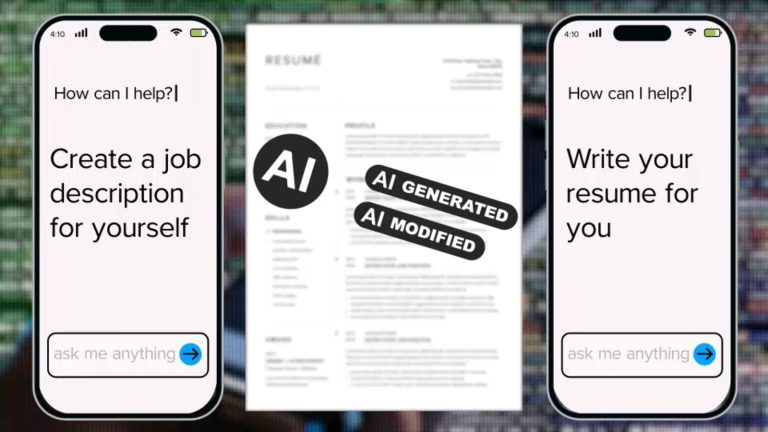
AI resume building: Tips to be careful when using artificial intelligence for a job search

Editorial Disclosure: This article is an editorial-assisted curated synthesis of verified global coverage. The original source reporting has been analyzed, structured, and compiled by Pune.Media’s Editorial Desk to bring you high-density business insights.

Original Coverage & Source Attribution: abc7ny.com

NEW YORK (WABC) — Finding the right job can be the hardest work a job seeker can do and making matters worse, is the growing problem of applicants being fooled by artificial intelligence.

From phony recruiters to fake job sites, there’s good reason to be careful.

7 On Your Side has warned about job scam red flags, but now there are con jobs, and it starts with the offer to help with your resume.

It’s competitive out there in the job market, and you may want to get your resume in front of as many employers as possible. But push pause before doing two things: using AI to write for you and paying for a service which promises to distribute your resume to hiring managers for a fee.

Imposters exploiting generative AI will promise you volume, like getting your resume to thousands of recruiters.

Executive Coach Michelle Perchuk says people on the hunt in the job market should focus on quality, not quantity.

“A spray and pray approach to finding a job is not the right approach. Sending a resume to five thousand jobs and getting zero interviews is not an equation anyone should pay even one dollar for,” Perchuk said.

Some services can ask for a monthly subscription or pony up a one-time fee, but before clicking send, Perchuck says to ask questions.

“For example, who sees my resume? What companies are you sending my resume to? What levels of positions are you targeting?” she said.

Inquire about guaranteed outcomes, like the number of interviews or offers. Ask for results from other job applicants.

“Buying these services and not understanding how they work and who they send your resume to is really dangerous,” Perchuk said.

What’s included in the resume can also be dangerous.

“A lot of people put their phone number, their home address, their cell number and some people even put their social security number. When you put that information out there, these databanks of resumes can be sold to nefarious entities which could be printing credit cards without information,” Perchuk said.

She recommends name, email, contact number and your handle on LinkedIn only. When it comes to building your resume, Perchuk says never use AI to create a job description for yourself or write your resume for you.

Top Stories

Applicant tracking services which collect resumes have filters to detect the use of AI.

“Apparently, there is an invisible watermark on the content that AI writes,” Perchuk said.

Perchuk recommends using AI to help you brainstorm as a supplement, not a replacement, and get into the habit of rewriting content in your own words.

“Because when you are at the actual interview, if your hiring manager will ask about that thing on your resume, you are not going to be able to use your natural language to explain what you did. They’re going to know you used AI. You’re going to need to articulate your value as a job seeker,” Perchuk said.

Fake recruiters are also using AI to pose as HR reps on lookalike websites. Check the URL carefully and verify the job posting with the company. Real hiring managers will have the company name.com as their email and not be operating from a Gmail account.

“Job seekers are so desperate now; they are really prey to these scams,” Perchuk said.

You may be wondering what else is in it for the scammer. Perchuk says the goal goes beyond stealing your ID for financial gain. When they steal your resume, they can subcontract your job, cutting you and others out of the job market.

If they get a successful hire with your profile, it’s a treasure trove of documents like employment verification, payroll, and official contract letters. That could lead to fake visas or bank loans, all attached to your name.

———-
SHARE YOUR STORY

Do you have an issue with a company that you haven’t been able to resolve? If so, 7 On Your Side wants to help you!

Fill out the form below or email your questions, issues, or story ideas by filling out the form below or by emailing [email protected]. All emails MUST INCLUDE YOUR NAME AND CELLPHONE NUMBER. Without a phone number, 7 On Your Side will not be able to respond.

Copyright © 2026 WABC-TV. All Rights Reserved.

{
“@context”: “https://schema.org”,
“@type”: “NewsArticle”,
“headline”: ” AI resume building: Tips to be careful when using artificial intelligence for a job search”,
“datePublished”: “2026-10-06 13:46:00”,
“image”: “https://cdn.abcotvs.com/dip/images/19913334_100626-wabc-ai-job-scams-img.jpg?w=1600”,
“author”: {
“@type”: “Organization”,
“name”: “Pune.Media Editorial Desk”,
“url”: “https://pune.media”
},
“publisher”: {
“@type”: “Organization”,
“name”: “Pune.Media”,
“logo”: {
“@type”: “ImageObject”,
“url”: “https://pune.media/wp-content/uploads/logo.png”
}
},
“isBasedOn”: “https://abc7ny.com/post/ai-resume-building-tips-careful-when-using-artificial-intelligence-job-search/19910215/”,
“mainEntityOfPage”: “https://abc7ny.com/post/ai-resume-building-tips-careful-when-using-artificial-intelligence-job-search/19910215/”,
“creativeWorkStatus”: “Editorial-assisted Curation”,
“comment”: {
“@type”: “Comment”,
“text”: “This article was curated, verified, and structured under organizational human editorial guidelines by the Pune.Media Editorial Desk.”
}
}
Devoteam agrees 5-year AWS deal to foster enterprise AI take-up

Editorial Disclosure: This article is an editorial-assisted curated synthesis of verified global coverage. The original source reporting has been analyzed, structured, and compiled by Pune.Media’s Editorial Desk to bring you high-density business insights.

Original Coverage & Source Attribution: www.telecompaper.com

Devoteam agrees 5-year AWS deal to foster enterprise AI take-up

Consultancy Devoteam has announced a five-year cooperation agreement with Amazon Web Services (AWS). They will combine Devoteam’s specialist engineering and forward-deployed engineer (FDE) capabilities with AWS Cloud and AWS artificial intelligence services to accelerate enterprise AI adoption.

{
“@context”: “https://schema.org”,
“@type”: “NewsArticle”,
“headline”: “Devoteam agrees 5-year AWS deal to foster enterprise AI take-up”,
“datePublished”: “2026-10-06 12:40:00”,
“image”: “https://ik.imagekit.io/tp/20220217-amazon-aws-logo-dark.png”,
“author”: {
“@type”: “Organization”,
“name”: “Pune.Media Editorial Desk”,
“url”: “https://pune.media”
},
“publisher”: {
“@type”: “Organization”,
“name”: “Pune.Media”,
“logo”: {
“@type”: “ImageObject”,
“url”: “https://pune.media/wp-content/uploads/logo.png”
}
},
“isBasedOn”: “https://www.telecompaper.com/news/devoteam-agrees-5-year-aws-deal-to-foster-enterprise-ai-take-up–1584820”,
“mainEntityOfPage”: “https://www.telecompaper.com/news/devoteam-agrees-5-year-aws-deal-to-foster-enterprise-ai-take-up–1584820”,
“creativeWorkStatus”: “Editorial-assisted Curation”,
“comment”: {
“@type”: “Comment”,
“text”: “This article was curated, verified, and structured under organizational human editorial guidelines by the Pune.Media Editorial Desk.”
}
}