Original Coverage & Source Attribution: www.vulture.com
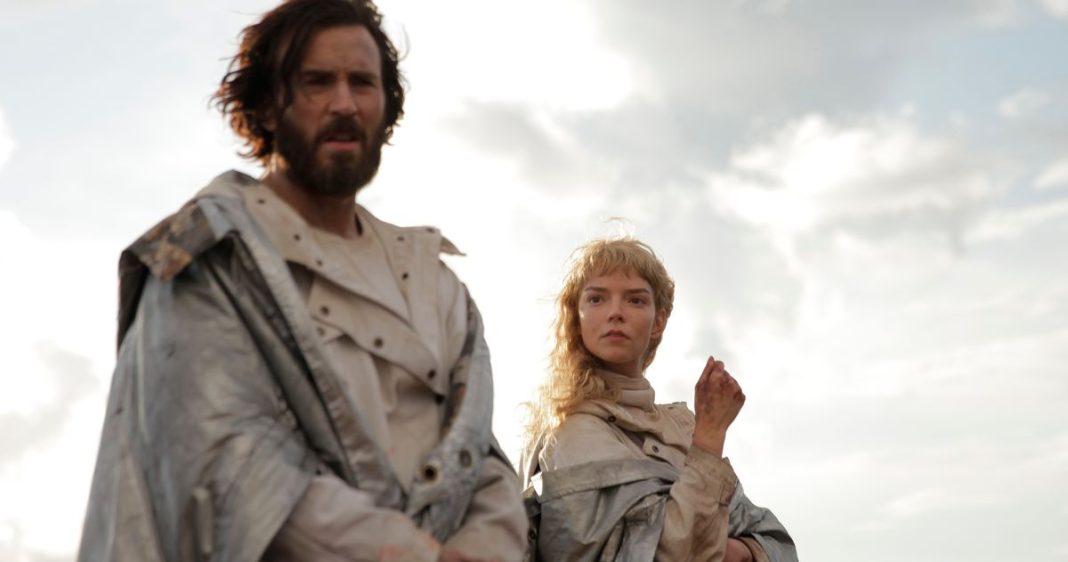
Chris Evans is certainly a handsome man and a talented actor, but most movies seem unable (or unwilling) to capitalize on his real secret strength: his innate dorkiness. Something about the way he looks and talks makes him a great straight arrow — a kind of amiably, fascinatingly outdated stiff. This sounds like a criticism (or a backhanded compliment at best), but really, it’s not. Evans seems to understand this. The first Captain America movie used this quality of his well, but his character’s distinctiveness gradually faded in subsequent Marvel entries. Now, in Romain Gavras’s Sacrifice, which is premiering on Netflix, Evans comes into his comic own as movie star Mike Tyler, a down-on-his-luck leading man obsessed with his thinning hair and public image on the eve of a glitzy benefit held inside a giant marble quarry in Greece. When a group of ecoterrorists, led by the stone-faced Joan (Anya Taylor-Joy), invades the gala and demands three captives for a human sacrifice, Mike unwittingly ends up on the business end of a hostage standoff. According to a prophecy given to them by the earth itself, these zealots believe that they must find a “hero” who will throw himself into an active volcano in order to save the world from destruction. Thus, poor beleaguered Mike gets his chance at real-life heroism in the dumbest way possible.
Sacrifice has a silly premise, but it also has the stylistic force of a prophecy. Gavras’s previous film, the magnificent Athena, was an action epic and family tragedy about an uprising at a French housing project. The two pictures are similar in setup — both involve marginalized groups organizing themselves to take hostages from among the powerful — but extremely different in tone. Sacrifice starts off as an effective satire (aided immeasurably by Evans’s very funny performance) and then transforms into a quest narrative, at which point its humor becomes more conceptual. Gavras has always had an eye for the spectacular, but here he uses the heightened imagery to highlight the characters’ grandiosity: Against the film’s enormous marble halls, treacherous rivers, and burning, quaking mountains, Mike’s vanity and faux heroism seem especially rinky-dink, while Joan’s determination feels like it has emerged from the world around her. (I wish the film, which Netflix picked up after its Toronto Film Festival premiere last year, was getting a theatrical release — it looks incredible.) Both characters are ridiculous, each in their own way.
Each also wrestles with the devastated idealism of our times. Mike is haunted by images of his deceased father, who he imagines is judging him from beyond the grave; the movie star struggles to live up to the ideals, we sense, of this salt-of-the-earth man. In fact, Mike’s frustration at his own ineffectuality seems to be what’s at least partly destroying his public image. Joan, on the other hand, has taken the ideals of her scientist father (John Malkovich) to absurd lengths. Both characters live in a world where meaningful action seems impossible: One frets about their inability to change things; the other takes things to violent extremes. In that sense, the dead-end setting of their journey across a volatile landscape in which humans might be an afterthought seems to reflect their hopelessness.
Earlier this year, I grouped Sacrifice along with several other films that portrayed characters kidnapping their perceived tormentors, a diverse bunch of titles that included Jafar Panahi’s It Was Just an Accident, Yorgos Lanthimos’s Bugonia, and Gus Van Sant’s Dead Man’s Wire. At the time, these seemed to reflect the poisoned proximity of our era, this ongoing sense that we are both more connected and more helpless than ever — that our lives are going to hell in a world where we have constant, albeit illusory access to the powerful. Thinking more about Sacrifice, I realize it also belongs to a certain utopian strain of filmmaking that is, secretly, mired in helplessness. Our save-the-planet narratives are becoming increasingly far-fetched. (Call Project Hail Mary “hopecore” as much as you want, but a movie that locates humanity’s only salvation in elaborate alien technology on the other side of a wormhole is just nihilism with a smile.) Sacrifice seems to echo that desolation. Nothing else seems to be working, it says, so why not try throwing a movie star into a volcano?
A weekly dispatch on the cultural discourse, for subscribers only.
Vox Media, LLC Terms and Privacy Notice
By submitting your email, you agree to our Terms and Privacy Notice and to receive email correspondence from us.
See All