



Original Coverage & Source Attribution: itchanneloxygen.com
The future of work in the AI era could be surprisingly positive and people-driven, an expert panel brought together for AVI-SPL’s recent VIBE event in London agreed.
Held on the 42nd floor of London’s ‘Cheesegrater’ skyscraper, VIBE showcased the latest in next-generation workplace technology in front of an audience of 120 enterprise leaders.
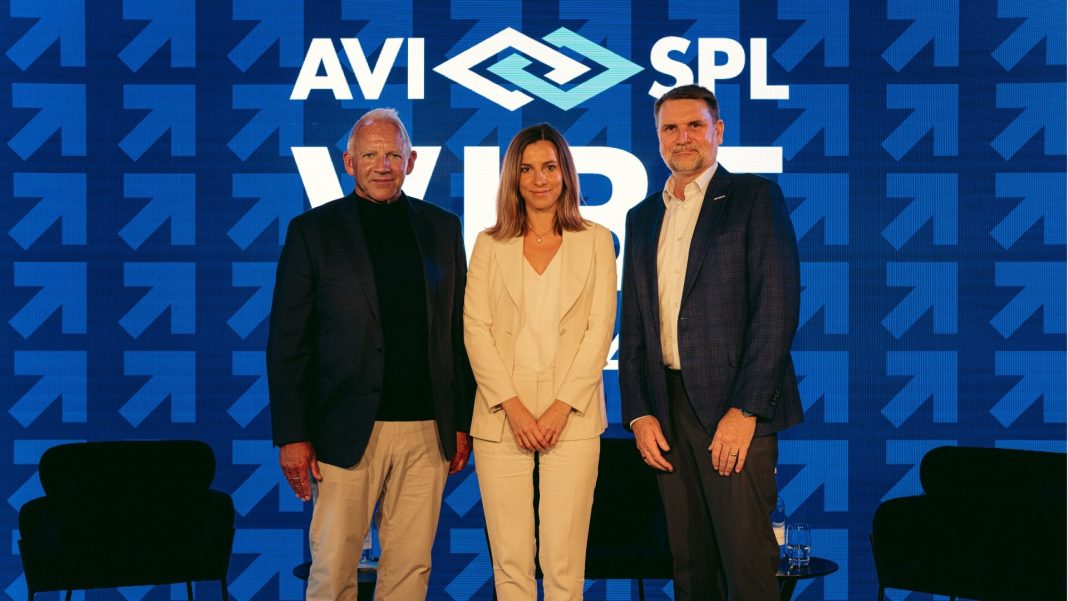
During a panel session held at the event, three experts looked beyond the recent doom-filled headlines to discuss the potentially positive impact AI could have on the future of work.
The “90:10 switch”
This included author, speaker, futurist and AVI-SPL SVP Julian Phillips, who argued the onset of AI could be an opportunity for businesses to “rethink and reimagine their whole business model”.
According to the ‘90:10 switch’ theory, humans spend 90% of their time on manually and cognitively repetitive tasks, and only 10% doing more ‘human’ problem-solving and creative ones, Phillips explained.
“If we could do a switch or inversion, where we actually spend 90% of our time being creative with things of value, and then AI picks up the slack on the automation, guess what would happen to productivity in the enterprise?” he said.
“Guess what happens about your job security? Guess what happens about the hope we give young people coming into the workplace?”
The entry-level, white-collar jobs that are reportedly under threat from AI are instead being “reframed”, Phillips claimed. Graduate trainees will potentially need to be “adaptive and think outside the box”, rather than performing “drudgery”, he said.
Liberal arts educations are coming back into fashion for this reason, Phillips said.
“I think we’re going to see more roles and opportunities for artists, musicians, dancers and creatives. Because, guess what, these are uniquely human attributes,” he said.
“As business leaders, we need to start encouraging a liberal arts dialog. We need to be encouraging communication, collaboration and critical thinking, because this is what we do.”
“That’s why I’m positive”
When panel chair Joe Molloy asked the audience whether they were optimistic about AI, the majority concurred.
Among those raising their hands was panellist Iliana Gross-Buening, whose Deeply Human Innovation platform measures the human impact of digital products.
“I’ve always been a tech optimist,” she said.
“I started my work in Sub-Saharan Africa in education technology. So for me, technology has always been an enabler – and I think I’ve never totally lost this [mentality].”
It is important to counteract potential dystopian scenarios by focusing on “what good looks like” in an AI-driven world, Gross-Buening said.
“When we asked people about the most positive future with AI, it centred very much around productivity, efficiency and automation. This goes back to the importance of imagination, and really thinking about, ‘okay, it’s 2040; this has all gone really well’ – what does that look like?”
Job security is not what most worries young people about AI, Gross-Buening said.
They are instead more concerned that people may rely on AI too much or think less deeply, she explained, citing a study Deeply Human Innovation had conducted in 68 countries.
She urged the business leaders present to recognise their ability to shape the future of AI.
“I think at this global scale, we have never thought about what are the human qualities we want to nourish,” she said.
“What makes us deeply human? What makes us uniquely human? How do we want to promote these qualities in the workplace and the relationships that we have in the workplace and at home?
“That’s why I’m positive.”
The rise of “apocaloptimism”
John Bailey, SVP, Technology & Innovation at AVI-SPL, agreed there is a need to look beyond recent headlines and appreciate the opportunities as well as risks that come with AI.
“I heard a term just this past week – it’s difficult to pronounce, but I’m going to try it. It’s the ‘apocaloptimist’,” he said.
“There’s certainly a lot of superlatives being used in the media, especially in the past couple of weeks, about what the possible bad outcomes could be.
“But if you dig deeper, you’ll find an equal number of proponents that have faith in humanity and humans, and our ability to control this thing.”
Asked what a typical office might look like in 2030, Bailey pointed to a future of increasingly sophisticated digital assistants.
When it comes to hybrid meetings, digital assistants have already moved from performing basic translation and transcription tasks to “facilitation” in areas such as follow-up actions, he explained.
“In the near future, the context of that agent will be much more tailored to the context of the meeting, or even the project series that the meetings are relevant to,” Bailey said.
AVI-SPL’s digital workplace concierge, LISA, which it was showcasing at the event alongside other bleeding-edge AV and UCC technology, already possesses such attributes, Bailey said.
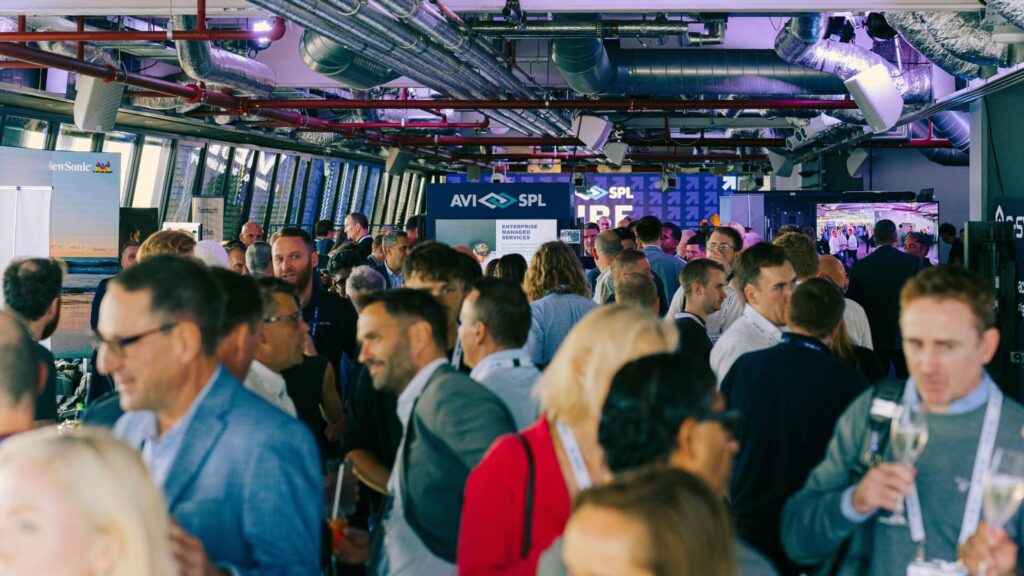
In his opening remarks at the event, Michael Kellaway, Managing Director, Europe at AVI-SPL, promised that the panellists would tell personal stories and show their vulnerable sides.
That was a theme picked up by Phillips, who noted that people tend to wrongly project the greatest certainty in times of great uncertainty.
“We as leaders in our business have to start adopting a new mode of operating, and that is actually starting to understand that leadership right now is not projecting certainty; it is acknowledging the uncertainty that exists and showing leadership through those uncertain times,” he concluded.
To find out more about how AVI-SPL is reshaping the future of the workplace, see here
This article was produced in association with AVI-SPL and is classified as partner content. What is partner content? See more here.