Original Coverage & Source Attribution: www.motorbiscuit.com
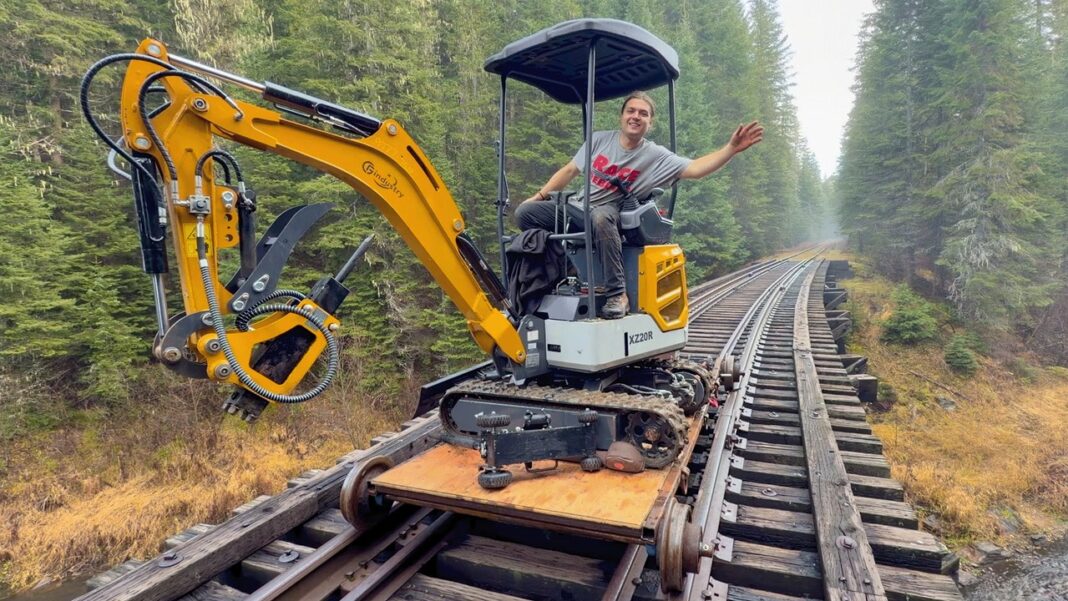
YouTuber Matt Spears turned a Chinese mini excavator into a rail car on 107-year-old gold mine wheels, then derailed it on an abandoned railroad.
The build is his entry for Idaho in 50×50: Science Across America, a series pairing one YouTuber from each state with local scientists. His video, “Building a Mini Excavator to Clear Abandoned Railroads,” went up on Nov. 15 and has passed 2.1 million views. MotorBiscuit last covered Spears when he fitted a 200-hp Hayabusa engine in the back of a toy truck.
The excavator came from an auction site, where it was brand new but wouldn’t start. Spears says he paid about half what a similar machine costs on Amazon. The fault turned out to be a seized starter, which came back to life after a few hits with a hammer.
The Wheels Came Out of a Gold Mine
The excavator doesn’t run on the rails itself. It drives up onto a steel-framed electric cart, about 4 feet by 10 feet, with a motor rated at more than 30,000 watts and a 60-tooth sprocket Spears cut on his waterjet.
The wheels are the old part. “These wheels are 107 years old, and they are super heavy. These are original gold mine cart wheels. I bought these a long time ago, but I haven’t been able to use them because they’re so heavy,” Spears says. Each one weighs over 50 pounds.
They’re also cast iron, which he had never welded before. He preheated each wheel to about 500 degrees, TIG-welded the new hubs in short runs while peening the bead with a pointed hammer, used a high-nickel rod and left each wheel to cool slowly in a bucket of sand. The next morning, one weld had already cracked.
On the way to the tracks, he stopped at the University of Idaho, where forest operations professor Ryer Becker let him try the school’s logging machine simulators. Becker told him hydraulics went mainstream on equipment like this between the early 1950s and the 1960s.
A Worn Rail Found the Bad Weld
The first test nearly ended before it began. The excavator lost all hydraulic pressure on the steep climb to the track, and Spears took apart the relief valve looking for a blockage. He didn’t find one, but the machine started working again on its own.
With a hydraulic rock hammer fitted in place of the bucket, he crossed two wooden trestles before the cart came off the rails. Spears blamed track worn into a curve by about 80 years of trains, then found the real damage: a wheel cracked on both sides.
“That was not the crash’s fault. That was definitely my fault. I did a bad job at welding this,” he says.
He used the excavator to drag the cart back onto the line and nursed it back on the cracked wheel, stopping on the way to try the rock hammer while the excavator sat on the cart. Driving the excavator down the final steep hill with the cart tied behind it, he heard a bang and thinks one of its tracks came off.